
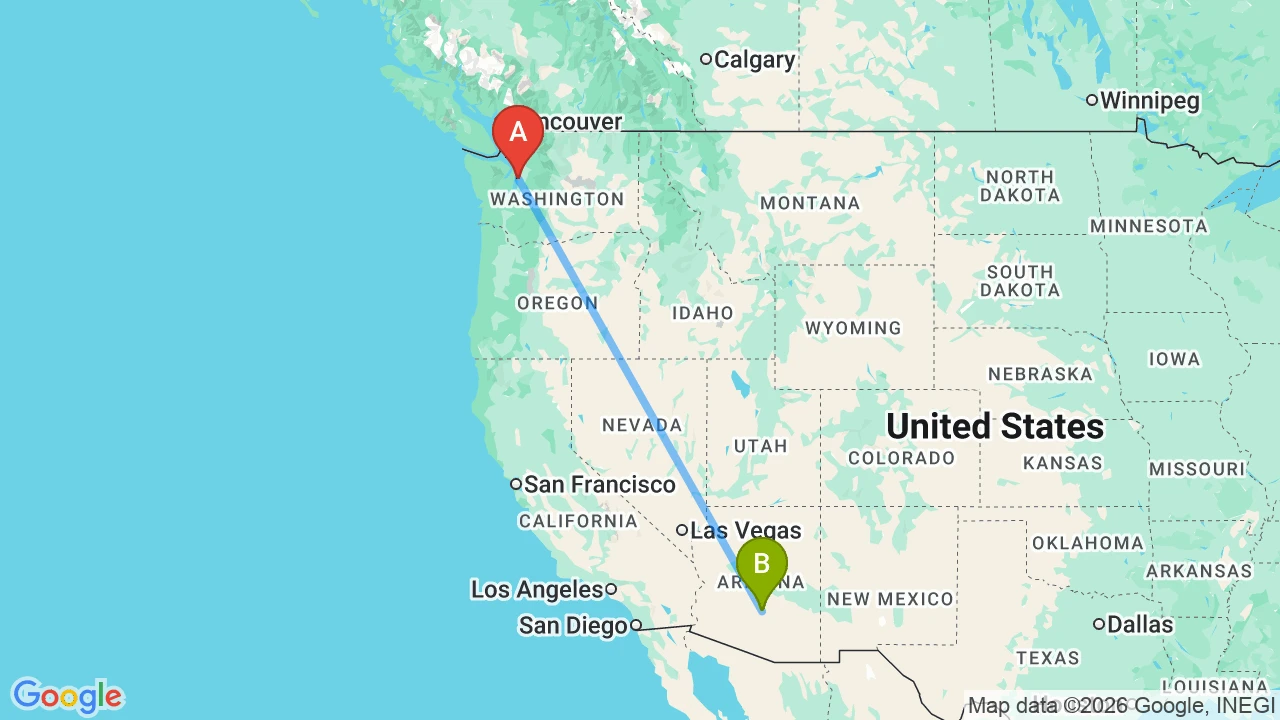
Moving from Seattle, WA to Queen Creek, AZ represents one of the more dramatic geographic and lifestyle shifts available within the continental United States. This isn’t just a change of address—it’s a fundamental reorientation of how daily life is structured, where costs concentrate, and what infrastructure supports your routines.
Seattle sits in the Pacific Northwest with a dense urban core, established transit infrastructure, and a housing market shaped by decades of tech-driven demand. Queen Creek, by contrast, is a rapidly growing suburban community in the Phoenix metro area, characterized by newer development, car-oriented design, and a very different climate envelope. The two cities operate under fundamentally different cost models: Seattle’s pressure concentrates in housing entry barriers and ongoing rental obligations, while Queen Creek distributes costs across transportation infrastructure, cooling-season utilities, and the logistical overhead of covering distance by car.
This guide explains where cost pressure moves when you make this transition—not whether the move saves money overall, but how expenses reorganize and which households tend to adapt most successfully. If you’re accustomed to Seattle’s walkable neighborhoods, transit options, and mild summers, Queen Creek will require new mental models for budgeting, commuting, and managing seasonal utility exposure.
Cost Pressure Shifts: Where Expenses Reorganize
The most immediate financial difference between Seattle and Queen Creek is the structure of housing costs. Seattle’s median home value sits at $879,900, while Queen Creek’s is $493,700—a substantial reduction in entry barriers for buyers. Renters see a more complex picture: Seattle’s median gross rent is $1,945 per month, while Queen Creek’s is $2,030 per month. The rental market in Queen Creek reflects newer construction and larger floor plans typical of suburban Phoenix development, which can push per-unit costs higher even as the ownership market offers more accessible entry points.
This housing cost inversion—lower purchase prices but comparable or slightly higher rents—shapes who benefits most from the move. Households planning to buy gain significant leverage in Queen Creek, where the same down payment that barely opens the door in Seattle can secure a newer, larger home with a yard. Renters, however, may find that the expected cost relief doesn’t materialize as strongly, especially when factoring in the transportation and utility costs that come with suburban living in the Sonoran Desert.
Transportation costs shift dramatically. Seattle’s average commute is 27 minutes, with 43.2% of workers facing long commutes; Queen Creek’s average is 30 minutes, but 54.5% face long commutes. More importantly, Queen Creek’s infrastructure is fundamentally car-dependent. Seattle offers rail transit, substantial pedestrian infrastructure, and cycling networks that allow some households to reduce or eliminate car ownership. Queen Creek provides none of these alternatives at meaningful scale. Households moving from Seattle will almost certainly need to own, insure, fuel, and maintain at least one vehicle per working adult—a fixed cost layer that doesn’t exist for all Seattle residents.
Gas prices favor Queen Creek at $2.98 per gallon compared to Seattle’s $3.88 per gallon, but the savings are offset by increased driving distances. Queen Creek’s layout requires a car for nearly every errand: groceries, healthcare, school drop-offs, and social activities all involve driving. The work-from-home rate in Queen Creek is 7.5%, slightly higher than Seattle’s 6.3%, which can mitigate commute costs for some households, but the majority will face daily driving as a non-negotiable expense.
Utility costs introduce a new seasonal pressure. Seattle’s mild climate and lower electricity rates (13.85¢/kWh) keep cooling and heating costs modest year-round. Queen Creek’s electricity rate is higher at 15.66¢/kWh, and the summer cooling load is intense. Triple-digit heat from May through September drives air conditioning usage far beyond what most Seattle households have ever experienced. Households accustomed to opening windows in summer will instead face multi-month periods where the AC runs continuously, and utility bills can spike significantly during peak heat.
Grocery costs show modest regional differences. Seattle’s derived grocery estimates—such as $2.07/lb for bread and $7.56/lb for ground beef—reflect the city’s higher regional price parity index of 113. Queen Creek’s estimates—$1.94/lb for bread and $7.09/lb for ground beef—align with its lower index of 106. (Derived estimate based on national baseline adjusted by regional price parity; not an observed local price.) The differences are real but incremental; grocery savings alone won’t offset the structural cost shifts in transportation and utilities.
Housing & Neighborhood Patterns: Entry vs. Ongoing Obligations
Seattle’s housing market is defined by scarcity, vertical density, and age. The city’s building stock includes older single-family homes, mid-rise apartments, and newer high-density developments concentrated in urban neighborhoods. Queen Creek’s housing is overwhelmingly newer, horizontal, and suburban—single-family homes on larger lots, often in master-planned communities with HOA governance.
For buyers, Queen Creek’s lower home values translate to smaller mortgage payments and more accessible down payment requirements. A household priced out of Seattle’s market may find that Queen Creek offers not just entry, but also more space, newer construction, and modern amenities. However, ongoing obligations shift in character: HOA fees are common in Queen Creek’s newer developments, and while they often cover landscaping and community amenities, they represent a fixed monthly cost that doesn’t exist in many Seattle neighborhoods. Property taxes in Queen Creek also reflect Arizona’s tax structure, which can differ significantly from Washington’s system.
Renters face a different calculus. Queen Creek’s rental stock skews toward larger units in newer buildings, which can drive per-unit costs higher even as the ownership market is more affordable. Renters who prioritized walkability, transit access, or proximity to urban amenities in Seattle will find that Queen Creek’s rental options are almost exclusively car-dependent and require longer drives to reach comparable services. The rental market also reflects the broader Phoenix metro’s growth patterns, where demand has remained strong and vacancy rates can be tight.
Neighborhood form affects daily costs in subtle but persistent ways. Seattle’s mixed-use neighborhoods allow some households to consolidate errands on foot or by bike, reducing vehicle wear and fuel costs. Queen Creek’s layout requires driving for nearly every task, which increases not just fuel expenses but also maintenance, insurance, and the opportunity cost of time spent in the car. Households with children will also face different school access patterns: Seattle offers some walkable school zones, while Queen Creek’s geography often requires driving or school bus reliance.
Lifestyle & Daily Rhythms: How Place Structure Shapes Routine
Seattle and Queen Creek operate on fundamentally different infrastructural logic, and this shapes daily life in ways that go beyond dollars. Seattle’s urban form supports a range of mobility options: walking to coffee shops, taking light rail to work, biking to the grocery store. Queen Creek’s form supports exactly one option: driving. This isn’t a judgment—it’s a structural fact derived from the density, land use, and infrastructure present in each place.
In Seattle, pedestrian infrastructure density exceeds high thresholds, and the pedestrian-to-road ratio supports walkable routines in many neighborhoods. Grocery and food establishment density is also high, meaning that daily errands can often be handled within a short radius. Queen Creek lacks these characteristics. The absence of rail transit, limited pedestrian infrastructure, and lower density of food and grocery establishments mean that households must plan around driving for nearly every out-of-home activity.
This shift affects time, convenience, and mental load. In Seattle, a household might walk to the store, grab dinner on the way home, and stop by the pharmacy—all without a car. In Queen Creek, the same sequence requires three separate driving trips, parking, and navigation of strip mall layouts. For households with young children, this can mean more time spent buckling car seats, more exposure to traffic, and less spontaneity in daily routines.
Climate also reshapes daily rhythms. Seattle’s cool, wet winters and mild summers allow year-round outdoor activity with minimal seasonal adjustment. Queen Creek’s extended cooling season—where temperatures regularly exceed 100°F from June through August—compresses outdoor activity into early mornings and late evenings during summer months. Households with children or pets will need to plan around heat exposure, and outdoor recreation shifts toward indoor alternatives or travel to higher elevations during peak heat.
The employment landscape differs as well. Seattle’s unemployment rate is 4.1%, while Queen Creek’s is 3.1%, reflecting the broader Phoenix metro’s growth and labor demand. However, Queen Creek functions primarily as a residential community within the Phoenix metro, meaning that many residents commute to jobs in Chandler, Gilbert, Mesa, or Phoenix proper. This commute-oriented lifestyle is a departure from Seattle’s more centralized employment hubs and transit-accessible job centers.
Relocation Logistics & Practical Friction
The physical act of moving from Seattle to Queen Creek involves roughly 1,400 miles and crosses multiple climate zones. Most movers will either drive or fly, with household goods shipped separately. The distance makes DIY moves impractical for most households, so professional moving services become a significant upfront cost. Timing the move around Queen Creek’s summer heat is worth considering—moving in June through August means unloading in triple-digit temperatures, which can be physically taxing and logistically challenging.
Once in Queen Creek, new residents face a setup period that differs from Seattle’s urban onboarding. In Seattle, many households can function immediately with minimal infrastructure—transit passes, walking shoes, and a bike can cover a surprising amount of ground. In Queen Creek, a functioning vehicle is non-negotiable from day one. New residents will also need to establish utility accounts, navigate HOA requirements if applicable, and adjust to the rhythm of a car-dependent suburb.
Healthcare access shifts in character. Seattle’s urban density supports hospital presence and high clinic availability. Queen Creek’s healthcare infrastructure is present but distributed across the broader Phoenix metro, meaning that specialized care may require longer drives. Routine healthcare remains accessible, but the convenience of walking to a nearby clinic or pharmacy—common in Seattle—disappears in Queen Creek’s layout.
Social and community integration also follows different patterns. Seattle’s neighborhood density and third-place infrastructure (coffee shops, bars, community centers) create organic opportunities for social interaction. Queen Creek’s suburban form requires more intentional effort to build community—joining HOA events, school networks, or organized activities becomes more important when spontaneous street-level interaction is less common.
Frequently Asked Questions
- Does Queen Creek feel more or less expensive than Seattle?
- It depends on what you’re buying. Queen Creek offers significantly lower home purchase prices, which reduces entry barriers for buyers and can lower monthly mortgage payments. However, renters may not see the same relief, as Queen Creek’s median rent is slightly higher than Seattle’s. The bigger shift is where costs concentrate: Seattle’s expenses cluster in housing, while Queen Creek distributes costs across transportation (car ownership, fuel, maintenance), utilities (summer cooling), and the logistical overhead of a car-dependent lifestyle. Households who can buy, drive efficiently, and manage cooling costs tend to feel less financial pressure in Queen Creek; renters without remote work options may find the cost structure less favorable.
- How do the housing markets differ between Seattle and Queen Creek?
- Seattle’s housing market is constrained by geography, zoning, and decades of demand growth, resulting in high home values and competitive bidding. Queen Creek’s market reflects rapid suburban expansion with newer construction, larger lots, and more accessible pricing. Seattle offers more housing diversity—condos, townhomes, older single-family homes—while Queen Creek skews heavily toward single-family detached homes in master-planned communities. Buyers gain significant purchasing power in Queen Creek, but renters may find fewer options and less walkable access to services. The ownership experience also differs: Seattle’s older housing stock may require more maintenance, while Queen Creek’s newer homes often come with HOA obligations and desert landscaping requirements.
- What feels different about daily life after moving to Queen Creek?
- The most immediate change is the shift to car dependency. In Seattle, many households can walk, bike, or take transit for daily errands; in Queen Creek, nearly every activity requires driving. This affects time, convenience, and mental load—spontaneous errands become planned trips, and households with multiple working adults will likely need multiple vehicles. The climate also reshapes routines: Seattle’s mild summers allow year-round outdoor activity, while Queen Creek’s extended heat season compresses outdoor time into early mornings and evenings during summer. The pace feels slower and more suburban, with less density, fewer third places, and more intentional community-building required.
- When does this move tend to feel easiest or hardest?
- The move tends to feel easiest for households who are buying, have remote work flexibility, and are comfortable with car-oriented suburban living. Timing the physical move outside of Queen Creek’s peak summer heat (June–August) reduces logistical strain. The transition feels hardest for renters, households accustomed to transit and walkability, and those who underestimate the cumulative cost of car dependency and summer cooling. The first summer in Queen Creek can be a shock for Seattle transplants unfamiliar with sustained triple-digit heat, and the adjustment to driving for every errand takes time to normalize.
- What are the common adjustment pressures after moving?
- The biggest adjustment is transportation: households must own, insure, and maintain vehicles, and driving becomes the default for all activities. Utility bills during summer months can surprise newcomers, as cooling costs in triple-digit heat far exceed anything most Seattle residents have experienced. Social integration requires more effort in Queen Creek’s suburban layout, where spontaneous interaction is less common. Households with children may also adjust to longer school commutes and more structured activity schedules. Finally, the loss of Seattle’s mild climate and walkable neighborhoods can feel like a lifestyle downgrade for those who valued those features, even if housing costs are lower.
- Who tends to benefit most from this move—and who may struggle?
- Buyers with stable incomes, especially those priced out of Seattle’s market, tend to benefit most: they gain purchasing power, more space, and newer construction. Families seeking larger homes, yards, and suburban school environments also adapt well. Remote workers who can avoid long commutes and households comfortable with car-dependent living find the transition smoother. Renters, transit-dependent households, and those who prioritize walkability and urban density tend to struggle more. The move also challenges households sensitive to heat, those who value spontaneous access to services, and anyone who underestimates the fixed costs of suburban car ownership. Singles and couples without children may find Queen Creek’s suburban form less aligned with their lifestyle preferences.
Making the Decision: Tradeoffs and Fit
The move from Seattle to Queen Creek is not a simple cost arbitrage—it’s a fundamental restructuring of how daily life is organized and where financial pressure concentrates. Seattle’s model is high housing costs with lower transportation and utility needs; Queen Creek’s model is lower housing entry barriers with higher transportation, utility, and logistical overhead. Neither is universally better; they serve different household priorities and life stages.
Buyers gain the most from this transition, especially those who can secure remote work or tolerate long commutes. The ability to purchase a home in Queen Creek for roughly half of Seattle’s median price is a powerful financial lever, and the newer construction and larger floor plans appeal to families and households seeking space. However, the savings come with strings attached: car dependency is non-negotiable, summer cooling costs are significant, and the suburban form requires more intentional effort to build community and access services.
Renters face a less clear-cut proposition. The modest difference in median rent doesn’t deliver the same relief that buyers experience, and the loss of Seattle’s transit, walkability, and urban amenities can feel like a lifestyle downgrade. Households who rent in Queen Creek should budget for vehicle ownership, higher summer utility bills, and the time cost of driving for every errand.
Climate adaptation is real and ongoing. Seattle’s mild, wet climate allows year-round outdoor activity with minimal seasonal adjustment. Queen Creek’s extended heat season requires behavioral changes—shifting outdoor activity to early mornings, planning around peak heat, and accepting that summer months involve significant indoor time. Households with children, pets, or strong preferences for outdoor recreation should consider how this seasonal compression affects quality of life.
Ultimately, this move works best for households who value space, homeownership, and suburban living over urban density, transit access, and walkability. It works less well for those who prioritize spontaneous access to services, minimal car dependency, or mild year-round weather. The financial case depends entirely on whether you’re buying or renting, how much you’ll drive, and how well you manage summer cooling costs.
For more detailed cost breakdowns and neighborhood-level insights, explore the Seattle living guide and the Queen Creek living guide on IndexYard. Both hubs offer granular data on housing, utilities, transportation, and daily expenses to help you model your specific situation.
How this article was built: In addition to public economic data, this article incorporates location-based experiential signals derived from anonymized geographic patterns—such as access density, walkability, and land-use mix—to reflect how day-to-day living actually feels in Seattle, WA and Queen Creek, AZ.