
“I thought I could make it work without a car when I moved here—there are bus stops, and some areas feel walkable. But after a month, I bought one. You just need it.”
That’s the reality of getting around Manchester, Connecticut. The city has elements that suggest flexibility—sidewalks in certain neighborhoods, bus service along key corridors, and a layout that occasionally rewards proximity. But for most residents, daily life still hinges on car ownership. Understanding transportation options in Manchester means recognizing where transit and walkability create real convenience, and where they fall short of replacing a vehicle.
Manchester sits in the Hartford metro area with a suburban structure: low-rise development, mixed residential and commercial zones, and infrastructure that prioritizes driving. The average commute is 22 minutes, which suggests reasonable proximity to employment centers. But only 4.6% of residents work from home, meaning nearly everyone travels daily. And more than a quarter of workers—26.5%—face commutes long enough to expose them to significant time and fuel costs. The question isn’t whether people commute in Manchester. It’s how they do it, and what that means for daily logistics.
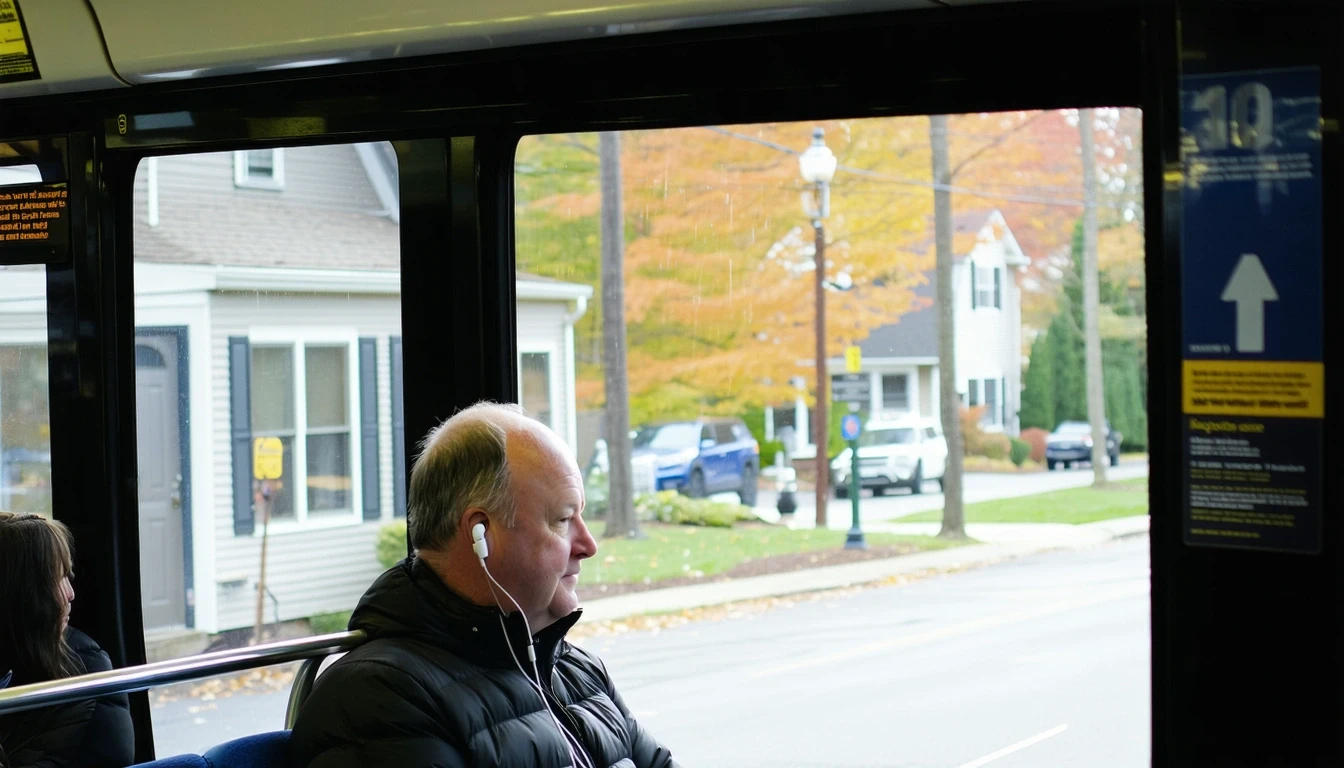
How People Get Around Manchester
Manchester operates as a car-first environment with selective pockets of walkability. The pedestrian-to-road ratio is high in certain areas, meaning some neighborhoods have sidewalks, crosswalks, and street layouts that support walking to nearby destinations. But that infrastructure is unevenly distributed. You’ll find it near commercial corridors and older residential blocks, not across the entire city.
Bus service is present, which distinguishes Manchester from purely car-dependent suburbs. Routes connect residential areas to commercial centers and provide links to the broader Hartford region. But there’s no rail transit, and bus coverage doesn’t extend uniformly. If you live near a route and your destinations align with the schedule, transit becomes a supplemental tool. If you don’t, it’s largely irrelevant.
Cycling infrastructure exists in limited areas—bike-to-road ratios fall in the medium band—but it’s not extensive enough to serve as a primary commuting mode for most residents. Biking works for recreational trips or short errands in specific neighborhoods, not as a citywide mobility solution.
What newcomers often misunderstand is that Manchester’s layout rewards proximity, not transit dependence. If you live near a grocery store, a bus stop, and a few daily services, you can reduce car trips. But you’re still structuring your life around driving, not replacing it.
Public Transit Availability in Manchester
Public transit in Manchester often centers around systems such as CTtransit, which operates bus routes connecting the city to Hartford and surrounding towns. The presence of bus stops throughout the city provides a baseline level of access, but the practical utility depends heavily on where you live and where you need to go.
Transit tends to work best along commercial corridors where residential density, retail, and employment overlap. In these areas, bus service can support commuting to Hartford or accessing shopping and services without a car. But outside these corridors—particularly in residential neighborhoods set back from main roads—transit becomes less viable. Coverage gaps, combined with the time cost of transfers and waiting, mean that even residents near bus stops often choose to drive for speed and flexibility.
Late-hour service and weekend frequency are common pain points in bus-dependent suburbs. If your work schedule is non-standard, or if you need to make multiple stops in a single trip, transit quickly becomes impractical. Manchester’s bus network is a tool for specific trips, not a comprehensive mobility system.
The absence of rail transit is significant. Rail offers speed, frequency, and predictability that buses can’t match in mixed traffic. Without it, Manchester residents who commute to Hartford or other regional centers face longer travel times and fewer alternatives when traffic is heavy.
Driving & Car Dependence Reality
For most residents, driving isn’t optional—it’s the default. Grocery stores, schools, medical offices, and workplaces are spread across a low-rise, mixed-use landscape that doesn’t concentrate destinations within walking distance. Even in neighborhoods with sidewalks and nearby retail, the distances involved and the lack of frequent transit make cars the most practical choice.
Parking is generally accessible and free in most areas, which removes one of the friction points that discourages driving in denser cities. Residential streets, shopping centers, and office parks all provide ample parking, reinforcing the car-first structure.
Sprawl plays a role. Manchester’s development pattern spreads residential and commercial uses across a wide area, which increases travel distances and reduces the efficiency of transit. That sprawl also means that even short errands—picking up prescriptions, dropping off dry cleaning, getting to a gym—often require driving.
The tradeoff is flexibility. Owning a car in Manchester gives you control over timing, routing, and the ability to handle multi-stop trips efficiently. You’re not constrained by bus schedules or limited by coverage gaps. But that flexibility comes with exposure to fuel costs, maintenance, insurance, and the time cost of commuting in traffic.
Commuting Patterns & Daily Mobility
The 22-minute average commute in Manchester reflects proximity to employment centers, but it doesn’t tell the full story. That average includes both short in-town trips and longer commutes to Hartford or other regional job centers. More than a quarter of workers face long commutes, which suggests that while some residents work nearby, many others absorb significant daily travel time.
Single-destination commutes—home to work and back—are the simplest pattern, and they’re the ones where transit or carpooling can occasionally work. But many households face more complex logistics: dropping kids at school, stopping for groceries, picking up a partner from a second job. These multi-stop patterns require the flexibility that only a car provides.
Proximity matters more than transit access for most residents. Living near your workplace, your children’s school, or key services reduces day-to-day costs and time pressure, even if you’re still driving. The benefit isn’t eliminating the car—it’s reducing how much you use it.
Who Transit Works For — and Who It Doesn’t
Transit in Manchester works best for single adults or couples without children who live near bus corridors and have flexible schedules. If your job is in Hartford and your route aligns with a direct bus line, you can make it work, especially if you’re willing to trade time for savings on parking and fuel.
It’s less practical for families. Coordinating school drop-offs, after-school activities, grocery runs, and medical appointments on a bus schedule is difficult. The time cost alone—waiting for transfers, managing multiple stops—makes driving the more rational choice, even when transit is technically available.
Renters in core neighborhoods near commercial corridors have the best chance of reducing car dependence. These areas tend to have the highest concentration of walkable infrastructure, bus stops, and nearby services. But even here, most residents still own cars for trips that fall outside the transit network.
Homeowners in peripheral neighborhoods face the starkest car dependence. These areas were built around driving, with residential streets feeding into collector roads that lead to commercial strips. Walking and transit aren’t viable for daily needs, and the distances involved make biking impractical for most trips.
Transportation Tradeoffs in Manchester
Choosing between transit and driving in Manchester isn’t about affordability alone—it’s about predictability, control, and how much friction you’re willing to accept in daily logistics.
Transit offers lower direct costs and eliminates parking hassles, but it introduces time costs and limits spontaneity. You’re constrained by schedules, coverage, and the need to plan trips in advance. For residents with predictable routines and destinations on bus routes, that tradeoff can work.
Driving offers speed, flexibility, and the ability to handle complex trip chains, but it exposes you to fuel price volatility, maintenance costs, and the ongoing expense of insurance and registration. It also requires upfront capital—either purchasing a vehicle or managing monthly payments.
The real tradeoff is between time and money. Transit saves money but costs time. Driving saves time but costs money. In Manchester, where transit coverage is limited and most destinations require a car, the time savings usually win. Residents who try to rely on transit often find themselves spending hours on trips that would take 15 minutes by car.
Walkability in certain pockets reduces the intensity of this tradeoff. If you can walk to a grocery store, a coffee shop, and a bus stop, you gain some independence from the car for local errands. But you’re still driving for most other needs.
FAQs About Transportation in Manchester (2026)
Is public transit usable for daily commuting in Manchester?
It depends on where you live and where you work. Bus service exists and connects Manchester to Hartford, but coverage is uneven and frequency is limited. If your commute aligns with a direct route and you have a flexible schedule, transit can work. For most residents, especially those with multi-stop trips or non-standard hours, driving remains more practical.
Do most people in Manchester rely on a car?
Yes. Manchester’s layout, sprawl, and limited transit coverage make car ownership the norm. Even residents in walkable pockets or near bus stops typically own cars for trips that fall outside the transit network. The city’s infrastructure is built around driving, and most daily logistics require it.
Which areas of Manchester are easiest to live in without a car?
Neighborhoods near commercial corridors with bus service and higher pedestrian infrastructure offer the best chance of reducing car dependence. These areas tend to have sidewalks, nearby grocery stores, and access to transit. But even in these locations, most residents still own cars for flexibility and convenience.
How does commuting in Manchester compare to nearby cities?
Manchester’s 22-minute average commute is relatively short, reflecting proximity to employment centers in the Hartford metro area. However, more than a quarter of workers face long commutes, suggesting variability based on job location. Compared to denser cities with rail transit, Manchester offers less commute flexibility but generally shorter travel times for car commuters.
Can you bike for transportation in Manchester?
Biking infrastructure exists in limited areas, but it’s not extensive enough to serve as a primary commuting mode for most residents. Cycling works for short trips in specific neighborhoods or for recreation, but the distances involved and the car-oriented road design make it impractical for daily commuting across the city.
How Transportation Fits Into the Cost of Living in Manchester
Transportation in Manchester isn’t just a line item—it’s a structural factor that shapes where you can live, how much time you spend commuting, and how much flexibility you have in daily life. The city’s car-dependent layout means that owning a vehicle is effectively a cost of entry, not an optional upgrade.
That dependence affects housing decisions. Living closer to work, schools, or key services reduces commute time and fuel costs, even if rent or home prices are higher. The tradeoff between housing cost and transportation tradeoffs is real, and it’s worth calculating before choosing where to live.
Gas prices, maintenance, insurance, and depreciation all add up, but they’re predictable and controllable. You can choose a fuel-efficient vehicle, limit discretionary trips, and maintain your car to avoid costly repairs. What you can’t control is the time cost of commuting or the need to own a car in the first place.
For a fuller picture of how transportation costs fit into overall household expenses in Manchester, including utilities, groceries, and housing, see the Monthly Spending in Manchester: The Real Pressure Points guide.
The bottom line: Manchester rewards proximity and punishes distance. If you can live near your daily destinations and minimize commute time, you’ll reduce both financial and time costs. But you’ll still need a car. The question is how much you’ll use it, not whether you’ll own one.
How this article was built: In addition to public economic data, this article incorporates location-based experiential signals derived from anonymized geographic patterns—such as access density, walkability, and land-use mix—to reflect how day-to-day living actually feels in Manchester, CT.