
Is Hartford expensive to live in? Hartford is considered moderately priced in 2026, with a median home value of $198,900 and median rent of $1,154 per month. The value proposition depends on housing entry cost versus transportation exposure—whether you live near the walkable core or in car-dependent outer areas determines your recurring cost burden.
You’re weighing a move to Hartford, and the numbers feel slippery. Rent looks manageable, home prices seem reasonable compared to coastal metros, but you’ve heard whispers about commutes, winter heating bills, and whether you’ll need a car for everything. The truth is, Hartford’s cost structure isn’t uniform—it bends around where you live and how you move.
This guide maps the cost drivers that shape daily life in Hartford, explains which expenses dominate household pressure, and clarifies where surprises tend to surface. You’ll understand what makes Hartford moderately priced, where the hidden friction lives, and how different household situations encounter different cost realities.
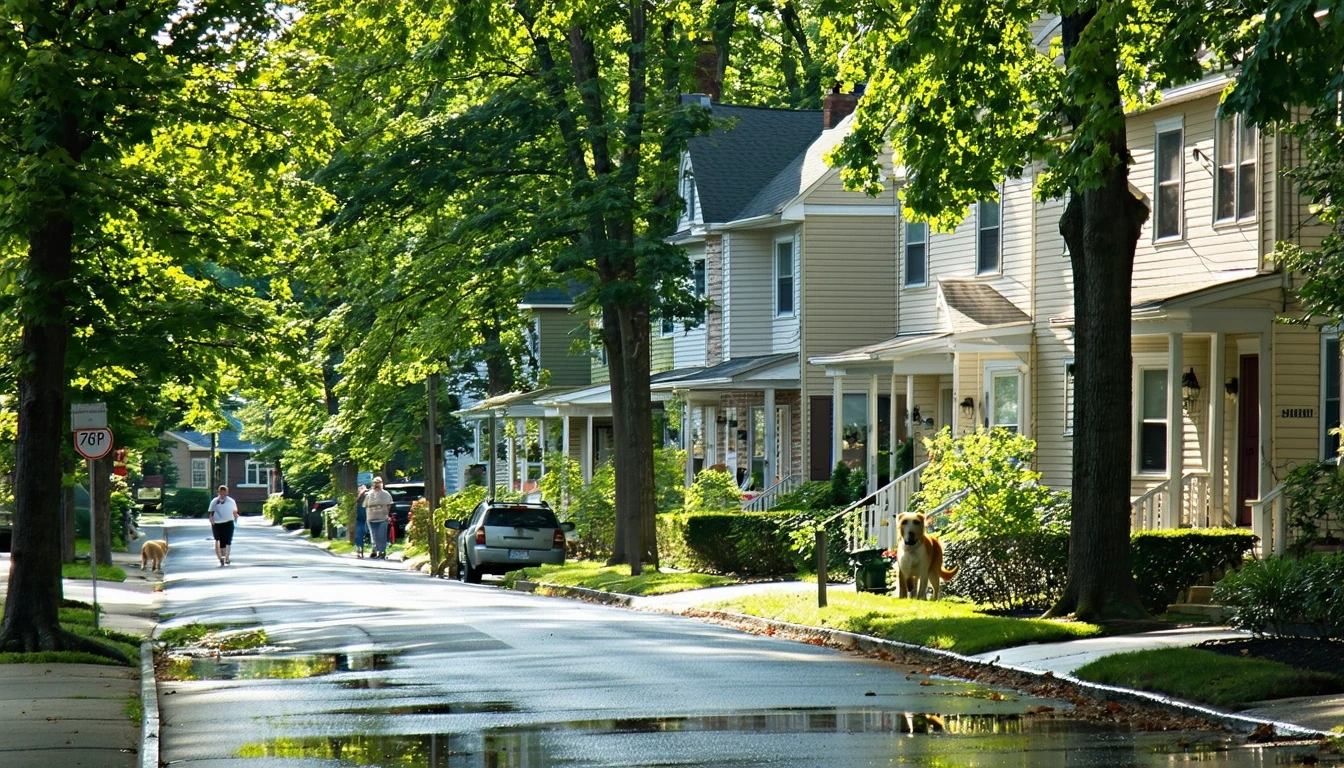
Overall Cost of Living Snapshot
Hartford’s cost profile sits slightly above the national baseline, with a regional price parity index of 103—meaning goods and services run about 3% higher than the U.S. average. But that aggregate number hides the real story: housing entry costs are low relative to comparable metros, while transportation and seasonal utility exposure create recurring pressure for households that depend on cars or live in less efficient housing stock.
The city’s cost shape is defined by three forces: accessible housing entry points, variable transportation dependence based on neighborhood, and moderate utility volatility driven by cold winters and warm summers. Unlike high-cost metros where housing alone determines affordability, Hartford spreads cost pressure across multiple categories—making it easier to enter but harder to predict month-to-month swings.
Compared to nearby cities, Hartford trends more affordable than Boston or New Haven but carries higher transportation and utility exposure than denser urban cores. The unemployment rate sits at 3.8%, reflecting a stable but not booming labor market.
Driver verdict: Housing dominates upfront decisions, but transportation and utilities determine long-term cost stability. Surprises come from commute length and seasonal heating bills, not grocery prices or rent increases.
Housing Costs (Primary Driver)
Housing in Hartford offers a rare combination: low entry costs and genuine neighborhood choice. The median home value of $198,900 positions the city well below regional peers, while the median gross rent of $1,154 per month provides a realistic rental option for households testing the market or avoiding ownership risk.
Renting makes sense for newcomers, short-term residents, or households uncertain about neighborhood fit. Owning becomes compelling quickly—monthly ownership costs (mortgage, taxes, insurance) often align closely with rent once you account for equity build and tax deductions. The city functions as a transitional market: renters can convert to owners without dramatic income thresholds, and owners gain stability without locking into unaffordable long-term exposure.
The housing stock varies widely by neighborhood. Walkable pockets near downtown offer mixed-use buildings with higher density and vertical character, while outer areas lean toward single-family homes with larger lots and car-dependent access. Your housing tradeoffs aren’t just about size or price—they determine whether you’ll need a car for daily errands, how much you’ll spend on transportation, and whether green space is steps away or a drive.
| Housing Type | Cost Anchor | What That Buys You |
|---|---|---|
| Rental (median) | $1,154/month | Flexibility, lower upfront cost, no maintenance risk |
| Ownership (median home) | $198,900 | Equity build, tax benefits, neighborhood stability |
| Downtown walkable | Variable | Transit access, errands on foot, reduced car dependence |
| Outer residential | Variable | Larger lots, quieter streets, car required for most errands |
Conclusion: Hartford is a transitional city where renting and owning both make sense depending on timeline and certainty. Housing entry costs are low, but location choice determines transportation exposure.
Utilities & Energy Risk
Utilities in Hartford carry moderate volatility, driven by cold winters and warm summers that push heating and cooling into seasonal spikes. Electricity runs 25.30¢ per kWh—higher than the national average—while natural gas costs $16.18 per MCF (roughly 100 therms), which translates to meaningful heating exposure during extended cold months.
For illustrative context, a typical household using 1,000 kWh per month would face around $253 in electricity costs before fees and taxes. During heating months, natural gas usage of 1 MCF per month would add roughly $16, though actual consumption varies widely based on home efficiency, insulation quality, and thermostat discipline.
The real risk isn’t the baseline rate—it’s the seasonal swing. Winter heating dominates utility budgets, while summer cooling creates secondary pressure. Older housing stock with poor insulation amplifies both, turning utility bills into a recurring surprise rather than a stable line item. Renters in multi-unit buildings often see lower exposure due to shared walls and landlord-controlled systems, while single-family homeowners face full seasonal volatility.
Risk classification: moderate. Utilities won’t break a budget, but they swing enough to matter—especially for households in older homes or those unfamiliar with New England heating seasons.
Groceries & Daily Costs
Grocery costs in Hartford run slightly above the national baseline, reflecting the city’s regional price parity. While individual item prices vary, the overall pressure on household food budgets is modest—not a primary cost driver, but not negligible either.
Derived estimate based on national baseline adjusted by regional price parity; not an observed local price. For context, staples like bread ($1.91/lb), chicken ($2.11/lb), and rice ($1.11/lb) sit near typical ranges, while items like ground beef ($6.94/lb) and cheese ($4.82/lb) reflect moderate premium pricing. Eggs run $2.58 per dozen, and milk costs $4.15 per half-gallon.
The bigger story is access, not price. Hartford’s food and grocery establishment density exceeds high thresholds in walkable areas, meaning households near downtown can run errands on foot or via short trips. Outer neighborhoods require car trips, adding transportation friction to grocery costs. The difference isn’t dramatic, but it’s real: proximity to food access reduces both time and recurring vehicle expense.
Daily costs—coffee, takeout, household goods—follow similar patterns. Prices trend slightly elevated, but the city doesn’t impose the premium seen in high-cost metros. The cost texture is shaped more by convenience and access than by price volatility.
Transportation Reality
Transportation in Hartford splits into two realities: those who live near the walkable core with rail access, and those who depend on cars for everything. The average commute runs 22 minutes, but that number hides wide variation—23.7% of workers face long commutes, while only 5.9% work from home. Gas prices sit at $3.62 per gallon, and for illustrative context, a typical 25-mile round-trip commute at 25 MPG would consume about 20 gallons per month, costing roughly $72 before maintenance, insurance, or parking.
But the real cost isn’t fuel—it’s the structural requirement. Hartford’s pedestrian-to-road ratio exceeds high thresholds in certain pockets, and rail transit is present, meaning some households can genuinely reduce or eliminate car dependence. Walkable areas near downtown support errands on foot, rail connections enable regional commutes, and bike infrastructure exists in limited areas. For these households, transportation becomes a minor, controllable expense.
For everyone else, a car isn’t optional—it’s recurring exposure. Commute length, parking costs, insurance, and maintenance stack into a persistent cost layer that exceeds housing or utilities for many households. The difference between a 15-minute local commute and a 45-minute regional drive isn’t just time—it’s hundreds of dollars per month in vehicle-related costs.
Hartford’s transportation reality is binary: live near the core and minimize car dependence, or accept that vehicle ownership will dominate your recurring cost structure.
Cost Exposure Profiles
Hartford’s cost structure creates distinct exposure profiles depending on where you live and how you move. The city doesn’t impose uniform pressure—it distributes cost across housing entry, transportation dependence, and utility seasonality, meaning different household situations encounter entirely different cost realities.
Low-exposure households live near the walkable core, rent or own efficiently insulated housing, use rail or bike for commutes, and run daily errands on foot. For these households, housing entry costs are low, transportation is minimal, and utilities remain predictable. The cost burden stays concentrated in rent or mortgage, with limited recurring volatility.
High-exposure households live in outer residential areas, depend on cars for all errands and commutes, and occupy older single-family homes with poor insulation. For these households, housing costs may be lower upfront, but transportation and utilities create persistent, unpredictable pressure. A long commute, two-car household, and seasonal heating spikes can easily exceed the savings from cheaper rent or a lower mortgage.
The contrast isn’t about income or household size—it’s about structural choices. A single professional near downtown with rail access faces fundamentally different cost exposure than a family in the suburbs with two commuters and school-age children. Hartford rewards proximity and efficiency, but it doesn’t punish distance with unaffordable housing—it just shifts the cost burden to transportation and energy.
The city’s cost profile is forgiving at entry but unforgiving to inefficiency. Households that optimize location, transportation, and housing efficiency can live comfortably on moderate incomes. Households that don’t face compounding recurring costs that erode the initial housing savings.
Frequently Asked Questions
Is Hartford more affordable than New Haven in 2026? Hartford tends to offer lower housing entry costs than New Haven, but transportation exposure can offset that advantage depending on commute patterns and neighborhood choice.
What does a typical cost profile look like in Hartford? Most households face moderate housing costs, variable transportation dependence based on location, and seasonal utility swings driven by winter heating and summer cooling.
Do utilities cost more in Hartford than nearby areas? Electricity rates in Hartford run higher than the national average, and natural gas costs create meaningful heating exposure during cold months, making utilities a moderate but noticeable cost factor.
What costs tend to surprise newcomers in Hartford? Seasonal heating bills and commute-related vehicle expenses surprise households unfamiliar with New England winters or the city’s car-dependent outer neighborhoods.
Are property taxes higher in Hartford than surrounding towns? Property tax rates vary across municipalities, and Hartford’s rates tend to run higher than some suburban towns, though lower home values can partially offset the difference.
Can you live in Hartford without a car? Yes, but only in walkable pockets near downtown where rail transit, bike infrastructure, and high errands accessibility reduce car dependence to optional rather than required.
How much does commuting add to monthly costs in Hartford? Commute costs vary widely—short local trips add minimal expense, while long regional commutes can easily add several hundred dollars per month in fuel, maintenance, insurance, and parking.
Is Hartford a good value compared to Boston? Hartford offers significantly lower housing entry costs than Boston, but households must weigh that against transportation tradeoffs, job market differences, and regional amenities.
How this article was built: In addition to public economic data, this article incorporates location-based experiential signals derived from anonymized geographic patterns—such as access density, walkability, and land-use mix—to reflect how day-to-day living actually feels in Hartford, CT.