
Is Hartford the kind of place you grow roots—or just pass through? Connecticut’s capital sits at an emotional crossroads: it offers the walkable texture and transit access that many smaller New England cities lack, yet it carries the financial tension of urban living without the income cushion of wealthier metros. For some, that combination feels like opportunity—a chance to live in a real city without the crushing expense of Boston or New York. For others, it feels like compromise: the tradeoffs of city life without all the rewards.
Understanding Hartford’s vibe means understanding who tends to feel at home here and who finds themselves restless. It’s a place where you can walk to the grocery store, catch a train, and find green space woven into daily life—but where income limits often shape how much of the city’s potential you can actually access. The people who thrive here tend to value urban structure over suburban sprawl, appreciate transit as a real option rather than a novelty, and find meaning in a smaller-scale city that still functions like one.
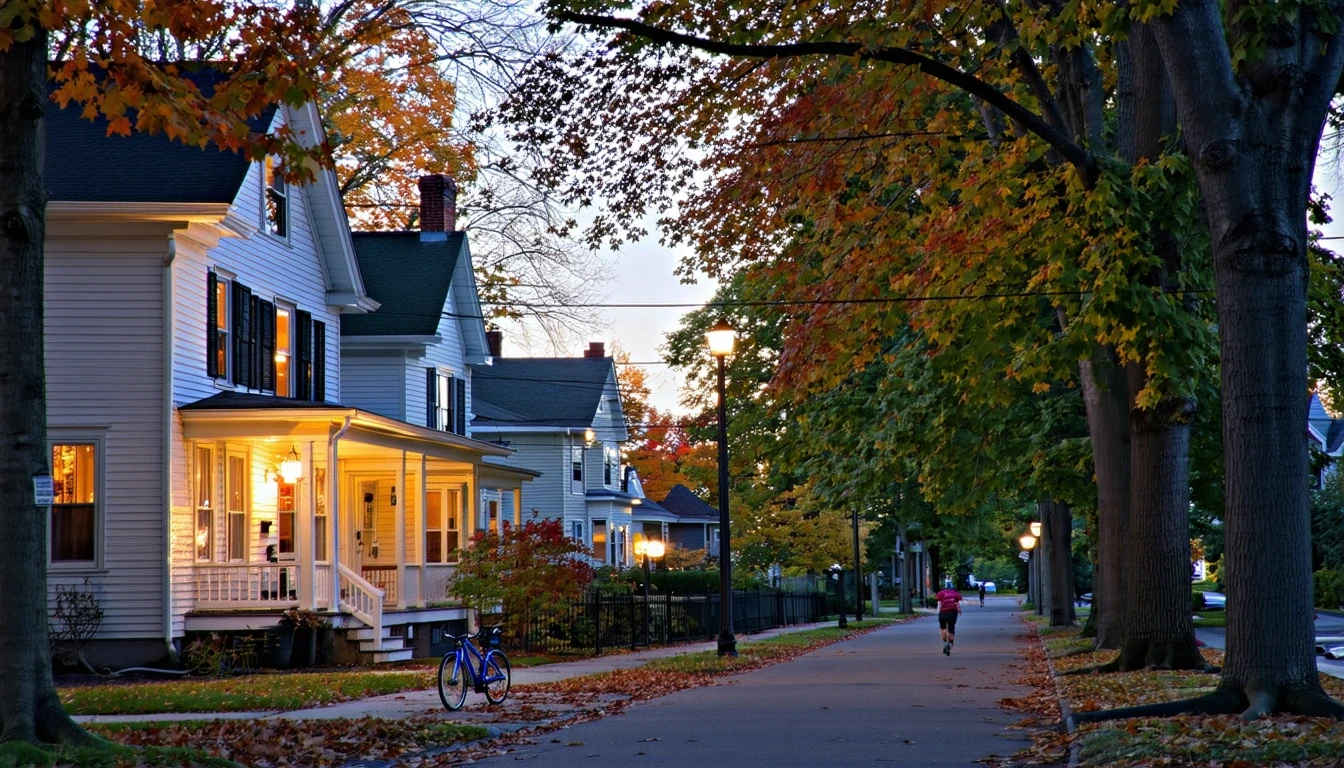
The Emotional Pulse of Hartford
Across local forums and social platforms, Hartford’s discussion tends to circle around a few recurring themes: the tension between affordability and income, pride in the city’s walkable core, frustration with the gap between what the city offers and what people can afford to enjoy, and a protective loyalty among long-time residents who’ve watched the city evolve. There’s less of the boosterism you might find in fast-growing sunbelt metros, and more of a grounded realism—people talk about Hartford as a place that works if you know what you’re getting.
“I love that I can actually walk places here. That’s rare in Connecticut outside of New Haven,” one frequent refrain goes. Another common sentiment: “It’s a real city, but it doesn’t feel like it’s trying too hard to be something it’s not.” On the flip side, you’ll hear: “The bones are here, but sometimes it feels like the city is just out of reach financially for the people who actually live in it.”
What emerges is a portrait of a city that rewards people who value structure and access over newness and polish. Hartford’s urban form—with its taller buildings, mixed-use blocks, and integrated parks—creates a rhythm that feels distinctly different from the car-dependent suburbs that dominate much of the state. That difference is exactly what some people are looking for, and exactly what others find limiting.
What the Conversation Reveals
On Reddit-style forums and local Facebook groups, Hartford discussions often split along predictable lines. Newcomers tend to express pleasant surprise at the walkability and transit options; long-time residents toggle between defending the city’s character and acknowledging its economic challenges. There’s frequent discussion about which neighborhoods feel safest, where to find community, and how to navigate the gap between the city’s amenities and the income needed to fully enjoy them.
“I moved here thinking it would feel like a compromise, but honestly, being able to ditch my car most days has been huge,” reflects one commonly expressed theme. Another: “The parks are better than I expected—there’s actually water access and green space that feels intentional, not just leftover.” But the tension surfaces quickly: “It’s frustrating that the rent doesn’t match the wages. You’re paying city prices on a small-city salary.”
The protective tone among locals is notable. When outsiders dismiss Hartford, residents often push back—not by claiming perfection, but by insisting the city deserves to be understood on its own terms. The vibe isn’t defensive so much as clarifying: this place has a specific identity, and if you’re not looking for what it offers, you’ll miss the point.
How Local Coverage Frames the City
Local news and community coverage in Hartford tends to frame the city through a few recurring lenses: debates over development and growth, tension between preserving character and attracting investment, healthcare and institutional presence as anchors, and the ongoing challenge of aligning cost of living with local wages. The tone is rarely celebratory in the booster sense, but it’s also not fatalistic—it’s more like ongoing negotiation.
Simulated topic buckets that capture the flavor of local coverage might include:
- “Community Debates What Growth Should Look Like”
- “Healthcare Institutions Anchor City Identity”
- “Residents Weigh Walkability Gains Against Rising Costs”
- “Transit Access Remains Regional Differentiator”
- “Balancing Urban Texture with Affordability Pressure”
The framing reflects a city that knows it’s not a boom town, but also knows it has assets that matter—particularly to people tired of car dependency and suburban isolation. The question that runs underneath much of the coverage is whether Hartford can hold onto its urban character while remaining accessible to the people who need it most.
Review-Based Sentiment Patterns
On platforms like Google Reviews, Yelp, and neighborhood apps, Hartford’s public perception tends to hinge on expectation alignment. People who moved here seeking walkable urban life in a smaller metro tend to leave positive reviews: they praise the ability to run errands on foot, the presence of rail transit, the density of food and grocery options, and the integrated park system. People who expected more suburban comfort, lower costs, or big-city amenities tend to express disappointment.
Positive sentiment often highlights: easy access to daily needs without driving, the presence of a hospital and healthcare facilities, the ability to live in a real neighborhood with mixed-use blocks, and the surprising amount of green space and water access for a small city. Complaints tend to focus on: the mismatch between housing costs and local income, limited playground infrastructure for families with young children, the sense that some of the city’s potential feels just out of reach financially, and the variability in neighborhood feel depending on where you land.
One recurring theme: people who wanted suburban predictability often feel unsettled by Hartford’s urban texture, while people fleeing suburban monotony feel relief. The city doesn’t try to be all things—it has a specific structure, and your experience depends heavily on whether that structure matches what you need.
How Hartford Compares to Nearby Cities
| Dimension | Hartford, CT | New Haven, CT | Springfield, MA |
|---|---|---|---|
| Overall Vibe | Grounded urban texture, transit-accessible, income tension | College-town energy, more dining variety, higher housing costs | Post-industrial grit, lower costs, less walkable core |
| Walkability Feel | Strong in pockets, high ped-to-road ratio | Very walkable downtown and near campus | Car-dependent outside limited downtown blocks |
| Transit Access | Rail present, notable for region | Rail present, better frequency to NYC | Bus-focused, limited rail options |
| Cost vs Income | Tension between city costs and modest wages | Higher costs, but more economic variety | Lower costs, but fewer urban amenities |
| Family Appeal | Schools present, but limited playground density | Strong school presence, more family infrastructure | Affordable for families, but less walkable texture |
Hartford sits between New Haven’s college-driven vibrancy and Springfield’s post-industrial affordability. If you want a walkable city with transit access and don’t need the dining scene or campus energy of New Haven, Hartford offers a quieter, less expensive version of that life. If you’re comparing it to Springfield, Hartford trades lower costs for better urban infrastructure and walkability. The choice depends on whether you prioritize affordability, amenities, or structure—and how much income tension you’re willing to navigate.
Voices from the Ground
“I didn’t expect to be able to walk to the grocery store in Connecticut. That alone made Hartford worth it for me.” — Remote worker, late 20s
“The parks are genuinely nice. We’ve got water access, trails, green space that feels intentional. It’s not just a patch of grass with a swing set.” — Young parent, early 30s
“Honestly, the rail station changes everything. I can get to New York or Boston without owning a car. That’s huge.” — Frequent traveler, mid 30s
“It’s frustrating because the city has good bones, but the rent feels steep for what you’re actually earning here. You’re paying for urban life on a salary that doesn’t quite match.” — Long-time resident, late 40s
“I love the density. I was so tired of suburban sprawl. Here, things are actually near each other. You can build a routine that doesn’t revolve around your car.” — Newcomer from the suburbs, early 40s
“If you’ve got kids, the school situation is decent, but don’t expect a ton of playgrounds. You’ll be driving to parks more than you’d think.” — Parent of two, mid 30s
“Hartford gets a bad rap, but if you actually live here and engage with it, it’s a real city. It’s not trying to be Brooklyn. It’s just itself.” — Artist, late 20s
Does Hartford Feel Like a Good Fit?
Hartford tends to work for people who value urban structure over suburban ease, who see transit as a meaningful asset rather than a curiosity, and who can navigate the tension between city costs and modest income without feeling constantly squeezed. It rewards those who appreciate walkable errands, integrated green space, and the presence of a hospital and healthcare access. It frustrates people expecting big-city wages, extensive family infrastructure, or the polished amenities of wealthier metros.
This is a city that functions like a city—mixed-use blocks, taller buildings, rail access, food and grocery density—but at a smaller, quieter scale. If that combination sounds like relief, Hartford might feel like home. If it sounds like compromise, you’ll likely feel the gap between what’s here and what you wish were here.
The people who grow roots in Hartford tend to be the ones who were looking for exactly this: a real city in a region dominated by car-dependent suburbs, a place where you can walk and take transit and still afford to live, even if the margins are tighter than you’d prefer. The people who pass through are often those who wanted either more affordability or more amenity—and found Hartford sitting in the middle, offering neither extreme.
How this article was built: In addition to public economic data, this article incorporates location-based experiential signals derived from anonymized geographic patterns—such as access density, walkability, and land-use mix—to reflect how day-to-day living actually feels in Hartford, CT.
The perspectives shown reflect commonly expressed local sentiment and recurring themes in public discussion, rather than individual accounts.