
What does it actually feel like to live in Royal Oak? Not the marketing version—the day-to-day emotional reality of choosing this particular Detroit suburb over the dozens of others within a 20-minute drive. The answer depends less on what Royal Oak has and more on what you’re hoping to escape or find.
According to local sentiment patterns, 74 out of 100 residents say they’re happy in Royal Oak. But that headline number hides the real story: this is a city where satisfaction hinges on alignment. People who wanted walkable blocks, neighborhood restaurants, and the ability to run Saturday errands on foot tend to feel they’ve found their place. People who wanted spacious yards, easy parking, and predictable suburban quiet often feel squeezed—by cost, by crowds, or by the sense that Royal Oak is changing faster than they’d like.
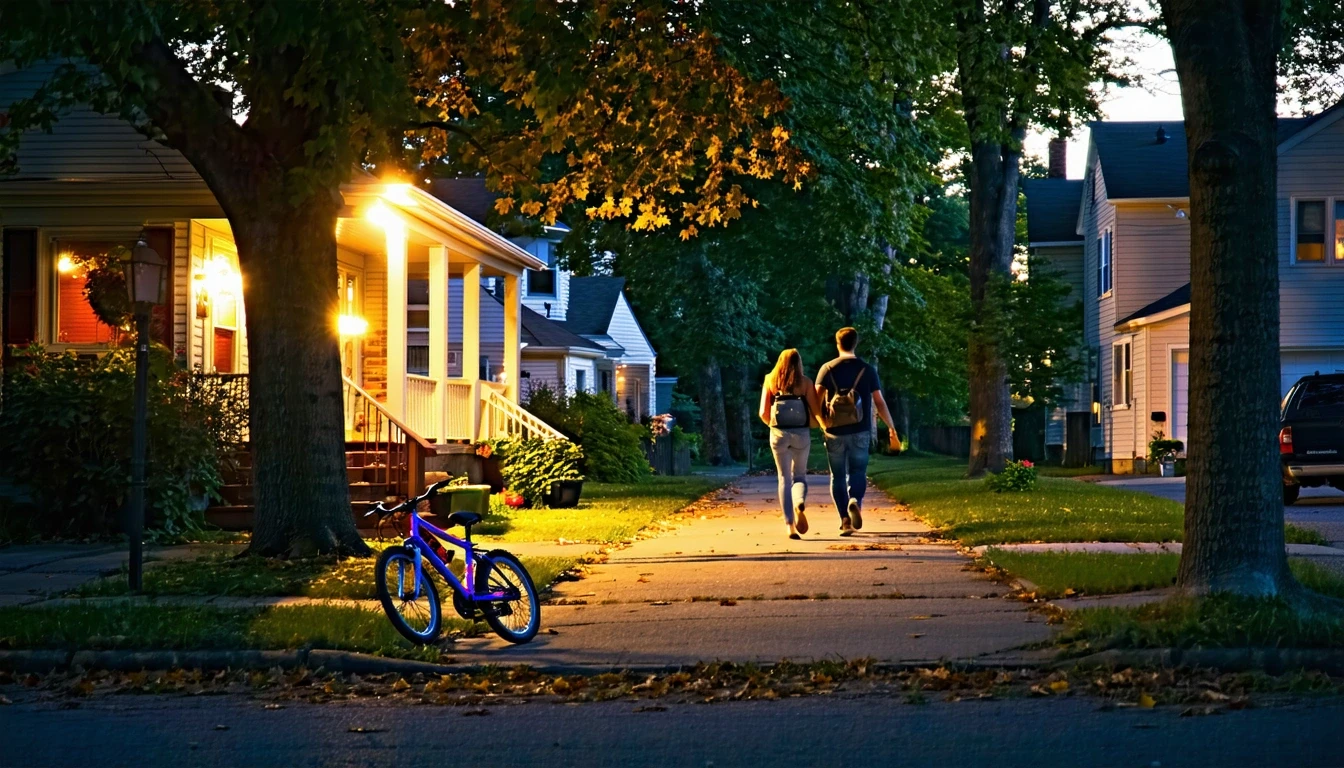
What Royal Oak Feels Like: The Emotional Landscape
Royal Oak sits in an unusual middle ground. It’s not quite a city, not quite a classic suburb. The infrastructure reflects that: substantial pedestrian paths, notable bike lanes, rail transit access, and grocery and food options that exceed density thresholds typically associated with car-dependent suburbs. Parks are woven throughout, and both residential and commercial land uses share the same blocks.
For people who value that texture, Royal Oak delivers a rare combination in metro Detroit: you can walk to coffee, pick up groceries without driving, and still live on a tree-lined street with modest single-family homes. The urban form supports spontaneity—grabbing dinner on a Tuesday, meeting a friend without coordinating parking, taking a evening walk that doesn’t feel like a trek through empty sidewalks.
But that same density creates friction for others. Parking near downtown can feel competitive. Rent has climbed steadily, and the housing tradeoffs tilt toward smaller lots and older housing stock unless you’re willing to pay a premium. Families with multiple kids sometimes feel the squeeze: playground infrastructure exists, but school density lags, and the “broadly accessible” errands advantage matters less when you’re juggling car seats and nap schedules.
The emotional dividing line isn’t income or age—it’s expectation. Did you come here for the walkability and the restaurant turnover, or did you come here despite it, hoping for a quieter version of what Royal Oak used to be?
Social Media Buzz in Royal Oak
Public discussion in Royal Oak—across neighborhood Facebook groups, local subreddit threads, and community pages—tends to circle back to a few recurring themes: pride in the city’s identity, frustration with growth and change, and a protective instinct about what makes Royal Oak distinct from neighboring communities.
The tone is rarely neutral. Residents who love Royal Oak tend to describe it in terms of fit: “It’s one of the few places in metro Detroit where I don’t need to drive everywhere,” or “I can walk my dog, grab a beer, and run into neighbors—it feels like a real community.” There’s affection for the walkable blocks, the local restaurant scene, and the sense that Royal Oak has managed to stay interesting without tipping into unaffordable or pretentious.
But there’s also a thread of fatigue. Conversations about new developments, rising rents, and parking shortages come up frequently, often with a tone of resignation: “I get that growth happens, but it’s pricing out the people who made this place worth living in.” Longtime residents sometimes express ambivalence—they appreciate the amenities that density brings, but worry about losing the neighborhood feel that drew them in the first place.
Complaints about traffic, construction, and the cost of eating out appear regularly, though they’re usually tempered with acknowledgment: “It’s still better than most suburbs, but it’s not the bargain it used to be.”
Local News Tone
Coverage of Royal Oak tends to frame the city through the lens of evolution and tension—stories about what’s being built, what’s being debated, and how residents are navigating the gap between Royal Oak’s past and its future. The tone is rarely celebratory or critical in isolation; instead, it reflects a community in negotiation with itself.
Recurring topic categories include:
- “New Restaurants and Retail Openings Draw Crowds, Debate”
- “Residents Weigh Development Proposals Against Neighborhood Character”
- “Parking and Traffic Concerns Resurface as Density Increases”
- “Community Events Highlight Royal Oak’s Social Scene”
- “Housing Costs Rise as Demand Outpaces Supply”
The framing tends to acknowledge tradeoffs rather than declare winners. Growth brings amenities but also pressure. Walkability attracts newcomers but strains parking. The city’s identity as a “cool suburb” creates both pride and anxiety about affordability and accessibility.
Review-Based Public Perception
Public reviews of Royal Oak—whether on Google, Yelp-style platforms, or neighborhood forums—reveal a pattern: people tend to rate the city highly when their expectations align with what Royal Oak actually offers, and poorly when they were hoping for something else.
Praise tends to focus on:
- Walkability and the ability to run errands without a car
- Restaurant variety and turnover—new spots opening regularly
- Access to parks and green space woven into neighborhoods
- A sense of community and social activity, especially for younger professionals and couples
- Proximity to Detroit without the full intensity of city living
Criticism tends to focus on:
- Cost—both rent and homeownership feel steep relative to nearby suburbs
- Parking challenges, especially near downtown or during events
- Noise and activity levels that don’t match expectations of suburban quiet
- Limited yard space and older housing stock in many areas
- School infrastructure that doesn’t quite match the density of family amenities elsewhere
Interestingly, the same features appear in both positive and negative reviews. Walkability delights people who wanted it and frustrates people who didn’t prioritize it. The active social scene feels vibrant to some and overwhelming to others. Density brings convenience but also competition for space.
Neighborhood variation exists but is often described in broad terms: newer planned pockets feel more suburban and car-oriented, while older areas closer to downtown offer more texture and walkability. The distinction matters most to families weighing school access and yard size against proximity to restaurants and transit.
Comparison to Nearby Cities
| Aspect | Royal Oak | Ferndale | Birmingham |
|---|---|---|---|
| Overall Vibe | Walkable suburb with urban texture | Artsy, eclectic, younger energy | Polished, upscale, family-oriented |
| Walkability | Strong pedestrian infrastructure | Compact and very walkable | Walkable downtown, car-dependent edges |
| Cost Perception | Rising but still accessible | More affordable, scrappier feel | Premium pricing across the board |
| Social Scene | Active, restaurant-focused | Quirky, community-driven | Refined, event-based |
| Family Fit | Mixed—depends on priorities | Less family infrastructure | Strong schools, spacious homes |
Royal Oak occupies a middle position between Ferndale’s scrappier, artsy energy and Birmingham’s polished, high-cost suburban appeal. If you want walkability without the full bohemian vibe of Ferndale or the premium price tag of Birmingham, Royal Oak often feels like the compromise that doesn’t compromise too much.
Ferndale appeals to people willing to trade some amenities and polish for lower cost and a more eclectic community. Birmingham appeals to families prioritizing top-tier schools, spacious homes, and a more traditional suburban feel—but at a significant cost premium. Royal Oak attracts people who want quality of life factors like walkability and dining options but aren’t ready to pay Birmingham prices or sacrifice the neighborhood texture that Ferndale offers.
The choice often comes down to what you’re willing to give up: space and quiet, cost and predictability, or polish and prestige.
What Locals Are Saying
“I moved here from a bigger suburb and I love that I can walk to the farmers market, grab coffee, and not feel like I’m stuck in my car all weekend. It’s not perfect, but it feels alive.”
— Young professional, renting near downtown
“We bought here five years ago and we’re happy, but I do worry about what happens when our kids need more space. The yards are small and the prices keep climbing.”
— Family with young children
“Royal Oak used to feel like a hidden gem. Now it feels like everyone knows about it, and that’s changed the vibe a little. It’s busier, more expensive, harder to find parking.”
— Longtime resident
“I work remotely and I wanted a place where I could walk during the day and not feel isolated. Royal Oak has been great for that—parks, coffee shops, people out and about.”
— Remote worker, mid-30s
“It’s a good city if you don’t have a long commute and you like going out. If you’re driving 40 minutes each way and you just want a quiet house with a big yard, there are better options.”
— Commuter who moved after two years
“The restaurant scene is one of the best things about living here. There’s always something new to try, and you don’t have to drive into Detroit to get good food.”
— Couple in their 40s
“I appreciate the bike lanes and the walkability, but the cost has gone up faster than I expected. I’m not sure how long I can afford to stay.”
— Renter, late 20s
Does Royal Oak Feel Like a Good Fit?
Royal Oak doesn’t try to be all things to all people, and that clarity is part of its appeal—and its limitation. This is a city that rewards people who value walkability, social texture, and the ability to participate in a community without needing to drive everywhere. It works well for young professionals, couples, small families, and remote workers who want more than a bedroom community but aren’t ready for full urban intensity.
It tends to frustrate people who came expecting spacious suburban quiet, easy parking, and stable costs. The infrastructure supports a denser, more active lifestyle, and if that’s not what you’re looking for, the tradeoffs—monthly expenses, parking competition, noise—will feel like friction rather than character.
The emotional dividing line is expectation. If you’re moving to Royal Oak because you can walk to the grocery store and grab dinner without planning, you’ll likely feel at home. If you’re moving here despite that density, hoping for a quieter, more affordable version of what Royal Oak used to be, you may find yourself restless.
Royal Oak’s vibe isn’t for everyone. But for the people it fits, it tends to fit well.
How this article was built: In addition to public economic data, this article incorporates location-based experiential signals derived from anonymized geographic patterns—such as access density, walkability, and land-use mix—to reflect how day-to-day living actually feels in Royal Oak, MI.
The perspectives shown reflect commonly expressed local sentiment and recurring themes in public discussion, rather than individual accounts.