
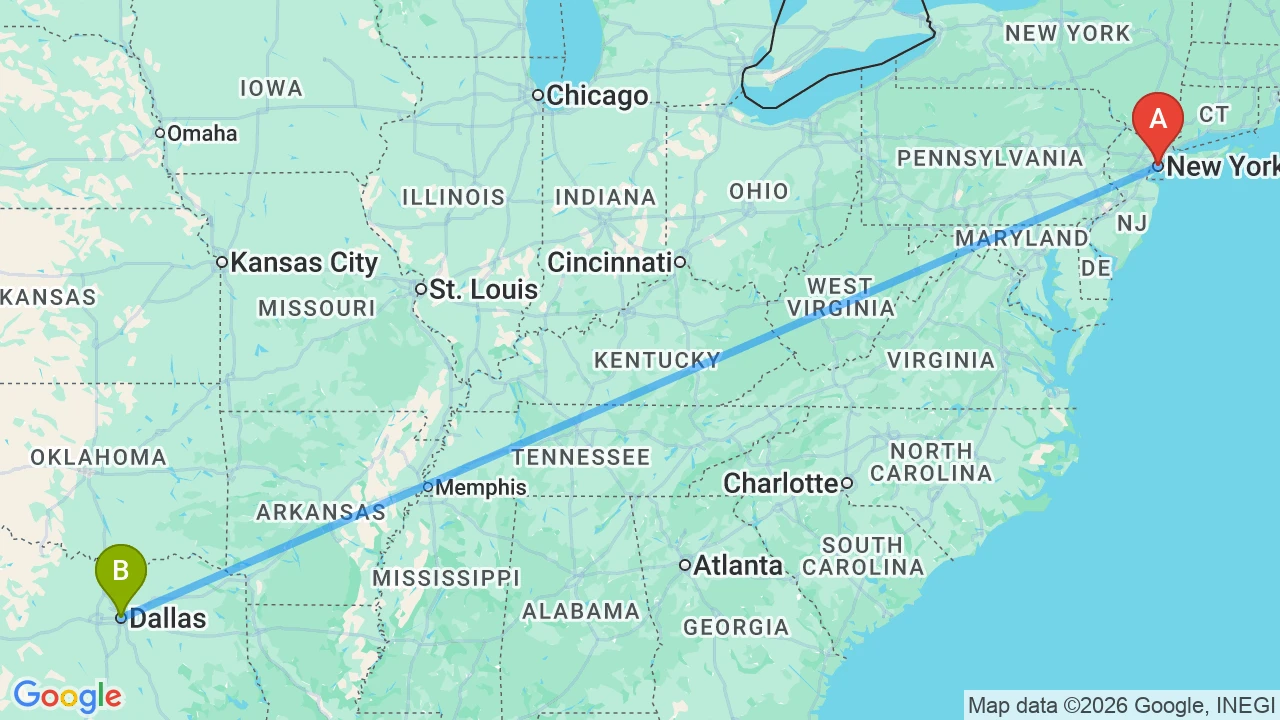
Moving from New York, NY to Dallas, TX represents one of the most dramatic relocations in the American urban landscape—not just in distance, but in how daily life is structured, where money gets spent, and what kind of friction you encounter managing a household. People make this move for job opportunities, lower housing entry costs, or a desire to escape the relentless pace and density of the Northeast. But the shift isn’t simply “cheaper” or “easier.” It’s a fundamental reordering of where pressure concentrates, how much control you have over expenses, and what trade-offs you accept in exchange for relief in other areas.
This guide explains how cost behavior, lifestyle rhythms, and logistical patterns change when you relocate from New York to Dallas. It does not calculate total budgets, declare a financial winner, or predict whether you’ll save money. Instead, it clarifies where costs show up differently, why certain households feel more or less pressure after the move, and what surprises tend to catch people off guard once they’ve settled in.
Cost Pressure Shifts: Where Money Moves
The most visible change is housing entry cost. New York’s median home value sits at $732,100, while Dallas comes in at $270,700—a difference that fundamentally alters who can consider ownership and how much capital gets locked into a down payment. Renters see a similar gap: New York’s median gross rent is $1,714 per month, compared to Dallas at $1,305 per month. That $400+ monthly difference doesn’t disappear—it redistributes into transportation, utilities, and the hidden costs of car dependency.
In New York, housing dominates the budget, but many other expenses stay contained because density and transit reduce the need for a car, limit driving costs, and compress errands into walkable loops. In Dallas, housing pressure eases, but transportation becomes non-negotiable. The average commute in Dallas is 26 minutes, compared to New York’s 41 minutes, but only 7.2% of Dallas workers operate from home, compared to 26.5% in New York. More importantly, 40.2% of Dallas commuters face long commutes (over 30 minutes), and the city’s structure assumes car ownership. Gas prices in Dallas run $2.40 per gallon versus $3.03 in New York, but you’ll burn far more of it.
Utilities shift in both cost and volatility. Electricity in Dallas costs 16.11¢/kWh, well below New York’s 26.95¢/kWh, but Dallas summers bring extended periods of triple-digit heat, and cooling a detached home or poorly insulated apartment can spike bills far beyond what renters in dense New York buildings ever encounter. Natural gas is more expensive in Dallas at $30.71/MCF compared to New York’s $23.93/MCF, though heating demand is lighter and shorter. The key difference isn’t the rate—it’s the exposure. In Dallas, you’re more likely to be responsible for the full utility load of a standalone structure, with no shared walls or centralized systems to buffer seasonal swings.
Groceries and everyday goods cost slightly less in Dallas, reflected in the regional price parity index: Dallas sits at 103 (just above the national baseline), while New York registers 112. (Derived estimate based on national baseline adjusted by regional price parity; not an observed local price.) In practical terms, bread runs about $1.84/lb in Dallas versus $2.00/lb in New York; ground beef is $6.74/lb versus $7.32/lb; eggs cost $2.95/dozen versus $3.20/dozen. The differences are real but modest—enough to notice over time, not enough to offset transportation or cooling costs if you’re unprepared.
Housing & Neighborhood Patterns
New York’s housing market is defined by scarcity, vertical density, and rental rigidity. Most people rent, and ownership is reserved for those with significant capital or multi-generational support. Neighborhoods are tightly packed, and housing costs are the dominant financial fact of life. In Dallas, ownership is far more accessible, but it comes with a different set of obligations: property taxes, homeowners association fees, lawn care, pest control, and the expectation that you’ll maintain a vehicle to reach work, groceries, and services.
Dallas neighborhoods sprawl horizontally, and the housing stock skews toward single-family homes and low-rise apartment complexes. This means more space per dollar, but also more responsibility. Renters in Dallas often pay separately for utilities that were bundled or absorbed by landlords in New York. Homeowners take on maintenance burdens that don’t exist in a co-op or rent-stabilized building. The trade-off is control: you can choose a larger home, a yard, or a quieter street, but you’re also choosing to manage more systems, more square footage, and more exposure to seasonal utility swings.
Neighborhood selection in Dallas is less about proximity to a subway line and more about commute tolerance, school district quality, and whether you’re willing to drive 20 minutes for errands. Walkability exists in pockets—Uptown, parts of East Dallas, older neighborhoods near the DART rail—but the default assumption is that you’ll drive. That changes how you think about location: in New York, being two stops farther out might add 10 minutes to your commute; in Dallas, it might add 20 minutes and require a second car for a two-income household.
Lifestyle & Daily Rhythms
Daily life in New York is defined by density, vertical access, and the assumption that most needs can be met on foot or via transit. Errands compress into tight loops. Social plans don’t require parking strategies. The city’s pace is relentless, but the infrastructure is designed to support it. Dallas operates on a completely different logic. The city is built for cars, and the rhythm of daily life reflects that. Errands are planned, not spontaneous. You drive to the gym, the grocery store, the coffee shop. Social plans require coordination around parking, traffic, and distance.
The climate shift is significant. New York winters are cold and occasionally brutal, but Dallas summers are long, hot, and humid, with extended stretches above 100°F. Air conditioning isn’t optional—it’s a baseline cost of living. Outdoor activity shifts to early mornings and evenings during summer months. Heating costs drop, but cooling costs rise, and the seasonal swing is more pronounced if you’re living in a detached home rather than a dense apartment building.
Work-from-home patterns differ sharply: 26.5% of New York workers operate remotely, compared to just 7.2% in Dallas. This reflects both industry mix and the fact that Dallas employers have historically expected in-office presence. If you’re moving for a remote role, Dallas offers more space and lower housing costs, but you’ll still need a car for everything outside your front door. If you’re commuting, expect to drive daily, and expect traffic during peak hours, especially on major corridors like I-35E, the LBJ Freeway, and Central Expressway.
In addition to public economic data, this article incorporates location-based experiential signals derived from anonymized geographic patterns—such as access density, walkability, and land-use mix—to reflect how day-to-day living actually feels in each city. In New York, the density of essential services and transit infrastructure creates a fundamentally different mobility texture: most daily needs are reachable on foot or via short transit trips, and car ownership is optional for many households. In Dallas, the urban form assumes car dependency. Errands require planning and driving, and the distance between home, work, and services is a daily logistical factor. This isn’t a judgment—it’s a structural difference that shapes how you spend time, money, and energy managing a household.
Relocation Logistics & Practical Friction
The logistics of moving from New York to Dallas are straightforward in theory—hire movers, ship your belongings, fly or drive south—but the adjustment period is longer and more disorienting than many people expect. The most common surprise is how much you’ll rely on a car. In New York, many households don’t own a vehicle, or they own one car shared among multiple adults. In Dallas, a car per working adult is the norm, and that means doubling or tripling transportation costs: insurance, registration, maintenance, parking, and fuel.
Another adjustment is the loss of spontaneous access. In New York, you can walk out your door and find food, services, and entertainment within a few blocks. In Dallas, even in denser neighborhoods, you’ll drive to most destinations. That changes how you think about time, convenience, and social plans. It also means you’ll spend more time in your car, more time planning errands, and more time managing the logistics of a vehicle-dependent household.
Utility management becomes more hands-on. In New York, many renters have utilities included or simplified into a single bill. In Dallas, you’ll likely manage separate accounts for electricity, water, gas, trash, and internet. You’ll also need to think about cooling costs in a way that doesn’t register in New York: a poorly insulated apartment or a home with older HVAC systems can generate summer electric bills that rival or exceed your rent savings.
The pace of life slows, but the logistical load increases. You’ll have more space, more control over your environment, and more breathing room in your budget—but you’ll also have more systems to manage, more driving to do, and more exposure to costs that were previously invisible or shared.
Frequently Asked Questions
- Does Dallas feel more or less expensive than New York?
- Dallas feels less expensive at the point of entry—housing costs are dramatically lower, and everyday goods cost slightly less—but the pressure redistributes rather than disappears. Transportation becomes a major expense, utilities swing more with the seasons, and the assumption of car ownership adds costs that don’t exist in transit-rich New York. For households that can absorb transportation costs and prefer ownership over renting, Dallas often feels more manageable. For those who relied on walkability and transit, the shift can feel like trading one kind of financial pressure for another.
- How do the housing markets differ between New York and Dallas?
- New York’s housing market is defined by scarcity, high entry costs, and rental dominance. Dallas offers far more accessible ownership, lower rents, and more space per dollar, but it comes with different obligations: property taxes, HOA fees, and maintenance responsibilities. In New York, housing is the dominant cost but often the only major cost; in Dallas, housing is cheaper, but transportation, utilities, and upkeep fill the gap.
- What feels different about daily life after moving from New York to Dallas?
- The most immediate change is car dependency. In New York, you can walk or take transit to most destinations; in Dallas, you’ll drive almost everywhere. The pace slows, the density drops, and spontaneous access disappears. You’ll have more space, quieter streets, and less crowding, but you’ll also spend more time in your car, more time planning errands, and more time managing a vehicle-dependent household. Social rhythms shift too—plans require more coordination, and proximity matters less than commute tolerance.
- When does the move from New York to Dallas tend to feel easiest?
- The move feels smoothest when you’re prepared for car dependency, have stable income to cover upfront vehicle and housing costs, and aren’t tied to walkable urban infrastructure. Spring and fall offer the mildest weather for settling in, avoiding both the peak heat of summer and the logistical chaos of peak moving season. The adjustment is easier for households that value space and ownership over density and spontaneous access, and harder for those who relied heavily on transit or walkable neighborhoods.
- What are the most common challenges people face after relocating from New York to Dallas?
- The biggest adjustment is car dependency—many New York transplants underestimate how much they’ll drive and how much that costs. Utility volatility surprises people too, especially summer cooling bills in poorly insulated homes. The loss of walkable access and transit options can feel isolating, and the slower pace, while appealing to some, can feel disorienting to others. Social networks take longer to rebuild in a sprawling city, and the logistical load of managing a car, a larger home, and separate utility accounts adds friction that wasn’t present in New York.
- Who does this move work best for, and who might struggle?
- This move works well for households seeking homeownership, more space, and relief from New York’s relentless cost pressure—especially those with stable income, tolerance for driving, and a preference for quieter, less dense environments. It’s a strong fit for families, remote workers who want more space per dollar, and people relocating for job opportunities in Dallas’s growing corporate and tech sectors. The move is harder for those who rely on walkability, public transit, or spontaneous urban access; for single-car households where both adults work; and for anyone unprepared for the logistical and financial realities of car dependency and utility volatility.
Conclusion
Moving from New York to Dallas is not a simple cost reduction—it’s a structural shift in how daily life is organized, where money gets spent, and what trade-offs you accept. Housing becomes more accessible, but transportation becomes non-negotiable. Rent drops, but utilities swing more with the seasons. The pace slows, but the logistical load increases. The move works best for households that value space, ownership, and control over density, walkability, and spontaneous access. It’s harder for those who underestimate car dependency, utility volatility, or the time cost of a sprawling city.
If you’re considering this move, spend time understanding not just the headline costs, but the behavioral and logistical shifts that come with them. Visit Dallas, drive the commute routes you’d actually use, and talk to people who’ve made the move recently. The decision isn’t about whether Dallas is “cheaper”—it’s about whether the trade-offs align with how you want to live, work, and manage a household.
For deeper exploration of Dallas costs, neighborhoods, and lifestyle patterns, visit the Dallas city hub on IndexYard. For New York-specific context and comparisons, explore the New York city hub.
How this article was built: In addition to public economic data, this article incorporates location-based experiential signals derived from anonymized geographic patterns—such as access density, walkability, and land-use mix—to reflect how day-to-day living actually feels in Dallas, TX.