
Nearly one in five Livonia residents is over 65, and that share continues to grow as retirees discover what the city offers: integrated park systems, pockets of genuine walkability, and a cost structure that stretches fixed income further than many metro Detroit alternatives. But Livonia isn’t a one-size-fits-all retirement destination. The experience depends heavily on where you live within the city, how you access healthcare, and whether you’re prepared for the realities of aging in a low-rise, car-oriented suburb with cold winters and corridor-based errands.
This guide explores what makes Livonia work for retirees—and where it asks you to adapt.
Why Retirees Choose Livonia
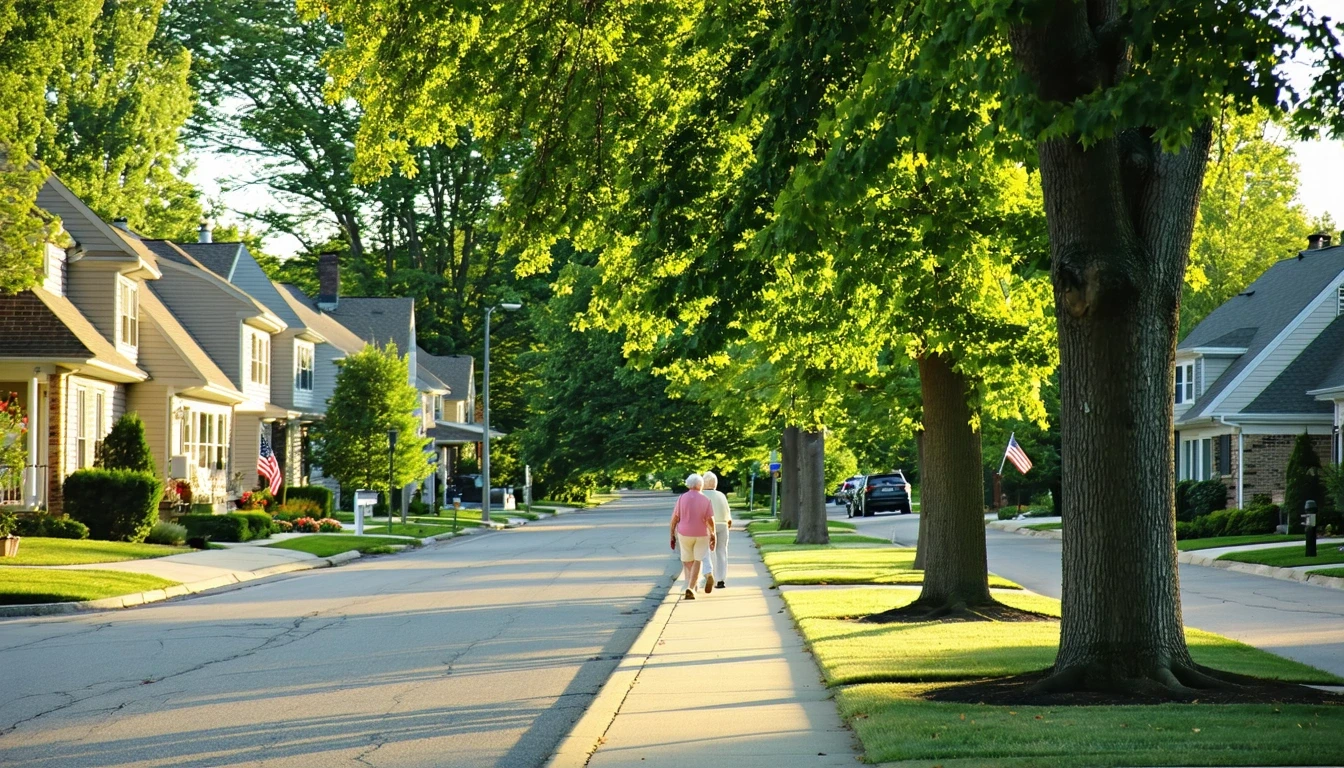
Livonia earns a retirement suitability score of 78 out of 100, driven primarily by its exceptional green space access, below-national-average cost structure, and neighborhoods that support car-light living for those who choose carefully. The city’s park density exceeds high thresholds, with water features woven throughout, creating an environment where daily walks, birdwatching, and outdoor social activity become part of the routine rather than a special trip. For retirees managing arthritis, cardiovascular health, or simply seeking mental clarity, this kind of integrated access matters more than amenities that require a membership or a drive.
The cost structure also works in retirees’ favor. With a regional price parity index of 98—slightly below the national baseline—groceries, services, and day-to-day expenses stretch fixed income further than in many peer communities. The median home value of $249,000 creates an accessible entry point for downsizers or those relocating from higher-cost markets, while keeping property tax exposure manageable for long-term residents on Social Security and pension income.
But Livonia’s appeal isn’t uniform. The city’s low-rise character and walkable pockets mean that neighborhood selection determines much of your day-to-day experience. Errands cluster along commercial corridors rather than distributing evenly, so retirees who want to walk to the pharmacy or grocery store need to choose their location intentionally. Those who settle in car-dependent sections will find themselves driving for nearly everything, while those near the walkable zones gain meaningful independence as driving becomes less appealing or feasible.
Healthcare Access for Seniors
Livonia provides routine local healthcare through clinics and pharmacies distributed throughout the city, but it does not have a hospital within city limits. For annual checkups, chronic disease management, lab work, and prescription refills, the infrastructure is present and accessible. Retirees managing diabetes, hypertension, or other stable conditions will find the care they need without long drives.
The gap appears during acute events. Heart attacks, strokes, serious falls, and surgical emergencies require transport to hospitals in neighboring communities—typically a 15- to 25-minute drive under normal conditions, longer during rush hour or winter weather. For retirees with high cardiovascular risk, mobility limitations, or conditions that could escalate quickly, this distance introduces real exposure. It’s not a disqualifying factor, but it’s one that should shape your emergency planning, your choice of specialists, and your relationship with local urgent care facilities.
Medicare acceptance is widespread among local providers, and the presence of multiple pharmacies ensures prescription access and competitive pricing. Physical therapy, podiatry, and audiology services are available locally, reducing the need to travel for routine follow-ups. However, specialist care—cardiology, oncology, orthopedic surgery—often requires trips to regional medical centers, making transportation reliability a recurring concern for retirees who no longer drive or prefer not to navigate highway traffic.
Senior-Friendly Amenities and Services
Livonia supports active aging through senior centers, recreational programming, and libraries that function as community hubs. The city’s park system, with its high density and water features, creates natural gathering points for walking groups, tai chi classes, and informal social networks. These aren’t programmed activities requiring registration—they’re organic routines that emerge when outdoor space is genuinely accessible and maintained year-round.
Transportation options for non-drivers include bus service, but the system is limited compared to cities with rail or comprehensive regional transit. Retirees who can no longer drive safely face a real logistics challenge: ride services and senior shuttles fill some gaps, but spontaneous errands or last-minute medical appointments become more complicated. The walkable pockets help—if you live in one, you can manage groceries, pharmacy runs, and social outings on foot. Outside those zones, you’ll need to coordinate rides or rely on delivery services.
Grocery delivery and meal programs are available, and the city’s high grocery density along commercial corridors means competitive pricing and variety for those who can reach them. Libraries offer lifelong learning programs, computer access, and social programming tailored to older adults. Community colleges in the metro area provide non-credit courses in everything from art history to financial planning, though reaching them requires a car or coordination.
Cost of Living for Retirees
Retirement budgets in Livonia hinge on housing pressure, heating exposure, and transportation needs. The median home value of $249,000 translates to property tax bills that vary by millage and assessment, but Michigan’s senior property tax exemptions and deferrals can reduce exposure for qualifying households. Retirees downsizing from larger homes may find condos or ranch-style homes in the $180,000–$280,000 range, depending on neighborhood and condition.
For those renting, the median gross rent of $1,235 per month reflects the broader market, though senior-specific communities and income-restricted units may offer lower entry points. Renters avoid property tax and maintenance exposure but face the risk of lease renewals and rent increases over time.
Utility costs are shaped by Livonia’s long heating season. Electricity rates of 19.53¢/kWh and natural gas prices of $10.24/MCF combine with cold winters to create seasonal spikes in heating bills. Retirees in well-insulated homes or smaller units will see lower exposure, while those in older, larger homes may face bills that strain fixed income during January and February. Efficiency programs offered by regional utilities can reduce usage, but the climate itself is non-negotiable.
Michigan does not tax Social Security income, and pension income receives favorable treatment, which helps stretch retirement dollars. However, the state does tax other retirement income, including distributions from 401(k)s and IRAs, so retirees should model their tax exposure based on their specific income mix. Medicare supplement costs vary by plan and provider, but the competitive insurance market in metro Detroit offers choices.
Monthly Retirement Budget in Livonia
Here’s what a typical monthly retirement budget might look like in Livonia:
| Expense Category | Modest Lifestyle | Comfortable Lifestyle |
|---|---|---|
| Housing (mortgage/rent + insurance) | $1,100 | $1,600 |
| Property Taxes | $250 | $350 |
| Utilities (electric, gas, water) | $180 | $220 |
| Groceries | $320 | $450 |
| Healthcare (supplements, co-pays, Rx) | $280 | $400 |
| Transportation (gas, insurance, maintenance) | $220 | $320 |
| Entertainment & Dining | $150 | $350 |
| Miscellaneous | $150 | $250 |
| Total | $2,650 | $3,940 |
Estimates based on average senior spending patterns and local costs, before taxes and one-time expenses.
Community and Social Opportunities
Livonia’s social fabric for retirees is built less on formal senior centers and more on the organic networks that form in parks, libraries, and faith communities. The city’s integrated green space creates natural meeting points—walking loops, benches near water features, and open fields where pickleball and bocce games emerge informally. These aren’t scheduled programs; they’re routines that develop when outdoor access is reliable and the infrastructure supports it.
Volunteer opportunities exist through local nonprofits, schools, and civic organizations, offering retirees a way to stay engaged and contribute skills developed over decades. Faith communities provide both spiritual support and social connection, with many congregations offering weekday programming, meal services, and intergenerational activities that reduce isolation.
Recreation programs through the city and local community centers include fitness classes, art workshops, and seasonal events, though participation often requires a car to reach facilities. Walking groups and hobby clubs form around shared interests, and the city’s proximity to metro Detroit cultural institutions—museums, theaters, concerts—expands options for retirees who enjoy occasional outings.
For retirees with family nearby, Livonia’s location within the Detroit metro makes visiting straightforward. The city’s low-rise character and residential streets create a calm environment for grandchildren to visit, while the park system offers spaces for multi-generational gatherings without the need for reservations or fees.
Aging in Place Considerations
Livonia’s low-rise built environment reduces some physical barriers to aging in place—no elevator dependencies, fewer high-rise security protocols—but the city’s car orientation and corridor-based errands create challenges for retirees losing driving ability. Home modification services are available through regional contractors, and occupational therapists can assess homes for fall risks, but the fundamental structure of the city assumes car access for most daily needs.
In-home care is available through agencies serving metro Detroit, and assisted living facilities operate in and near Livonia, offering a continuum of care as needs escalate. However, retirees who want to remain in their homes as mobility declines need to plan for how they’ll manage groceries, medical appointments, and social connection without driving. The walkable pockets offer a solution—if you choose one early and settle there before driving becomes difficult, you preserve independence longer. Outside those zones, you’ll need to build a support network or budget for transportation services.
Winter presents the most significant seasonal challenge. Snow, ice, and cold temperatures increase fall risk, limit outdoor activity, and raise heating costs. Retirees with driveways face the physical demand of snow removal or the recurring cost of hiring it out. Walkability drops during winter months even in the best neighborhoods, and the risk of isolation rises for those who avoid going out in harsh conditions.
Emergency services respond throughout the city, but the absence of a local hospital means that serious medical events involve transport time. Retirees with conditions that could require rapid intervention—cardiac issues, stroke risk, severe allergic reactions—should discuss response protocols with their physicians and ensure that family or neighbors know how to assist during an emergency.
FAQs About Retirement in Livonia
What’s the average cost of retirement in Livonia?
A modest retirement lifestyle in Livonia runs approximately $2,650 per month, covering housing, utilities, groceries, healthcare, and transportation. A more comfortable lifestyle, with additional dining, travel, and entertainment, approaches $3,940 per month. These figures assume Medicare coverage, a paid-off or low-cost mortgage, and typical senior spending patterns. Heating costs during winter and transportation needs for non-drivers can push expenses higher.
How good is healthcare access for seniors?
Livonia provides strong routine healthcare through local clinics and pharmacies, making chronic disease management and preventive care accessible without long drives. However, the city does not have a hospital, so acute emergencies, surgeries, and specialist care require travel to neighboring communities. For retirees with stable health and manageable conditions, the local infrastructure works well. Those with high-risk conditions should factor in hospital distance when evaluating the city.
Are there active senior communities?
Livonia supports active aging through its exceptional park system, walking groups, and library programming, but it’s not a city with large-scale age-restricted developments or resort-style senior communities. Social connection happens organically in parks, through volunteer work, and in faith communities rather than through formal senior centers. Retirees seeking structured programming and planned activities may find the options more limited than in purpose-built retirement destinations.
What are the tax implications of retiring in Michigan?
Michigan does not tax Social Security income, which helps retirees on fixed income. Pension income receives partial exemptions depending on age and income level, and the state offers property tax deferrals and exemptions for qualifying seniors. However, distributions from 401(k)s, IRAs, and other retirement accounts are taxed as ordinary income. Retirees should model their specific tax exposure based on their income mix and consult a tax professional familiar with Michigan’s retirement income rules.
Making the Move: Is Livonia Right for Your Retirement?
Livonia works best for retirees who value outdoor access, want to stretch fixed income in a below-national-average cost environment, and are willing to choose their neighborhood carefully to maximize walkability. The city’s integrated park system, high grocery density along corridors, and low-rise character create a foundation for active, independent aging—but only if you settle in the right part of town and plan for the realities of cold winters and limited transit.
The absence of a local hospital is the most significant healthcare gap. Retirees with stable, manageable conditions will find the local clinics sufficient for routine care, but those with high-risk health profiles should weigh the distance to emergency and specialist services carefully. Transportation becomes a recurring challenge for non-drivers, and the city’s car orientation means that losing the ability to drive has real consequences for independence.
If you’re considering Livonia, visit during winter to understand the seasonal demands. Walk the neighborhoods you’re considering to assess proximity to parks, groceries, and pharmacies. Talk to local retirees about how they manage healthcare, transportation, and social connection. Livonia offers a genuine quality of life for retirees who align with its strengths, but it’s not a city that adapts easily to every retirement vision.
How this article was built: In addition to public economic data, this article incorporates location-based experiential signals derived from anonymized geographic patterns—such as access density, walkability, and land-use mix—to reflect how day-to-day living actually feels in Livonia, MI.