
Maya pulls her transit card from her wallet as the regional shuttle slows at the corner of Middlebelt and Five Mile. She’s one of three people boarding this Tuesday morning—a light crowd, typical for Livonia. The bus will take her to a transfer point closer to her job in Southfield, but she knows the trip will stretch past an hour. She chose this apartment partly because it sat near a bus line, but after six months, she’s weighing whether the tradeoff still makes sense. In Livonia, transportation options exist, but they don’t always align with the rhythm most households need.
Livonia sits within the Detroit metro, a region shaped by highways, industrial legacy, and low-density residential development. The city itself reflects classic suburban form: single-family homes on tree-lined streets, shopping plazas set back from wide roads, and a layout that assumes most people own a car. That assumption isn’t wrong—most do. But understanding how people actually get around here requires looking past the obvious and into the structure that determines who can rely on transit, who can’t, and what daily mobility actually costs in time, control, and flexibility.
How People Get Around Livonia
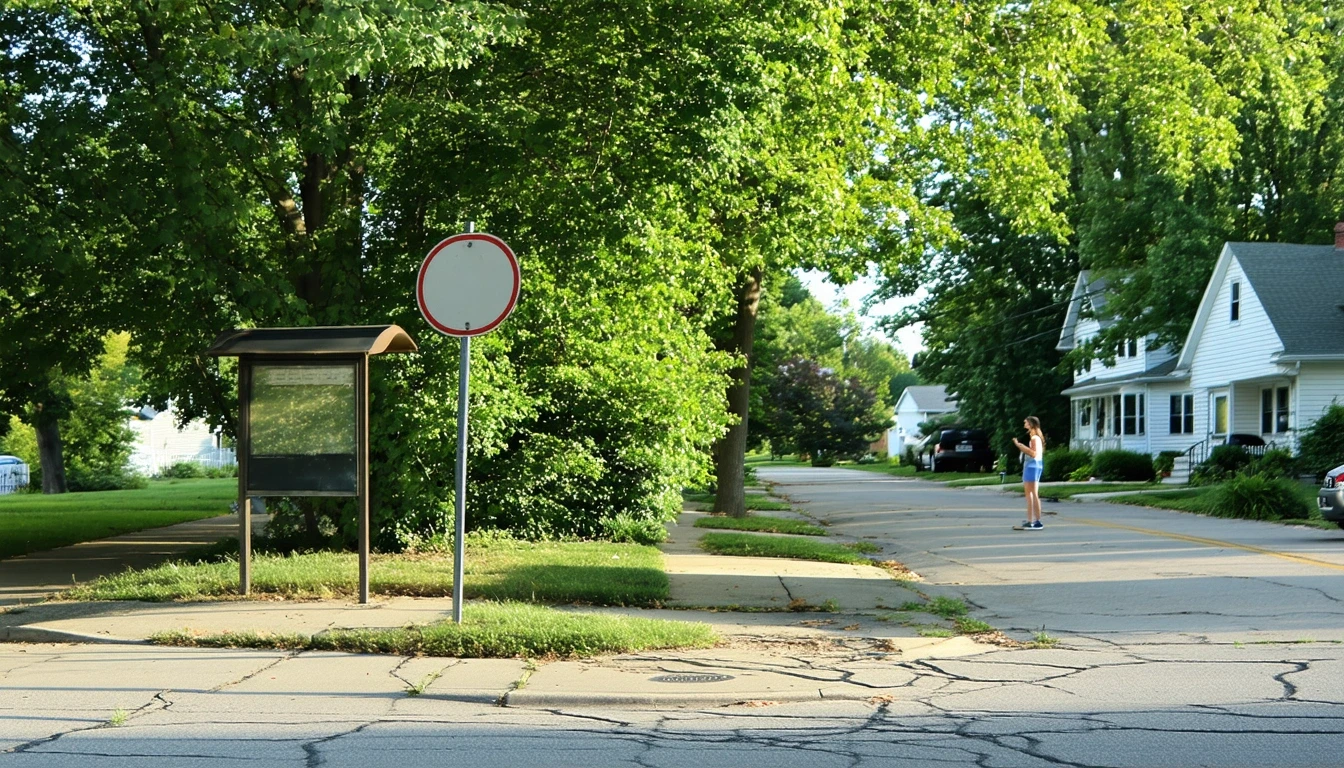
Livonia operates primarily as a car-oriented city. The street grid supports driving well: roads are wide, parking is abundant, and most errands—groceries, pharmacies, schools—are designed with vehicle access in mind. Pedestrian infrastructure does exist, and in certain pockets, the ratio of sidewalks to roads is notably high. But those walkable zones don’t eliminate the need for a car; they soften it in specific corridors, particularly where commercial and residential land uses mix.
Public transit is present, but it plays a supporting role rather than a foundational one. Bus service connects parts of Livonia to neighboring communities and regional employment centers, but coverage is limited and frequency doesn’t support the kind of spontaneous, multi-stop errands that define daily life for many households. Cycling infrastructure exists in some areas, though it remains modest and unevenly distributed. For most residents, the practical answer to “how do I get around?” is still “by car.”
What newcomers often misunderstand is that Livonia’s layout doesn’t penalize car ownership—it rewards it. The city’s design assumes you’ll drive to the grocery store, the doctor’s office, the school pickup line. Where money goes in a Livonia household often reflects this reality: gas, insurance, and maintenance aren’t optional line items. They’re structural.
Public Transit Availability in Livonia
Public transit in Livonia often centers around systems such as SMART (Suburban Mobility Authority for Regional Transportation), which provides regional bus service connecting Livonia to Detroit, Southfield, and other metro communities. The network exists, but it’s not comprehensive. Routes tend to follow major corridors—Middlebelt, Plymouth Road, Farmington—where ridership and commercial density justify service. Residential neighborhoods farther from these arteries see little to no coverage.
Transit works best for people whose destinations align with existing routes and who can build their schedules around fixed departure times. Someone commuting from central Livonia to a job in downtown Detroit or Southfield may find bus service viable, especially if their work hours are predictable. But transit falls short for households managing multiple stops, irregular schedules, or destinations outside the primary corridors. Late-night and weekend service is particularly thin, which limits transit’s role for shift workers or anyone whose routine doesn’t fit a traditional weekday pattern.
The city’s low-rise building character and mixed land use in certain areas create environments where walking to a bus stop feels reasonable, but once you’re off the bus, the next leg of the trip often requires another ride or a long walk. Transit doesn’t eliminate car dependence here; at best, it reduces it for a narrow set of use cases.
Driving & Car Dependence Reality
For most Livonia households, driving isn’t a preference—it’s a necessity. The city’s layout, with its separated residential zones and corridor-based commercial development, makes it difficult to accomplish daily tasks without a vehicle. Grocery stores, medical offices, schools, and workplaces are rarely within comfortable walking distance of each other, even in the more pedestrian-friendly pockets.
Parking is abundant and usually free, which removes one of the friction points that makes driving costly or inconvenient in denser cities. Commute flexibility is high: you leave when you’re ready, stop where you need to, and adjust on the fly. That control matters, especially for parents managing school schedules, retirees running errands on their own timeline, or workers whose jobs require travel between sites during the day.
But car dependence also means exposure. Gas prices—currently around $3.59 per gallon locally—affect household budgets directly, and while that’s not unique to Livonia, the lack of viable alternatives makes the impact harder to mitigate. Insurance, maintenance, and registration costs layer on top. A second car isn’t a luxury for most families here; it’s the default, because one vehicle rarely covers the logistical needs of a multi-person household in a city this spread out.
Commuting Patterns & Daily Mobility
Commuting in Livonia often means leaving the city. Many residents work in Detroit, Southfield, Novi, or other metro communities, and the commute structure reflects that. Highways like I-96 and I-275 provide direct access to regional employment centers, and most commuters drive alone. The rhythm is predictable: morning outbound, evening inbound, with congestion that pulses around traditional work hours.
For households with two working adults, coordination becomes part of the routine. One person might head east toward Detroit, the other north toward Farmington Hills. Carpooling is rare unless destinations align closely. Flexibility matters more than speed—being able to leave early, stay late, or detour for an errand without depending on someone else’s schedule or a fixed bus timetable.
Single-job commutes are straightforward, but daily mobility in Livonia often involves more than one destination. Dropping kids at school, stopping for groceries, picking up prescriptions—these tasks don’t chain together neatly without a car. Transit can handle point-to-point trips, but it struggles with the multi-stop, non-linear patterns that define many households’ daily reality.
Who Transit Works For—and Who It Doesn’t
Transit in Livonia works best for a specific profile: someone living near a major corridor, commuting to a fixed location along an existing route, with a schedule that aligns with bus service hours. That might describe a renter in a corridor-clustered area commuting to a downtown Detroit office, or a student traveling to a regional campus.
It works less well for families, especially those with children. School bus service exists, but extracurriculars, doctor’s appointments, and weekend activities require the kind of on-demand mobility that public transit can’t provide here. Retirees, despite Livonia’s designation as a retirement city, generally need cars too. Medical appointments, social activities, and errands don’t cluster conveniently along bus routes, and the physical demands of waiting, transferring, and walking longer distances can be prohibitive.
Renters closer to the city’s commercial cores have the best shot at reducing car dependence, but even then, “reducing” doesn’t mean eliminating. Owners in residential neighborhoods farther from transit corridors face a different reality: car ownership isn’t optional, and household logistics assume at least one vehicle, often two.
Transportation Tradeoffs in Livonia
Choosing between transit and driving in Livonia isn’t about cost alone—it’s about control, predictability, and how much friction you’re willing to accept in daily life. Driving offers flexibility and speed, but it ties you to fuel prices, maintenance schedules, and the assumption that parking will always be available (which, in Livonia, it mostly is). Transit offers lower direct costs for the trip itself, but it imposes constraints: fixed routes, limited hours, longer travel times, and the need to plan around someone else’s timetable.
For someone whose routine is stable and whose destinations align with existing service, transit can work. But for households managing multiple schedules, irregular hours, or trips that don’t fit neatly into corridor routes, driving remains the more practical choice. The tradeoff isn’t financial as much as it is operational: transit saves money on the condition that you can absorb the time cost and logistical limits it introduces.
Livonia’s structure doesn’t penalize drivers, but it also doesn’t reward transit users with the kind of coverage, frequency, or connectivity that would make car-free living broadly viable. The city’s walkable pockets and bus service provide options, but they don’t fundamentally alter the car-dependent baseline.
FAQs About Transportation in Livonia (2026)
Is public transit usable for daily commuting in Livonia?
Public transit is usable for some commuters, particularly those traveling along major corridors to regional employment centers like Detroit or Southfield. Bus service exists and connects Livonia to the broader metro, but coverage is limited, and schedules may not align with all work hours. For commuters with fixed routines and destinations near transit routes, it can work. For those managing multiple stops, irregular hours, or residential areas far from bus lines, driving remains more practical.
Do most people in Livonia rely on a car?
Yes. Livonia’s layout, residential density, and commercial development pattern assume car ownership. Most households own at least one vehicle, and many own two. Parking is abundant, roads are designed for driving, and daily errands—groceries, medical appointments, school runs—are difficult to manage without a car. Transit exists as a supplement, but it doesn’t replace the need for vehicle access for most residents.
Which areas of Livonia are easiest to live in without a car?
Areas near major commercial corridors—particularly along Middlebelt, Plymouth Road, and Farmington—offer the best access to bus service and the highest concentration of walkable amenities. These zones tend to have better pedestrian infrastructure and closer proximity to grocery stores, pharmacies, and other daily needs. Even in these areas, however, car-free living requires careful planning and acceptance of longer travel times and limited schedule flexibility.
How does commuting in Livonia compare to nearby cities?
Livonia’s commuting reality is similar to other Detroit-area suburbs: most residents drive, highways provide regional access, and public transit plays a secondary role. Compared to denser cities closer to Detroit’s core, Livonia offers easier parking and less congestion within city limits, but fewer transit options. Compared to more rural communities farther out, Livonia has better bus access and shorter distances to metro employment centers, though the car-dependent structure remains consistent across much of the region.
Can you get by with one car in a two-adult household in Livonia?
It’s possible, but it requires coordination and compromise. If both adults work in different directions, have overlapping schedules, or need vehicles during the day for errands or child-related tasks, a single car becomes a logistical challenge. Households that manage with one car typically have at least one person working from home, using transit, or with a schedule flexible enough to share vehicle access. For most two-adult households, especially those with children, two cars remain the norm.
How Transportation Fits Into the Cost of Living in Livonia
Transportation in Livonia isn’t just a budget line—it’s a structural factor that shapes where you live, how you spend your time, and what kind of flexibility you can expect in daily life. The city’s car-oriented layout means that vehicle ownership, fuel, insurance, and maintenance are baseline costs for most households, not optional expenses. Transit exists, but its limited coverage and schedule constraints mean it works for a narrow set of circumstances rather than serving as a broadly viable alternative.
Understanding a month of expenses in Livonia requires recognizing that transportation costs don’t fluctuate much based on behavior—they’re baked into the city’s design. You can reduce driving at the margins, but you can’t eliminate the need for a car without significant tradeoffs in convenience, time, and access.
For newcomers weighing a move to Livonia, the question isn’t whether you’ll need a car—it’s whether the city’s layout, commute access, and residential character align with the kind of daily rhythm you want. Livonia rewards households that value space, parking, and the control that comes with driving. It’s harder on those hoping to rely on transit, walk to daily needs, or avoid the fixed costs of vehicle ownership. The city’s transportation reality is clear, consistent, and unlikely to shift quickly. Plan accordingly.
How this article was built: In addition to public economic data, this article incorporates location-based experiential signals derived from anonymized geographic patterns—such as access density, walkability, and land-use mix—to reflect how day-to-day living actually feels in Livonia, MI.
—