
Livonia is considered moderately priced in 2026, with a median home value of $249,000 and median rent at $1,235 per month. The value proposition depends on housing entry cost versus car dependence and seasonal utility exposure rather than day-to-day price volatility.
Overall Cost of Living Snapshot
Livonia operates slightly below the national cost baseline, with a regional price parity index of 98. That positioning reflects a suburban Detroit cost structure where housing remains accessible compared to coastal markets, but where transportation and seasonal utility swings create recurring pressure points that aren’t immediately visible in sticker prices.
The primary cost driver is housing—specifically, the gap between rental availability and ownership entry. The secondary driver is transportation, shaped by car dependency despite pockets of walkable infrastructure. Utility seasonality rounds out the top three, with natural gas heating exposure during Michigan winters and electricity cooling loads in summer months.
Compared to the broader Detroit metro, Livonia sits in the middle tier: more expensive than outer-ring communities with lower home values, but more affordable than inner suburbs with premium school districts or denser commercial access. The unemployment rate of 5.5% signals a stable but not booming local economy, which keeps wage pressure modest and reinforces the importance of managing fixed costs carefully.
Driver verdict: Housing entry and car ownership dominate total cost exposure. Surprises come from the mismatch between walkable street design in some neighborhoods and the reality that errands, work, and services still require a vehicle. Utility bills swing more than groceries or gas, making seasonal budgeting more important than daily price-watching.
Housing Costs (Primary Driver)
Livonia’s housing market is built for ownership. The median home value of $249,000 positions the city as an attainable entry point for households with stable income and down payment capacity, but the rental stock—priced at a median of $1,235 per month—offers limited flexibility for those not ready to buy. Renting here functions more as a short-term landing pad than a long-term cost strategy, especially given that rental availability is concentrated rather than distributed across the city.
Ownership brings property tax exposure, homeowners insurance (which has climbed across Michigan due to weather-related claims), and maintenance costs that renters avoid. But it also locks in the largest monthly expense and builds equity in a market with relatively stable home values. For households planning to stay more than three to five years, buying makes more financial sense than renting at current price ratios.
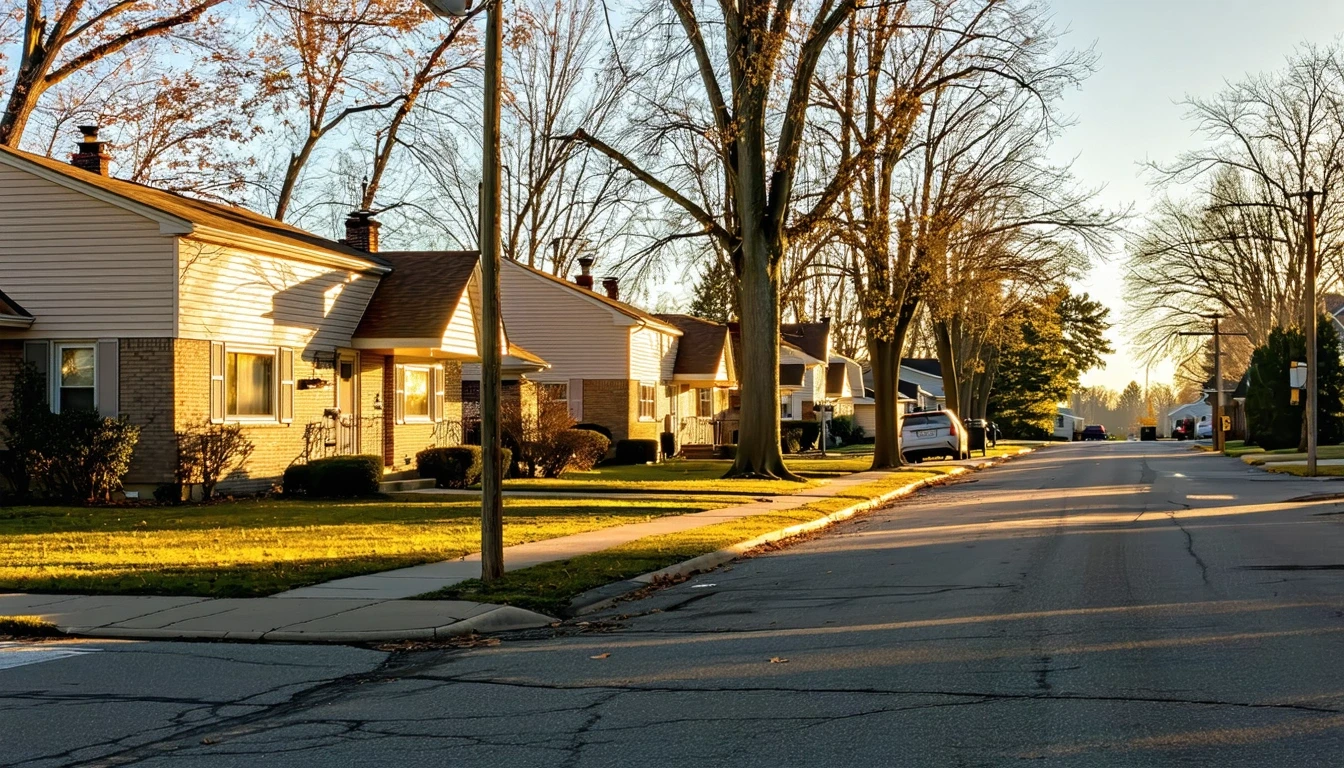
The building character is low-rise and suburban, with mixed residential and commercial land use present but not dominant. This means neighborhoods feel residential first, with commercial services clustered along corridors rather than embedded in every block. That structure keeps housing costs lower than mixed-use urban cores, but it also means you’re paying for car access to reach daily needs.
| Housing Type | Cost Anchor | What That Buys You |
|---|---|---|
| Median Home | $249,000 | Single-family ownership in a stable suburb with low-rise character and established neighborhoods |
| Median Rent | $1,235/month | Access to the city without ownership commitment, but limited stock and less geographic choice |
Conclusion: Livonia is an ownership-oriented city. Renting works for transitions, but the cost structure rewards buying for anyone with timeline certainty and capital access.
Utilities & Energy Risk
Electricity in Livonia runs 19.53¢ per kWh, which sits above the national average and reflects Michigan’s energy mix and delivery costs. For a household using around 1,000 kWh per month, that rate translates to meaningful baseline exposure before accounting for seasonal swings. Summer air conditioning and winter electric heating (in homes without gas furnaces) push usage higher, and bills can double during peak months.
Natural gas is priced at $10.24 per MCF (roughly 100 therms), which is moderate but becomes significant during extended heating seasons. Michigan winters are long and cold, and homes built in the mid-20th century—common in Livonia—often lack modern insulation standards. That combination means heating costs can dominate utility bills from November through March, with natural gas serving as the primary exposure for most households.
The risk here isn’t daily volatility—it’s seasonal intensity. A mild winter reduces gas costs substantially; a harsh one with sustained below-freezing temperatures can push heating bills well above baseline expectations. Electricity follows a similar but less extreme pattern, with July and August driving cooling costs up in homes that rely on central air.
Risk classification: Moderate. Utilities won’t break a budget in Livonia, but they require seasonal planning and create meaningful swings in monthly cash flow. Households that fail to account for winter heating exposure often face bill shock in January and February.
Groceries & Daily Costs
Grocery costs in Livonia reflect the regional price parity index of 98, meaning food prices run slightly below the national baseline. Derived estimates suggest staples like bread, chicken, and eggs cost marginally less than in higher-cost metros, but the difference isn’t large enough to offset housing or transportation pressure. Grocery density is high in certain areas, meaning access to supermarkets and food retailers is strong along commercial corridors, though not evenly distributed across all neighborhoods.
For households that cook at home and shop strategically, grocery costs remain manageable and predictable. The pressure point isn’t price—it’s access friction. Because food establishments cluster along corridors rather than spreading throughout residential blocks, running errands requires intentional trips rather than spontaneous stops. That structure doesn’t raise costs directly, but it does increase the planning burden and reinforces car dependency for daily needs.
Dining out, convenience purchases, and specialty groceries follow typical suburban patterns: available but requiring travel to specific commercial zones. Households that rely on quick, frequent errands will find Livonia less accommodating than denser cities with corner stores and walkable retail.
Transportation Reality
Livonia is a car-dependent city, despite the presence of walkable pockets with high pedestrian-to-road ratios in certain neighborhoods. The infrastructure supports walking within residential blocks, but errands, work, and services remain clustered along commercial corridors that require driving to reach efficiently. Public transit exists in the form of bus service, but without rail connections or high-frequency routes, it functions as a supplemental option rather than a primary mobility solution.
Gas prices currently sit at $3.59 per gallon, which is moderate but becomes a recurring cost exposure for households that commute daily or run frequent errands. A typical round-trip commute of 25 miles in a vehicle averaging 25 MPG would consume about one gallon per day, translating to roughly $18 per week in fuel costs per commuter. Multi-car households face that exposure multiplied, and the lack of viable transit alternatives means there’s little flexibility to reduce transportation spending without relocating closer to work or services.
Cycling infrastructure exists in some pockets, with bike-to-road ratios in the medium band, but it’s not extensive enough to serve as a car replacement for most households. Biking works for recreation or short neighborhood trips, but not for commuting or grocery runs in winter months or across longer distances.
Transportation is a recurring exposure, not a one-time cost. In Livonia, that exposure is structural: the city’s layout, transit limitations, and commercial clustering all reinforce the need for at least one vehicle per working adult. Households that try to reduce car dependency will find the city’s design working against them.
How this article was built: In addition to public economic data, this article incorporates location-based experiential signals derived from anonymized geographic patterns—such as access density, walkability, and land-use mix—to reflect how day-to-day living actually feels in Livonia, MI.
Cost Exposure Profiles
In Livonia, cost exposure is shaped more by household structure and mobility patterns than by income level alone. The dominant exposures are housing entry, transportation dependence, and utility seasonality—each of which hits different household types with different intensity.
Low-exposure situations: Homeowners who bought before recent price increases, work locally or remotely, drive fuel-efficient vehicles, and live in well-insulated homes face the most stable cost structure. Their largest expenses—mortgage, property tax, insurance—are fixed or slow-moving, and their transportation and utility costs remain predictable. These households benefit from Livonia’s moderate baseline costs without facing the friction of car dependency or seasonal utility swings.
High-exposure situations: Renters, long-distance commuters, and multi-car households face compounding pressure. Renters pay close to ownership costs without building equity, and they have less control over housing stability. Commuters absorb daily fuel costs and vehicle depreciation, with no transit alternative to fall back on. Households with multiple vehicles double or triple transportation exposure, and those in older homes with poor insulation face winter heating bills that can exceed $200 per month during cold snaps.
The difference between these profiles isn’t income—it’s structure. A household earning $75,000 with one car, a short commute, and a fixed mortgage will experience Livonia as affordable. A household earning $95,000 but renting, commuting 30 miles each way, and running two vehicles will feel constant cost pressure despite higher income. The city’s design rewards ownership, proximity, and efficiency, and penalizes mobility, flexibility, and renting.
Frequently Asked Questions
Is Livonia more affordable than Ann Arbor in 2026? Yes, significantly. Livonia’s median home value of $249,000 and rent of $1,235 per month are well below Ann Arbor’s housing costs, which are driven by university demand and a tighter rental market. However, Livonia requires car ownership, which offsets some of the housing savings.
What does a typical cost profile look like in Livonia? Housing dominates, followed by transportation (vehicle ownership, fuel, insurance) and utilities (seasonal heating and cooling). Groceries and daily costs are moderate and predictable, but the need to drive for errands adds friction and recurring fuel expense.
Do utilities cost more in Livonia than in nearby Detroit suburbs? Electricity rates in Livonia are comparable to other Wayne County suburbs, but natural gas exposure depends heavily on home insulation and heating system efficiency. Older homes in Livonia tend to have higher winter heating costs than newer construction in outer-ring suburbs.
What costs tend to surprise newcomers in Livonia? Three stand out: (1) the gap between walkable street design and the reality that you still need a car for errands, (2) winter heating bills in older homes, which can spike dramatically during cold months, and (3) the limited rental stock, which makes renting feel like paying ownership costs without the equity benefit.
Are property taxes higher in Livonia than in Westland? Property taxes in Livonia tend to be higher due to stronger public services and school funding, but the difference is moderate. The trade-off is better-maintained infrastructure and more stable property values, which matter more for long-term ownership than year-to-year tax bills.
Is Livonia a good value for retirees in 2026? It can be, especially for retirees who already own homes and have low transportation needs. The moderate cost baseline, access to healthcare (clinics are present locally), and integrated green space make it livable. However, retirees who don’t drive or who rely on public transit will find [getting around](https://indexyard.com/best-moving-companies-guide/) more difficult than in denser cities with better transit.
How does Livonia compare to other Detroit-area suburbs for cost of living? Livonia sits in the middle: more expensive than downriver communities and outer-ring suburbs, but more affordable than premium inner suburbs like Birmingham or Rochester Hills. The cost structure rewards ownership and car access, making it a better fit for families and long-term residents than for renters or those seeking walkable urban living.