

Norristown and King of Prussia sit just miles apart in the Philadelphia metro, sharing the same regional economy, similar weather patterns, and overlapping infrastructure. Both cities offer rail transit access, strong family amenities, and broadly accessible daily errands. Yet the cost experience between them diverges sharply—not because one is universally cheaper, but because cost pressure concentrates differently depending on which household expenses dominate your budget and how you structure your day-to-day life in 2026.
The decision between these two cities isn’t about finding the lower total. It’s about understanding where financial friction shows up first. Norristown presents a lower entry barrier for housing, with median home values at $188,100 and median rent at $1,264 per month, but commute patterns reveal higher exposure to long-distance travel—42.6% of workers face extended commutes. King of Prussia flips that structure: median home values reach $375,700 and rent averages $1,854 per month, creating a steeper upfront hurdle, but only 32.1% of workers manage long commutes, and gas prices run lower at $3.88/gal compared to Norristown’s $4.52/gal. For households sensitive to housing affordability, Norristown offers immediate relief. For those prioritizing predictable commute costs and time budgets, King of Prussia’s structure may reduce ongoing friction even as it demands more capital upfront.
Both cities benefit from similar experiential infrastructure—rail service is present in each, food and grocery density exceed high thresholds, and park access is integrated throughout residential areas. School and playground density support family logistics in both locations. What separates them is not the presence or absence of amenities, but how housing costs, transportation exposure, and utility rate structures interact with different household types. The better choice depends entirely on which costs you’re most sensitive to and how much flexibility you have to absorb upfront versus ongoing expenses.
Housing Costs
Housing is where the two cities diverge most visibly. Norristown’s median home value of $188,100 positions it as one of the more accessible entry points in the Philadelphia metro for buyers managing conventional down payment requirements or first-time buyer constraints. Median rent at $1,264 per month reflects a market where renters can secure housing without stretching into premium-tier income bands. King of Prussia, by contrast, operates at a fundamentally different price tier: median home values reach $375,700, effectively doubling the capital required to enter homeownership, while median rent sits at $1,854 per month, creating a baseline obligation nearly $600 higher each month before any other household costs are considered.
These differences shape household composition and lifecycle decisions in distinct ways. In Norristown, renters managing tighter budgets or building savings can find housing that doesn’t monopolize income, leaving room to absorb variability in transportation or utilities. First-time buyers benefit from lower mortgage principal and reduced property tax bases, though older housing stock may introduce deferred maintenance exposure. In King of Prussia, the higher rent floor and steeper purchase prices filter for households with stronger income stability or dual-earner structures. Renters here face less flexibility to downsize or shift housing types without leaving the city entirely. Buyers gain access to newer construction and lower ongoing maintenance friction, but the upfront capital requirement and higher property tax obligations create a front-loaded cost structure that doesn’t suit households still building equity or managing student debt.
For families, the housing decision hinges on space needs and timeline. Norristown’s lower entry costs make it easier to secure single-family homes with yards at prices that don’t require stretching into jumbo loan territory. King of Prussia’s housing stock skews toward newer builds and denser configurations, where families pay more per square foot but gain energy efficiency and reduced repair unpredictability. Single adults and couples without children may find Norristown’s rental market offers better cost control, while King of Prussia’s higher rent baseline only makes sense if shorter commutes or proximity to specific employers offset the added housing obligation.
Housing takeaway: Norristown fits households prioritizing lower entry barriers and tolerance for older housing stock. King of Prussia fits those able to absorb higher upfront costs in exchange for newer construction and reduced maintenance volatility. The difference isn’t about one being cheaper—it’s about whether your household is more exposed to entry barriers or ongoing unpredictability.
Utilities and Energy Costs
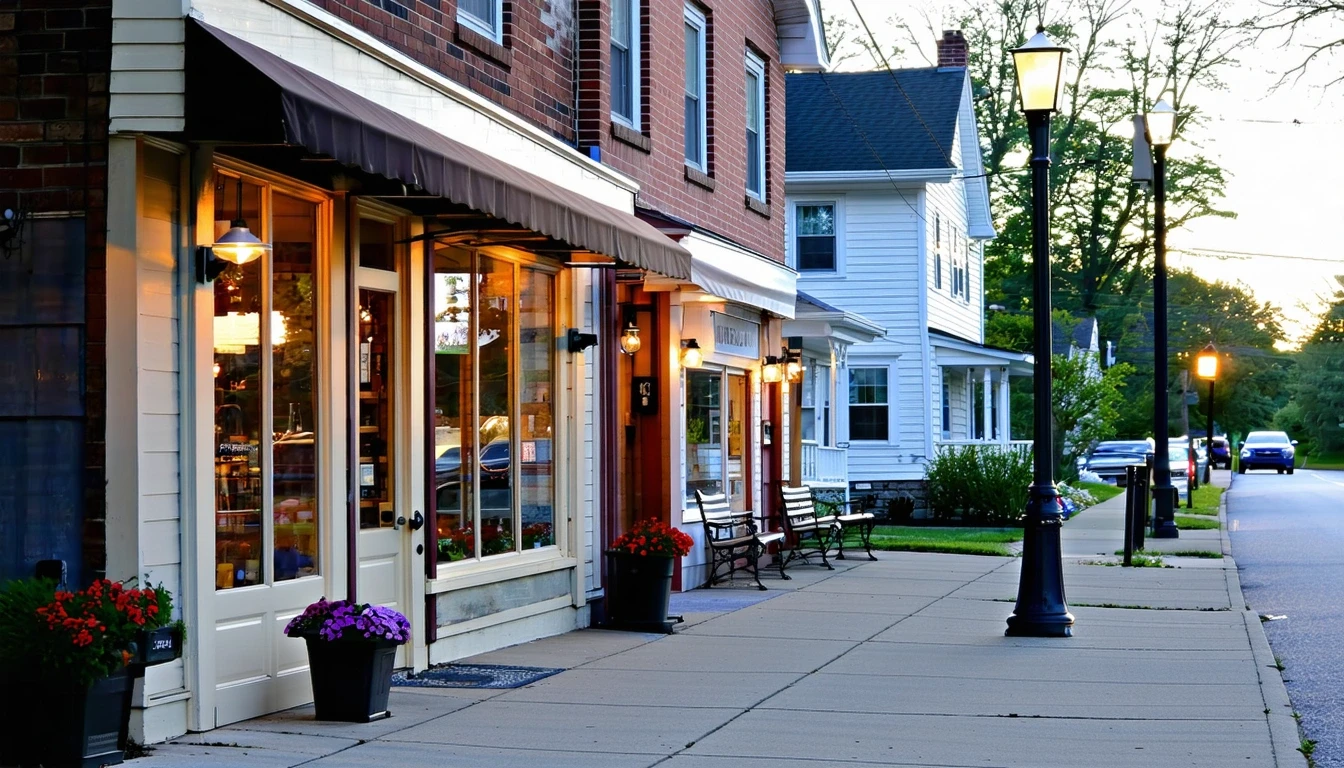
Utility cost structures in Norristown and King of Prussia reflect minor rate differences that matter less than housing type and household behavior. Norristown’s electricity rate sits at 20.30¢/kWh, while King of Prussia’s rate is 20.08¢/kWh—a gap too narrow to drive meaningful monthly differences for most households. Natural gas pricing shows slightly more separation: Norristown’s $14.49/MCF versus King of Prussia’s $13.91/MCF creates modest exposure differences during heating months, but the impact depends more on home size, insulation quality, and thermostat discipline than on the rate itself.
What matters more is how housing stock interacts with seasonal demand. Norristown’s lower median home values often correlate with older construction, where heating and cooling systems may lack modern efficiency standards and insulation may underperform during temperature extremes. Households in older single-family homes face higher baseline usage during both summer cooling and winter heating periods, amplifying the effect of even modest rate differences. King of Prussia’s higher home values often reflect newer builds with better envelope performance, programmable thermostats, and HVAC systems designed for lower consumption. Renters in newer apartment complexes benefit from shared-wall insulation and landlord-managed systems that reduce individual exposure to seasonal spikes.
For families managing larger homes, utility volatility becomes a planning concern. Norristown households in older, larger homes may see winter heating bills climb as natural gas usage rises, while summer air conditioning demands push electricity consumption higher. King of Prussia families in newer construction experience more predictable usage curves, though higher square footage still drives absolute costs upward. Single adults and couples in apartments face less volatility overall, but Norristown’s older rental stock may lack individual climate control, forcing tenants to absorb landlord decisions about heating and cooling setpoints. King of Prussia renters in modern complexes gain more control and lower per-unit consumption, though rent premiums already reflect those efficiencies.
Utility takeaway: Norristown households face slightly higher rates and greater exposure to volatility in older housing stock. King of Prussia households benefit from newer construction that dampens seasonal swings, though higher home values and rents already price in those efficiencies. The difference is less about the rates and more about how housing age and size amplify or dampen exposure.
Groceries and Daily Expenses
Both Norristown and King of Prussia benefit from broadly accessible food and grocery infrastructure—density exceeds high thresholds in each city, meaning households don’t face structural barriers to reaching supermarkets, discount grocers, or everyday staples. This shared accessibility reduces the friction cost of running errands and limits the need for bulk-buying trips or reliance on convenience stores that carry price premiums. The experiential difference between the cities is minimal here: both offer mixed land use that integrates residential and commercial areas, allowing households to manage grocery runs without extended drives or complex logistics.
Where the two cities diverge is in how household income levels and spending habits interact with available options. King of Prussia’s higher median household income of $107,139 per year supports a retail environment where specialty grocers, prepared food options, and premium brands occupy more shelf space. Households with tighter budgets may find themselves navigating around higher-priced options or traveling slightly farther to access discount chains. Norristown’s median household income of $59,068 per year correlates with a grocery landscape that skews toward value-oriented retailers and fewer premium-tier options, making it easier for cost-conscious shoppers to avoid spending creep but potentially limiting selection for households seeking organic, specialty, or international products.
For families managing larger grocery volumes, the difference shows up in cart composition rather than access. Norristown households can fill carts with staples at competitive prices without encountering as many premium-tier temptations. King of Prussia families face more choice but also more opportunities for incremental spending on prepared foods, grab-and-go meals, and higher-margin convenience items. Single adults and couples experience similar dynamics: Norristown’s environment supports disciplined, budget-focused shopping, while King of Prussia’s retail mix makes it easier to drift into convenience spending that adds up over weeks and months.
Groceries takeaway: Both cities offer strong accessibility, but King of Prussia’s retail environment reflects higher income levels and creates more opportunities for spending creep. Norristown fits households prioritizing cost discipline and value-oriented shopping. The difference isn’t about availability—it’s about whether the surrounding retail mix supports or challenges budget control.
Taxes and Fees
Property taxes in Pennsylvania are locally determined, and the difference in median home values between Norristown and King of Prussia translates directly into divergent tax obligations. Norristown’s median home value of $188,100 generates a lower assessed value base, reducing annual property tax bills even if millage rates are similar. King of Prussia’s median home value of $375,700 effectively doubles the assessed value, pushing property tax obligations higher regardless of rate structure. For homeowners planning to stay several years, this difference compounds: King of Prussia buyers face not only higher mortgage principal but also higher ongoing tax obligations that don’t decline as the mortgage is paid down.
Renters in both cities absorb property taxes indirectly through rent, but the structure differs. Norristown’s lower property values mean landlords face smaller tax bills, creating less upward pressure on rent renewals tied to tax increases. King of Prussia landlords managing higher property tax obligations often pass those costs through to tenants over time, particularly in newer buildings where property assessments reflect recent construction values. Renters planning to stay long-term should anticipate that King of Prussia’s higher baseline rent may face more tax-driven upward pressure during lease renewals.
Local fees—trash collection, water, sewer, and parking—vary by municipality and housing type, but both cities operate within similar regional service structures. Homeowners in both locations typically manage these fees directly, with costs scaling to home size and usage. Renters may find fees bundled into rent or billed separately depending on building type and landlord practice. HOA fees, where present, tend to be more common in King of Prussia’s newer developments, where shared amenities and landscaping services are bundled into monthly obligations. Norristown’s older housing stock includes fewer HOA-managed communities, reducing recurring fees but potentially increasing individual responsibility for exterior maintenance and snow removal.
Taxes and fees takeaway: Norristown homeowners benefit from lower property tax exposure due to lower assessed values. King of Prussia homeowners face higher ongoing tax obligations that persist throughout ownership. Renters in King of Prussia should anticipate tax-driven rent pressure over time. The difference is structural: lower entry costs in Norristown come with lower ongoing tax burdens, while King of Prussia’s higher home values create persistent tax obligations that don’t diminish.
Transportation & Commute Reality
Both Norristown and King of Prussia offer rail transit access, providing households with alternatives to car-dependent commuting. The pedestrian-to-road ratio in each city falls into a medium band, supporting mixed mobility patterns where walking and driving coexist but neither dominates entirely. Cycling infrastructure is present in limited areas in both locations, offering some flexibility for short trips but not replacing car reliance for most households. The structural similarity in transit and walkability means the real differentiation comes from commute distance patterns and fuel costs rather than infrastructure presence.
Norristown’s commute data reveals higher exposure to long-distance travel: 42.6% of workers manage commutes that stretch beyond typical suburban patterns, and the average commute time sits at 26 minutes. Gas prices in Norristown reach $4.52/gal, amplifying the cost impact for households driving longer distances regularly. King of Prussia shows a different pattern: only 32.1% of workers face long commutes, and the average commute time is slightly shorter at 24 minutes. Gas prices are notably lower at $3.88/gal, reducing per-mile costs for those who do drive. For households commuting to Philadelphia or other regional employment centers, Norristown’s rail access helps mitigate car dependence, but those working in dispersed suburban locations face higher fuel exposure and longer drive times.
For single adults and dual-income couples, the commute difference shapes daily schedules and time budgets. Norristown households managing long commutes spend more time in transit and face higher fuel costs, even with rail alternatives available. King of Prussia households benefit from shorter average commutes and lower fuel prices, creating more predictable transportation costs and freeing up time for errands, childcare, or flexibility. Families with school-age children face similar tradeoffs: Norristown’s longer commute exposure can compress evening schedules and increase childcare coordination complexity, while King of Prussia’s shorter commute patterns offer more margin for managing pickup times and extracurricular logistics.
Transportation takeaway: Norristown fits households able to leverage rail transit or willing to absorb longer commute exposure and higher fuel costs. King of Prussia fits those prioritizing shorter commutes and lower per-mile fuel expenses. The difference is less about transit availability and more about commute distance patterns and fuel cost exposure.
Cost Structure Comparison
Housing dominates the cost structure difference between Norristown and King of Prussia, but the nature of that dominance depends entirely on household stage and income flexibility. Norristown’s lower median home value and rent create immediate relief for households managing tight budgets or building savings, but that relief comes with tradeoffs: older housing stock introduces maintenance unpredictability, and higher commute exposure adds ongoing fuel and time costs. King of Prussia’s higher housing entry barrier filters for households with stronger income stability, but those who clear that threshold gain access to newer construction, lower maintenance volatility, and shorter commute patterns that reduce transportation friction.
Utilities introduce modest differences, but housing age and size matter more than rate structures. Norristown households in older homes face higher seasonal volatility as heating and cooling systems work harder to maintain comfort. King of Prussia households in newer builds experience more predictable usage curves, though higher square footage still drives absolute costs upward. For families managing larger homes, Norristown’s slightly higher utility rates compound with older housing stock to create more unpredictable bills. For renters in modern apartments, King of Prussia’s newer construction dampens volatility but doesn’t eliminate it.
Transportation patterns matter more in Norristown, where longer commutes and higher gas prices create persistent exposure for car-dependent households. King of Prussia’s shorter average commutes and lower fuel costs reduce that friction, but the benefit only materializes if your job location aligns with the city’s commute patterns. For households working in dispersed suburban locations, the transportation advantage disappears. For those commuting to central Philadelphia, both cities offer rail access, leveling the playing field.
Groceries and daily expenses reflect income-driven retail environments rather than structural access barriers. Norristown’s value-oriented grocery landscape supports cost discipline, while King of Prussia’s higher-income retail mix creates more opportunities for convenience spending creep. Families managing tight budgets may find Norristown’s environment easier to navigate, while higher-income households in King of Prussia gain more selection at the cost of constant temptation to trade up.
The decision framework is clear: households sensitive to housing entry costs and willing to manage commute friction and older housing stock will find Norristown’s structure more forgiving. Households able to absorb higher upfront housing costs in exchange for predictable commutes, newer construction, and lower fuel expenses will find King of Prussia’s structure reduces ongoing friction. Neither city is universally cheaper—the better choice depends on which costs dominate your household and where you have flexibility to absorb pressure.
How the Same Income Feels in Norristown vs King of Prussia
Single Adult
For a single adult, housing becomes the first non-negotiable cost, and Norristown’s lower rent baseline leaves more room to absorb variability in transportation and utilities. Flexibility exists in grocery spending and discretionary categories, but longer commutes compress time budgets and increase fuel exposure. In King of Prussia, higher rent obligations claim a larger share of income upfront, but shorter commutes and lower gas prices free up time and reduce transportation unpredictability. The tradeoff is between housing affordability and time flexibility—Norristown offers lower entry costs but demands more time and fuel management, while King of Prussia requires higher housing commitment but delivers more predictable daily logistics.
Dual-Income Couple
For a dual-income couple, housing costs in Norristown allow one income to cover rent while the other builds savings or manages debt, creating financial flexibility that absorbs unexpected expenses. Commute friction becomes more complex when both partners work, especially if jobs are dispersed across the metro. In King of Prussia, higher rent or mortgage obligations require both incomes to contribute to housing, reducing flexibility but shortening commute exposure for both partners if job locations align. The role of commute friction shifts from individual burden to household coordination challenge—Norristown’s structure supports income flexibility but demands more time management, while King of Prussia’s structure reduces time friction but tightens financial flexibility.
Family with Kids
For families, housing space needs become non-negotiable first, and Norristown’s lower home values make it easier to secure single-family homes with yards without stretching into premium loan territory. Flexibility disappears quickly as childcare, school logistics, and extracurricular activities layer onto commute schedules, and longer commute exposure in Norristown compresses evening routines. In King of Prussia, higher home values demand more upfront capital, but shorter commutes create margin for managing pickup times and activity schedules. The role of commute friction intensifies with children—Norristown’s lower housing costs offer breathing room in monthly budgets but demand tighter time coordination, while King of Prussia’s higher housing costs buy time flexibility that simplifies daily logistics at the expense of financial margin.
Decision Matrix: Which City Fits Which Household?
| Decision factor | If you’re sensitive to this… | Norristown tends to fit when… | King of Prussia tends to fit when… |
|---|---|---|---|
| Housing entry + space needs | You need to minimize upfront capital or monthly rent obligations | Lower entry barriers and rent baselines free up income for other categories | You can absorb higher upfront costs in exchange for newer construction and lower maintenance volatility |
| Transportation dependence + commute friction | You prioritize shorter commutes and lower fuel exposure | You can leverage rail transit or tolerate longer drive times and higher gas prices | Shorter average commutes and lower fuel costs reduce time and transportation unpredictability |
| Utility variability + home size exposure | You want predictable seasonal bills and lower maintenance risk | You can manage older housing stock and higher seasonal volatility in exchange for lower housing costs | Newer construction dampens utility swings and reduces deferred maintenance exposure |
| Grocery strategy + convenience spending creep | You need a retail environment that supports cost discipline | Value-oriented grocery options dominate and reduce temptation to trade up | You value selection and convenience even if it creates opportunities for incremental spending |
| Fees + friction costs (HOA, services, upkeep) | You want to minimize ongoing fees and bundled obligations | Older housing stock includes fewer HOA-managed communities and lower property tax exposure | You prefer bundled services and predictable fee structures even if they add to monthly obligations |
| Time budget (schedule flexibility, errands, logistics) | You need margin in daily schedules for childcare, errands, or coordination | You can absorb longer commutes and tighter time budgets in exchange for lower housing costs | Shorter commutes and accessible errands create time flexibility that simplifies household logistics |
Lifestyle Fit
Both Norristown and King of Prussia benefit from integrated park access and strong family infrastructure, with school and playground density supporting household logistics in each location. Rail transit is present in both cities, and food and grocery density exceeds high thresholds, meaning daily errands don’t require extended drives or complex planning. The pedestrian-to-road ratio falls into a medium band in each city, supporting mixed mobility where walking and driving coexist. Urban form in both locations skews toward more vertical building character, with mixed residential and commercial land use creating environments where housing and services sit closer together than in purely car-oriented suburbs.
What distinguishes the two cities is less about amenity presence and more about how cost structure and commute patterns shape daily rhythms. Norristown’s lower housing costs and higher commute exposure create a lifestyle where financial flexibility comes at the cost of time compression. Families benefit from accessible parks and playgrounds, but longer commutes mean less margin for evening activities or spontaneous errands. King of Prussia’s higher housing costs and shorter commutes flip that structure: households pay more upfront but gain time flexibility that makes it easier to manage school pickups, extracurricular schedules, and weekend errands without feeling constantly behind.
For households prioritizing outdoor access and green space, both cities deliver. Park density is high in Norristown and present in King of Prussia, with water features adding to the outdoor environment in each location. Families with young children find strong playground and school infrastructure in both cities, reducing the need to drive to recreational amenities. Single adults and couples benefit from walkable pockets and accessible transit, though car ownership remains practical for most households given the medium pedestrian-to-road ratio. The lifestyle difference isn’t about what’s available—it’s about how much time and financial margin you have to enjoy it. Norristown’s median household income sits at $59,068 per year, while King of Prussia’s reaches $107,139 per year. Both cities report a 3.0% unemployment rate, reflecting similar regional economic stability.
FAQ Section
Is Norristown or King of Prussia cheaper for renters in 2026?
Norristown offers lower median rent at $1,264 per month compared to King of Prussia’s $1,854 per month, creating immediate cost relief for renters managing tight budgets or building savings. However, Norristown renters face higher commute exposure and potentially higher utility volatility in older housing stock. King of Prussia renters pay more upfront but benefit from shorter average commutes and newer construction that dampens seasonal utility swings. The better choice depends on whether you’re more sensitive to monthly rent obligations or ongoing transportation and utility unpredictability.
How do housing costs differ between Norristown and King of Prussia for first-time buyers in 2026?
Norristown’s median home value of $188,100 creates a lower entry barrier for first-time buyers managing down payment requirements or conventional loan limits. King of Prussia’s median home value of $375,700 effectively doubles the capital required to enter homeownership, filtering for buyers with stronger income stability or dual-earner households. Norristown buyers gain affordability but may face older housing stock and higher maintenance exposure. King of Prussia buyers absorb higher upfront costs but access newer construction and lower deferred maintenance risk. The decision hinges on whether you prioritize entry affordability or long-term predictability.
Which city has lower transportation costs, Norristown or King of Prussia, in 2026?
King of Prussia shows lower fuel costs at $3.88/gal compared to Norristown’s $4.52/gal, and fewer workers face long commutes—32.1% versus 42.6% in Norristown. For car-dependent households, King of Prussia reduces per-mile fuel exposure and shortens average commute times. Norristown households can leverage rail transit to offset car dependence, but those driving regularly face higher fuel costs and longer commute distances. The transportation advantage in King of Prussia only materializes if your job location aligns with the city’s shorter commute patterns.
Do utilities cost more in Norristown or King of Prussia in 2026?
Utility rates are nearly identical—Norristown’s electricity rate sits at 20.30¢/kWh versus King of Prussia’s 20.08¢/kWh, and natural gas pricing shows minimal separation. The real difference comes from housing age and size: Norristown’s older housing stock often drives higher seasonal usage as heating and cooling systems work harder, while King of Prussia’s newer construction dampens volatility through better insulation and modern HVAC systems. Families in larger homes face higher absolute costs in both cities, but Norristown households experience more unpredictability due to older building envelopes.
How do commute patterns in Norristown compare to King of Prussia in 2026?
Norristown shows higher long-distance commute exposure, with 42.6% of workers managing extended travel compared to 32.1% in King of Prussia. Average commute times are similar—26 minutes in Norristown versus 24 minutes in King of Prussia—but the higher percentage of long commutes in Norristown suggests more workers traveling to dispersed suburban job centers or central Philadelphia. Both cities offer rail transit, but King of Prussia’s shorter commute patterns and lower fuel costs create less ongoing friction for car-dependent households. The difference matters most for families managing dual-income schedules or tight time budgets.
Conclusion
Norristown and King of Prussia operate within the same regional economy and share similar infrastructure—rail transit, accessible errands, integrated parks, and strong family amenities. The cost difference between them isn’t about one being universally cheaper. It’s about where financial pressure concentrates and which household stage you’re navigating. Norristown fits households prioritizing lower housing entry costs and willing to manage longer commute exposure and older housing stock. King of Prussia fits those able to absorb higher upfront housing costs in exchange for shorter commutes, newer construction, and lower fuel expenses. Neither city eliminates tradeoffs—they simply distribute them differently.
The decision comes down to which costs you’re most sensitive to and where you have flexibility. If housing affordability dominates your budget and you can tolerate commute friction, Norristown offers immediate relief. If you can clear the higher housing entry barrier and value predictable commutes and time flexibility, King of Prussia reduces ongoing friction. Both cities support family logistics, outdoor access, and daily errands without structural barriers. The better choice depends entirely on whether your household is more exposed to entry costs or ongoing unpredictability, and whether you’re optimizing for financial margin or time flexibility in 2026.
How this article was built: In addition to public economic data, this article incorporates location-based experiential signals derived from anonymized geographic patterns—such as access density, walkability, and land-use mix—to reflect how day-to-day living actually feels in Norristown, PA.
==image