
A first-time renter in Norristown looking at a one-bedroom apartment near the rail line might budget around $1,264 per month for rent—the city’s median—plus electricity and gas that swing with the seasons. A first-time buyer eyeing a modest single-family home at the city’s median value of $188,100 faces a different set of exposures: property taxes, maintenance on older housing stock, and full responsibility for heating and cooling through Pennsylvania’s cold winters and warm summers. Both paths are viable here, but the cost structure and long-term risk profile differ sharply depending on how you live, how long you stay, and how much control you want over your monthly obligations.
Norristown sits in the Philadelphia metro area with a regional price level about 13% above the national baseline, but its housing costs remain more accessible than many nearby communities. The city’s mix of older rowhomes, small multifamily buildings, and single-family houses reflects its history as a regional hub, and that variety shows up in both rental availability and ownership options. What shapes the housing experience here isn’t just the price—it’s the interplay of transit access, an older housing stock that demands upkeep, and a cost structure where property taxes and utilities can rival or exceed the mortgage itself over time.
This guide explains how housing costs actually behave in Norristown: what renters face in a market with moderate pressure and rail access, what owners take on when they buy into an older housing stock with full seasonal exposure, and how the rent-versus-buy tradeoff plays out in a city where walkable errands, strong family infrastructure, and mixed pedestrian texture make day-to-day logistics easier than the car-dependent suburban norm—but where ownership still means managing volatility you can’t outsource.
—
The Housing Market in Norristown Today
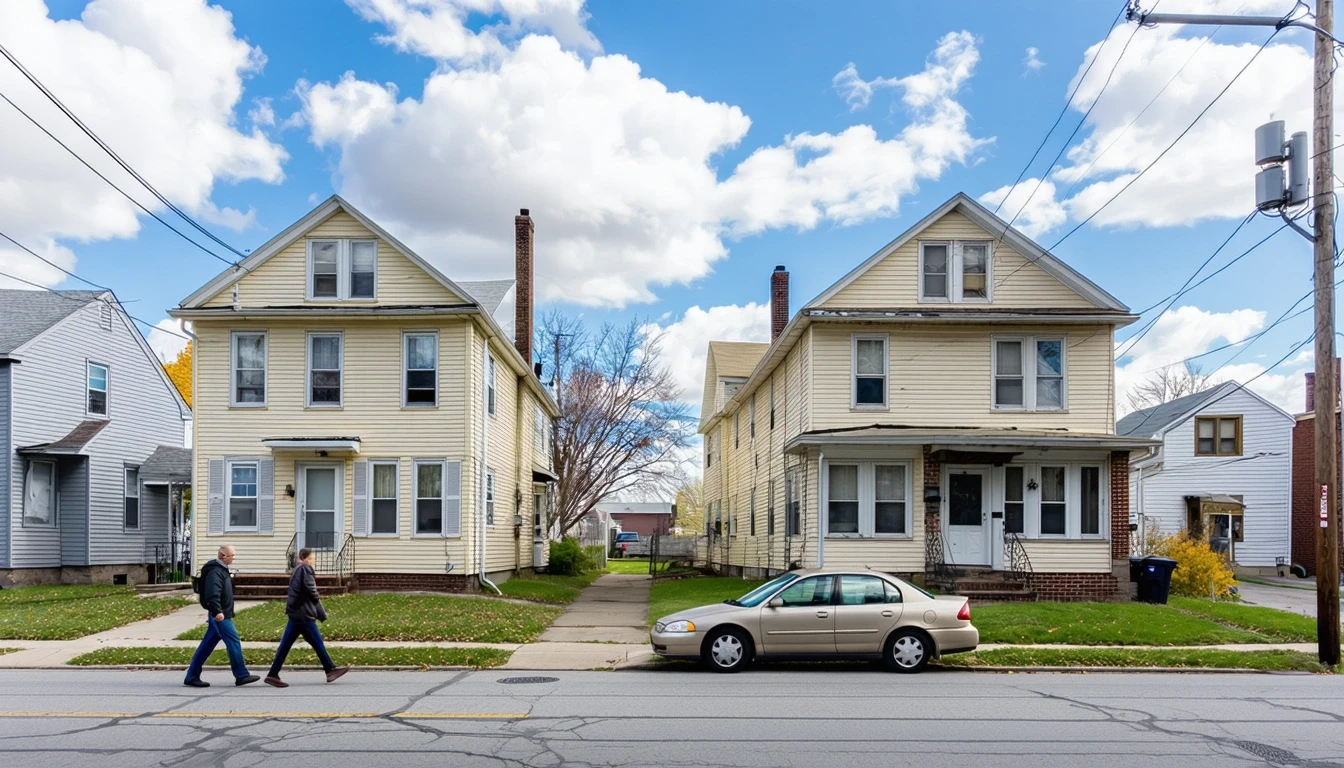
Norristown’s housing market reflects its role as a Montgomery County seat with direct rail access to Philadelphia and a compact, mixed-use downtown surrounded by residential neighborhoods. The median home value of $188,100 positions the city as a regionally accessible entry point compared to higher-cost suburbs closer to Center City, but that accessibility comes with tradeoffs: much of the housing stock dates from earlier decades, and the density and building character here feel more urban than the newer subdivisions that ring the outer metro.
What newcomers often misunderstand is that Norristown isn’t a bedroom community where housing costs are the only variable. The city has its own commercial corridors, a transit hub, and a street grid that supports walking to groceries and errands in many neighborhoods—something that reduces car dependency for households near the core but also means the housing experience varies widely depending on where you land. A renter in a walkable pocket near the Norristown Transportation Center has a fundamentally different cost-of-living profile than someone in a car-dependent edge neighborhood, even if the rent is similar.
The rental market here shows moderate pressure, with median gross rent at $1,264 per month. That figure reflects a mix of older apartments, converted rowhomes, and small multifamily buildings, many of which don’t include utilities or parking. Rental availability tends to be better than in the most competitive Philadelphia suburbs, but turnover is lower in buildings with long-term tenants, so timing and flexibility matter when searching.
For buyers, the value proposition is straightforward on paper—home prices are lower than much of the metro—but the total cost of ownership in Norristown includes property taxes that reflect the city’s municipal services and school district, maintenance on housing stock that wasn’t built yesterday, and utility bills that swing with Pennsylvania’s full four-season climate. The market here rewards buyers who understand what they’re taking on and plan to stay long enough to absorb the upfront and ongoing costs that come with older homes.
—
Renting in Norristown
Renting in Norristown at the median rate of $1,264 per month buys access to a city with rail transit, walkable errands in many areas, and a housing stock that ranges from older apartments in converted buildings to units in small multifamily structures. The rental experience here is shaped by location: proximity to the Norristown Transportation Center, the density of the street grid, and whether your building is in a corridor with shops and services or a quieter residential block.
Rental pressure is moderate rather than extreme. The city doesn’t see the same competitive intensity as towns with newer construction or tighter vacancy rates, but availability can be uneven depending on the season and neighborhood. Landlords here typically don’t include utilities, so renters need to budget separately for electricity and natural gas—and those bills fluctuate with the seasons. A winter heating bill can be noticeably higher than a summer cooling bill, or vice versa, depending on the unit’s insulation, heating system, and exposure.
What makes renting here distinct is the infrastructure around it. Norristown has rail service on SEPTA’s Manayunk/Norristown Line, bus routes that connect to regional destinations, and a street network that supports walking to groceries, pharmacies, and clinics in many neighborhoods. For renters who work in Philadelphia or need to move around the metro without a car, that transit access reduces transportation costs and logistical friction. For renters who drive, parking availability varies—some buildings include it, others don’t, and street parking rules differ by block.
The rental stock skews older, which means charm and quirks come together. High ceilings, hardwood floors, and period details are common, but so are radiator heat, older windows, and layouts that weren’t designed for modern appliances. Renters who prioritize character and location over newness tend to do well here; renters who expect central air, in-unit laundry, and included parking may find the search harder.
Rent volatility in Norristown is tied to the broader metro market, but the city’s relatively stable tenant base and older housing stock mean renewals don’t typically spike as sharply as in rapidly gentrifying areas. That said, renters should expect some upward pressure over time, especially in buildings near transit or recently renovated units. The tradeoff is predictability: renting here means capped exposure to property taxes, maintenance surprises, and the long-term costs of ownership, but it also means less control over rent changes and building management decisions.
—
Owning a Home in Norristown
Buying a home in Norristown at the median value of $188,100 offers a regionally accessible entry point, but ownership here means taking on the full cost structure of an older housing market in a city with municipal tax obligations, seasonal utility exposure, and maintenance demands that reflect the age and character of the stock. The upfront price is only part of the equation—what you pay over time depends on how you manage property taxes, upkeep, and the volatility that comes with Pennsylvania’s climate and aging infrastructure.
Property taxes in Norristown are a significant ownership cost, funding municipal services, schools, and county obligations. While the exact rate isn’t provided here, buyers should expect taxes to represent a substantial share of the monthly housing burden—often comparable to or exceeding the principal and interest portion of a mortgage payment. Unlike rent, property taxes don’t stay fixed; they can rise with reassessments, municipal budget changes, or school district needs, and owners have no ability to cap that exposure beyond the political process.
Maintenance is the other major ownership-specific cost, and it’s driven by the housing stock itself. Many homes in Norristown were built decades ago, with older roofs, windows, HVAC systems, and plumbing that require periodic replacement or repair. A furnace that fails in January or a roof that needs replacement after a storm isn’t optional spending—it’s a cost that falls entirely on the owner, with no landlord to call. Buyers who budget only for the mortgage and taxes without setting aside reserves for maintenance often find themselves financially stretched when the inevitable happens.
Utility costs hit owners harder than renters because they’re responsible for the entire building, not just a unit. Heating a whole house through a Pennsylvania winter—especially an older home with less insulation—can mean natural gas or electric bills that double or triple compared to mild months. Cooling costs in summer are typically lower but still present, and owners also pay for water, sewer, and trash services that renters sometimes see bundled into rent elsewhere.
Homeownership in Norristown also means navigating the city’s regulatory environment: permits for renovations, code compliance for older systems, and the occasional surprise when an inspection reveals knob-and-tube wiring or an outdated electrical panel. These aren’t dealbreakers, but they add time and cost to projects that might be simpler in newer construction.
The upside of ownership here is control and stability. Owners aren’t subject to rent increases or lease non-renewals, they can renovate and customize as they see fit, and they build equity in a market that, while not rapidly appreciating, offers long-term value for households that plan to stay. For families with kids, owning in Norristown also means access to a city with strong school and playground density, parks integrated throughout the street grid, and a walkable infrastructure that supports daily life without constant driving.
Ownership here fits households that understand the total cost structure, have reserves for maintenance and tax increases, and value the predictability and control that come with eliminating rent volatility—even if it means taking on different kinds of financial exposure in return.
—
Apartment vs House in Norristown — Cost Behavior Comparison
The cost difference between renting an apartment and owning a house in Norristown isn’t just a matter of monthly payment size—it’s a difference in cost behavior, exposure, and control. The table below highlights only the categories where the distinction is meaningful in this city, shaped by its older housing stock, full seasonal climate, and mixed urban-suburban infrastructure.
| Expense Category | Apartment | House |
|---|---|---|
| Heating & Cooling | Tenant pays for unit only; shared walls and smaller footprint reduce exposure; older buildings may lack central air | Owner pays for entire structure; older homes with less insulation face higher seasonal swings; furnace and AC replacement falls on owner |
| Property Taxes | Not billed directly; embedded in rent; no exposure to reassessment or rate changes | Direct annual obligation; can rise with municipal or school district budgets; no cap or control |
| Maintenance & Repairs | Landlord responsible; tenant calls for service but doesn’t pay for furnace, roof, plumbing failures | Owner fully responsible; older housing stock means periodic roof, HVAC, window, and system replacements; reserve fund essential |
| Water & Sewer | Often included in rent or billed separately at lower usage; no responsibility for infrastructure | Owner billed directly; responsible for lateral lines, leaks, and compliance with city codes |
| Parking | Varies by building; some include off-street parking, others require street parking; no control over availability | Typically includes driveway or garage; owner controls access and can add capacity |
| Outdoor Space | Limited or shared; balconies uncommon in older stock; no yard maintenance required | Private yard typical; owner responsible for mowing, landscaping, seasonal cleanup, and snow removal from walks |
Why these categories? Norristown’s older housing stock and Pennsylvania’s full seasonal climate make heating, cooling, and maintenance exposure significantly different between apartments and houses. Property taxes and water/sewer are structured differently for renters versus owners in this city. Parking and outdoor space reflect the physical form of the housing stock here—older apartments rarely include dedicated parking or private outdoor access, while houses typically do. Categories like trash collection, internet, or renter’s insurance were omitted because they don’t vary meaningfully by housing type in Norristown, or because the cost behavior is similar regardless of structure.
—
Utilities & Upkeep Differences
Utility and maintenance costs in Norristown are shaped by two local realities: the city’s older housing stock and Pennsylvania’s full four-season climate. These factors don’t just add expense—they change the cost behavior between apartments and houses in ways that matter for long-term budgeting and risk management.
Heating dominates winter utility bills. Norristown experiences cold winters that require consistent furnace use, and older homes—many built before modern insulation standards—lose heat faster than newer construction. A house with original windows, minimal attic insulation, and an aging furnace can see natural gas or electric heating bills that represent a major monthly expense from November through March. Apartment renters face lower heating costs due to smaller square footage and shared walls, but units in older buildings without updated systems still see noticeable seasonal swings.
Cooling costs are present but typically less dominant. Warm summers mean air conditioning is necessary for comfort, but the cooling season is shorter and less intense than the heating season. Older apartments may lack central air entirely, relying on window units that tenants install and pay to run. Houses with central air face higher cooling costs due to larger spaces, but the expense is generally moderate compared to winter heating.
Electricity rates in Norristown are 20.30¢/kWh, and natural gas is priced at $14.49 per thousand cubic feet (MCF). For illustrative context, a household using approximately 1,000 kWh per month would see an electric bill around $203 before fees and taxes, while a home using roughly 1 MCF of natural gas during a heating month would pay about $14.49 for the gas itself, plus delivery and service charges. These are not predictions or guarantees—they’re reference points to understand how rates translate into exposure when usage is driven by climate and housing conditions.
Maintenance exposure is where ownership in Norristown diverges sharply from renting. The city’s housing stock includes many homes built in the mid-20th century or earlier, and that age shows up in the systems that eventually fail: roofs that need replacement after storms, furnaces that give out in winter, water heaters that leak, and electrical panels that require upgrades to meet code. Apartment renters call the landlord when these things break; homeowners pay out of pocket, often on short notice and without the ability to defer.
Seasonal maintenance also falls harder on house owners. Snow removal from sidewalks is required by the city, and failure to clear walks can result in fines. Gutters clogged with fall leaves can cause water damage if not cleaned. Older homes with basements may face sump pump failures during heavy rain, and exterior wood trim or siding requires periodic painting or repair to prevent rot in Pennsylvania’s humid summers.
The upkeep difference isn’t just about money—it’s about time, attention, and the need to stay ahead of problems before they compound. Homeowners in Norristown who treat maintenance as optional rather than essential often find themselves facing larger, more expensive failures down the line. Renters avoid that exposure entirely, but they also have no control over when the landlord chooses to fix or defer issues, and they can’t make improvements that reduce their own utility bills.
—
Rent vs Buy: Long-Term Exposure in Norristown
The rent-versus-buy decision in Norristown isn’t a question of which costs less in year one—it’s a question of which cost structure fits your risk tolerance, time horizon, and need for control. Renting and owning expose you to different kinds of volatility, and the tradeoff between predictability and flexibility plays out differently here than in newer suburban markets or rapidly appreciating urban cores.
Renters in Norristown face rent increases over time, but those increases are capped by the pace of the local rental market, which tends to move more slowly than in high-demand suburbs with newer construction. The risk is that you have no control over whether your lease renews, what the rent will be next year, or whether the building changes hands and new ownership raises rents or declines to renew. The upside is that you’re insulated from property tax increases, maintenance surprises, and the long-term costs of aging systems. If the furnace dies or the roof leaks, you call the landlord—you don’t write a check.
Owners in Norristown lock in their mortgage payment (if they use a fixed-rate loan), but they take on exposure to property taxes, which can rise with municipal budgets, school district needs, or reassessments. They also absorb the full cost of maintenance and repairs, which in an older housing market means budgeting for eventual roof replacement, HVAC system failures, and the kind of deferred maintenance that previous owners may have left behind. Utility costs hit harder because owners pay for the whole structure, and seasonal swings in heating and cooling bills are larger and less predictable than in apartments.
The long-term advantage of ownership is stability and control. Your housing cost doesn’t disappear if the landlord sells the building or decides to convert it to condos. You can renovate, improve efficiency, and make changes that reduce your operating costs over time. You build equity, and if you stay long enough, the home becomes an asset rather than just a monthly obligation. But that stability comes at the cost of liquidity—selling a home takes time and money, and if the market softens or you need to move quickly, ownership can become a constraint rather than an advantage.
Renting offers flexibility and lower upfront cost. You can move when your lease ends, you’re not responsible for major repairs, and your monthly obligations are more predictable in the short term. But over a long enough time horizon, rent payments build no equity, and you remain exposed to the landlord’s decisions and the rental market’s direction. In a city like Norristown, where rental availability is moderate and turnover is lower in some buildings, that flexibility can be harder to exercise than it appears.
The decision comes down to time horizon and risk profile. If you’re planning to stay in Norristown for less than three to five years, renting avoids the transaction costs and maintenance exposure of ownership. If you’re planning to stay longer, have reserves for upkeep and taxes, and value control over your housing situation, ownership offers a path to stability that renting can’t match—but only if you’re prepared to manage the costs that come with it.
—
How Day-to-Day Living Shapes Housing Decisions in Norristown
Housing costs in Norristown don’t exist in isolation—they interact with how the city is structured and how that structure shapes daily logistics, transportation needs, and household friction. The way Norristown is built changes what it costs to live here, and understanding that interaction helps clarify which housing choice actually fits your situation.
Norristown has rail transit, with SEPTA’s Manayunk/Norristown Line providing direct access to Philadelphia’s Center City. That connection reduces car dependency for commuters and opens up job access without the need to own, insure, and maintain a vehicle. For renters or buyers near the Norristown Transportation Center, that transit access translates into lower transportation costs and less logistical complexity—you’re not managing parking downtown, paying for gas and tolls, or losing time in traffic. For households farther from the rail line or working in suburban job centers, car ownership remains necessary, and that shifts the cost equation.
The city’s street grid and land-use mix also matter. Norristown has broadly accessible food and grocery options, with both food establishments and grocery stores exceeding density thresholds across much of the city. That means many households can walk or make short trips for daily errands rather than needing to drive to a distant supermarket or rely on bulk shopping trips. The pedestrian infrastructure is mixed—some areas have sidewalks, crossings, and a street network that supports walking, while others are more car-oriented—but the overall texture is more walkable than the typical suburban subdivision.
For families, the city’s infrastructure is notably strong. School density and playground density both exceed high thresholds, and park access is integrated throughout the street grid, with water features adding to the outdoor environment. That means kids can walk to school in many neighborhoods, parents have nearby options for outdoor play, and the daily logistics of managing a household with children don’t require constant driving. That reduces transportation costs, saves time, and makes the housing decision less about proximity to a single school or park and more about the overall neighborhood fit.
The building character here is more vertical than the low-rise suburban norm, and the mix of residential and commercial land use means that many neighborhoods have shops, services, and daily destinations within walking distance. That mixed-use pattern reduces the need for a second car in some households, lowers the frequency of long drives, and makes it possible to run errands on foot or by bike in ways that aren’t feasible in car-dependent suburbs.
What this means for housing decisions is that the cost of living in Norristown isn’t just rent or mortgage—it’s rent or mortgage plus transportation, plus time, plus the logistical friction of getting things done. A household that rents near the rail line and walks to groceries has a fundamentally different cost-of-living profile than a household that buys a house in a car-dependent edge neighborhood and drives everywhere, even if the housing payment is similar. The city’s infrastructure reduces some costs and friction for households that can take advantage of it, but it doesn’t eliminate car dependency entirely, and the benefit varies widely depending on where you live within Norristown.
For renters deciding where to search, proximity to transit, grocery access, and walkable streets should weigh as heavily as the rent itself—because those factors determine your transportation budget and daily time costs. For buyers, understanding which neighborhoods offer that infrastructure and which don’t is essential, because the long-term cost of ownership includes not just the house but the lifestyle it requires.
—
How this article was built: In addition to public economic data, this article incorporates location-based experiential signals derived from anonymized geographic patterns—such as access density, walkability, and land-use mix—to reflect how day-to-day living actually feels in Norristown, PA.
—
FAQs About Housing Costs in Norristown
Is it cheaper to rent or buy in Norristown, PA?
Renting in Norristown at the median rate of $1,264 per month avoids property taxes, maintenance costs, and the upfront expense of a down payment, but it offers no equity and leaves you exposed to rent increases and lease non-renewals. Buying at the median home value of $188,100 requires managing property taxes, upkeep on older housing stock, and seasonal utility swings, but it locks in your housing cost (excluding taxes and maintenance) and builds equity over time. The answer depends on how long you plan to stay and whether you’re prepared to manage ownership costs.
What makes housing costs different in Norristown compared to other Philadelphia suburbs?
Norristown’s housing costs reflect its older stock, urban-suburban density, and rail transit access. Home values are lower than many nearby suburbs, but the city’s property taxes, maintenance demands on aging homes, and utility exposure from Pennsylvania’s full seasonal climate mean the total cost of ownership can rival or exceed newer suburban markets. Renters benefit from transit access and walkable errands that reduce car dependency, but the rental stock skews older and often excludes utilities and parking.
How much do utilities cost for homeowners in Norristown, PA?
Utility costs in Norristown are driven by the city’s older housing stock and Pennsylvania’s cold winters and warm summers. Electricity is priced at 20.30¢/kWh, and natural gas costs $14.49 per thousand cubic feet. For illustrative context, a home using approximately 1,000 kWh per month would see an electric bill around $203 before fees, and a home using roughly 1 MCF of gas during a heating month would pay about $14.49 for the gas itself, plus delivery charges. Actual costs vary widely based on home size, insulation, and system efficiency.
Does Norristown have good rental availability?
Rental availability in Norristown is moderate. The city has a mix of older apartments, converted rowhomes, and small multifamily buildings, and turnover is lower in buildings with long-term tenants. Availability improves during certain seasons, but the market doesn’t see the same competitive intensity as newer suburban developments or rapidly gentrifying areas. Renters should expect variability by neighborhood and be prepared to act quickly when units near transit or walkable corridors become available.
What should first-time buyers know about buying a home in Norristown, PA?
First-time buyers in Norristown should expect a median home value of $188,100, but the total cost of ownership includes property taxes, maintenance on older housing stock, and utility bills that swing with the seasons. Many homes here were built decades ago and may need furnace replacement, roof work, or electrical upgrades. Buyers should budget for reserves beyond the down payment and closing costs, and they should factor in the city’s transit access and walkable infrastructure when evaluating neighborhoods—because those features reduce transportation costs and change the long-term cost-of-living equation.
—
Making Housing Choices in Norristown
Housing costs in Norristown are shaped by the city’s older stock, its role as a transit-connected hub in the Philadelphia metro, and a cost structure where property taxes, maintenance, and utilities often rival the mortgage or rent itself. The median home value of $188,100 and median rent of $1,264 per month offer regionally accessible entry points, but the total cost of living here depends on how you navigate the city’s infrastructure, how long you plan to stay, and whether you’re prepared to manage the volatility that comes with ownership in an aging housing market.
Renters in Norristown gain flexibility, avoid maintenance exposure, and benefit from rail access and walkable errands that reduce car dependency in many neighborhoods. Owners gain stability, control, and equity, but they take on property taxes, seasonal utility swings, and the ongoing costs of maintaining older homes in a climate that demands both heating and cooling. Neither path is universally cheaper—each fits different time horizons, risk tolerances, and household priorities.
What makes Norristown distinct is the infrastructure around the housing: rail transit that connects to Philadelphia, broadly accessible groceries and daily errands, strong family amenities, and a mixed-use street grid that supports walking in ways the typical suburb doesn’t. Those features reduce some costs and logistical friction, but they don’t eliminate car dependency entirely, and the benefit varies widely depending on where you live within the city.
For more on what a budget has to handle in Norristown, including transportation, utilities, and household expenses beyond housing, see our breakdown of monthly costs. For a broader look at Norristown affordability: what’s easy, what’s expensive, explore how the city’s cost structure compares across categories. And if you’re planning a move, see our 2025 moving company picks for logistics and cost guidance.
Housing in Norristown rewards households that understand the total cost structure, plan for the long term, and choose the path—renting or owning—that fits their financial capacity, time horizon, and need for control. The city offers accessible entry points and infrastructure that reduces some costs, but it demands attention to the details that drive exposure over time.