
Norristown is considered moderately priced in 2026, with median home values at $188,100 and median rent at $1,264 per month. The value proposition hinges on housing entry cost versus transportation exposure—rail access exists, but car ownership remains the practical default for most households.
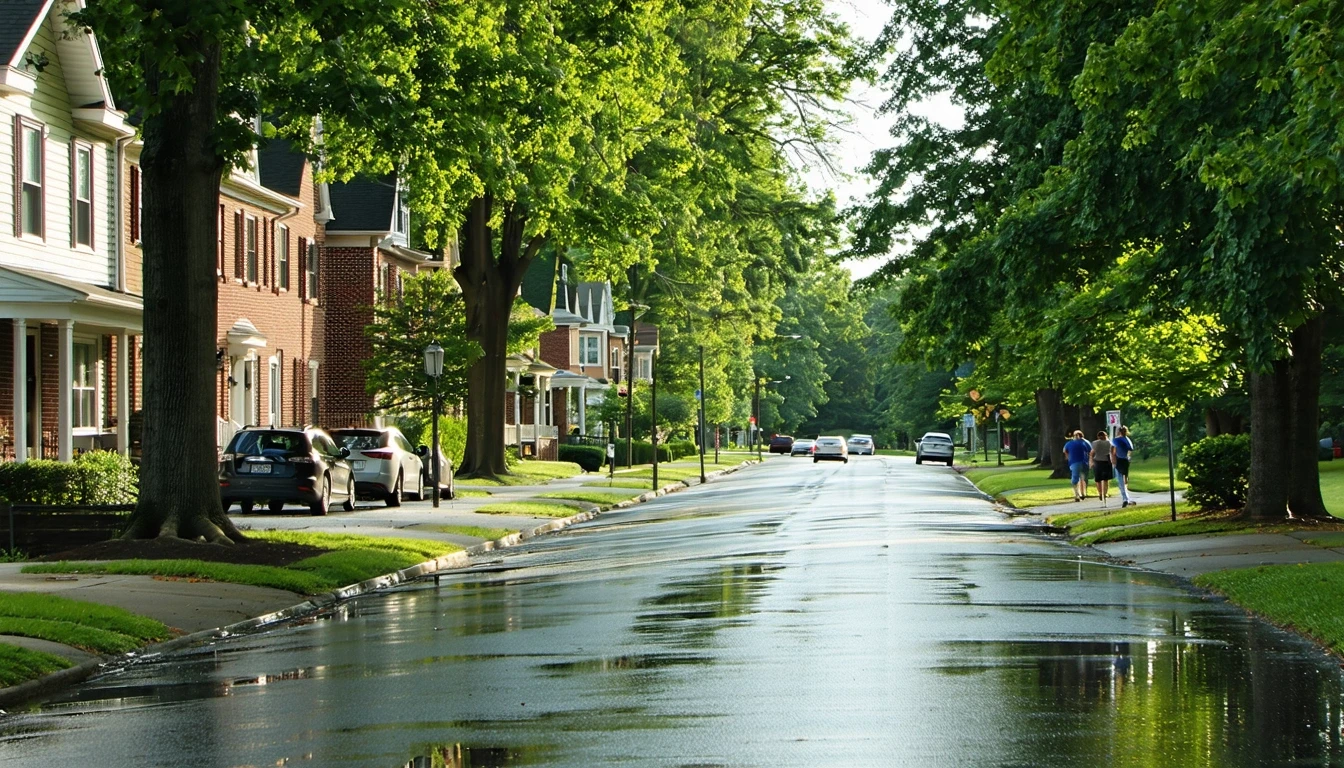
Overall Cost of Living Snapshot
Norristown’s cost structure sits 13% above the national baseline, driven primarily by housing entry costs and shaped by its position in the Philadelphia metro orbit. The regional price parity index of 113 reflects moderate upward pressure across categories, but the dominant financial question for most households isn’t day-to-day prices—it’s whether you’re renting short-term, buying in, or commuting out.
What separates low-cost and high-cost living here isn’t income level—it’s structural exposure. A renter with a short commute and access to rail faces fundamentally different cost pressure than a homebuyer financing entry at today’s rates while driving 25+ miles daily. The unemployment rate of 3.0% signals a stable local economy, but job location relative to Norristown determines whether transportation becomes a secondary housing payment or a minor line item.
The biggest surprise for newcomers isn’t sticker shock—it’s realizing that convenience and logistics costs (time, fuel, vehicle wear) often outweigh small differences in grocery or utility bills. Food and grocery density exceeds high thresholds, and park access is deeply integrated, meaning day-to-day errands and recreation don’t require long drives. But workplace location still dictates whether those advantages translate into lower overall cost exposure.
Driver verdict: Housing entry cost dominates upfront decisions, but transportation exposure determines long-run financial pressure. Utility seasonality and grocery prices add texture but rarely shift the calculus.
Housing Costs (Primary Driver)
Median home value stands at $188,100, positioning Norristown as a moderate-entry market within the Philadelphia metro. For renters, median gross rent of $1,264 per month reflects the same dynamic: not cheap, but accessible compared to closer-in suburbs and urban cores. The gap between rent and ownership cost isn’t wide enough to make either choice automatic—it depends on timeline, mobility, and financing access.
Renters gain flexibility and avoid property tax exposure, which matters in Pennsylvania’s relatively high-tax environment. Buyers gain stability and stop rent escalation, but take on maintenance, insurance, and tax volatility that doesn’t appear in the purchase price. Neither path is inherently cheaper—the right choice depends on how long you plan to stay and whether you value optionality over predictability.
Norristown functions as a transitional city: accessible enough for first-time buyers and stable enough for renters who need more space than urban options provide, but not insulated from regional price pressure. Building height character exceeds high thresholds and mixed land use is present, indicating an established, denser residential fabric rather than sprawling single-family subdivisions. That density supports the errands accessibility observed in the data, but it also means housing stock is older, with the maintenance and efficiency implications that come with it.
Conclusion: Norristown is a transitional city—viable for both renting and buying depending on household timeline, but neither path avoids trade-offs.
| Housing Type | Cost Anchor | What That Buys You |
|---|---|---|
| Renting | $1,264/month median | Flexibility, no tax or maintenance exposure, access to established neighborhoods |
| Buying | $188,100 median value | Stability, equity building, exposure to property tax and maintenance volatility |
Utilities & Energy Risk
Electricity rates sit at 20.30¢ per kWh, reflecting Pennsylvania’s mid-Atlantic utility pricing. Natural gas is priced at $14.49 per MCF (roughly 100 therms), which translates to moderate heating-season exposure in a climate with cold winters. Current temperature of 50°F (feels like 48°F) is typical of shoulder seasons, but winter heating and summer cooling both drive meaningful swings in monthly utility outlays.
The risk isn’t that utilities are unusually expensive—it’s that seasonal demand creates volatility. Heating a home through a Pennsylvania winter or cooling it during humid summer stretches can double or triple baseline electric and gas usage. Older housing stock, common in denser, established areas, often means lower insulation standards and less efficient HVAC systems, amplifying seasonal swings.
Households can reduce exposure through efficiency upgrades, programmable thermostats, and usage discipline, but the structural reality remains: utilities here are a moderate, recurring risk rather than a minor fixed cost. Budget accordingly for seasonal peaks, and recognize that efficiency improvements reduce volatility more than they reduce absolute cost.
Risk classification: Moderate. Seasonal swings are predictable but not trivial, and housing age amplifies exposure.
Groceries & Daily Costs
Grocery pricing in Norristown reflects the regional price parity index of 113, meaning food costs run moderately above the national baseline. Derived estimates place bread around $2.04 per pound, eggs at $2.65 per dozen, and ground beef at $7.57 per pound—all consistent with mid-Atlantic pricing in 2026. These figures are derived estimates based on national baseline adjusted by regional price parity; not observed local prices.
What matters more than individual item prices is the accessibility of grocery options. Food and grocery establishment density both exceed high thresholds, meaning competitive options exist without long drives. That structural advantage reduces the hidden costs of grocery shopping—time, fuel, and the temptation to overspend at convenience stores when full-service groceries aren’t nearby.
For cost-conscious households, the ability to compare prices across multiple stores within a short radius translates into meaningful savings over time. For time-constrained households, the same density means errands don’t require dedicated trips or route planning. Either way, the day-to-day costs of feeding a household are shaped more by logistics and access than by per-item pricing.
Transportation Reality
Average commute time is 26 minutes, and 42.6% of workers face long commutes—a clear signal that many Norristown residents work outside the immediate area. Only 6.9% work from home, meaning the vast majority depend on either personal vehicles or public transit to reach employment.
Rail service is present with high confidence, offering a viable alternative to driving for those whose jobs align with transit routes. But the pedestrian-to-road ratio sits in the medium band, and bike infrastructure is present only in pockets. Translation: while rail access exists, the default transportation mode for most households remains the car. Errands, school runs, and non-work trips still require personal vehicles even if commuting doesn’t.
Gas prices at $4.52 per gallon add recurring cost pressure for car-dependent households, especially those driving long distances daily. A 25-mile round-trip commute at 25 MPG implies roughly one gallon per day, or over $90 per month in fuel alone before maintenance, insurance, or depreciation. Double that exposure for two-car households or longer commutes.
The transportation calculus here isn’t binary. Rail presence reduces exposure for some, but it doesn’t eliminate car dependency for most. The question isn’t whether you need a car—it’s whether you need two, and how many miles you’re putting on them annually.
Cost Exposure Profiles
Cost pressure in Norristown is structural, not universal. A renter with a short commute or rail-accessible job faces moderate housing cost and minimal transportation exposure—a relatively low-cost profile. A homebuyer financing at current rates while commuting 30+ miles daily faces high entry cost, ongoing transportation expense, and seasonal utility swings—a high-exposure profile. Same city, radically different financial realities.
The dominant exposures are:
- Housing entry cost: Moderate for buyers, recurring but capped for renters. Ownership brings tax and maintenance volatility; renting brings renewal risk.
- Transportation dependence: High for long commuters and multi-car households, low for those near rail or with short drives. Vehicle count and commute distance determine whether this is a minor or major cost center.
- Utility volatility: Moderate for all, amplified by housing age and seasonal extremes. Predictable but not trivial.
Low-exposure situations cluster around short tenures, rail access, and rental housing. High-exposure situations cluster around long commutes, homeownership with financing, and multi-vehicle dependence. The city itself is moderately priced, but household structure and job location determine whether that moderation holds or compounds.
Norristown rewards proximity and simplicity. The closer your job, the fewer cars you need, and the shorter your stay, the lower your total cost exposure. Conversely, long commutes and long timelines amplify every cost category.
Frequently Asked Questions
Is Norristown more affordable than nearby Philadelphia in 2026? Yes, housing entry costs are lower in Norristown, but transportation exposure often offsets the savings if your job remains in the city. The trade-off is rent versus commute cost.
What does a typical cost profile look like in Norristown? Moderate housing cost, moderate grocery and utility expenses, and variable transportation cost depending on commute length and vehicle dependence. The biggest swings come from where you work and how you get there.
Do utilities cost more in Norristown than in other Pennsylvania suburbs? Electricity and gas rates are consistent with mid-Atlantic pricing—not unusually high, but subject to seasonal volatility. Heating and cooling drive the largest swings, especially in older housing stock.
What costs tend to surprise newcomers in Norristown? Transportation exposure surprises those who underestimate commute distance or assume rail access eliminates the need for a car. Seasonal utility swings also catch renters off guard if they’re used to milder climates.
Are property taxes higher in Norristown than in surrounding areas? Pennsylvania property taxes tend to run higher than the national average, and Norristown reflects that regional pattern. Exact rates vary by municipality, but buyers should budget for meaningful annual tax obligations.
Is Norristown a good value for renters in 2026? For renters with short commutes or rail-accessible jobs, yes—median rent of $1,264 buys access to established neighborhoods with strong errands accessibility and green space. For those commuting long distances, transportation costs can erode the housing savings.
How does grocery cost in Norristown compare to the rest of Pennsylvania? Grocery pricing runs moderately above the national baseline, consistent with the regional price parity index of 113. The bigger advantage is access—high grocery density means competitive options without long drives.
Does Norristown require a car, or is transit enough? Rail service exists and works well for some commutes, but the pedestrian-to-road ratio and bike infrastructure suggest most households still rely on cars for errands, school, and non-work trips. Transit reduces exposure but doesn’t eliminate car dependency for most.
How this article was built: In addition to public economic data, this article incorporates location-based experiential signals derived from anonymized geographic patterns—such as access density, walkability, and land-use mix—to reflect how day-to-day living actually feels in Norristown, PA.
—