
Mia stood in front of three browser tabs: a studio near campus for $2,400, a shared two-bedroom fifteen minutes away for $1,800 per person, and a room in a six-person house two miles out for $1,200. All three were in Palo Alto. All three felt impossibly expensive. But as she clicked through photos of tree-lined streets, bike lanes, and cafés within walking distance, she started to understand what she was actually paying for—and whether it was worth it.
Student living in Palo Alto isn’t defined by a single price point. It’s shaped by a tension between exceptional day-to-day infrastructure and some of the highest housing costs in the country. This guide breaks down what students actually experience here: how housing works, what mobility feels like without a car, where money goes, and whether the tradeoffs make sense for your college years.
Why Students Choose Palo Alto
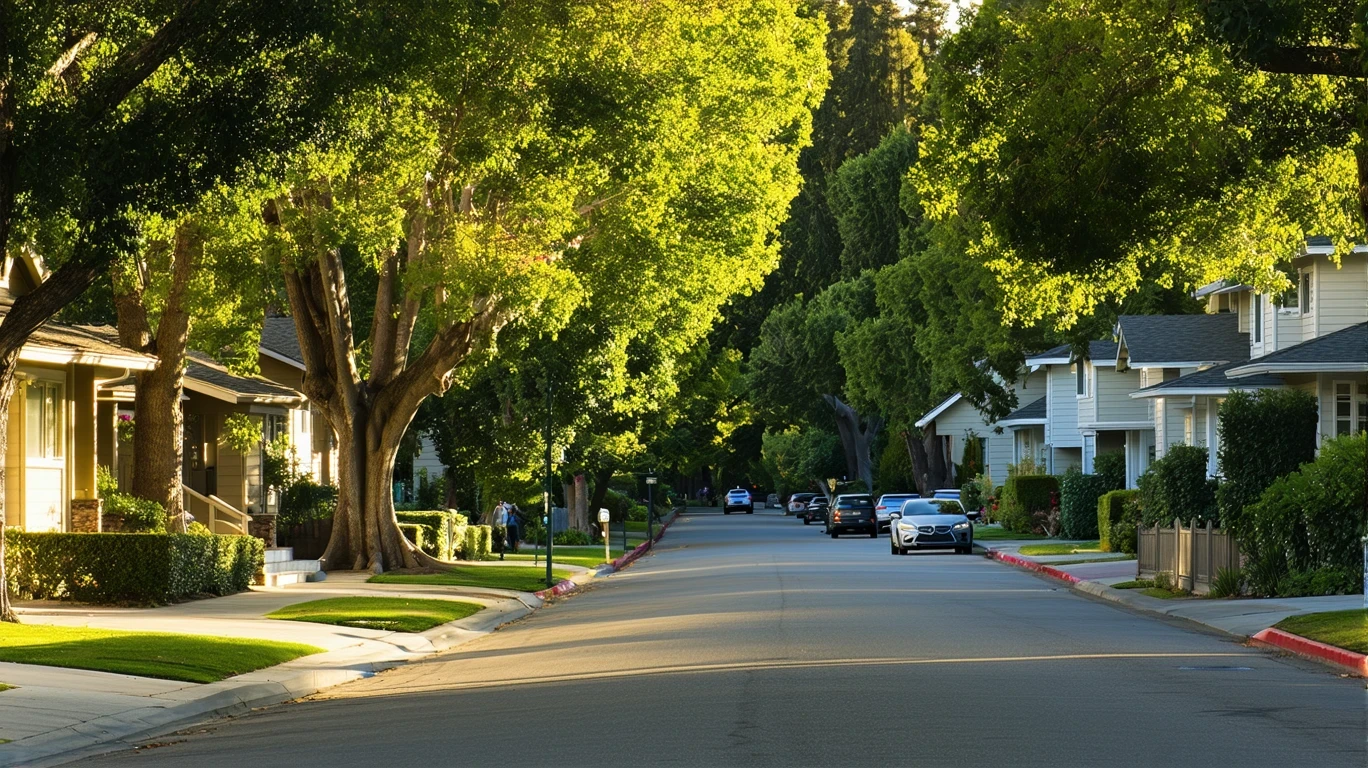
Palo Alto earns a student-friendliness score of 78 out of 100, reflecting a city built for movement, access, and intellectual energy—but constrained by cost. The score captures two realities at once. On one hand, Palo Alto offers a rare combination of walkable neighborhoods, extensive bike infrastructure, rail transit access, and high-density grocery and food options that let students live without a car and still run errands efficiently. Parks are integrated throughout the city, healthcare facilities including a hospital are present, and the urban form mixes residential and commercial uses in ways that reduce friction in daily life.
On the other hand, median gross rent in Palo Alto is $3,169 per month, a figure that reflects the broader housing market and creates immediate pressure for students trying to live independently or even with roommates. The city’s proximity to Stanford University and its position in Silicon Valley drive both its intellectual vibrancy and its housing costs. Students choose Palo Alto because the day-to-day experience—how you move, where you study, what you can reach on foot or by bike—is unusually fluid. But that choice comes with financial tradeoffs that require planning, shared housing, or external support.
What makes Palo Alto work for students isn’t affordability in the traditional sense. It’s the ability to live car-free, access campus and amenities without logistical friction, and be embedded in a community where intellectual work and innovation are the norm. For students with financial aid packages, family support, or graduate assistantships, those qualities can outweigh the rent burden. For others, the calculus doesn’t close.
Housing Options for Students
The off-campus rental market in Palo Alto operates at a scale that makes solo living prohibitively expensive for most students. Median rent reflects a mix of single-family homes, larger apartments, and newer units—not purpose-built student housing. In practice, students navigate this market by sharing. A two-bedroom apartment might rent for $3,500 to $4,500 per month, translating to $1,750 to $2,250 per person when split. Three- or four-bedroom houses, often older and farther from campus, can bring per-person costs closer to $1,200 to $1,600 when fully occupied, though availability is limited and competition is high.
Lease terms typically run twelve months, and landlords often require first and last month’s rent plus a security deposit, meaning upfront costs can easily reach $4,000 to $5,000 per person even in shared scenarios. Some students find rooms in larger group houses where existing tenants are looking to fill a vacancy, which can reduce upfront costs and offer more flexibility, but these arrangements require careful vetting and clear agreements about shared responsibilities.
On-campus housing, where available, often provides more predictable costs and eliminates the need to furnish a unit or manage utilities separately, but availability is typically limited and prioritized by class year or program. Students who secure on-campus options often find that the convenience and proximity justify the cost, especially when factoring in time saved commuting and the ability to participate in campus life without logistical barriers. Off-campus students, by contrast, gain more control over their living environment and sometimes lower per-person costs, but take on the complexity of lease negotiations, roommate coordination, and utility management.
Proximity to campus matters not just for commute time but for spontaneity—being able to attend evening lectures, meet study groups on short notice, or access libraries and labs without planning around a bus schedule. Palo Alto’s bike infrastructure and pedestrian-to-road ratio make it possible to live a mile or two from campus and still feel connected, but students farther out often find themselves more reliant on planning and less embedded in the campus rhythm.
Getting Around: Transportation and Campus Access
Palo Alto’s transportation structure is one of its strongest assets for students. The city’s pedestrian-to-road ratio exceeds high thresholds, meaning sidewalks, crossings, and pathways are dense relative to car infrastructure. The bike-to-road ratio is similarly high, with dedicated bike lanes and paths that make cycling a practical primary mode rather than a recreational option. For students, this translates into a day-to-day reality where you can live without a car and not feel stranded or dependent on others for basic errands.
Rail transit is present in Palo Alto, providing direct access to San Francisco, San Jose, and other parts of the Bay Area. For students, this means internships, cultural events, and social opportunities beyond the immediate area are reachable without needing to own or borrow a vehicle. Local bus service connects neighborhoods within the city and extends to nearby communities, and many students qualify for discounted or free transit passes through university programs.
Biking is not just viable but common. The infrastructure supports it, the climate allows year-round cycling, and the distances between campus, grocery stores, cafés, and parks are manageable. Students who bike as their primary mode often find that their monthly transportation costs drop to near zero aside from occasional maintenance. Those who rely on public transit might spend $50 to $100 per month depending on frequency and whether they travel outside the immediate area. Students who choose to keep a car face not only gas prices of $5.89 per gallon but also parking costs, insurance, and the reality that much of daily life doesn’t require one.
The question isn’t whether you can get around without a car—you can. The question is whether your housing location, class schedule, and social life align in ways that make car-free living feel easy or require constant planning. In Palo Alto, the infrastructure leans heavily toward the former.
Student Cost of Living
A realistic monthly budget for a student in Palo Alto depends almost entirely on housing arrangement. For a student sharing a two-bedroom apartment at $1,800 per person, the foundation is already set. Add groceries, transportation, personal expenses, and occasional entertainment, and the total monthly outlay can range from $2,200 to $2,800 depending on lifestyle. Students in larger shared houses paying $1,200 to $1,400 per person can bring total monthly costs closer to $1,800 to $2,200, while those attempting solo living face $3,000+ in housing alone before any other expenses.
Food costs vary by approach. Students cooking most meals at home and shopping strategically might spend $250 to $350 per month on groceries. Those who eat out more frequently, grab coffee between classes, or rely on campus dining options can easily see food costs rise to $500 to $600 per month. Palo Alto’s high density of food establishments and grocery stores—both exceeding high thresholds—means access isn’t the issue; cost management is.
Textbooks and course materials add $100 to $200 per month when averaged across a semester, though this fluctuates by program and whether students buy new, used, or digital versions. Entertainment and social expenses—concerts, movies, dinners out, weekend trips—can range from $100 for students living frugally to $300 or more for those with more discretionary income. Personal care, phone bills, and miscellaneous expenses typically add another $100 to $150 per month.
Part-time work is common and often necessary. On-campus jobs, tutoring, research assistant positions, and service industry roles in the area typically pay $16 to $22 per hour. A student working 15 hours per week at $18 per hour earns roughly $1,170 per month before taxes, which can cover a significant portion of non-housing expenses but rarely closes the gap on rent in shared housing without additional financial aid or family support.
Monthly Student Budget in Palo Alto
Here’s what a typical monthly student budget might look like in Palo Alto:
| Category | Shared Housing | Solo Living |
|---|---|---|
| Rent | $1,400–$1,800 | $2,400–$3,200 |
| Utilities (electric, gas, internet) | $80–$120 | $150–$200 |
| Groceries | $250–$350 | $300–$400 |
| Dining out / coffee | $100–$200 | $150–$250 |
| Transportation | $30–$80 | $50–$100 |
| Textbooks / supplies | $100–$150 | $100–$150 |
| Entertainment / social | $100–$200 | $150–$300 |
| Personal care / misc | $100–$150 | $100–$150 |
| Total | $2,160–$3,050 | $3,400–$4,750 |
Estimates based on average student spending patterns and local costs; ranges reflect frugal to moderate lifestyle choices and do not include tuition, fees, or financial aid.
Student-Friendly Amenities and Services
Palo Alto’s amenity density creates an environment where students can study, work, and socialize without needing to travel far or plan extensively. Coffee shops with reliable Wi-Fi are abundant, and many stay open late enough to accommodate evening study sessions. Public libraries and campus facilities provide additional study spaces, and the presence of both residential and commercial land uses means you’re rarely more than a ten-minute walk from a café, grocery store, or park.
Green space is integrated throughout the city, with park density exceeding high thresholds. For students, this means access to outdoor areas for running, pickup sports, or simply decompressing between classes. Playgrounds and schools are present in moderate density, reflecting family infrastructure that also supports a sense of community safety and neighborhood stability.
Healthcare access includes both a hospital and pharmacies, meaning students can address routine and urgent medical needs locally. Many students also have access to campus health centers, but knowing that off-campus options exist reduces dependence on university systems and provides continuity of care for students living in the area year-round.
Student discounts are common at local businesses, particularly cafés, bookstores, and fitness centers. On-campus job boards and career services provide access to part-time work, internships, and networking opportunities, and the proximity to Silicon Valley means students in tech, business, and research fields often find pathways to professional experience that align with their academic focus.
Social Scene and Nightlife
Palo Alto’s social scene is shaped more by campus culture and intellectual community than by traditional nightlife. The city has restaurants, bars, and live music venues, but the energy is quieter and more focused than in larger urban centers. Students often find that social life revolves around campus events, student organizations, intramural sports, and informal gatherings rather than a bustling downtown bar scene.
For students who want access to more varied nightlife or cultural events, Palo Alto’s rail transit connection makes San Francisco and San Jose reachable for weekend trips without needing a car. Locally, the mix of residential and commercial land use supports neighborhood cafés, small music venues, and community events that create opportunities for connection without requiring late nights or high spending.
Dating and social networking benefit from the density of young professionals and graduate students in the area, and the walkable environment makes spontaneous meetups easier. Students who thrive in quieter, intellectually engaged communities often find Palo Alto’s social texture appealing, while those seeking high-energy nightlife may feel the limitations.
Safety and Practical Considerations
Palo Alto’s crime rate is low relative to national averages, and the presence of both campus security and local law enforcement creates multiple layers of safety infrastructure. Students living off-campus generally report feeling safe walking or biking at night, particularly in well-lit areas near campus and along main corridors. Emergency services are accessible, and the hospital presence means urgent medical care is available locally.
Academic support services, tutoring centers, and writing labs are typically available through the university, and the city’s café and library infrastructure provides additional spaces for focused work. For students balancing part-time work and coursework, the ability to study in multiple locations without commuting long distances reduces logistical friction and supports time management.
Internship opportunities are abundant given Palo Alto’s location in Silicon Valley, and career services at nearby universities often facilitate connections to local companies, startups, and research institutions. For students in STEM fields, business, or policy, the proximity to industry can translate into professional experience that enhances both academic work and post-graduation prospects.
FAQs About Student Life in Palo Alto
What’s the average cost of student living in Palo Alto?
Students in shared housing typically spend $2,200 to $3,000 per month including rent, food, transportation, and personal expenses. Solo living pushes total costs to $3,400 to $4,750 per month. The primary driver is housing; students who secure lower-cost shared arrangements or on-campus housing can bring totals down, but the baseline remains high compared to most college towns.
How safe is it for students to live off-campus?
Palo Alto has low crime rates and well-lit pedestrian infrastructure, and students generally report feeling safe walking or biking at night. Campus security, local police, and the presence of a hospital contribute to a secure environment. As with any city, awareness of surroundings and choosing well-trafficked routes at night are standard precautions.
Are there good part-time job opportunities?
Yes. On-campus positions, tutoring roles, research assistantships, and service industry jobs in the area are common. Typical wages range from $16 to $22 per hour. The proximity to Silicon Valley also creates internship and contract opportunities for students in tech and business fields, though these may require more flexible scheduling.
What’s the social scene like for college students?
Palo Alto’s social scene is quieter and more campus-focused than in larger cities. Student organizations, intramural sports, and campus events form the core of social life. The city has cafés, restaurants, and some live music venues, but students seeking high-energy nightlife often travel to San Francisco or San Jose via rail. The environment suits students who value intellectual community and outdoor access over dense urban nightlife.
Making the Decision: Is Palo Alto Right for Your College Years?
Palo Alto offers a rare combination of walkability, transit access, bike infrastructure, and amenity density that makes car-free student life not just possible but practical. The ability to reach campus, grocery stores, parks, and cafés on foot or by bike reduces both transportation costs and daily logistical friction. For students who value that kind of fluidity and are embedded in a university community with strong financial aid or external support, Palo Alto can provide an environment where intellectual work and day-to-day living align smoothly.
The primary drawback is cost. Median rent of $3,169 per month reflects a housing market shaped by Silicon Valley demand, and even shared housing requires careful budgeting and often part-time work or family contributions. Students without robust financial support may find that the cost of living in Palo Alto limits other opportunities—study abroad, unpaid internships, or simply the ability to save—in ways that affect both college experience and post-graduation flexibility.
For undergraduates in shared housing with financial aid packages that account for local costs, Palo Alto can work. For graduate students with assistantships or fellowships, the tradeoff between rent and access may be worth it, particularly if research or professional opportunities are tied to the area. For community college students or those without significant financial support, commuting from surrounding areas is often more realistic than trying to live locally.
The decision ultimately hinges on whether the day-to-day quality of life—how you move, what you can access, and the intellectual environment you’re embedded in—justifies the financial pressure. Palo Alto doesn’t make that tradeoff easy, but for students whose academic and professional goals align with what the city offers, the infrastructure and community can support a focused, engaged college experience. Understanding your monthly budget in Palo Alto and planning accordingly is essential before committing to living here.
How this article was built: In addition to public economic data, this article incorporates location-based experiential signals derived from anonymized geographic patterns—such as access density, walkability, and land-use mix—to reflect how day-to-day living actually feels in Palo Alto, CA.