
| Transit Type | Coverage in North Miami | Typical Use Case |
|---|---|---|
| Bus Service | Present along major corridors | Fixed-route commuters, corridor-based errands |
| Rail Transit | Not available within city limits | N/A |
| Walkable Access | High in select pockets | Daily errands, short trips in dense areas |
| Cycling Infrastructure | Present in limited areas | Recreational or short commutes in specific zones |
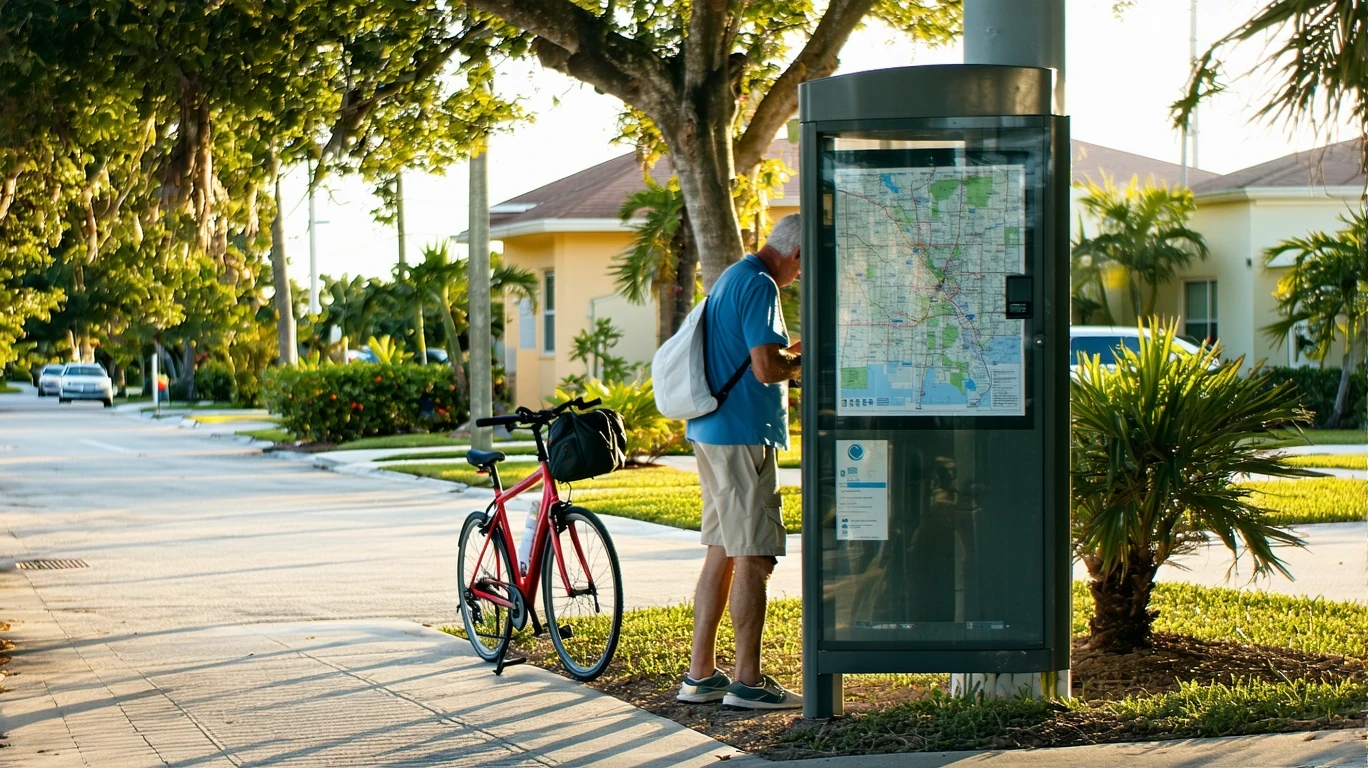
How People Get Around North Miami
Understanding transportation options in North Miami means recognizing a city built primarily around the car, but one where bus service and walkable pockets create meaningful alternatives for specific households and trip types. North Miami sits in a region where sprawl, heat, and distances between daily destinations make driving the default for most residents. Yet the city’s infrastructure tells a more textured story: pedestrian-to-road ratios exceed typical suburban thresholds in certain areas, bus stops dot major corridors, and grocery density supports corridor-clustered errands. The result is a mobility landscape where your transportation reality depends heavily on where you live within the city and what your daily routine demands.
Newcomers often assume North Miami operates like a purely car-dependent suburb or, conversely, that proximity to the Miami metro means robust transit throughout. Neither is accurate. The city’s building height profile skews more vertical than many Florida suburbs, and mixed land use appears in commercial corridors, creating zones where walking to a grocery store or catching a bus to work is genuinely viable. But step outside those pockets, and the infrastructure quickly favors the car. The question isn’t whether North Miami has transit—it does—but whether that transit, combined with walkability and cycling infrastructure, aligns with your household’s daily patterns.
Public Transit Availability in North Miami
Public transit in North Miami centers around bus service. No rail stations operate within city limits, so residents relying on public transportation navigate a network of bus routes that connect the city to surrounding areas and regional employment centers. Systems such as Miami-Dade Transit provide coverage along major corridors, and bus stops are present throughout the city, but the structure of that service shapes who benefits and who struggles.
Bus transit works best for households with predictable, linear commutes—someone traveling from a residential corridor to a job site along a major route, for example, or a renter living near a high-frequency corridor who can structure errands around bus schedules. The city’s corridor-clustered grocery and food access means that some residents can combine transit commutes with walkable errands, reducing the need for a personal vehicle on a day-to-day basis. But transit falls short for multi-stop trips, late-night travel, and routes that don’t align with the bus network’s spine. Families managing school drop-offs, grocery runs, and after-work activities typically find that transit adds friction rather than solving it.
The absence of rail transit is a structural constraint. While bus service can support specific lifestyles, it doesn’t offer the speed, frequency, or coverage that rail systems provide in denser metro cores. For North Miami residents, this means transit is a tool for certain trips, not a replacement for car ownership for most households.
Driving & Car Dependence Reality
Most people in North Miami rely on a car for daily life. The city’s layout, the distances between residential areas and job centers, and the realities of Florida heat make driving the path of least resistance for errands, commuting, and household logistics. Parking is generally accessible, and road infrastructure supports car travel as the primary mode. Even in the city’s walkable pockets, many households keep a vehicle for trips that fall outside the bus network or require flexibility.
Car dependence isn’t just about preference—it’s about structure. North Miami’s development pattern includes both vertical, mixed-use corridors and lower-density residential zones. In the latter, walking to a grocery store or bus stop may be impractical, and cycling infrastructure exists only in limited areas. For families, multi-income households, or anyone managing complex daily schedules, the car provides control and predictability that transit cannot match.
That said, car reliance comes with its own tradeoffs. Vehicles require upfront costs, maintenance, insurance, and exposure to fuel price volatility. Gas prices in the area currently sit at $4.28 per gallon, a reminder that driving, while convenient, ties household budgets to external price swings. The question for residents isn’t whether to own a car, but whether a second or third vehicle is necessary, and whether proximity to transit or walkable corridors can reduce how much that car gets used.
Commuting Patterns & Daily Mobility
Commuting in North Miami reflects the broader reality of South Florida’s dispersed employment landscape. Many residents work outside the city, traveling to Miami, Fort Lauderdale, or other regional hubs. Others work locally, but in zones that require a car to reach efficiently. The structure of the commute—whether it’s a single fixed route or a multi-stop pattern—determines whether transit is viable or whether driving becomes non-negotiable.
For single-destination commuters whose routes align with bus corridors, public transit can work. Someone living near a major bus line and working in a transit-accessible zone can avoid the costs and hassles of daily driving. But households managing multiple stops—dropping kids at school, running errands, picking up groceries—find that transit adds time and complexity. The city’s pedestrian infrastructure supports walking in certain pockets, but those areas are not evenly distributed, and the summer heat makes even short walks feel longer.
Proximity matters. Residents in North Miami’s walkable pockets, where pedestrian-to-road ratios are high and bus stops are nearby, experience a fundamentally different daily reality than those in car-oriented zones. The former can structure their lives around shorter trips and occasional transit use; the latter absorb commute friction as a baseline condition.
Who Transit Works For — and Who It Doesn’t
Transit in North Miami is not a universal solution—it’s a fit for specific household types and living situations. Renters in walkable corridors near bus lines, single commuters with fixed schedules, and households prioritizing lower vehicle costs can build a functional life around bus service and walking. These residents benefit from the city’s corridor-clustered grocery access and the presence of bus stops along major routes. For them, transit reduces transportation costs and simplifies daily logistics.
But transit doesn’t work well for families, especially those with young children or complex schedules. School drop-offs, after-school activities, and multi-stop errands require the flexibility that only a car provides. Similarly, residents in peripheral neighborhoods—where walkability is lower and bus coverage is thinner—find that transit adds time without reducing costs enough to justify the tradeoff. Homeowners, who often prioritize space and yard access over proximity to transit corridors, typically end up car-dependent by default.
The city’s infrastructure also creates a divide between core and edge. In areas where building heights are higher, land use is mixed, and pedestrian paths are denser, transit becomes a viable supplement to car ownership. In lower-density zones, it remains a backup option at best.
Transportation Tradeoffs in North Miami
Choosing between transit and driving in North Miami means weighing predictability against cost, and control against exposure. Driving offers flexibility, speed, and the ability to manage complex schedules without depending on bus routes or walking distances. It also exposes households to fuel price swings, maintenance costs, and the upfront burden of vehicle ownership. Transit, by contrast, reduces those fixed costs but introduces route constraints, schedule dependence, and time friction for trips that don’t align with the bus network.
For households that can structure their lives around walkable corridors and bus routes, the tradeoff tilts toward transit. These residents gain lower transportation costs and reduce their exposure to fuel volatility, though they sacrifice some flexibility. For families, multi-income households, or anyone living outside the city’s walkable pockets, the tradeoff tilts toward driving. The car becomes a necessity, not a luxury, and the question shifts from “whether” to “how many.”
The city’s layout also shapes housing decisions. Proximity to bus corridors and walkable zones often comes with higher rents or home prices, as those areas offer better access to daily errands and transit options. Residents who prioritize lower housing costs may find themselves in car-dependent zones, where transportation savings evaporate into higher vehicle use.
FAQs About Transportation in North Miami (2026)
Is public transit usable for daily commuting in North Miami?
Yes, but only for specific commute patterns. If your route aligns with major bus corridors and your schedule is predictable, transit can work. Multi-stop commutes, late-night travel, or routes that require transfers add enough friction that most households default to driving.
Do most people in North Miami rely on a car?
Yes. The city’s layout, distances between destinations, and limited rail access make car ownership the norm. Even residents who use transit occasionally typically keep a vehicle for trips that fall outside the bus network.
Which areas of North Miami are easiest to live in without a car?
Walkable pockets near major bus corridors offer the best chance of reducing car dependence. These areas combine higher pedestrian infrastructure, mixed land use, and access to grocery stores and transit stops. Outside these zones, car-free living becomes significantly harder.
How does commuting in North Miami compare to nearby cities?
North Miami’s commute reality mirrors much of South Florida: car-dominant, with bus service as a supplement rather than a replacement. Cities with rail access or denser cores offer more transit options, but North Miami’s bus network and walkable corridors provide more flexibility than purely suburban areas.
Can you get by with one car in North Miami?
Many households do, especially if one partner works from home, uses transit, or has a flexible schedule. But families with multiple jobs, school-age children, or complex daily routines often find that a second vehicle reduces stress and time friction.
How Transportation Fits Into the Cost of Living in North Miami
Transportation in North Miami isn’t just a line item—it’s a structural factor that shapes where you live, how much time you spend commuting, and how much control you have over daily logistics. Households that can access walkable corridors and bus routes gain flexibility in how they allocate resources, potentially reducing vehicle costs or avoiding a second car. Those in car-dependent zones absorb higher transportation costs as part of the baseline cost structure.
The city’s median household income sits at $49,069 per year, and transportation decisions ripple through the rest of the budget. A household that can rely on one car instead of two frees up resources for housing, savings, or other priorities. A household that needs two vehicles to manage daily life faces higher fixed costs and greater exposure to fuel and maintenance volatility.
For a fuller picture of how transportation costs interact with housing, utilities, and other expenses, see A Month of Expenses in North Miami: What It Feels Like. That article breaks down the broader cost structure and shows how mobility choices fit into the larger financial reality of living here.
Ultimately, getting around North Miami works best when you understand the city’s infrastructure and match it to your household’s needs. Transit is real, walkability exists in pockets, and bus service supports specific lifestyles—but the car remains the dominant mode for most residents. The key is knowing which zones offer alternatives, what tradeoffs those alternatives require, and whether your daily routine aligns with the city’s transportation structure.
How this article was built: In addition to public economic data, this article incorporates location-based experiential signals derived from anonymized geographic patterns—such as access density, walkability, and land-use mix—to reflect how day-to-day living actually feels in North Miami, FL.