
“We moved to Maple Grove for the schools, but stayed for the neighbors.”
That sentiment captures something essential about this northwest Twin Cities suburb—but it doesn’t tell the whole story. Maple Grove draws people in with promises of space, safety, and access to nature, and for many households, it delivers exactly that. But the emotional experience of living here depends heavily on what you’re trading in, what you’re hoping to find, and how much friction you’re willing to tolerate in the logistics of daily life.
This isn’t a city that tries to be everything to everyone. It’s a place where parks feel abundant and integrated into the rhythm of life, where cycling infrastructure has quietly become more notable than many expect, and where the suburban baseline is punctuated by pockets of walkability that surprise newcomers. But it’s also a place where errands cluster along corridors rather than spreading evenly across neighborhoods, where school density lags behind family demand, and where getting around without a car still means planning ahead.
Understanding whether Maple Grove feels like home—or like compromise—comes down to recognizing these tradeoffs before you arrive.
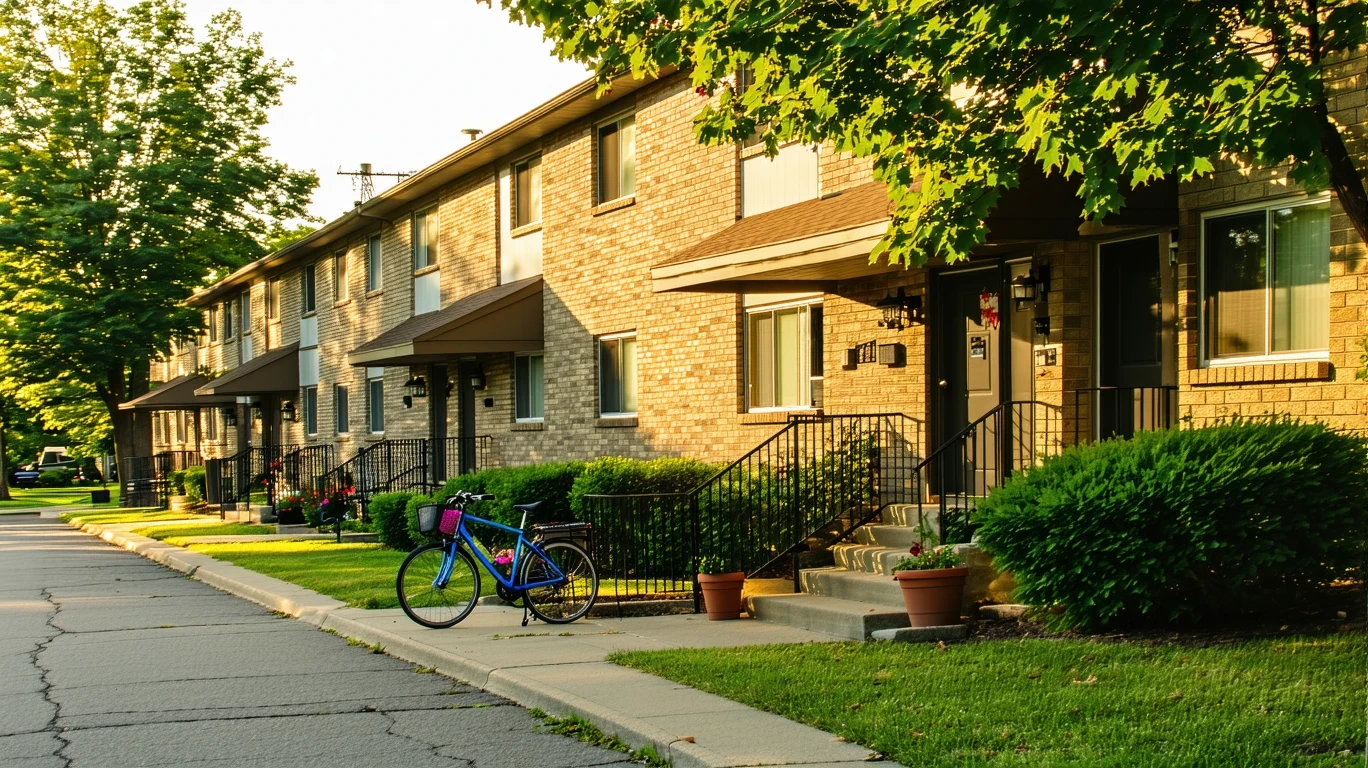
What Defines the Maple Grove Vibe
Maple Grove occupies an interesting middle ground in the Twin Cities suburban landscape. It’s not trying to mimic urban Minneapolis, but it’s also evolved past the purely residential bedroom community model. The result is a place where outdoor access and green space feel genuinely woven into daily life, where bike lanes appear in places you wouldn’t expect in a typical suburb, and where certain neighborhoods offer more pedestrian texture than the car-dominated reputation suggests.
But that texture isn’t universal. The city’s commercial and grocery options tend to concentrate along major corridors, which means day-to-day costs and convenience depend heavily on where you live relative to those arteries. If your home sits near one of these clusters, errands feel manageable. If you’re tucked into a quieter pocket, every grocery run or pharmacy stop becomes a deliberate trip.
The emotional tone here skews toward contentment among people who value outdoor recreation, appreciate economic stability, and don’t mind driving to access what they need. Frustration tends to surface among those who expected denser school options, spontaneous walkability to daily needs, or robust public transit that goes beyond bus-only service.
Social Media Buzz in Maple Grove
Conversations about Maple Grove on platforms like Facebook neighborhood groups and regional Reddit threads tend to circle around a few recurring themes: pride in the park system, mild irritation about traffic along commercial strips, and ongoing debate about what the city is becoming as it continues to grow.
There’s a protective streak in how long-time residents talk about the community—a sense that Maple Grove has “done suburban right” by maintaining green space and avoiding the kind of strip-mall sprawl that defines some peer cities. But there’s also fatigue among newer arrivals who feel the infrastructure hasn’t kept pace with population growth, particularly around school capacity and the clustering of services.
“It’s a great place to raise kids if you have a car and don’t mind driving them everywhere,” one composite sentiment reflects. “The parks are fantastic, but good luck walking to get milk.”
“I love the trail system here—it’s one of the best-kept secrets in the metro,” another voice offers. “But I wish there were more local spots within biking distance that weren’t just big-box stores.”
“We came from a walkable neighborhood in Minneapolis and the adjustment was harder than we expected,” a third perspective admits. “It’s quiet and safe, but everything feels like it requires a plan.”
The tone isn’t bitter, but it’s not uncritical either. People tend to appreciate what Maple Grove does well while acknowledging the tradeoffs that come with its structure.
Local News Tone
Coverage of Maple Grove in regional and community outlets tends to frame the city through the lens of growth management, amenity expansion, and identity evolution. The city is no longer “new,” but it’s still in the process of defining what it wants to be as it matures.
Recurring topic buckets include:
- “Community Debates What Growth Should Look Like”
- “New Retail and Dining Options Arrive Along Main Corridors”
- “Residents Weigh Convenience vs Quiet in Development Discussions”
- “Trail Expansions and Park Improvements Draw Outdoor Enthusiasts”
- “Schools Face Capacity Questions as Enrollment Shifts”
The framing is generally optimistic but not without tension. There’s recognition that Maple Grove has built something appealing, but also awareness that maintaining that appeal while accommodating growth requires difficult choices about density, traffic, and character.
Review-Based Public Perception
On platforms like Google reviews, Nextdoor posts, and regional discussion boards, Maple Grove earns consistent praise for its park system, safety, and overall “suburban done right” feel. Families who wanted space, good schools, and access to nature tend to feel their expectations were met—or exceeded.
But there’s a clear pattern of disappointment among those who hoped for more walkable access to daily needs, more variety in local dining and retail, or a stronger sense of neighborhood-level community identity. The city’s structure rewards those who enjoy driving and planning, and penalizes those who value spontaneity and hyperlocal access.
“The parks are incredible and we use them constantly,” one common refrain goes. “But if you forget something at the store, it’s a whole thing to go back.”
“Great for families with young kids who love being outside,” another perspective notes. “Less great if your kids are old enough to want independence but too young to drive.”
Newer planned areas tend to draw praise for their cohesion and amenities, while older pockets sometimes feel disconnected from the city’s evolving identity. The variation isn’t dramatic, but it’s enough to shape daily experience in meaningful ways.
Comparison to Nearby Cities
| Dimension | Maple Grove | Plymouth | Minnetonka |
|---|---|---|---|
| Overall Vibe | Outdoor-focused suburban comfort with walkable pockets | Polished, corporate-adjacent, highly planned | Established, varied, quietly affluent |
| Errands & Walkability | Corridor-clustered, requires planning | Similar corridor model, slightly denser retail | More neighborhood-level commercial nodes |
| Outdoor Access | Exceptional park density and trail integration | Strong but more utilitarian | Excellent, with more water access |
| Transit & Mobility | Bus-only, notable bike infrastructure | Bus-only, similar car dependence | Bus-only, more established cycling culture |
| Community Tone | Friendly, protective, growth-conscious | Professional, transient-friendly | Settled, low-key, less overtly social |
Choosing between these three often comes down to what you’re optimizing for. If outdoor recreation and park access top your list, Maple Grove delivers in ways that feel genuinely integrated rather than incidental. If you want more variety in commercial nodes or a slightly more urban-adjacent feel, Minnetonka offers more texture. If you prioritize a polished, corporate-friendly environment with strong retail corridors, Plymouth might edge ahead.
None of these cities will satisfy someone seeking dense, spontaneous walkability or robust transit. But within the constraints of northwest suburban Twin Cities life, each offers a distinct flavor of compromise.
What Locals Are Saying
“We love the trail system and use it year-round. It’s one of the main reasons we picked Maple Grove over other suburbs. But I do wish there were more local coffee shops or breakfast spots we could bike to—it’s mostly chains along the main roads.”
— Young family, moved from Minneapolis three years ago
“The parks are genuinely great, and our kids spend more time outside here than they ever did in our old neighborhood. The tradeoff is that we drive a lot more. Everything is just far enough apart that walking isn’t practical most of the time.”
— Parents of two elementary-aged children
“I was surprised by how bike-friendly parts of Maple Grove are. It’s not Copenhagen, but for a suburb, the infrastructure is better than I expected. That said, I still drive to the grocery store because the nearest one is on a busy corridor.”
— Remote worker, mid-30s
“It’s quiet, safe, and the neighbors are friendly. But it does feel a little generic at times—like it could be any well-maintained suburb anywhere. I miss having a stronger sense of local character.”
— Transplant from an older Twin Cities neighborhood
“We moved here for the schools, but honestly, the school our kids ended up in wasn’t our first choice and it’s farther than we expected. The district is good overall, but the density isn’t what we thought it would be.”
— Family with school-aged children
“If you’re retired and you like being active outdoors, Maple Grove is hard to beat. The trails, the parks, the water features—it’s all very well done. Just don’t expect to walk to much beyond that.”
— Retiree, moved from a smaller Minnesota town
“It’s a solid place to live if you’re established and have your routines figured out. But if you’re new to the area or don’t have a car, it can feel isolating. The bus service exists, but it’s not going to replace driving.”
— Single professional, renting
Does Maple Grove Feel Like a Good Fit?
Maple Grove works best for people who value outdoor access, appreciate economic stability, and are comfortable with a car-dependent lifestyle that includes pockets of pleasant walkability rather than universal pedestrian convenience. It’s a place where the park system genuinely enhances daily life, where cycling infrastructure has quietly become more robust than the suburban label suggests, and where the community tone skews friendly and protective without tipping into insular.
It tends to frustrate people who expected denser school options within walking distance, who hoped for spontaneous access to groceries and services, or who wanted public transit that goes beyond bus routes. The city’s structure rewards planning and driving, and penalizes those who value hyperlocal convenience or car-free mobility.
The emotional experience here isn’t about whether Maple Grove is “good” or “bad”—it’s about whether its specific tradeoffs align with your priorities. If you’re moving from a walkable urban neighborhood, the adjustment will be real. If you’re coming from a more isolated or less amenity-rich suburb, Maple Grove may feel like an upgrade in texture and access.
Before deciding, it’s worth exploring what quality of life factors matter most to you, understanding housing tradeoffs in different parts of the city, and getting a realistic sense of how much driving, planning, and corridor-based errands will shape your daily rhythm.
Maple Grove isn’t trying to be everything. But for the right household, what it does offer—space, parks, safety, and a certain kind of suburban ease—can feel like exactly enough.
How this article was built: In addition to public economic data, this article incorporates location-based experiential signals derived from anonymized geographic patterns—such as access density, walkability, and land-use mix—to reflect how day-to-day living actually feels in Maple Grove, MN.
The perspectives shown reflect commonly expressed local sentiment and recurring themes in public discussion, rather than individual accounts.