
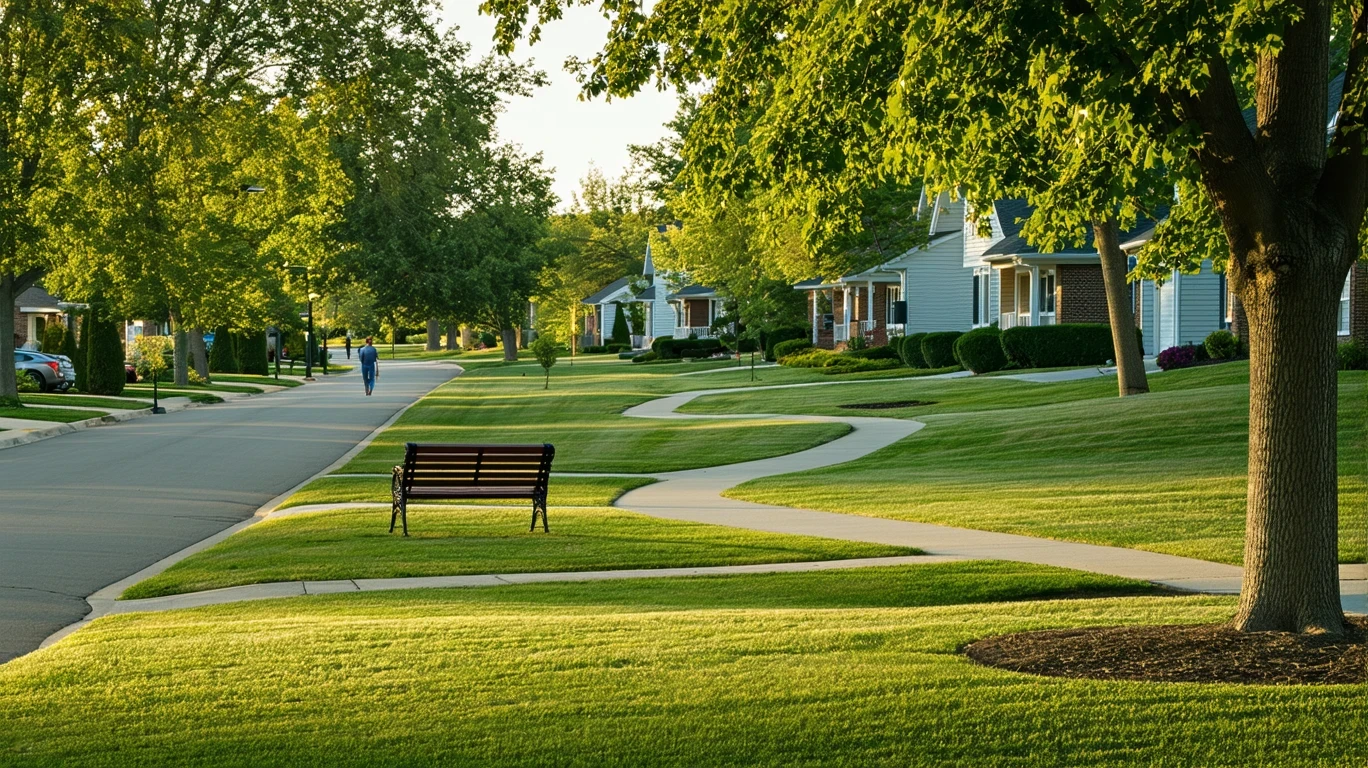
What “Living Comfortably” Means in Maple Grove
Comfort in Maple Grove isn’t about luxury—it’s about margin. It means housing that doesn’t force you into the smallest available unit, utility bills that don’t dictate behavior during Minnesota’s coldest and hottest months, and enough flexibility to absorb the occasional surprise expense without reworking your entire month. It means being able to choose where you live based on fit, not just what you can technically afford.
In a suburb where the median home value sits at $379,800 and median rent reaches $1,768 per month, comfort also means having options. For renters, it’s the ability to stay in a place that works rather than moving every lease cycle to chase lower rates. For buyers, it’s entering the market without stretching to the absolute edge of approval. And for everyone, it’s the capacity to participate in the lifestyle the area offers—parks, green space, and a quieter pace—without feeling financially squeezed at every turn.
Comfort here is also seasonal. Maple Grove’s long heating season and summer cooling demands create utility swings that require households to absorb volatility, not just cover averages. It’s having a car that works reliably, because even with bus service present and notable bike infrastructure in parts of the city, most errands and routines still require driving. The area’s corridor-clustered food and grocery access means planning trips rather than walking to the corner, and that changes how time and money interact daily.
Expectations matter. Maple Grove draws people seeking space, safety, and access to outdoor amenities—park density here exceeds high thresholds, and water features are present throughout. But those benefits come with tradeoffs: school density falls below low thresholds, meaning families often navigate longer drives or waitlists. Comfort, in this context, means having enough resources to manage those tradeoffs without constant stress.
—
Where Income Pressure Shows Up First
Housing is the dominant pressure point. Whether renting or buying, the cost of securing stable shelter in Maple Grove absorbs a significant share of household income. At $1,768 per month for median rent, a renter needs gross monthly income well above that figure to stay within traditional affordability guidelines and still cover transportation, utilities, food, and everything else. Buyers face a median home value of $379,800, which translates to substantial monthly mortgage payments, property taxes, insurance, and maintenance—all before utilities or commuting costs enter the picture.
For many households, monthly expenses begin with housing and then layer on everything else, leaving less room for discretionary spending or savings than income alone might suggest. The pressure intensifies when housing options narrow: families seeking more space, renters trying to avoid annual increases, or buyers competing in a market where inventory and affordability don’t always align.
Utilities add seasonal volatility. Electricity rates at 14.98¢ per kilowatt-hour and natural gas prices at $9.43 per thousand cubic feet mean that winter heating and summer cooling create noticeable swings in monthly obligations. Households without financial cushion feel these swings acutely—comfort requires the ability to absorb a higher bill in January or July without cutting into grocery or transportation budgets.
Transportation costs are non-negotiable for most. The city’s mobility texture includes walkable pockets and a high pedestrian-to-road ratio in certain areas, but the overall structure still requires car ownership for reliable access to work, errands, and services. With gas prices at $3.44 per gallon and an average commute time of 24 minutes, households must budget for fuel, maintenance, insurance, and the occasional repair. Families with multiple drivers face compounded costs.
Errands and daily logistics add friction. Food and grocery density falls in the medium band, clustered along corridors rather than distributed throughout neighborhoods. This means most households drive to shop, and spontaneous trips are less common. The planning burden isn’t severe, but it’s constant—and it requires both time and a functioning vehicle.
For families, the limited school density introduces another layer of pressure. With school availability below low thresholds, parents often navigate enrollment complexity, longer drives, or childcare gaps that require paid solutions. Even in a city with strong outdoor access and integrated park density, the logistics of managing school-age children add both time and financial strain that other household types don’t face.
—
How the Same Income Feels Different by Household
A single adult earning a solid income in Maple Grove has fundamentally different financial pressure than a couple or a family at the same earnings level. The structure of the city—its housing costs, transportation requirements, and errands accessibility—affects each household type in distinct ways.
Single adults face the full weight of rent or mortgage on one income. At $1,768 median rent, a single person needs a gross monthly income high enough to keep housing below recommended thresholds while still covering a car payment, insurance, gas, utilities, and food. The upside: one person’s choices are simpler. Walkable pockets and notable bike infrastructure mean some errands and recreation can happen without driving, especially for those who prioritize proximity to those areas. Grocery trips still require planning due to corridor clustering, but a single adult’s shopping frequency and volume are manageable. Utility costs are lower in smaller spaces, and there’s no need to coordinate schedules or absorb costs for dependents.
Couples benefit from shared housing costs, which immediately changes the math. Splitting a $1,768 rent or a mortgage on a $379,800 home makes entry far more feasible, and it creates room in the budget for transportation, savings, or discretionary spending. Two incomes also provide resilience: if one person faces a job transition or unexpected expense, the other can cover essentials. Commute coordination becomes a factor—if both partners work in different directions or have mismatched schedules, the household may need two vehicles, which doubles transportation costs. But couples without children avoid the logistical and financial burden that school density and childcare create, and they can more easily take advantage of the city’s strong park access and outdoor amenities without needing to plan around school hours or extracurriculars.
Families experience the highest pressure, even at elevated income levels. Housing costs don’t just double—they expand, because families typically need more bedrooms, and larger units command higher rents or purchase prices. The median home value of $379,800 often represents the floor, not the ceiling, for family-sized housing. Add in the limited school density, and families face logistical complexity that translates to time and money: longer drives to schools, waitlists, or private options that carry tuition costs. Errands become more frequent and more complex—grocery runs are larger, schedules are tighter, and the corridor-clustered accessibility means most trips require driving. Families also face higher utility costs due to larger homes and more occupants, and they’re more likely to need two vehicles, compounding transportation expenses. The city’s integrated green space and park access are genuine strengths for families seeking outdoor activity, but accessing them still requires planning and, often, driving.
Households at similar income levels often experience very different financial pressure depending on size, structure, and stage of life. A couple earning $120,000 may feel comfortable and even have surplus for savings or travel. A family of four at the same income may feel stretched, with housing, transportation, childcare, and school logistics consuming nearly everything. The difference isn’t income—it’s how the city’s cost structure and infrastructure interact with household needs.
—
The Comfort Threshold (Qualitative)
Comfort in Maple Grove begins when housing stops dictating every other decision. It’s the point where a household can choose a place based on fit—proximity to parks, access to walkable pockets, or simply a layout that works—rather than accepting the cheapest available option. It’s when rent renewals or property tax increases don’t trigger immediate budget crises, and when a larger-than-expected utility bill in January is annoying but not destabilizing.
This threshold isn’t a number. It’s a shift in experience. Below it, households make constant tradeoffs: skipping maintenance, delaying purchases, or avoiding activities that cost money. Above it, choices expand. Saving becomes possible, not just aspirational. Eating out occasionally or replacing a worn-out appliance doesn’t require reworking the month’s budget. There’s enough margin to absorb the friction that Maple Grove’s structure creates—driving to clustered errands, managing longer school commutes, covering seasonal utility swings.
For single adults, the threshold often aligns with the ability to rent a one-bedroom unit in a preferred area without stretching beyond recommended affordability guidelines, while still covering a reliable car, utilities, and food. For couples, it’s the point where shared housing costs leave enough room for two vehicles if needed, occasional discretionary spending, and a modest emergency fund. For families, the threshold is higher and harder to reach: it requires enough income to afford family-sized housing, absorb the logistics costs that come with limited school density, manage frequent errands, and still have capacity for the unexpected.
The comfort threshold also reflects the city’s infrastructure. Because Maple Grove’s errands accessibility is corridor-clustered and most households depend on cars, comfort includes the ability to maintain a vehicle without financial stress. Because utility costs swing with the seasons, comfort means having enough cushion to handle peak months without cutting essentials. Because school density is limited and family logistics are complex, comfort for families includes the capacity to pay for solutions—whether that’s driving time, private options, or childcare gaps.
Reaching this threshold doesn’t mean wealth. It means stability, flexibility, and the ability to participate in the lifestyle Maple Grove offers—strong park access, integrated green space, a quieter suburban pace—without feeling financially squeezed at every turn. Households below the threshold can survive here, but they rarely feel settled. Those above it can build a life that fits.
—
Why Online Cost Calculators Get Maple Grove Wrong
Most cost-of-living calculators reduce Maple Grove to a list of averages: median rent, typical utility bills, standard grocery costs, average transportation expenses. Add them up, apply a generic affordability percentage, and out comes a “required income” figure that looks precise but misses the reality of how money actually works here.
The problem isn’t the numbers—it’s the assumption that totals tell the story. A calculator might say a household needs $X per month to live in Maple Grove, but it won’t explain that the city’s corridor-clustered errands accessibility means most people drive to shop, adding time and fuel costs that don’t show up in a grocery line item. It won’t account for the fact that limited school density forces some families into longer commutes or private options, creating costs that aren’t captured in a generic “family budget” template. And it won’t reflect the seasonal utility swings that come with Minnesota winters and summers, where a household’s actual monthly obligations fluctuate far more than an annual average suggests.
Calculators also treat housing as a fixed cost, but in Maple Grove, housing is a tradeoff. A household might technically afford the median rent of $1,768, but that figure represents a wide range of unit sizes, locations, and conditions. Choosing a place near walkable pockets or integrated park areas often costs more. Accepting a longer drive to access those amenities might save money but adds transportation time and fuel costs. The calculator sees one number; residents experience a spectrum of choices, each with different financial and lifestyle consequences.
Transportation assumptions are especially misleading. A typical calculator might estimate car costs based on national averages, but it won’t know that Maple Grove’s bus-only transit system and car-dependent errands structure mean most households need a reliable vehicle—and families often need two. It won’t factor in the 24-minute average commute, which for many people stretches longer depending on where they work, or the $3.44 per gallon gas price that makes every trip a line item. The calculator might say “transportation: $X per month,” but it won’t explain that the city’s mobility texture creates different experiences depending on where you live and whether you’re near the areas with notable bike infrastructure and higher pedestrian-to-road ratios.
Lifestyle assumptions are invisible but powerful. Calculators assume a baseline standard of living, but they don’t ask whether you expect to walk to errands, whether you need space for kids to play, or whether you’re comfortable absorbing utility volatility. They don’t account for the fact that Maple Grove’s integrated green space and park density are genuine draws for people seeking outdoor access, but taking advantage of them still requires time and transportation. A household that values those amenities might feel comfortable here at an income level that would feel tight elsewhere—but the calculator has no way to know that.
People feel surprised after moving because the totals were right but the texture was wrong. The rent matched the estimate, but the need to drive everywhere added friction. The grocery budget held, but the time spent planning trips to corridor-clustered stores was more than expected. The income seemed sufficient on paper, but the combination of housing costs, transportation needs, and family logistics created pressure the calculator never mentioned.
Maple Grove works well for some households and poorly for others, and the difference isn’t always income—it’s how income, expectations, and the city’s actual structure align. A calculator can’t tell you that. It can only tell you what things cost, not what they feel like.
—
How to Judge Whether Your Income Fits Maple Grove
Instead of asking “Do I earn enough?” ask whether your income and expectations align with how Maple Grove actually functions. The questions below won’t produce a pass/fail score, but they will clarify whether the city’s cost structure and infrastructure match your household’s reality.
How sensitive are you to housing tradeoffs?
If you need to rent at or near the median ($1,768/month) or buy near the median home value ($379,800), does that leave enough income for everything else—transportation, utilities, food, and savings? Or does it stretch you so thin that any increase or surprise expense creates a crisis? If housing absorbs most of your income, Maple Grove will feel financially tight, because the city’s car-dependent errands structure and seasonal utility swings require margin beyond rent or mortgage.
Can you absorb seasonal utility swings?
Minnesota winters and summers create heating and cooling costs that fluctuate significantly. If a higher-than-average utility bill in January or July would force you to cut other essentials, you’re operating without enough cushion. Comfort here requires the ability to handle peak months without financial stress.
Is time or money your limiting factor?
Maple Grove’s corridor-clustered errands accessibility and limited school density mean many households spend more time driving, planning, and coordinating logistics. If your income is modest but your schedule is flexible, you may be able to manage. If both time and money are tight, the city’s structure will amplify pressure rather than relieve it.
Do you expect to walk to errands, or are you comfortable driving?
Walkable pockets exist, and bike infrastructure is notably present in parts of the city, but most households still depend on cars for routine errands and access to services. If you expect to live car-free or car-lite, you’ll need to prioritize proximity to those walkable areas—and housing costs may be higher there. If you’re comfortable driving, the city’s layout works, but you’ll need to budget for vehicle ownership, fuel at $3.44/gallon, and maintenance.
How much logistical complexity can your household handle?
Families face the most friction here due to limited school density and the need to coordinate errands, school runs, and activities. If you have children, ask whether your income supports not just housing and transportation, but also the time and money required to manage those logistics—longer drives, potential childcare gaps, or private school options. If you’re a single adult or couple without dependents, the logistical burden is far lighter, and your income will stretch further.
How much flexibility do you expect month to month?
If your budget requires everything to go exactly as planned—no surprise repairs, no rate increases, no unplanned expenses—Maple Grove will feel precarious. The city’s cost structure rewards households with margin: enough income to absorb volatility, enough savings to handle the unexpected, and enough flexibility to make choices rather than accept defaults. If you’re living paycheck to paycheck, even a solid income may not feel comfortable here.
Do you value outdoor access enough to plan for it?
Maple Grove offers integrated green space and high park density, which are genuine strengths for households seeking outdoor recreation. But accessing those amenities still requires transportation and time. If outdoor activity is central to your lifestyle and you’re willing to drive to parks and trails, the city delivers. If you expect green space to be immediately walkable from your front door, you’ll need to prioritize housing location—and pay accordingly.
Your income fits Maple Grove if it supports not just the costs, but the structure: car dependency, seasonal utility swings, corridor-clustered errands, and for families, the logistics burden that comes with limited school density. If your income covers those realities and still leaves room for flexibility, the city can work well. If it doesn’t, you’ll feel the gap quickly.
—
FAQs About Living Comfortably in Maple Grove
Is Maple Grove affordable for single people?
It depends on income and expectations. At $1,768 median rent, a single adult needs a gross monthly income well above that to stay within affordability guidelines and cover transportation, utilities, and food. Single people who prioritize proximity to walkable pockets and bike infrastructure may find some car-lite viability, but most still need a vehicle for errands and work. If your income comfortably covers rent, a car, and seasonal utility swings with margin left over, Maple Grove can work. If rent alone stretches your budget, the city’s cost structure will feel tight.
Do families need a higher income to feel comfortable here?
Yes. Families face higher housing costs due to space needs, more complex logistics due to limited school density, and greater transportation expenses because most households with children require reliable vehicles—often two. Errands are more frequent and require driving to corridor-clustered grocery and food options. Utility costs are higher in larger homes. The city’s strong park access and green space are real benefits, but accessing them still requires time and transportation. Families need enough income to absorb these compounded costs and still have flexibility for the unexpected.
Can you live comfortably in Maple Grove without a car?
It’s difficult for most households. Bus service is present, and bike infrastructure is notable in parts of the city, but the overall structure remains car-dependent. Errands accessibility is corridor-clustered, meaning grocery and food options require planning and often driving. Walkable pockets exist, and households who prioritize living in those areas may reduce car dependency, but housing costs in those locations may be higher. For the majority of residents, a functioning vehicle is non-negotiable, and comfort requires budgeting for fuel, insurance, and maintenance.
How much do utility costs vary by season?
Significantly. Minnesota winters drive heating costs, and summers require cooling, creating noticeable swings in monthly utility bills. Electricity rates at 14.98¢ per kilowatt-hour and natural gas prices at $9.43 per thousand cubic feet mean peak months—January and July—can push bills well above annual averages. Comfortable households can absorb these swings without cutting other essentials. Those operating without financial cushion feel the volatility acutely and may need to adjust behavior or defer other expenses during peak months.
What income level feels “comfortable” in Maple Grove?
There’s no single number, because comfort depends on household size, structure, and expectations. A single adult might feel comfortable at an income level that would feel stretched for a couple needing two cars, and a family would need significantly more to manage housing, transportation, school logistics, and errands without constant tradeoffs. Comfort begins when housing stops dictating every other decision, when seasonal utility swings are absorbable, and when there’s enough margin to handle the unexpected. Below that threshold, households survive but rarely feel settled. Above it, choices expand and financial pressure eases.
Why do people say Maple Grove is expensive if the median income is over $127,000?
Because high median income reflects who already lives here, not what it takes to feel comfortable. A household earning less than the median can technically afford to live in Maple Grove, but they’ll experience more pressure—especially if they’re renting, raising children, or lack financial cushion for utility swings and transportation costs. The city’s cost structure rewards higher incomes with flexibility and choice. Lower incomes face tighter margins, more tradeoffs, and less room for error. The perception of expense comes from the gap between what it costs to live here and what it costs to live here comfortably.
—
How this article was built: In addition to public economic data, this article incorporates location-based experiential signals derived from anonymized geographic patterns—such as access density, walkability, and land-use mix—to reflect how day-to-day living actually feels in Maple Grove, MN.
—