
Maple Grove’s housing market operates at a price point that surprises many newcomers: the median home value of $379,800 sits well above national norms, while median rent reaches $1,768 per month. These figures reflect the city’s position as an established Minneapolis-St. Paul suburb with a strong income base—median household income stands at $127,001 per year—but they also reveal cost pressures that extend beyond the purchase price or lease signature. Property taxes, winter maintenance demands, and the structural realities of a car-oriented suburb with selective walkability all shape what housing actually costs to maintain here, month after month and year after year.
What catches residents off guard isn’t always the upfront price. It’s the ongoing expenses that compound in a cold-climate suburb: heating bills that stretch across five or six months, property tax assessments that reflect Minnesota’s governance model, and the reality that even in neighborhoods with decent pedestrian infrastructure, most households still depend on vehicles for daily errands. Maple Grove’s housing stock includes both low-rise and mixed-height buildings, with residential and commercial land use woven together along certain corridors, but the overall development pattern still requires cars for reliable access to work, groceries, and services. That transportation dependency becomes a hidden housing cost, one that doesn’t appear on the mortgage statement but shapes the household budget just as firmly.
This article explains how housing costs behave in Maple Grove—not what you can afford, but what you’re exposed to once you commit. It covers rent pressure, ownership tradeoffs, the differences between apartments and houses in this climate, and the long-term cost structure that separates stable situations from financially precarious ones. The goal is to help you decide whether Maple Grove’s housing market fits your risk tolerance and logistics preferences, not to tell you what to buy or where to live.
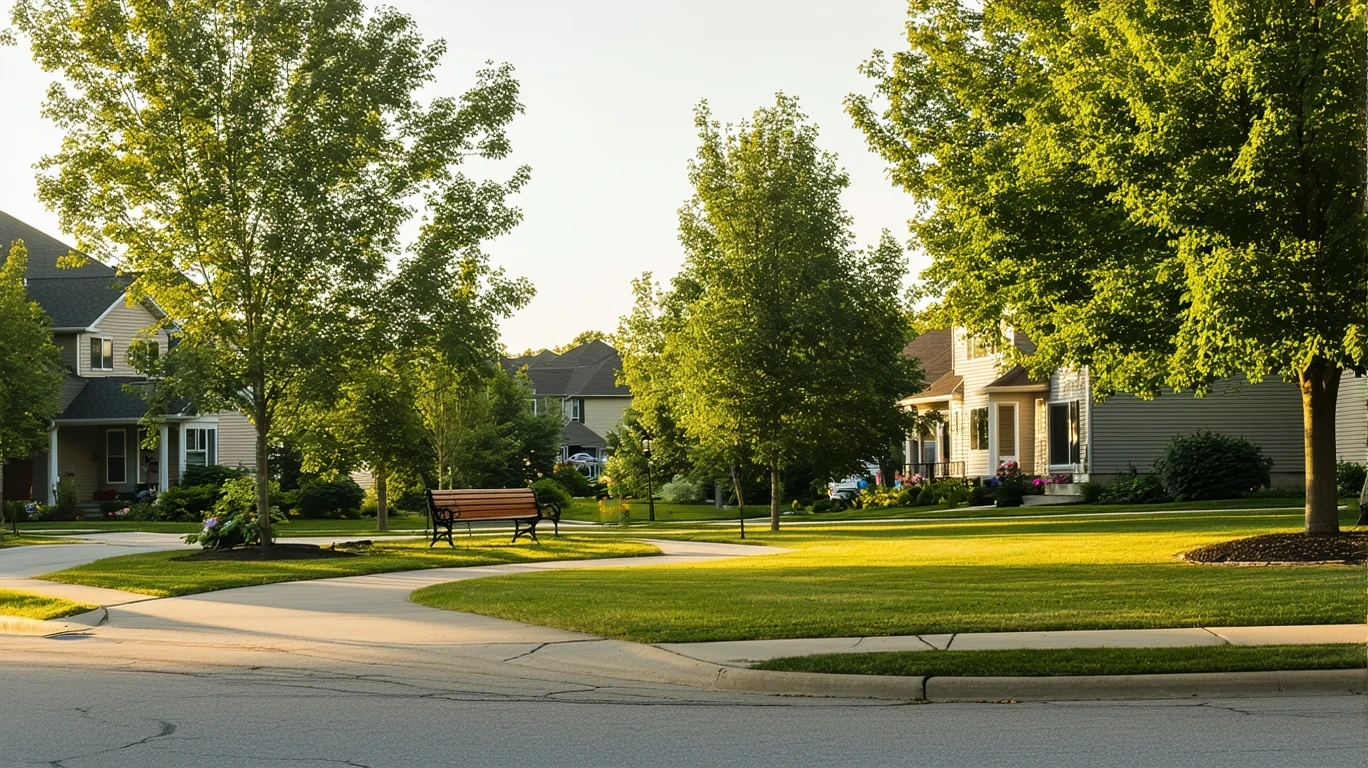
The Housing Market in Maple Grove Today
Maple Grove’s housing market is shaped by its role as a mature suburban node in the Twin Cities metro, where strong household incomes and limited rental supply create upward pressure on both ownership and lease costs. The $379,800 median home value reflects decades of development that prioritized single-family ownership over multifamily density, leaving renters with fewer options and less pricing competition. The $1,768 median rent isn’t an anomaly—it’s the market clearing price in a city where most housing stock was built for buyers, not tenants.
What distinguishes Maple Grove from peer suburbs is the combination of high entry costs and ongoing climate exposure. Minnesota’s cold winters mean heating systems run hard from October through April, and homes here face maintenance demands that don’t exist in temperate regions: frozen pipe risk, ice dam prevention, snow removal, and the seasonal wear that comes from temperature swings of 100 degrees or more between summer and winter. These aren’t occasional expenses—they’re structural features of ownership in this geography.
The city’s development pattern also matters. While Maple Grove includes walkable pockets with higher pedestrian-to-road ratios and notable cycling infrastructure, food and grocery access remains corridor-clustered rather than broadly distributed. That means most households—renters and owners alike—depend on cars for daily errands, and monthly expenses must account for fuel, insurance, and vehicle upkeep as part of the housing decision. The unemployment rate of 2.8% signals a tight labor market, which supports home values but also means competition for housing remains intense even during slower economic periods.
Newcomers often underestimate how much Minnesota’s property tax structure and HOA governance affect ownership costs. While specific tax rates aren’t visible in every listing, the state’s reliance on property taxes to fund schools and services means annual bills can surprise buyers who compare only purchase prices across regions. And in neighborhoods with homeowner associations—common in newer developments—monthly or annual fees add another layer of cost that doesn’t show up in the mortgage calculation but absolutely shapes affordability over time.
Renting in Maple Grove
Renting in Maple Grove means navigating a market with limited supply and strong demand. The $1,768 median rent reflects a housing stock that was never designed to serve a large renter population: most apartment complexes are concentrated along commercial corridors, and single-family rentals remain rare. That scarcity gives landlords pricing power, and it means renters face fewer choices when lease renewals bring increases or when household needs change.
The rental experience here is also shaped by transportation logistics. Even in neighborhoods with decent pedestrian infrastructure, grocery stores and services cluster along major roads rather than distributing evenly across residential areas. That means renters typically need cars to manage daily errands efficiently, and the cost of vehicle ownership—fuel at $3.44 per gallon, insurance, maintenance—becomes an unavoidable part of the housing budget. The average commute of 24 minutes suggests most jobs aren’t hyperlocal, and with only 3.9% of workers operating from home, the car dependency isn’t optional for most households.
Renters also face exposure to utility volatility that ownership can sometimes mitigate. Heating costs during Minnesota’s long cold season—driven by natural gas priced at $9.43 per MCF and electricity at 14.98¢ per kWh—can swing significantly depending on building age, insulation quality, and thermostat behavior. In older apartment buildings, winter utility bills can rival or exceed the rent increase from the previous year, and tenants have limited control over efficiency upgrades. Landlords may or may not invest in weatherization, and lease terms rarely guarantee utility cost stability.
What makes renting viable here is flexibility and lower upfront cost. Renters avoid property tax exposure, they’re not responsible for roof replacements or furnace failures, and they can relocate without selling into a competitive market. But that flexibility comes at the cost of price predictability and wealth accumulation, and in a city where rental supply remains constrained, lease renewals often bring increases that exceed income growth.
Owning a Home in Maple Grove
Ownership in Maple Grove starts with the $379,800 median home value, but the cost structure extends far beyond the purchase price. Property taxes in Minnesota fund a significant share of local services, and while exact rates vary by jurisdiction and assessment, owners should expect annual tax bills that represent a meaningful percentage of home value—often enough to rival several months of what renters pay annually. These taxes don’t remain static; they adjust as home values rise and as local governments set levy rates, creating long-term exposure that buyers must plan for even if the mortgage payment feels manageable.
Homeowner association fees add another layer in many neighborhoods, particularly in newer developments where shared amenities, landscaping, and snow removal are managed collectively. Monthly HOA dues can range from modest to substantial depending on what’s included, and they’re not optional—they’re a condition of ownership. Some associations cover exterior maintenance, which reduces individual upkeep burden, but others exist primarily for governance and aesthetic enforcement, offering less tangible value for the cost.
Climate-driven maintenance is where ownership costs in Maple Grove diverge sharply from temperate regions. Furnaces work hard across long heating seasons, and failures often happen mid-winter when replacement costs are highest and timelines are urgent. Roofs face ice dam risk, gutters need seasonal clearing, and driveways require snow removal that’s either a recurring service cost or a time burden. Homes with older windows or insufficient insulation leak heat, driving up natural gas and electricity usage during the coldest months. These aren’t deferred expenses—they’re part of the annual rhythm of ownership here.
Insurance costs, while not specified in available data, tend to reflect both home value and regional risk. Severe weather events—spring storms, heavy snow, occasional hail—create claims exposure that insurers price into premiums. Owners also face the reality that major systems (HVAC, water heaters, appliances) wear out on predictable timelines, and replacement costs have risen significantly in recent years due to supply chain and labor pressures.
What ownership provides is control and stability. Monthly housing costs become more predictable once the mortgage is locked in, and owners can invest in efficiency upgrades—better insulation, programmable thermostats, high-efficiency furnaces—that reduce long-term utility exposure. Equity accumulation matters in a market where home values have historically risen, though that’s never guaranteed. And unlike renters, owners aren’t subject to lease non-renewals or sudden rent increases that force relocation.
But ownership also means absorbing every cost shock directly. When the furnace fails in January or the roof needs replacement after a hailstorm, there’s no landlord to call. The financial and logistical burden falls entirely on the household, and in a city where home values are already high, the cash reserves required to manage these events are substantial.
Apartment vs House in Maple Grove — Cost Behavior Comparison
The cost difference between renting an apartment and owning a house in Maple Grove isn’t just about price—it’s about exposure, control, and how much of your time and money gets consumed by the structure itself. The table below isolates the categories where apartments and houses behave differently in this climate and market, excluding generic distinctions that apply everywhere.
| Expense Category | Apartment | House |
|---|---|---|
| Heating & Cooling | Shared walls and smaller square footage reduce heating load; tenant has limited control over efficiency upgrades; older buildings may have poor insulation | Full exposure to Minnesota heating season; owner controls insulation, windows, and system efficiency; larger square footage increases baseline usage |
| Snow & Ice Management | Landlord or property management typically handles parking lot and walkway clearing; tenant rarely responsible for equipment or service costs | Owner must clear driveway, sidewalks, and any private walkways; requires equipment purchase or recurring service contract; liability exposure for slip-and-fall |
| Property Taxes | No direct tax bill; any tax burden is embedded in rent and invisible to tenant; no control over assessment or levy changes | Annual tax bill based on assessed home value and local levy rates; owner absorbs increases directly; must budget for multi-month equivalent of rent annually |
| Maintenance Failures | Landlord responsible for furnace, water heater, appliance replacement; tenant experiences inconvenience but not direct cost | Owner absorbs full replacement cost and timing risk; winter failures (furnace, pipes) create urgent, high-cost situations |
| HOA or Association Fees | Rare in rental buildings; any shared costs are included in rent | Common in newer subdivisions; monthly fees cover governance, amenities, or exterior maintenance; non-optional and can increase annually |
| Transportation Dependency | Apartments often located along commercial corridors with moderate access to errands; still car-dependent for most households but may reduce trip frequency | Houses more dispersed across residential zones; car dependency near-universal; driveway and garage space reduce parking friction but increase vehicle reliance |
Why these categories: Each row reflects a cost behavior that changes meaningfully based on Maple Grove’s climate (heating season, snow management), governance (property taxes, HOA prevalence), or development pattern (transportation dependency, corridor-based retail). Categories like base rent vs mortgage payment or renter’s insurance vs homeowner’s insurance were excluded because they don’t vary in locally specific ways. The goal is to show where the apartment-vs-house decision creates different financial and logistical exposure in this city, not to list every possible housing cost.
Utilities & Upkeep Differences
Utility and maintenance costs in Maple Grove are shaped by two forces: Minnesota’s cold climate and the age and design of the housing stock. These forces affect apartments and houses differently, and understanding the distinction helps clarify where each housing type creates cost exposure.
Heating dominates the utility picture from October through April. Natural gas priced at $9.43 per MCF and electricity at 14.98¢ per kWh become the primary household expense during winter months, and the difference between an apartment and a house is substantial. Apartments benefit from shared walls and ceilings, which reduce heat loss and lower the total energy required to maintain comfort. A tenant in a multi-unit building may run the furnace less frequently simply because neighboring units provide passive warming. Houses, by contrast, face full exposure: four exterior walls, a roof, and often a basement or crawl space that leaks heat if not properly insulated. Larger square footage compounds the problem, and older homes with original windows or minimal attic insulation can see heating costs that dominate the monthly budget during the coldest stretches.
Apartment tenants have less control over efficiency improvements but also less responsibility. If the building’s furnace is undersized or the windows are drafty, the landlord owns the problem—though the tenant may still pay higher utility bills as a result. Homeowners, on the other hand, can invest in better insulation, programmable thermostats, or high-efficiency furnaces, but those upgrades require upfront capital and time to pay back through lower bills. The control is real, but so is the cost.
Maintenance exposure diverges sharply between apartments and houses when systems fail. In an apartment, a broken furnace or water heater is the landlord’s problem: the tenant experiences inconvenience, but the repair or replacement cost doesn’t hit their bank account. In a house, the owner absorbs the full cost and timing risk. Furnaces tend to fail during the coldest weeks of winter, when HVAC contractors are slammed and replacement costs are highest. Water heaters, sump pumps, and appliances follow similar patterns—they break when you need them most, and the bill is yours to pay.
Snow and ice management is another upkeep difference that matters in Maple Grove. Apartment complexes typically handle parking lot and walkway clearing through property management or contracted services, and tenants don’t see a separate bill. Homeowners must either clear snow themselves—requiring equipment, time, and physical effort—or hire a service, which adds a recurring seasonal cost. There’s also liability exposure: if someone slips on an unshoveled sidewalk in front of your house, you’re responsible. That risk doesn’t exist for apartment tenants.
Exterior maintenance—roofs, siding, gutters—is another cost category that only affects homeowners. Minnesota’s freeze-thaw cycles and occasional severe weather create wear that temperate climates don’t see. Ice dams can form on roofs during winter, forcing water under shingles and into attics. Gutters clog with leaves and debris, and if not cleared before winter, they can freeze and pull away from the house. These aren’t optional tasks—they’re part of the maintenance calendar, and neglecting them leads to expensive repairs down the line.
Apartment living in Maple Grove reduces utility and upkeep exposure but offers less control and no equity accumulation. Homeownership increases both exposure and control, and it rewards households who can manage the cash flow volatility that comes with climate-driven maintenance demands. Neither option is universally better—it depends on whether you value predictability or autonomy, and whether you have the financial reserves to handle the cost shocks that ownership inevitably brings.
Rent vs Buy: Long-Term Exposure in Maple Grove
The rent-versus-buy decision in Maple Grove isn’t about which option costs less in year one—it’s about which cost structure you’re willing to live with over time, and how much volatility you can absorb. Both paths come with exposure, but the risks are different in kind, not just degree.
Renting offers short-term predictability: your monthly payment is fixed for the lease term, and you’re insulated from property tax increases, special assessments, and major system failures. But that predictability is temporary. Lease renewals bring rent increases that you can’t control, and in a market like Maple Grove—where rental supply is limited and demand remains strong—those increases can be significant. Over five or ten years, renters face compounding exposure to a landlord’s pricing decisions, and there’s no mechanism to lock in long-term cost stability. You also build no equity, so every dollar spent on rent is a dollar that doesn’t contribute to wealth accumulation.
Buying replaces lease renewal risk with a different set of exposures. Once you lock in a fixed-rate mortgage, your principal and interest payments don’t change, which creates a foundation of stability that renting can’t match. But property taxes adjust over time, and in Minnesota, those adjustments can be meaningful as home values rise and local governments set levy rates. Homeowners also absorb the full cost of maintenance and repairs, and in a cold-climate city, those costs aren’t evenly distributed—they cluster during winter when heating systems fail and during spring when storm damage becomes apparent. A single furnace replacement or roof repair can cost several months’ worth of rent, and there’s no landlord to call.
The long-term advantage of ownership is control and equity. You can invest in efficiency upgrades that lower utility bills, you can renovate to match your needs, and you benefit from home value appreciation if the market continues to rise. But that advantage only materializes if you stay long enough for equity accumulation to outweigh transaction costs and if you have the cash reserves to weather maintenance shocks without financial distress. Ownership rewards stability and financial resilience; it punishes households that are stretched thin or likely to relocate within a few years.
Renting rewards flexibility and lower upfront cost. You can move without selling, you’re not exposed to property tax or maintenance volatility, and you don’t need a down payment or closing cost reserves. But you pay for that flexibility with higher long-term cost exposure and no wealth accumulation. In a city where rental supply is constrained, you also face the risk that lease non-renewals or steep rent increases force relocation at inconvenient times.
Neither path is universally better. The right choice depends on how long you plan to stay, whether you have the financial reserves to handle ownership’s cost shocks, and whether you value control and equity accumulation over flexibility and lower upfront cost. In Maple Grove, where home values are high and rental supply is limited, both options come with tradeoffs that require careful evaluation of your own risk tolerance and logistics preferences.
How this article was built: In addition to public economic data, this article incorporates location-based experiential signals derived from anonymized geographic patterns—such as access density, walkability, and land-use mix—to reflect how day-to-day living actually feels in Maple Grove, MN.
FAQs About Housing Costs in Maple Grove
Why is the median rent in Maple Grove so high compared to other Twin Cities suburbs?
Maple Grove’s rental market reflects limited supply in a city where most housing stock was built for ownership, not tenancy. Fewer apartment complexes mean less pricing competition, and strong household incomes create demand that pushes rents upward. The $1,768 median rent isn’t an outlier—it’s the market clearing price in a suburb where renters have fewer options and landlords have pricing power.
How much should I budget for heating costs during a Minnesota winter in Maple Grove?
Heating costs depend on home size, insulation quality, and thermostat behavior, but Minnesota’s extended cold season means natural gas and electricity bills rise significantly from October through April. Older homes or poorly insulated apartments face higher exposure, and households should expect heating to become the dominant utility expense during winter months. Control over efficiency upgrades matters: homeowners can invest in better insulation or high-efficiency furnaces, while renters depend on landlord decisions.
Do property taxes in Maple Grove increase every year?
Property taxes adjust based on assessed home values and local levy rates, both of which can change annually. Minnesota relies heavily on property taxes to fund schools and services, so owners should expect periodic increases even if their mortgage payment remains fixed. The exact timing and magnitude vary by jurisdiction and assessment cycle, but the exposure is structural—it’s part of the long-term cost of ownership here.
Is it realistic to live in Maple Grove without a car?
Most households in Maple Grove depend on cars for daily errands and commuting. While the city includes walkable pockets with decent pedestrian infrastructure and notable cycling facilities, grocery stores and services cluster along commercial corridors rather than distributing evenly across neighborhoods. Public transit exists in the form of bus service, but with only 3.9% of workers operating from home and an average commute of 24 minutes, car ownership remains the practical default for reliable access to work, food, and services.
What’s the biggest cost surprise for new homeowners in Maple Grove?
New owners often underestimate the combination of property taxes, winter maintenance demands, and climate-driven system failures. A furnace replacement during the coldest weeks of winter can cost several thousand dollars, and snow removal—whether you do it yourself or hire a service—becomes a recurring seasonal task. HOA fees in newer developments add another layer of cost that doesn’t appear in the mortgage calculation but shapes monthly cash flow. The upfront home price is visible; the ongoing cost structure reveals itself over time.
Making Housing Choices in Maple Grove
Housing costs in Maple Grove extend beyond the purchase price or lease signature. The $379,800 median home value and $1,768 median rent reflect a market shaped by strong incomes, limited rental supply, and the structural realities of a cold-climate suburb where car dependency and winter maintenance create ongoing cost exposure. Property taxes, HOA fees, heating bills, and snow management all contribute to the true cost of living here, and the difference between apartments and houses isn’t just about square footage—it’s about who absorbs the volatility when systems fail or when seasonal demands spike.
Renting offers flexibility and lower upfront cost but exposes households to lease renewal risk and limits control over efficiency and maintenance. Ownership provides stability and equity accumulation but requires financial reserves to handle the cost shocks that Minnesota’s climate and governance structure inevitably bring. Neither path is universally better; the right choice depends on how long you plan to stay, whether you can manage ownership’s cash flow volatility, and whether you value control over flexibility.
Understanding what shapes the cost of living in Maple Grove means recognizing that housing is the foundation of the household budget, but it’s not the only cost that matters. Transportation, utilities, and the logistics of daily errands all interact with housing decisions, and the city’s development pattern—walkable pockets, corridor-clustered retail, strong park access but limited school density—affects how much time and money you’ll spend managing day-to-day life. If you’re planning a move, reviewing the best moving companies guide can help you navigate the logistics of relocation while keeping costs predictable.
Maple Grove’s housing market rewards households with strong incomes, financial reserves, and a clear understanding of their own risk tolerance. It punishes those who underestimate the ongoing cost exposure or who assume that the purchase price or lease rate tells the whole story. The city offers stability, access to the Twin Cities metro, and a quality of life that many households value—but only if you enter the market with realistic expectations about what housing actually costs to maintain here, month after month and year after year.