
Is The Village expensive to live in? The Village is considered moderately priced in 2026, with a median home value of $172,300 and median rent of $1,351 per month. The value proposition depends on housing entry cost versus car dependence—while home prices remain accessible, transportation and errand logistics add recurring exposure that shapes monthly pressure more than day-to-day prices.
You’re staring at two spreadsheets: one for your current city, one for The Village. The rent looks reasonable. The home prices seem doable. But you know the real question isn’t what things cost on paper—it’s what actually drains your account every month, and whether this place makes your life easier or just rearranges the pressure points.
The Village sits in the Oklahoma City metro with a cost structure that rewards planning over spontaneity. Housing entry costs remain moderate compared to many metro suburbs, but the shape of daily life here—how you get groceries, where you go for healthcare, how much you drive—determines whether this city feels affordable or quietly expensive. The biggest financial decisions aren’t about unit prices; they’re about how place structure interacts with your household’s logistics, vehicle count, and tolerance for driving to solve problems.
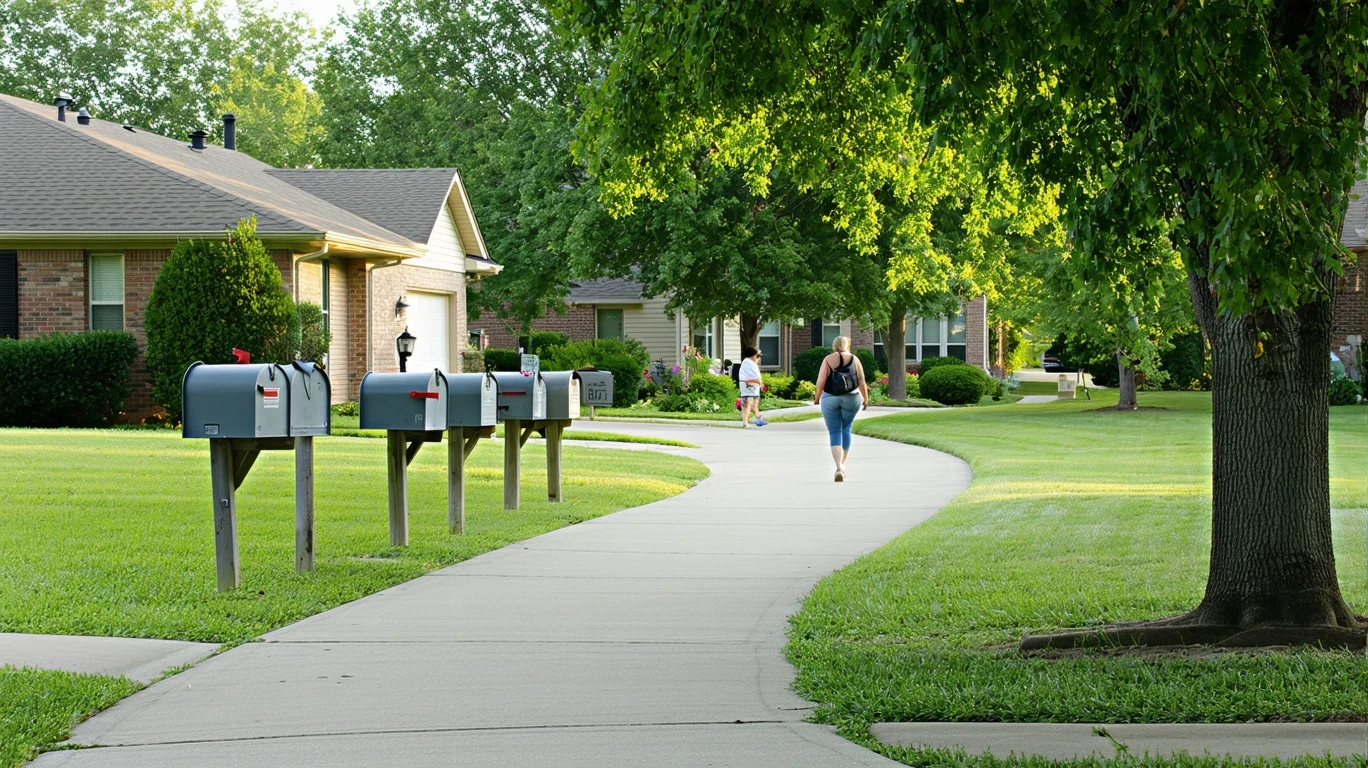
Overall Cost of Living Snapshot
The Village operates at 74% of the national price baseline (measured by regional price parity), meaning general consumer goods and services cost measurably less here than in most U.S. metros. That index advantage shows up in groceries, personal services, and some housing components—but it doesn’t override the two factors that actually shape monthly cash flow: whether you’re renting or buying, and how much you drive.
Housing dominates cost pressure, as it does in most suburbs, but the entry threshold here remains accessible: $172,300 median home value positions The Village well below the extremes seen in coastal or high-growth Sun Belt markets. Rent averages $1,351 per month, which reflects a tighter supply dynamic than the ownership market. Median household income sits at $67,524 per year, creating a workable but not generous margin for households carrying both housing and transportation costs.
The unemployment rate stands at 3.2%, signaling a stable local economy with decent job availability. Current weather is 70°F (feels like 71°F), though seasonal swings—particularly extended summer heat—drive meaningful utility exposure that doesn’t show up in snapshot pricing.
Driver verdict: Housing entry cost and car dependency together determine financial fit. The surprise factor isn’t prices—it’s the cumulative effect of driving to most destinations and managing healthcare or specialized errands outside the immediate area. Households that value park access, school density, and lower housing entry costs will find this structure appealing; those expecting walkable convenience or on-site healthcare will face friction that adds time and fuel costs even if dollar amounts stay moderate.
Housing Costs (Primary Driver)
Housing is where The Village separates itself from pricier Oklahoma City metro alternatives. At $172,300, the median home value offers a meaningful entry point for buyers who can manage a down payment and closing costs. Ownership here isn’t just cheaper than renting over time—it’s structurally favored by the market. Monthly rent of $1,351 doesn’t include the equity build, tax benefits, or inflation hedge that come with a mortgage, and in a low-density suburb like this, rental inventory tends to be limited and less competitive on quality or space.
Owning makes sense for households planning to stay more than a few years, especially those with school-age children who benefit from the city’s strong family infrastructure (high school and playground density). Renting works for short-term stays, people testing the metro, or those who can’t access financing—but it’s not the value play here. The ownership market offers more housing per dollar and more control over long-term cost stability.
Renters face less predictability: lease renewals, landlord decisions, and a smaller pool of available units create exposure that owners avoid. Buyers face maintenance, property taxes, insurance, and the upfront capital hurdle—but they gain fixed principal and interest payments that don’t shift with market rent trends.
| Housing Type | Cost Anchor | What That Buys You |
|---|---|---|
| Ownership | $172,300 median home value | Equity build, tax benefits, fixed mortgage payment, control over property decisions, access to low-rise single-family neighborhoods with strong school and park access |
| Rental | $1,351/month median rent | Flexibility, no maintenance burden, lower upfront cost, but less inventory, no equity, and exposure to lease-term rent adjustments |
Conclusion: The Village is an ownership-favoring city. Renting is a transitional or short-term strategy, not the long-term value path.
Utilities & Energy Risk
Electricity in The Village costs 12.62¢ per kWh, which sits comfortably below national averages and reflects Oklahoma’s energy production advantages. Natural gas is priced at $10.78 per MCF (roughly 100 therms), a moderate rate that becomes more relevant during winter heating months. For illustrative context, a household using around 1,000 kWh per month would see an electric bill near $126 before fees and taxes; gas usage of 1 MCF per month in colder periods would add roughly $11 in commodity cost, though distribution and service charges increase the actual bill.
The real exposure isn’t the rate—it’s the extended cooling season. Oklahoma summers bring sustained heat that pushes air conditioning into daily, all-day operation. Homes with older HVAC systems, poor insulation, or large square footage see sharp bill increases from June through September. Heating costs remain modest by comparison, since freezing weather is less frequent and intense.
Utility volatility here is moderate: not a budget-breaking risk, but meaningful enough that households should account for seasonal swings rather than assume flat monthly costs. Efficiency upgrades—programmable thermostats, attic insulation, air sealing—reduce exposure and help stabilize bills, though the payoff depends on home age and existing condition.
Risk classification: Moderate. Utilities are a secondary cost driver, but summer cooling creates predictable seasonal pressure that affects cash flow planning.
Groceries & Daily Costs
Grocery costs in The Village reflect the broader regional price advantage. Derived estimates based on national baselines adjusted by regional price parity suggest moderate pricing: bread around $1.34 per pound, chicken $1.50 per pound, ground beef $4.96 per pound, eggs $1.74 per dozen, and milk $3.01 per half-gallon. (These are derived estimates based on national baseline adjusted by regional price parity; not observed local prices.)
What matters more than unit prices is how you access groceries. The Village shows high grocery store density—meaning dedicated supermarkets are present—but overall food establishment density remains low. Translation: you’ll find a grocery store, but you won’t find quick grab-and-go options, diverse prepared food, or clustered retail that lets you combine errands in one trip. This is a plan-ahead environment, not a convenience-driven one.
For households used to urban errands accessibility or walkable retail corridors, this creates a friction cost that doesn’t show up in prices but does show up in time, fuel, and trip frequency. You’re not paying more per item—you’re spending more effort per shopping cycle.
Transportation Reality
The Village is car-dependent, full stop. Despite the presence of walkable pockets and notably strong bike infrastructure (high bike-to-road ratio), the overall errands accessibility remains sparse. That means pedestrian paths and bike lanes exist—particularly in residential areas with high park and school density—but they don’t connect you to daily necessities without a vehicle. You can walk your neighborhood or bike to a park, but you’re driving to the grocery store, the pharmacy, and almost certainly to work.
Gas prices currently sit at $3.47 per gallon. For illustrative context, a typical commuter driving 25 miles round trip in a vehicle averaging 25 MPG would use about one gallon per day, or roughly $17 per week in fuel alone before maintenance, insurance, or depreciation. Households running two vehicles or managing longer commutes face meaningfully higher transportation exposure.
There’s no rail transit here, and bus service (if present) doesn’t change the structural reality: this is a place where the car is your primary tool for solving logistical problems. That’s not a flaw—it’s a design choice reflected in the low-rise, spread-out built environment. But it’s a recurring cost that doesn’t compress easily, and it scales with household size, work locations, and activity patterns.
Transportation is a fixed exposure, not a variable one. Cutting trips or consolidating errands helps at the margin, but the baseline requirement remains high.
Cost Exposure Profiles
Cost pressure in The Village isn’t evenly distributed—it concentrates in predictable patterns based on housing tenure, vehicle count, and healthcare needs.
Low-exposure households own their home (locking in housing costs), drive one fuel-efficient vehicle with a short commute, and have no chronic healthcare needs requiring frequent specialist access. They benefit from the city’s lower price level, stable ownership costs, moderate utilities, and accessible grocery pricing. Their main financial task is managing seasonal utility swings and routine transportation.
High-exposure households are renting (facing lease-term uncertainty), operating two or more vehicles with longer commutes, or managing health conditions that require regular access to specialists or hospitals not present in The Village. The absence of local hospital or clinic infrastructure means medical care involves travel time and potentially higher transport costs. Renters face less cost predictability, and multi-vehicle households see transportation costs compound quickly.
The difference isn’t income level—it’s structural fit. A household earning $70,000 with one car and a paid-off home faces entirely different monthly pressure than a household at the same income renting and running two financed vehicles. The city’s cost structure rewards ownership, low vehicle dependence, and good health; it penalizes transience, mobility complexity, and healthcare intensity.
Families with school-age children gain significant non-financial value from the city’s strong school and playground infrastructure, integrated park access, and safe, low-rise neighborhoods. That doesn’t lower costs directly, but it reduces the need to pay for private recreation, childcare alternatives, or relocation to access quality schools—hidden savings that matter over years.
Frequently Asked Questions
Is The Village more affordable than Oklahoma City in 2026? The Village tends to offer lower housing entry costs than many Oklahoma City neighborhoods, particularly for ownership, though transportation costs may run higher depending on work location. The tradeoff is typically housing affordability versus commute length.
What does a typical cost profile look like in The Village? Most households face moderate housing costs, low to moderate grocery and utility expenses, and higher transportation costs due to car dependency. The dominant monthly expenses are housing (rent or mortgage) and vehicle operation, with utilities spiking in summer.
Do utilities cost more in The Village than nearby areas? Electricity and natural gas rates are competitive within the metro, but total utility costs depend heavily on home efficiency and cooling season length. Rates are moderate; exposure comes from usage intensity during hot months.
What costs tend to surprise newcomers in The Village? Transportation and healthcare logistics surprise people most. The need to drive for nearly all errands, combined with the absence of local hospital or clinic access, creates time and fuel costs that aren’t obvious from housing prices alone.
Are property taxes higher in The Village than nearby cities? Property tax rates vary across the metro and depend on county, school district, and municipal levies. The Village’s moderate home values mean absolute tax bills tend to be lower than in higher-priced suburbs, but effective rates should be confirmed locally.
Can you live in The Village without a car? Practically, no. While walkable pockets and bike infrastructure exist, sparse errands accessibility and limited transit mean a car is essential for groceries, healthcare, work commutes, and most daily tasks.
How much does commuting add to monthly costs in The Village? Commuting costs scale with distance and vehicle efficiency. A 25-mile daily round trip at current gas prices could add $70–$80 per month in fuel alone, before insurance, maintenance, or depreciation. Longer commutes or multiple vehicles increase exposure significantly.
Is The Village a good value for families? Yes, particularly for families who prioritize homeownership, school quality, park access, and neighborhood safety over walkable urban amenities. The city’s strong family infrastructure and lower housing costs create long-term value, though moving companies and vehicle dependency add upfront and recurring costs.
How this article was built: In addition to public economic data, this article incorporates location-based experiential signals derived from anonymized geographic patterns—such as access density, walkability, and land-use mix—to reflect how day-to-day living actually feels in The Village, OK.
—