
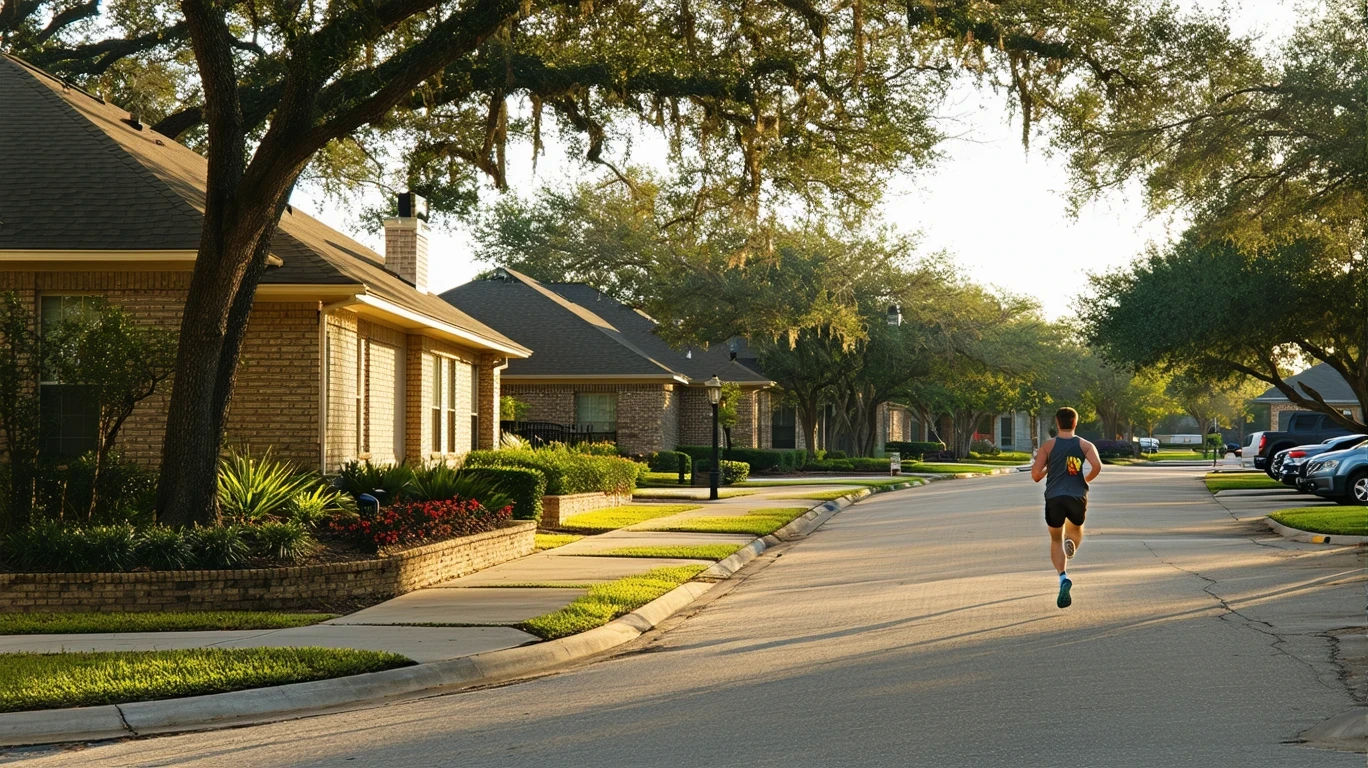
Live Oak vs San Marcos in 2026: Lower home prices but higher rent and gas costs in Live Oak. Higher home values but lower rent, transit options, and cheaper gas in San Marcos. Car ownership required in Live Oak; walkable pockets and rail service present in San Marcos. Natural gas heating costs significantly higher in San Marcos. Median household income $74,326/year in Live Oak vs $47,394/year in San Marcos—same expenses feel different.
Both cities sit in the San Antonio metro, but they serve different household needs. Live Oak attracts families and dual-income households seeking suburban predictability and lower homeownership entry costs, while San Marcos draws students, young professionals, and cost-conscious renters who value transit access and walkable neighborhoods. The decision between them isn’t about which city costs less overall—it’s about which cost structure aligns with how your household actually lives in 2026. Housing, transportation, and utility exposure differ sharply, and the income context means identical expenses create very different financial pressure depending on where you land.
This comparison explains where costs show up, how predictability and volatility differ, and which households feel each city’s tradeoffs most acutely. We’ll cover housing entry barriers vs ongoing rent obligations, car dependence vs transit viability, utility seasonality, grocery access friction, and the role of income context in shaping day-to-day financial experience.
Housing Costs
Live Oak’s median home value sits at $212,800, while San Marcos comes in at $248,300—a meaningful gap in upfront entry cost for buyers. That $35,500 difference translates directly into down payment requirements, mortgage qualification thresholds, and monthly principal and interest obligations. For first-time buyers or households stretching to enter homeownership, Live Oak’s lower barrier matters. The tradeoff: Live Oak’s median gross rent runs $1,362 per month compared to San Marcos’s $1,251 per month. Renters face $111 more in monthly housing expense in Live Oak, an ongoing obligation that compounds over lease terms.
This creates a structural tension. Homebuyers experience less front-loaded pressure in Live Oak, while renters absorb higher recurring costs. In San Marcos, the pattern inverts: homeownership requires more capital upfront, but renters gain $111 per month in flexibility. The difference isn’t trivial for single-income households or those managing student loan payments, childcare, or irregular income streams. San Marcos’s lower rent also reduces the income threshold needed to meet typical lease qualification requirements, which often demand gross monthly income at 2.5–3 times rent.
Housing stock and form factor play a role, too. Live Oak’s low-rise, car-oriented layout favors single-family homes and townhomes, where ownership dominates and rental inventory skews toward smaller complexes. San Marcos’s mixed building heights and land-use patterns support a broader range of rental options, including units closer to transit, clinics, and mixed-use corridors. That access reduces household logistics friction for renters who don’t own cars or prefer shorter errand loops.
| Housing Type | Live Oak | San Marcos |
|---|---|---|
| Median Home Value | $212,800 | $248,300 |
| Median Gross Rent | $1,362/month | $1,251/month |
First-time buyers sensitive to down payment size and mortgage qualification will find Live Oak’s entry point more accessible. Renters prioritizing monthly cash flow, especially those on single incomes or managing other fixed obligations, face lower ongoing pressure in San Marcos. Families planning to buy within a few years may prefer Live Oak’s lower home values, while young professionals or students renting long-term benefit from San Marcos’s rent structure and proximity to transit and services.
Housing takeaway: Live Oak favors buyers with lower entry barriers but imposes higher rent on those not ready to purchase. San Marcos requires more capital to buy but offers renters $111/month in breathing room and better access to walkable errands and transit. The better fit depends on whether your household is optimizing for ownership entry or rental affordability.
Utilities and Energy Costs
Electricity rates run nearly identical—15.87¢/kWh in Live Oak vs 16.04¢/kWh in San Marcos—so cooling-season exposure during triple-digit summer heat feels similar in both cities. The real divergence appears in natural gas pricing: $19.31/MCF in Live Oak compared to $30.71/MCF in San Marcos. That’s a 59% higher rate in San Marcos, and it matters most during the heating season when overnight lows dip and furnaces cycle on.
For households in older single-family homes with gas heating, San Marcos’s natural gas cost creates more volatility during winter months. Live Oak’s lower gas rate smooths out seasonal swings, making heating bills more predictable. Renters in newer apartment complexes with electric heat pumps or all-electric HVAC systems sidestep natural gas exposure entirely, but those in older housing stock—common in both cities—face direct exposure to heating fuel costs. The difference compounds for larger homes, where square footage and insulation quality drive baseline usage higher.
Household size and home age interact with these rates in predictable ways. A family of four in a 1,800-square-foot home built before 2000 will feel San Marcos’s natural gas premium more acutely than a single adult in a 700-square-foot apartment with electric baseboard heat. Dual-income couples in newer construction may notice minimal difference, while retirees or single-income families in older homes experience sharper seasonal cost swings in San Marcos. Live Oak’s lower natural gas rate reduces that volatility, offering more stable month-to-month utility obligations during heating season.
Time-of-use billing structures and efficiency programs exist in principle across Texas utilities, but participation and savings depend on household schedule flexibility and willingness to shift usage. Households with predictable routines and control over thermostat timing can reduce exposure in either city, but the baseline rate difference in natural gas remains regardless of behavior changes.
Utility takeaway: Electricity exposure feels similar in both cities, but San Marcos imposes significantly higher natural gas costs during heating months. Households in older homes with gas heating face more volatility in San Marcos, while Live Oak offers more predictable seasonal utility obligations. Renters in all-electric units and those in newer construction experience less difference.
Groceries and Daily Expenses
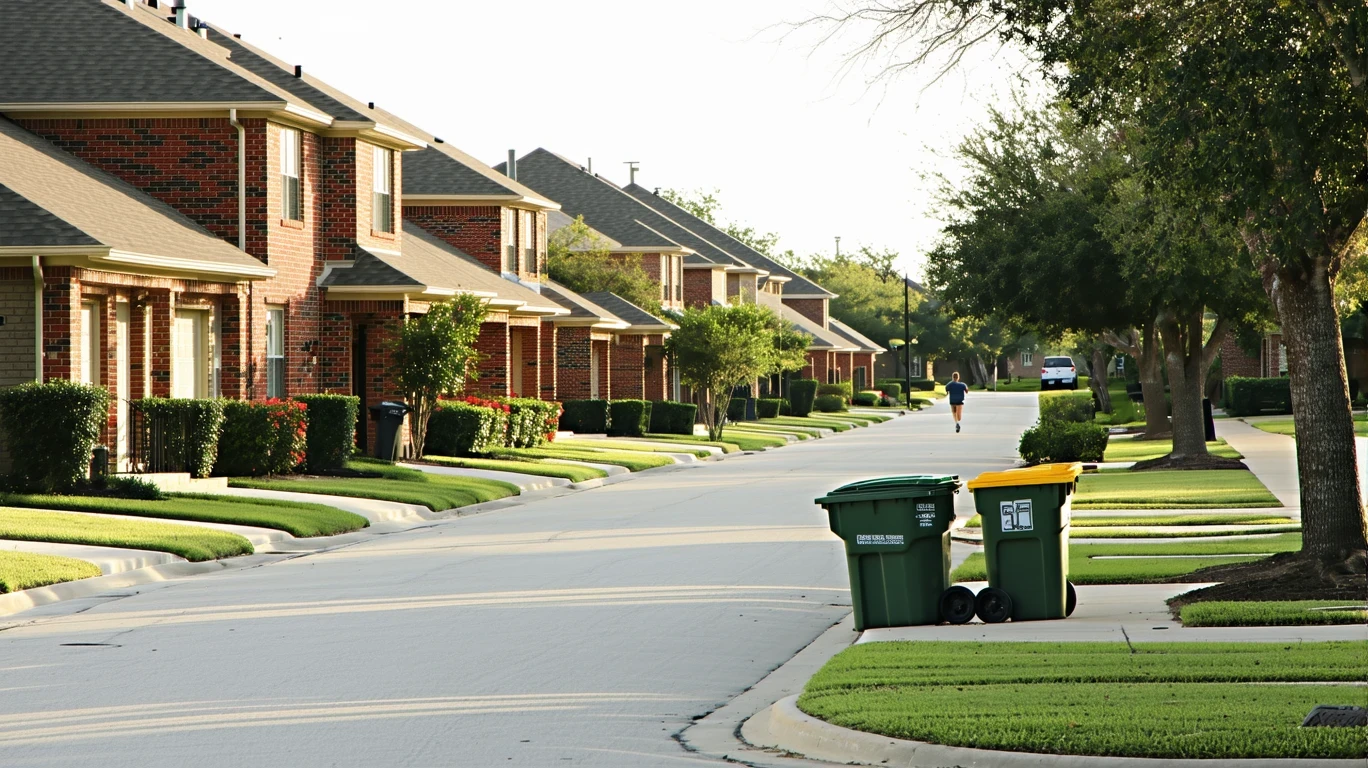
Both Live Oak and San Marcos fall below density thresholds for food and grocery establishments, meaning neither city offers the convenience of tightly clustered grocery options within short walking or biking distance for most residents. Errands require intentional trips, and households in both cities rely on cars to access supermarkets, discount grocers, and bulk retailers. The experiential difference lies in how far those trips stretch and whether alternative options exist for smaller top-up runs.
San Marcos’s mixed land-use areas and moderate park density create pockets where convenience stores, small grocers, or prepared food options sit closer to residential zones. That doesn’t eliminate car dependence, but it reduces the frequency of longer grocery hauls for households willing to pay slightly more for proximity. Live Oak’s car-oriented layout and limited pedestrian infrastructure mean nearly every grocery trip involves driving, and the sparse food establishment density leaves fewer fallback options when a household runs out of milk or needs a quick dinner solution.
Price sensitivity shows up differently depending on household composition. Single adults and couples can absorb occasional convenience-store markups or takeout meals without destabilizing monthly budgets, especially if they’re optimizing for time rather than per-unit grocery cost. Families managing larger volumes—weekly hauls for three or four people—feel the impact of fewer discount options and less competition more sharply. In both cities, access to big-box stores and regional grocery chains exists, but the time cost of reaching them and the lack of neighborhood alternatives create friction.
Dining out and prepared food spending also hinge on accessibility. San Marcos’s walkable pockets and rail transit make it easier for some households to grab food near work or school without a dedicated car trip, reducing the planning burden. Live Oak’s layout requires more intentional meal planning and batch grocery shopping, which can lower per-meal costs but increases the logistical load on whoever manages the household’s food supply.
Grocery takeaway: Both cities require car-dependent grocery strategies, but San Marcos offers slightly more flexibility through mixed-use pockets and transit-adjacent food options. Families managing high volumes feel Live Oak’s sparse options more acutely, while single adults and couples in San Marcos gain marginal convenience at the cost of occasional price premiums. Neither city rewards spontaneous, walkable errands.
Taxes and Fees
Texas relies heavily on property taxes to fund local services, and both Live Oak and San Marcos sit within that statewide framework. Homeowners in both cities face annual property tax bills tied to assessed home values, and the gap in median home values—$212,800 in Live Oak vs $248,300 in San Marcos—means San Marcos homeowners typically carry higher absolute property tax obligations, assuming similar millage rates. That difference scales with home value, so buyers stretching to afford San Marcos’s higher entry price also absorb a larger ongoing tax burden.
Renters don’t pay property taxes directly, but landlords pass those costs through in rent pricing. San Marcos’s lower median rent may partially reflect different housing stock composition or market dynamics, but property tax exposure still influences long-term rent stability. Homeowners planning to stay several years in either city should account for potential assessment increases, which can shift monthly obligations even when mortgage principal and interest remain fixed.
Local fees—trash collection, water, sewer, stormwater—vary by provider and housing type. In some neighborhoods, HOA fees may bundle landscaping, shared amenities, or exterior maintenance, adding predictable monthly costs for homeowners in planned communities. Renters in complexes with included utilities or trash service sidestep some of these line items, but those costs still appear indirectly in rent pricing. The structure of fees matters as much as the total: predictable monthly charges allow tighter budgeting, while variable or seasonal fees (like water bills tied to irrigation) introduce volatility.
Sales tax applies uniformly to most purchases in both cities, so everyday consumption—groceries, household goods, gas—doesn’t create a tax-driven cost difference between Live Oak and San Marcos. The meaningful gap appears in property-related obligations, where homeownership in San Marcos imposes higher front-loaded and ongoing costs compared to Live Oak.
Taxes and fees takeaway: Homeowners in San Marcos face higher property tax exposure due to elevated home values, while Live Oak’s lower entry price reduces that ongoing obligation. Renters in both cities experience indirect tax passthrough, but the structure favors predictability over magnitude. Long-term homeowners and those planning multi-year stays feel the difference more than short-term renters.
Transportation & Commute Reality
Live Oak’s car-oriented infrastructure and minimal pedestrian density mean households depend on personal vehicles for nearly every trip—work commutes, grocery runs, healthcare appointments, and errands. Gas prices in Live Oak run $3.21/gallon, and the lack of transit alternatives or walkable errand options locks households into per-mile fuel costs and vehicle maintenance obligations. Families with multiple drivers face compounded exposure: two cars mean two sets of insurance premiums, registration fees, and repair budgets.
San Marcos offers a different structure. Rail service exists, and the city’s walkable pockets and moderate pedestrian-to-road ratio create opportunities for some households to reduce car dependence, especially those living near transit stations or mixed-use corridors. Gas prices sit at $2.45/gallon—76 cents less than Live Oak—so households that still drive benefit from lower per-gallon costs. Cycling infrastructure appears in limited areas, and bus stops provide additional coverage, though the city’s overall errands accessibility remains sparse. The combination doesn’t eliminate car ownership for most households, but it creates optionality that Live Oak lacks.
Commute patterns and time costs differ based on household composition and work location. Single adults working near San Marcos’s rail line or walkable districts can minimize driving, reducing both fuel costs and the time burden of car ownership (oil changes, inspections, parking). Dual-income couples with jobs in different parts of the metro may still need two vehicles in either city, but San Marcos’s lower gas price and transit options offer marginal relief. Families managing school drop-offs, extracurricular activities, and grocery hauls face similar car dependence in both cities, though San Marcos’s mixed land-use areas slightly reduce trip frequency for smaller errands.
The absence of commute time data in either city limits precise trip-duration comparisons, but the structural difference remains clear: Live Oak requires car ownership and absorbs higher per-gallon fuel costs, while San Marcos provides transit and walkability options that reduce—but don’t eliminate—transportation expense and time friction.
Transportation takeaway: Live Oak locks households into car ownership with higher gas prices and no transit alternatives. San Marcos offers rail service, walkable pockets, and lower gas costs, creating flexibility for some households to reduce driving. Families and multi-car households feel the difference most, while single adults in San Marcos gain the most optionality.
Cost Structure Comparison
Housing pressure dominates the cost experience in both cities, but the mechanism differs. Live Oak imposes higher rent on those not ready to buy, while San Marcos requires more upfront capital for homeownership. Renters sensitive to monthly cash flow gain $111/month in breathing room in San Marcos, while buyers stretching to qualify for a mortgage face a lower entry barrier in Live Oak. The decision hinges on whether your household is optimizing for ownership access or rental affordability.
Utilities introduce more volatility in San Marcos due to significantly higher natural gas costs during heating months. Households in older homes with gas heating feel that seasonal swing more acutely, while those in newer all-electric units or apartments experience minimal difference. Live Oak’s lower natural gas rate smooths out winter utility bills, offering more predictable month-to-month obligations for families and retirees managing fixed incomes.
Transportation patterns matter more in Live Oak, where car ownership is non-negotiable and gas prices run 76 cents higher per gallon. San Marcos’s rail service, walkable pockets, and lower fuel costs create opportunities to reduce driving frequency and per-mile expense, though most households still need a vehicle. Single adults and couples working near transit lines benefit most from San Marcos’s structure, while families managing multiple drivers and daily logistics face similar car dependence in both cities.
Grocery and errands accessibility remains sparse in both cities, but San Marcos’s mixed land-use areas and moderate park density reduce trip frequency for smaller purchases and convenience needs. Live Oak’s car-oriented layout requires more intentional planning and batch shopping, increasing the logistical burden on whoever manages household errands. Families with high grocery volumes feel that friction more than single adults or couples.
The income context amplifies these differences. Live Oak’s median household income of $74,326/year means the same housing, utility, and transportation costs consume a smaller share of gross income compared to San Marcos’s $47,394/year median. For households earning near or below the local median, identical expenses create tighter budgets in San Marcos. For those earning above the median in either city, the cost structure differences matter more than the income baseline.
Households sensitive to upfront costs and mortgage qualification may prefer Live Oak’s lower home values and predictable utility exposure. Those prioritizing monthly flexibility, transit access, and lower rent will find San Marcos’s structure more forgiving, especially if they can reduce car dependence. For families managing tight budgets, the difference is less about total cost and more about where pressure concentrates—front-loaded in San Marcos, ongoing in Live Oak.
How the Same Income Feels in Live Oak vs San Marcos
Single Adult
In Live Oak, car ownership becomes non-negotiable first—insurance, gas at $3.21/gallon, and maintenance absorb a fixed chunk of monthly income before rent or groceries enter the picture. Flexibility exists in housing choice, but the $1,362 median rent and sparse errands accessibility mean most income goes toward shelter and transportation with limited optionality. In San Marcos, lower rent at $1,251/month and rail transit access create breathing room for those willing to live near walkable corridors, though natural gas heating costs introduce seasonal volatility. The role of commute friction differs: Live Oak requires driving everywhere, while San Marcos allows some households to substitute time and transit fares for car expenses.
Dual-Income Couple
In Live Oak, combined income eases the pressure of higher rent and gas costs, and the lower home entry barrier makes ownership more accessible for couples ready to buy. Predictability dominates—utility costs stay stable, and car dependence is a known quantity. In San Marcos, lower rent frees up cash flow for couples still renting, and transit options reduce the need for two vehicles if both partners work near rail lines or walkable districts. Flexibility exists in transportation and errands, but higher natural gas costs during winter and elevated home prices front-load ownership pressure. The tradeoff: ongoing obligations feel lighter in San Marcos for renters, while Live Oak favors couples prioritizing homeownership entry and stable monthly costs.
Family with Kids
In Live Oak, housing costs become non-negotiable first—whether renting at $1,362/month or buying at $212,800, shelter dominates the budget before childcare, groceries, or school expenses appear. Car dependence locks in transportation costs for multiple drivers, and sparse errands accessibility means every trip requires planning and fuel. In San Marcos, higher home values ($248,300) create a steeper entry barrier, but lower rent and moderate park density offer some relief for families not ready to buy. Healthcare access improves slightly with clinics present, reducing the friction of routine appointments. The role of time cost vs cash cost shifts: Live Oak requires more driving and logistical planning, while San Marcos offers marginal convenience through mixed-use areas and transit, though both cities show limited family infrastructure overall.
Decision Matrix: Which City Fits Which Household?
| Decision factor | If you’re sensitive to this… | Live Oak tends to fit when… | San Marcos tends to fit when… |
|---|---|---|---|
| Housing entry + space needs | Down payment size, mortgage qualification, or monthly rent burden | You’re prioritizing homeownership entry with lower upfront capital requirements | You’re renting long-term and value $111/month in cash flow flexibility |
| Transportation dependence + commute friction | Car ownership costs, fuel prices, or transit optionality | You accept car dependence and prefer predictable suburban driving patterns | You can live near rail or walkable areas and want to reduce per-mile fuel costs |
| Utility variability + home size exposure | Seasonal heating bills, natural gas volatility, or predictable monthly obligations | You want stable utility costs year-round, especially in older homes with gas heating | You’re in newer all-electric housing or can absorb winter natural gas cost swings |
| Grocery strategy + convenience spending creep | Errands planning burden, batch shopping, or proximity to food options | You’re comfortable with car-dependent grocery hauls and intentional meal planning | You value occasional walkable errands and mixed-use convenience despite sparse overall access |
| Fees + friction costs (HOA, services, upkeep) | Property tax exposure, predictable vs variable fees, or long-term ownership obligations | You’re buying and want lower property tax obligations tied to lower home values | You’re renting and can sidestep direct property tax exposure while benefiting from lower monthly rent |
| Time budget (schedule flexibility, errands, logistics) | Driving frequency, trip consolidation, or access to services without a car | You have schedule flexibility to batch errands and accept car-required logistics | You want to reduce driving frequency through transit and walkable pockets, even if options remain limited |
Lifestyle Fit
Live Oak’s low-rise, car-oriented layout favors households seeking suburban predictability and single-family home access. The city’s limited pedestrian infrastructure and sparse errands accessibility mean daily life revolves around driving, but that structure also delivers quiet residential streets and lower-density neighborhoods. Families prioritizing yard space, garage parking, and separation from mixed-use corridors will find Live Oak’s form factor familiar and stable. The tradeoff: limited healthcare access (no hospital or clinics detected) and minimal park density mean routine medical appointments and outdoor recreation require intentional trips to nearby cities or regional facilities.
San Marcos offers a different texture. Rail service, walkable pockets, and mixed building heights create opportunities for households to reduce car dependence, especially those living near transit stations or commercial corridors. Clinics are present, and moderate park density provides more accessible green space compared to Live Oak. The city’s mixed land-use areas support a lifestyle where errands, dining, and services sit closer together, reducing the logistical burden of daily routines. That convenience comes with tradeoffs: higher natural gas costs during heating months and elevated home prices for buyers. San Marcos’s unemployment rate sits at 3.4%, compared to Live Oak’s 4.8%, reflecting tighter labor market conditions that may influence job availability and wage competition.
Recreation and outdoor access differ meaningfully. Live Oak’s limited park density and water features mean families seeking regular outdoor activities often travel to regional parks or San Antonio’s larger green spaces. San Marcos’s moderate park density and water features (likely tied to the San Marcos River) create more immediate access to outdoor environments, supporting households that prioritize proximity to trails, swimming, or casual green space. Neither city offers integrated park systems, but San Marcos’s “present” green space access reduces the friction of spontaneous outdoor time.
Cultural and social infrastructure skew differently as well. Live Oak’s car-oriented, low-rise character attracts households seeking residential quiet and separation from commercial activity. San Marcos’s mixed-use areas and rail connectivity draw younger professionals, students, and cost-conscious renters who value walkability and transit access over suburban isolation. Both cities experience warm weather year-round, with current temperatures in the low 70s and mid-50s respectively, supporting outdoor lifestyles during most months and driving cooling-season utility exposure during summer heat.
Lifestyle factors indirectly affect costs in both cities. Live Oak’s car dependence and sparse services mean transportation and time costs dominate daily routines, while San Marcos’s walkable pockets and transit options reduce driving frequency for some households, lowering fuel and maintenance expenses. Live Oak’s lower home values ease ownership entry, but the lack of nearby healthcare and parks increases the hidden cost of accessing those services elsewhere. San Marcos’s clinics and moderate parks reduce that friction, though higher natural gas and home prices shift pressure to other categories.
FAQ
Is Live Oak or San Marcos cheaper for renters in 2026?
San Marcos offers lower median gross rent at $1,251/month compared to Live Oak’s $1,362/month, creating $111/month in cash flow flexibility for renters. That difference matters most for single-income households or those managing other fixed obligations like student loans or childcare. San Marcos also provides transit options and walkable pockets that can reduce car dependence, lowering transportation costs for renters living near rail or mixed-use areas. Live Oak requires car ownership and higher gas prices, increasing ongoing expenses for renters. The better fit depends on whether you’re optimizing for lower monthly rent or suburban predictability.
Which city has lower homeownership costs, Live Oak or San Marcos, in 2026?
Live Oak’s median home value sits at $212,800 compared to San Marcos’s $248,300, reducing the upfront capital needed for down payments and lowering monthly mortgage obligations. That $35,500 gap makes Live Oak more accessible for first-time buyers or households stretching to qualify for financing. However, San Marcos homeowners face higher property tax exposure tied to elevated home values, while Live Oak’s lower entry price reduces that ongoing obligation. Natural gas costs also differ—San Marcos’s $30.71/MCF rate creates more volatility during heating months compared to Live Oak’s $19.31/MCF. Live Oak favors buyers prioritizing entry affordability and stable utilities, while San Marcos suits those willing to absorb higher upfront costs for transit access and mixed-use convenience.
How do transportation costs differ between Live Oak and San Marcos in 2026?
Live Oak requires car ownership for nearly every trip, with gas prices at $3.21/gallon and no transit alternatives. San Marcos offers rail service, walkable pockets, and gas at $2.45/gallon—76 cents less per gallon. Households in San Marcos living near transit or mixed-use areas can reduce driving frequency, lowering fuel and maintenance costs. Families with multiple drivers face similar car dependence in both cities, but San Marcos’s lower gas price and transit options provide marginal relief. Live Oak’s car-oriented layout locks in higher per-mile costs and eliminates optionality, while San Marcos creates flexibility for some households to substitute transit for driving.
Do utilities cost more in Live Oak or San Marcos in 2026?
Electricity rates run nearly identical—15.87¢/kWh in Live Oak vs 16.04¢/kWh in San Marcos—so cooling-season exposure feels similar. The meaningful difference appears in natural gas: $19.31/MCF in Live Oak compared to $30.71/MCF in San Marcos. Households in older homes with gas heating face significantly higher winter bills in San Marcos, while Live Oak’s lower rate smooths out seasonal volatility. Renters in all-electric apartments or newer construction experience minimal difference, but families in single-family homes with gas furnaces feel San Marcos’s natural gas premium more acutely. Live Oak offers more predictable utility obligations year-round.
Which city fits single adults better, Live Oak or San Marcos, in 2026?
San Marcos fits single adults prioritizing lower rent ($1,251/month vs $1,362/month in Live Oak), transit access, and walkable errands. Rail service and mixed-use areas reduce car dependence for those living near transit, lowering transportation costs and time friction. Clinics are present in San Marcos, reducing healthcare access barriers. Live Oak requires car ownership, higher gas prices, and offers limited errands accessibility, increasing both cash and time costs for single-income households. San Marcos’s lower rent and transit options create more flexibility, while Live Oak’s structure favors those seeking suburban quiet and willing to absorb car-dependent logistics.