
“I thought I could make it work without a second car when we first moved here,” says a daily commuter who relocated to Live Oak two years ago. “But after a few weeks of trying to coordinate errands and pickups, we realized the layout just doesn’t support it. Everything’s spread out, and you’re planning around drive time, not walk time.”
That experience captures the transportation reality in Live Oak, TX. This is a city built around the automobile, where daily mobility depends on personal vehicles and where the infrastructure prioritizes road access over pedestrian or transit alternatives. For newcomers weighing a move, understanding how people actually get around—and what that means for household logistics—is essential to making an informed decision.
How People Get Around Live Oak
Live Oak is a car-first community. The street network, the placement of grocery stores and schools, and the distances between residential neighborhoods and daily destinations all reflect a development pattern designed for driving. Pedestrian infrastructure is minimal relative to the road network, and the density of food and grocery establishments falls below thresholds that would support walkable errand-running. This isn’t a matter of preference—it’s a structural reality shaped by how the city was built and continues to grow.
Most households operate with at least one vehicle, and many rely on two or more to manage work commutes, school runs, and routine errands without constant coordination. The layout doesn’t accommodate spontaneous trips on foot or quick public transit connections. Instead, residents plan their days around drive time, parking availability, and the need to consolidate trips when possible.
What newcomers often misunderstand is the cumulative effect of this car dependence. It’s not just about commuting to work—it’s about every trip to the pharmacy, every school pickup, every grocery run. In denser cities with mixed-use corridors, those tasks might be handled on foot or with a short bus ride. In Live Oak, they require a car, a plan, and often a second driver in the household.
Public Transit Availability in Live Oak
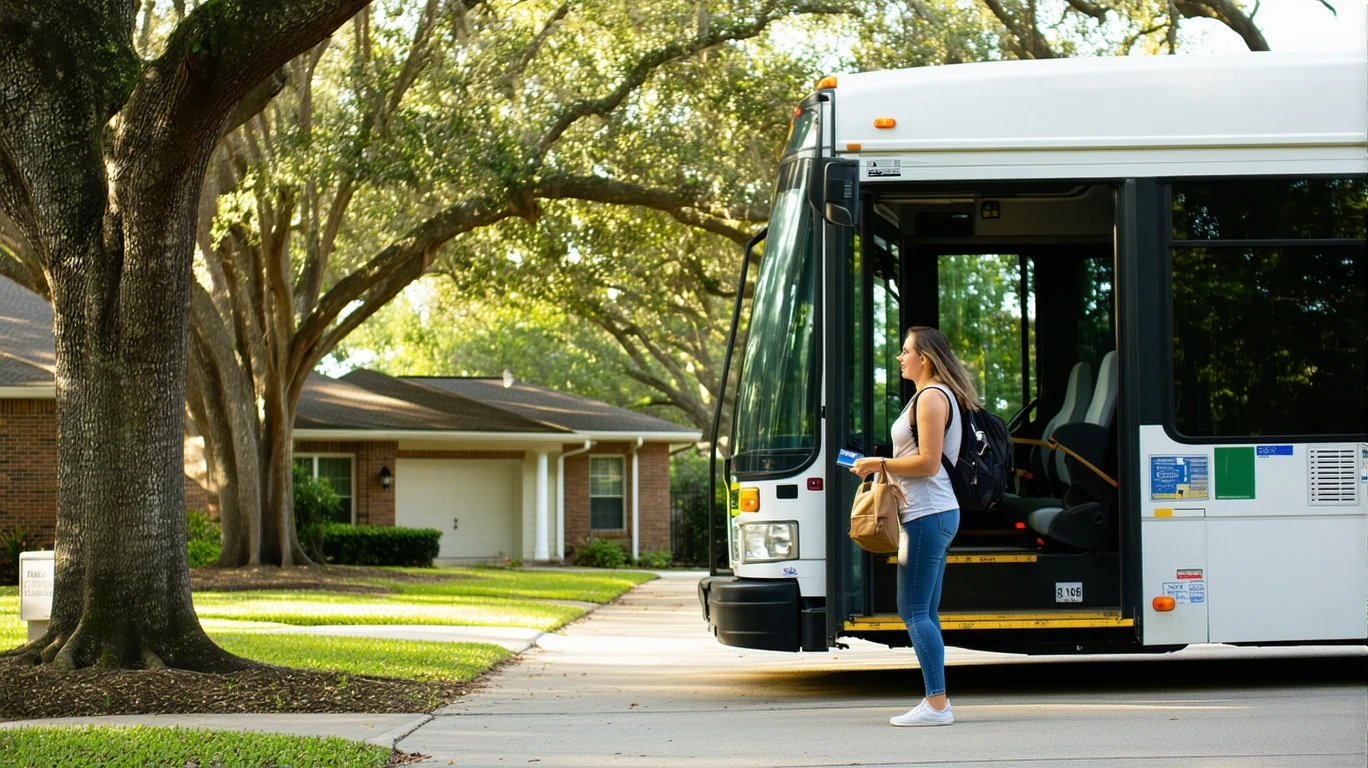
Public transit in the San Antonio metro area often centers around systems such as VIA Metropolitan Transit, though coverage and frequency vary significantly by location. In Live Oak specifically, transit plays a limited role in daily mobility. The city’s low-density, car-oriented layout means that even where bus service exists, it tends to serve commuters traveling into San Antonio’s core rather than residents moving within Live Oak itself.
Transit works best in areas with concentrated destinations—employment centers, medical districts, universities—where routes can serve high volumes of riders efficiently. Live Oak’s dispersed residential pattern and sparse commercial density make it difficult for transit to provide the kind of frequent, flexible service that would allow households to rely on it for daily errands or non-commute trips.
For residents who do use transit, the experience is typically structured around specific, predictable trips: a weekday commute to downtown San Antonio, for example, or access to a regional medical facility. But for grocery shopping, school pickups, evening activities, or weekend errands, transit coverage and scheduling constraints make it impractical for most households.
This doesn’t mean transit is absent—it means it functions as a supplemental option for a narrow set of trips, not as a primary mobility system for daily life in Live Oak.
Driving & Car Dependence Reality
Driving isn’t just the most common way to get around Live Oak—it’s the only realistic option for most households. The city’s layout, with residential subdivisions separated from commercial corridors and limited pedestrian connectivity, makes car ownership a functional necessity rather than a convenience.
Parking is generally abundant and free, which reduces one friction point common in denser urban areas. But that ease of parking comes with tradeoffs: longer distances between destinations, less walkable streetscapes, and a transportation cost structure that’s less visible day-to-day but more embedded in household budgets over time.
For families, car dependence often means coordinating multiple vehicles. One adult might commute to San Antonio while another handles local errands and school logistics. Single-car households face significant scheduling constraints, particularly when work hours, school pickup times, and errand windows don’t align.
The flexibility that comes with driving—being able to leave when you want, take the route you prefer, and carry groceries or equipment without hassle—is real. But so is the lack of alternatives when a car breaks down, when a household member can’t drive, or when a second vehicle becomes a financial stretch.
Commuting Patterns & Daily Mobility
Commuting in Live Oak typically means driving, whether the destination is within the city, into San Antonio, or to another nearby suburb. The region’s employment centers are dispersed, and many residents work in locations that aren’t well-served by transit or within walking distance of home.
For those commuting into San Antonio’s core, the drive can be straightforward during off-peak hours but congested during morning and evening rushes. For those working in Live Oak or nearby suburbs, commutes tend to be shorter in distance but still require a car due to the lack of pedestrian or transit infrastructure connecting residential and commercial areas.
Daily mobility extends beyond the work commute. Parents manage school drop-offs and pickups, often at multiple locations. Households make separate trips for groceries, medical appointments, and recreational activities. The cumulative time spent in the car—and the logistical complexity of coordinating those trips—shapes daily life in ways that aren’t immediately obvious when evaluating a move.
Who benefits from this pattern? Households with flexible work schedules, remote work arrangements, or jobs located close to home face less commute friction. Those with predictable hours and the ability to consolidate errands into fewer trips can manage the car-dependent structure more efficiently. But for households with rigid schedules, multiple job locations, or limited vehicle access, the transportation structure creates persistent logistical pressure.
Who Transit Works For — and Who It Doesn’t
Transit in Live Oak is most viable for a narrow set of users: individuals commuting to specific destinations in San Antonio’s core, those with schedules that align with limited route frequencies, and households willing to structure their entire day around transit availability.
It does not work well for families managing school runs, households needing to make multiple stops in a single trip, or residents whose work or errands require flexibility and speed. The sparse accessibility of daily errands—groceries, pharmacies, medical care—means that even if a commute is theoretically transit-accessible, the rest of daily life is not.
Renters in Live Oak face the same car-dependent reality as homeowners. Proximity to a bus stop doesn’t translate into transit viability if the routes don’t connect to the places you need to go or run infrequently enough that a missed bus means an hour-long delay.
For households without reliable vehicle access, Live Oak presents significant challenges. The infrastructure doesn’t support car-free living, and the workarounds—ride-sharing, relying on friends or family, limiting trips—add friction, cost, and stress to daily routines.
Transportation Tradeoffs in Live Oak
The tradeoff between driving and transit in Live Oak isn’t really a choice—it’s a structural reality. Driving offers control, flexibility, and the ability to manage complex household logistics. Transit, where it exists, offers limited coverage and requires significant time and planning tradeoffs.
Driving provides predictability: you know how long a trip will take, you can adjust your route in real time, and you’re not dependent on schedules or service changes. But it also creates exposure to monthly expenses that are less visible than a transit pass: fuel, maintenance, insurance, registration, and the eventual need to replace the vehicle.
Transit, in theory, reduces those costs and removes the burden of vehicle ownership. But in Live Oak, the practical limitations—sparse routes, infrequent service, limited coverage of daily destinations—mean that most households can’t rely on it as a primary transportation mode. The time cost, the scheduling constraints, and the lack of connectivity to essential services make it a supplement at best.
For households evaluating a move to Live Oak, the question isn’t whether to choose transit or driving. It’s whether the household can absorb the cost and logistics of car dependence, and whether the benefits of living in Live Oak—housing affordability, proximity to San Antonio, community character—outweigh the transportation structure that comes with it.
FAQs About Transportation in Live Oak (2026)
Is public transit usable for daily commuting in Live Oak?
Public transit in Live Oak is limited and primarily serves commuters traveling into San Antonio’s core. For daily errands, school runs, and non-commute trips within Live Oak, transit coverage and frequency are insufficient for most households. Driving remains the dominant and most practical option.
Do most people in Live Oak rely on a car?
Yes. The city’s layout, sparse pedestrian infrastructure, and low density of daily destinations make car ownership a functional necessity for the vast majority of residents. Multi-car households are common, particularly among families managing work commutes and school logistics.
Which areas of Live Oak are easiest to live in without a car?
No area of Live Oak is designed to support car-free living. Even neighborhoods with some bus access lack the walkable density, mixed-use development, and transit frequency needed to manage daily life without a vehicle. Households without cars face significant logistical and cost burdens.
How does commuting in Live Oak compare to nearby cities?
Live Oak shares the car-dependent commuting pattern common to suburban areas in the San Antonio metro. Commutes into San Antonio’s core can involve congestion during peak hours, while commutes within Live Oak or to nearby suburbs tend to be shorter in distance but still require personal vehicles due to limited transit and pedestrian infrastructure.
What should newcomers know about transportation costs in Live Oak?
Transportation costs in Live Oak are driven primarily by vehicle ownership and use. Fuel prices, insurance, maintenance, and the need for multiple vehicles in many households create ongoing expenses that are less visible than rent or mortgage payments but equally important to household budgets. Planning for these costs—and understanding that alternatives to driving are limited—is essential for financial stability.
How Transportation Fits Into the Cost of Living in Live Oak
Transportation in Live Oak isn’t just a line item in a budget—it’s a structural factor that shapes where people live, how they manage time, and what kind of flexibility they have in daily life. The car-dependent layout means that housing affordability must be weighed against the cost and logistics of vehicle ownership, and that proximity to work or school doesn’t eliminate the need for reliable transportation.
For households evaluating a move, understanding the transportation reality is as important as understanding housing costs or income levels. The city’s infrastructure requires planning, coordination, and financial capacity to manage multiple vehicles and the ongoing expenses that come with them.
Live Oak offers affordability and access to the San Antonio metro, but it does so within a framework that assumes car ownership and the logistical complexity that comes with it. For households prepared to navigate that structure, the city can provide a stable, suburban quality of life. For those expecting transit options, walkable errands, or car-free viability, the reality will require significant adjustment.
How this article was built: In addition to public economic data, this article incorporates location-based experiential signals derived from anonymized geographic patterns—such as access density, walkability, and land-use mix—to reflect how day-to-day living actually feels in Live Oak, TX.
—