
A household earning $70,000 might feel stretched in Live Oak while another at the same income level manages comfortably—not because one budgets better, but because their daily routines, housing choices, and expectations align differently with how this city actually works. Understanding whether your income fits here requires looking past totals and into the structure of everyday life.
What “Living Comfortably” Means in Live Oak
Comfort in Live Oak isn’t defined by luxury—it’s the ability to cover housing without constant tradeoffs, absorb seasonal utility swings without panic, and run errands without every trip feeling like a logistics puzzle. It means your car stays reliable because you depend on it for everything, and you’re not choosing between fixing the AC or paying rent during the long cooling season.
The median household income here sits at $74,326 per year (roughly $6,194 gross monthly income), but that figure alone doesn’t predict comfort. What matters more is whether your household can handle the specific friction points this place creates: car dependency for every errand, limited park access, sparse family infrastructure, and healthcare facilities that may require driving beyond city limits.
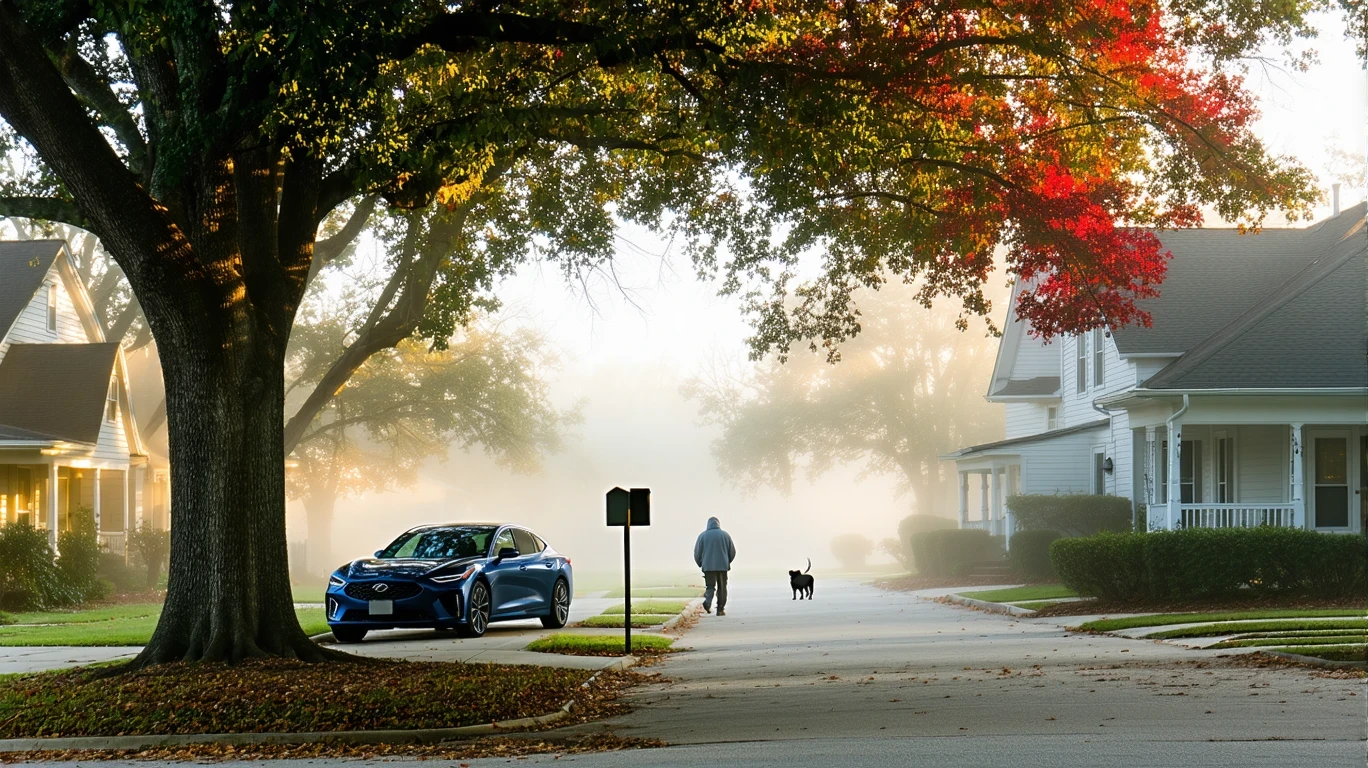
Comfort also means space. Live Oak’s low-rise building character and suburban layout mean most residents expect single-family homes or ground-level units, not apartments. That expectation shapes housing costs and limits flexibility when budgets tighten.
Where Income Pressure Shows Up First
Housing dominates financial pressure in Live Oak, but not always in obvious ways. The median home value of $212,800 might seem manageable compared to larger metros, yet ownership still requires stable income, down payment reserves, and the ability to cover property taxes, insurance, and maintenance—all while keeping the car running. Median gross rent of $1,362 per month offers an alternative, but renters face the same car dependency and utility exposure without building equity.
The choice between renting and owning becomes a tradeoff between flexibility and long-term cost control. Renters avoid maintenance surprises but remain exposed to lease renewals. Owners gain stability but absorb all repair and tax volatility. Neither path eliminates pressure—it just shifts where it lands.
Transportation costs layer on top of housing. Live Oak’s car-oriented infrastructure means every household needs at least one reliable vehicle, and most need two. Pedestrian infrastructure falls below thresholds, and food and grocery density sits well under what would support walkable errands. Gas prices at $3.21 per gallon add up quickly when every trip—work, groceries, healthcare, school runs—requires driving. Time becomes a hidden cost: the logistics of coordinating multiple car-dependent errands each week consume hours that higher-density cities handle with a single walk.
Utility volatility hits hardest during Live Oak’s extended cooling season. Electricity rates of 15.87¢ per kWh combine with the reality of triple-digit summer heat to create bills that swing dramatically between mild months and peak summer. Households without budget cushion feel every degree of thermostat adjustment. Natural gas at $19.31 per MCF matters less here than in colder climates, but cooling costs dominate household energy exposure.
For families, pressure multiplies. School density falls below thresholds, meaning parents may face longer drives for preferred schooling options. Playground density is low, and park access is limited—reducing free recreational options and increasing reliance on paid activities or longer drives to access green space. The absence of hospitals or clinics within city boundaries means routine pediatric care and urgent needs require planning and travel, adding friction to an already car-dependent routine.
How the Same Income Feels Different by Household
A single adult earning $50,000 gross annually might find Live Oak workable if they accept a smaller rental, minimal discretionary spending, and the understanding that nearly every activity requires driving. Car dependency becomes the primary lifestyle constraint—socializing, dining, errands, and healthcare all require fuel, time, and a functioning vehicle. Limited park access and sparse food establishment density mean fewer spontaneous, low-cost options. The unemployment rate of 4.8% suggests steady work availability, but any income disruption leaves little room for error.
Couples without children often experience less pressure at the same income level. Splitting rent of $1,362 per month becomes more manageable, and two incomes create buffer against utility swings and car repairs. They can coordinate errands more efficiently and share transportation costs. The lack of family infrastructure and limited healthcare access matters less without children in the household. Sparse daily errands accessibility still requires planning, but couples make fewer trips than families and can batch tasks more easily.
Families with children face the most intense pressure, even at higher income levels. Housing space needs grow, often pushing households toward ownership or larger rentals. Multiple daily trips—school, activities, groceries, pediatric appointments—turn car dependency into a constant logistical and financial drain. Limited school density may mean longer drives or fewer nearby options. The absence of local clinics means even routine healthcare requires travel. Low playground density and limited park access reduce free recreational outlets, increasing costs for structured activities or forcing longer drives to access green space. A household earning $80,000 might still feel stretched if they’re managing two cars, higher cooling bills in a larger home, and the time cost of coordinating a car-dependent family schedule.
The Comfort Threshold (Qualitative)
The transition to comfort in Live Oak happens when a household stops making forced tradeoffs. It’s the point where you can cover monthly expenses without deciding which bill to delay, absorb a surprise car repair without panic, and run the AC at a livable temperature during peak summer without calculating the cost per degree.
Comfort means owning—or seriously considering—a home without stretching every month to make the mortgage. It means a second car isn’t a luxury but a practical tool that doesn’t create financial stress. It means the drive to the grocery store or the pediatrician’s office feels like an inconvenience, not a budget line item you resent.
It also means having enough margin to handle Live Oak’s specific friction: the time cost of car-dependent errands, the seasonal utility swings, the need to drive for healthcare, and the reality that parks and recreational options require planning rather than appearing at the end of the block. Households below this threshold manage, but every decision is tactical. Households above it make choices based on preference, not pressure.
No single income number defines this threshold because household size, expectations, and tolerance for tradeoffs vary widely. But the shift is unmistakable when it happens: bills stop dictating behavior, and saving becomes plausible rather than theoretical.
Why Online Cost Calculators Get Live Oak Wrong
Most cost-of-living calculators reduce Live Oak to a set of averages—median rent, typical utilities, estimated transportation—and spit out a total. But totals don’t explain why two households at the same income level experience completely different financial realities here.
Calculators assume a baseline level of walkability and errands accessibility that doesn’t exist in Live Oak. They don’t account for the fact that pedestrian infrastructure sits well below thresholds and food and grocery density falls short of what would allow car-free or car-light living. Every trip requires a vehicle, fuel, and time—costs that don’t show up as line items but shape daily life and monthly budgets.
They also miss the intensity of cooling season exposure. A generic utility estimate might average costs across the year, but Live Oak households experience sharp seasonal swings. The extended period of heat and the electricity rate of 15.87¢ per kWh combine to create summer bills that dominate annual energy spending. Households without cushion feel that volatility as financial stress, not just higher numbers.
Calculators treat transportation as a simple commute calculation, ignoring the reality that car dependency here extends to every errand, every healthcare visit, every school run, and every attempt to access green space or family-friendly infrastructure. The time cost and logistical complexity of managing a car-dependent household—especially for families—doesn’t translate into a tidy monthly figure.
Finally, they don’t capture the healthcare access gap. The absence of hospitals or clinics within city boundaries means routine and urgent care require travel, adding friction and unpredictability that affect both time and money. Families with young children or anyone managing chronic conditions feel this gap more acutely, but calculators treat healthcare as a uniform national average.
People feel surprised after moving to Live Oak not because the numbers were wrong, but because the structure of daily life—the errands, the drives, the seasonal bills, the logistics—wasn’t part of the equation.
How to Judge Whether Your Income Fits Live Oak
Rather than asking “Is my income enough?”, ask whether your income and expectations align with how Live Oak actually works. Consider these questions honestly:
How sensitive are you to housing tradeoffs? Can you accept a smaller space, an older home, or a longer drive to work in exchange for lower rent or mortgage payments? Or do you need a specific type of housing that limits your flexibility? Live Oak’s housing market rewards those who can adapt and punishes those with narrow requirements.
Can you absorb seasonal utility swings? Do you have enough monthly margin to handle summer cooling bills that may double or triple compared to mild months? Or does a $150 surprise bill create a cascade of delayed payments? Utility volatility here isn’t occasional—it’s predictable and intense.
Is time or money your limiting factor? Live Oak’s car-dependent structure means every errand takes longer and costs more than in denser cities. If your income is tight but your schedule is flexible, you can plan and batch trips efficiently. If both time and money are constrained, the logistics become exhausting.
How much do you rely on walkable amenities or spontaneous errands? If you expect to walk to a coffee shop, grab groceries on the way home, or let kids bike to a park, Live Oak will frustrate you. Pedestrian infrastructure and errands accessibility both fall well below thresholds. Every trip is planned, and every trip requires a car.
Do you need nearby healthcare access? If you or your household members require frequent medical visits—pediatric care, chronic condition management, urgent care—the absence of hospitals or clinics within city limits adds friction and travel time. This matters more for families and older adults than for young, healthy singles.
How much flexibility do you expect month to month? Live Oak works better for households with stable, predictable income than for those with variable earnings or irregular expenses. The combination of car dependency, utility volatility, and limited infrastructure means there’s less room to absorb surprises. If your income fluctuates or your expenses are unpredictable, the margin for error shrinks quickly.
Your answers to these questions matter more than any income threshold. Live Oak can work well for households willing to accept its tradeoffs—but only if expectations match reality.
FAQs About Living Comfortably in Live Oak
Is $60,000 a year enough to live comfortably in Live Oak?
For a single adult or a couple without children, $60,000 gross annual income can work if you’re willing to rent modestly, manage car-dependent errands efficiently, and absorb seasonal utility swings without panic. For a family, that income level will feel tight unless housing costs are unusually low or one partner works from home, reducing transportation and childcare complexity. Comfort depends more on household size and expectations than the number itself.
How much does car dependency really cost in Live Oak?
Beyond the obvious costs—gas at $3.21 per gallon, insurance, maintenance—car dependency here creates a time tax and logistical burden that’s harder to quantify. Errands that take 10 minutes on foot in walkable cities require 20–30 minutes of driving, parking, and navigating here. Families managing multiple daily trips face compounding time and fuel costs. The real expense isn’t just the car—it’s the structure of life that requires it for everything.
Does Live Oak work for families on a single income?
It’s possible but requires significant tradeoffs. A single earner needs enough income to cover housing, utilities, transportation for a car-dependent household, and the time to manage all errands and logistics without a second adult’s schedule flexibility. Limited family infrastructure and healthcare access add friction. Single-income families who succeed here typically have stable, above-median earnings, modest housing expectations, and high tolerance for car-dependent routines.
What’s the biggest financial surprise people face after moving to Live Oak?
Most people underestimate the combined impact of car dependency and utility volatility. The need to drive everywhere—not just to work, but for every errand, every appointment, every attempt to access parks or services—adds up faster than expected. Then summer arrives, cooling bills spike, and households realize how much of their budget disappears into electricity during the extended heat season. The cost structure isn’t hidden, but the intensity catches people off guard.
Can you live in Live Oak without a car?
Practically speaking, no. Pedestrian infrastructure falls well below thresholds, food and grocery density is sparse, and there’s no rail transit. Bus stops exist, but the network doesn’t support car-free living for most households. Attempting to live here without a vehicle means severe limitations on employment, errands, healthcare access, and social life. A car isn’t optional—it’s the baseline requirement for participating in daily life.
How this article was built: In addition to public economic data, this article incorporates location-based experiential signals derived from anonymized geographic patterns—such as access density, walkability, and land-use mix—to reflect how day-to-day living actually feels in Live Oak, TX.
Live Oak can work well for some households—but only if expectations match reality. The city rewards those who accept car dependency, can buffer seasonal utility swings, and don’t require walkable amenities or immediate healthcare access. For everyone else, the gap between income and comfort widens quickly, no matter what the median figures suggest.