
What does it actually feel like to live in Mint Hill? According to composite sentiment drawn from public discussion, roughly 74 out of 100 residents say they’re happy in this growing suburb east of Charlotte. But that number tells only part of the story. The real question isn’t whether people are content—it’s whether the tradeoffs that define life here match what you’re looking for.
Mint Hill occupies an interesting middle ground: it’s close enough to Charlotte to feel connected, but far enough to maintain its own identity. It’s suburban in structure, but walkable infrastructure exists in pockets. It’s family-oriented in tone, but the density of schools and playgrounds falls below what you’d expect in a purpose-built family hub. And it’s growing—fast enough to bring new amenities, but not so fast that long-time residents feel entirely comfortable with the pace.
The people who thrive here tend to value space, affordability relative to closer-in neighborhoods, and a quieter pace. The people who feel friction tend to want walkability, variety, and less time behind the wheel. Understanding which side of that line you fall on is the key to predicting whether Mint Hill will feel like home or compromise.
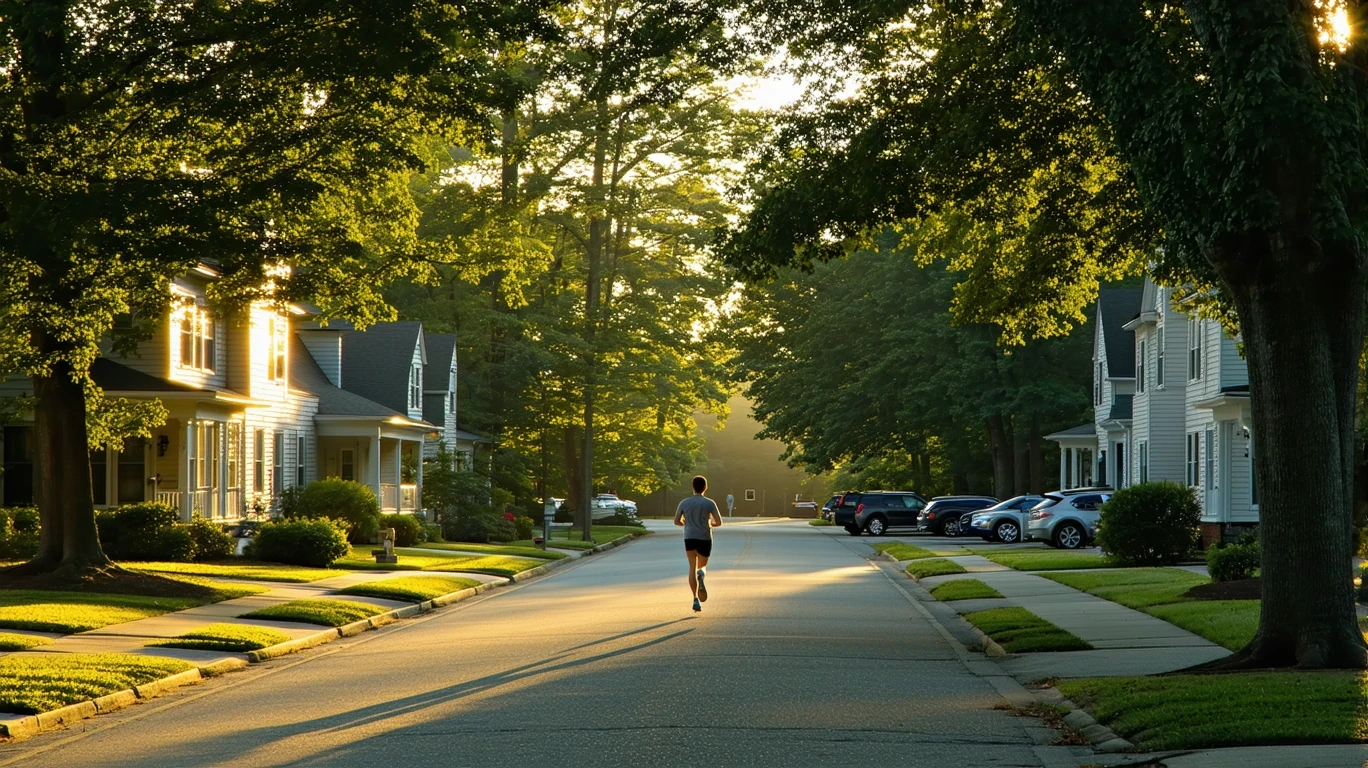
What Defines the Emotional Tone in Mint Hill
Mint Hill’s vibe is shaped by a few recurring themes that show up across social media, reviews, and local conversation. At its core, this is a place where people come for suburban comfort and homeownership value—but the experience of living here depends heavily on how you navigate its structure.
Because food and grocery options cluster along corridors rather than spreading evenly, daily errands often require a car, even in areas with decent pedestrian infrastructure. That creates a tension: you might be able to walk your neighborhood, but you’re still driving to the store, the pharmacy, and most services. For some households, that’s a non-issue. For others—especially those used to walkable urbanism or hoping to reduce car dependency—it’s a daily reminder of compromise.
The presence of both residential and commercial land use, combined with pockets of walkable infrastructure, means Mint Hill isn’t a cookie-cutter subdivision landscape. There’s texture here. But transit is limited to bus service, and with half of workers facing long commutes, the car remains the dominant mode. That shapes not just logistics, but the rhythm of daily life: planning replaces spontaneity, and convenience comes at the cost of drive time.
Healthcare access is strong—there’s a hospital present, along with pharmacies—which provides reassurance for families and older residents. Green space is present, with parks in moderate density and water features adding to the outdoor environment. But school and playground density fall below thresholds you’d expect in a family-heavy suburb, which surprises some newcomers who assumed “family-friendly” meant abundant dedicated infrastructure.
The result is a place that feels family-oriented in culture and tone, but requires more driving and planning than some households anticipate. It rewards people who are comfortable with car-based logistics and prioritize home value and space. It frustrates people who want walkable errands, transit options, or tightly packed family amenities.
Social Media Buzz in Mint Hill
On platforms like Facebook and Reddit, Mint Hill residents tend to talk about growth, identity, and the tension between small-town roots and suburban expansion. The tone is rarely extreme—this isn’t a place that inspires passionate love or deep frustration—but it’s also not neutral. People care about what Mint Hill is becoming, and they’re vocal about what they want it to stay.
Common discussion themes include:
- Traffic and commute creep: As more people move in, drive times to Charlotte and nearby job centers feel longer, especially during peak hours. The conversation isn’t panicked, but there’s a low hum of annoyance.
- New development vs character: Residents debate whether new retail and housing improve convenience or erode the town’s distinct feel. It’s not angry—it’s protective.
- Errands and options: People appreciate that chains and services are arriving, but some miss the spontaneity and variety they had in denser areas. The phrase “everything’s a drive” comes up often.
- Pride in community: There’s genuine affection for Mint Hill’s neighborly feel, local events, and sense of safety. People who’ve been here a while tend to defend it when outsiders dismiss it as “just another suburb.”
Composite sentiment from local discussion might sound like this:
“It’s quiet, safe, and we got a lot of house for the money. But I do miss being able to walk to dinner or grab groceries on a whim. Everything here requires a plan.”
“Mint Hill still feels like a town, not just a bedroom community. People know each other. That matters to us, even if it means fewer options.”
“The commute is the tradeoff. If you work in Charlotte, you’re looking at 30–40 minutes each way, and it’s getting worse. But we couldn’t afford this much space anywhere closer.”
The emotional undercurrent is one of cautious satisfaction. People aren’t unhappy, but they’re aware of what they gave up to get what they wanted.
How Local Coverage Frames Mint Hill
Local news and community outlets tend to frame Mint Hill through the lens of growth, infrastructure, and identity preservation. The tone is rarely critical, but it’s not boosterish either—it’s observational, focused on how change is reshaping daily life.
Recurring topic buckets in local coverage include:
- “New Retail and Dining Arrive as Town Grows”
- “Residents Weigh Convenience Against Small-Town Character”
- “Commute Times and Traffic Patterns Shift with Population Growth”
- “Community Debates What Development Should Look Like”
- “Schools and Services Adapt to Changing Demographics”
These aren’t headlines tied to specific incidents—they’re thematic frames that reflect ongoing conversation. The subtext is clear: Mint Hill is in transition, and people are still figuring out what that means for the experience of living here.
What’s notable is the absence of crisis language. Mint Hill doesn’t get covered as a place in decline or a place booming out of control. It’s a place adjusting, and the tone reflects that: measured, slightly wistful, but forward-looking.
Review-Based Public Perception
On platforms like Google, Yelp, and Nextdoor-style community boards, Mint Hill earns praise for safety, space, and value—but also draws criticism for limited walkability, dining variety, and the need to drive for nearly everything.
What delights people:
- Newer homes with yards, often at prices lower than comparable properties closer to Charlotte
- A sense of community and neighborliness that feels genuine, not manufactured
- Good schools in pockets, with families reporting positive experiences
- Low crime and a general feeling of safety, especially for families with young children
What disappoints people:
- Limited dining and entertainment options—people describe “the same few chains” and a lack of local texture
- Car dependency for errands, even in neighborhoods with sidewalks and greenways
- Commute length and traffic, especially for those working in Uptown Charlotte or beyond
- Fewer playgrounds and parks than expected for a family-heavy suburb
The pattern is clear: Mint Hill delivers on housing pressure relief and suburban comfort, but it doesn’t deliver on spontaneity, walkable convenience, or urban texture. People who moved here expecting a quiet, affordable alternative to Charlotte tend to feel satisfied. People who moved here hoping for a walkable, amenity-rich suburb tend to feel let down.
Neighborhood variation exists—newer planned areas tend to feel more polished and amenity-focused, while older pockets feel more established and tree-lined—but the overall structure is consistent: you’ll need a car, and you’ll spend time in it.
Comparison to Nearby Cities
| Dimension | Mint Hill | Matthews | Indian Trail |
|---|---|---|---|
| Overall Vibe | Quiet, family-oriented, growth in progress | More polished, walkable downtown, slightly pricier | Newer, more sprawling, heavily car-dependent |
| Walkability | Pockets of infrastructure, but errands require driving | Downtown core is walkable; rest is suburban | Minimal walkable areas; designed for cars |
| Dining & Retail | Growing but limited; mostly chains | More variety, local spots mixed with chains | Strip malls and big-box retail dominate |
| Commute Feel | Moderate to long; traffic building | Similar, but closer to some job centers | Longer on average; farther from Charlotte core |
| Community Tone | Neighborly, protective of identity | Polished, event-focused, slightly more transient | Newer, still forming identity |
Mint Hill sits between Matthews and Indian Trail in both geography and character. Matthews offers more walkable texture and dining variety, but at a higher price point and with a slightly more polished, less “small-town” feel. Indian Trail offers newer construction and often lower prices, but with even less walkability and longer commutes.
If you want a bit more urban texture and don’t mind paying for it, Matthews might feel like a better fit. If you want maximum space and newness and don’t mind being farther out, Indian Trail could work. Mint Hill is the middle path: not as polished as Matthews, not as sprawling as Indian Trail, but offering a balance of value, space, and community feel that appeals to households willing to drive for convenience.
What Locals Are Saying
“We moved here from South End and it was a huge adjustment. The house is great, the neighbors are friendly, but I miss being able to walk to a coffee shop or grab takeout without getting in the car. It’s a tradeoff we knew we were making, but it’s more noticeable than I expected.”
— Young professional couple, moved in 2022
“Mint Hill is exactly what we wanted: good schools, safe streets, a yard for the kids. Yes, we drive everywhere, but that’s suburban life. We’re not trying to live in the city—we left the city for this.”
— Family with two school-age children
“I’ve been here since the ’90s, and it’s changed a lot. More traffic, more development, more people who don’t know the history. But it’s still Mint Hill. It’s still home.”
— Long-time resident
“The commute is rough. I’m spending over an hour a day in the car, and that adds up. But we couldn’t afford a house like this in Dilworth or Plaza Midwood, so here we are.”
— Remote worker with occasional office days
“It’s fine. It’s safe, it’s clean, the neighbors are nice. But it’s not exciting. If you want nightlife or culture or variety, you’re driving into Charlotte. Mint Hill is where you come home to, not where you go out.”
— Single professional, renting
“We love the greenways and the parks. It’s not as dense as some suburbs, but there’s enough to keep the kids active. And the hospital being nearby gives us peace of mind.”
— Retirees, moved from out of state
“I thought ‘family-friendly’ meant more playgrounds and rec centers. There’s some stuff, but not as much as I expected. We end up driving to Matthews or Ballantyne for a lot of activities.”
— Parent of toddlers
Does Mint Hill Feel Like a Good Fit?
Mint Hill doesn’t inspire extremes. It’s not a place people rave about or flee from—it’s a place people choose deliberately, with eyes open to the tradeoffs.
This tends to work for:
- Families seeking homeownership value and space near Charlotte without paying urban prices
- Commuters willing to spend time in the car in exchange for a quieter home environment
- People who want a small-town feel with metro access, even if that access requires driving
- Households that prioritize safety, neighborliness, and newer construction over walkability and spontaneity
This tends to frustrate:
- People seeking walkable urbanism, transit independence, or car-free living
- Households that value dining variety, nightlife, and cultural texture
- Commuters sensitive to drive time or traffic stress
- Renters looking for diverse housing stock or affordability in the rental market
Mint Hill’s emotional profile is one of pragmatic satisfaction. People who live here tend to feel they made a smart choice given their priorities, but they’re also clear-eyed about what they gave up. The walkable pockets and mixed land use provide some relief from pure car dependency, but errands still cluster along corridors, and transit remains limited. The hospital and green space offer reassurance, but family infrastructure is less dense than the “family-friendly” label might suggest.
If you’re trying to decide whether Mint Hill fits, the question isn’t “Will I be happy here?” It’s “Do the things I value align with what this place delivers, and can I live comfortably with what it doesn’t?” If the answer is yes, Mint Hill will likely feel like a solid, sensible choice. If the answer is uncertain, it’s worth exploring what ‘enough’ actually means for your household before committing.
For a clearer picture of how costs break down day to day, see your monthly budget in Mint Hill. And if you’re weighing Mint Hill against other options, understanding the broader landscape of tradeoffs can help you predict where you’ll feel most at home.
How this article was built: In addition to public economic data, this article incorporates location-based experiential signals derived from anonymized geographic patterns—such as access density, walkability, and land-use mix—to reflect how day-to-day living actually feels in Mint Hill, NC.
The perspectives shown reflect commonly expressed local sentiment and recurring themes in public discussion, rather than individual accounts.