
Transit Coverage & Commute Patterns in Mint Hill
| Metric | Value |
|---|---|
| Average Commute Time | 28 minutes |
| Workers with Long Commutes (60+ min) | 50.2% |
| Work from Home | 4.9% |
| Transit Type Available | Bus service |
| Current Gas Price | $3.84/gal |
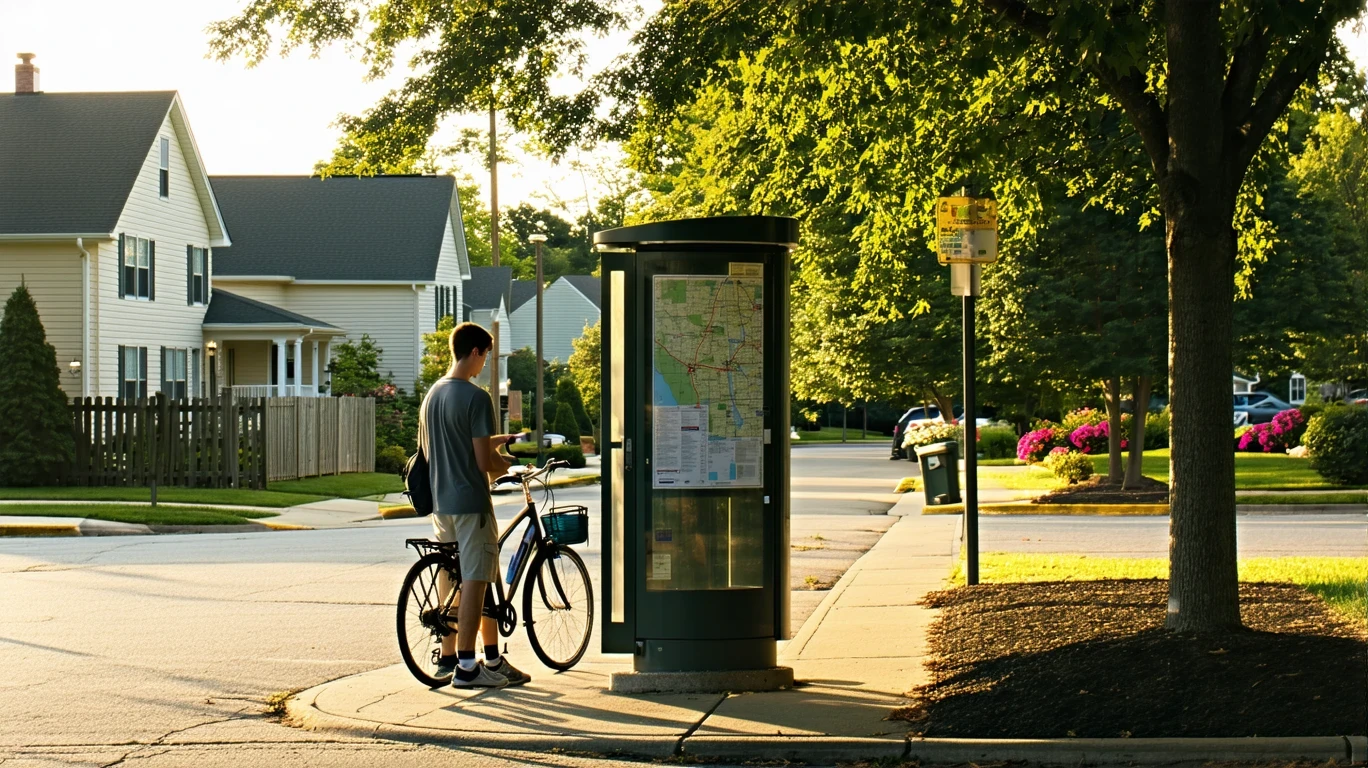
How People Get Around Mint Hill
Understanding transportation options in Mint Hill starts with recognizing what kind of place this is: a suburban community in the Charlotte metro where most daily life revolves around driving. While bus service exists and certain areas offer surprisingly strong pedestrian infrastructure, the reality for most households is that a car isn’t optional—it’s the primary tool for getting to work, running errands, and managing family logistics.
Newcomers often assume Mint Hill functions like denser parts of Charlotte, where transit and walkability can reduce car dependence. That’s not quite right. Mint Hill’s layout clusters commercial activity along specific corridors, leaving much of the residential fabric spread across quieter streets. The result is a place where you might walk comfortably within your neighborhood or near a shopping center, but still need to drive to reach most destinations across town or into the broader metro.
The commute data tells the story clearly: the average trip to work takes 28 minutes, and half of all workers face commutes longer than an hour. With only 4.9% working from home, the vast majority of Mint Hill residents are on the road regularly, navigating the demands of jobs concentrated in Charlotte and surrounding employment centers.
Public Transit Availability in Mint Hill
Public transit in Mint Hill centers around bus service, which provides a baseline level of connectivity but doesn’t replace the need for a car in most cases. The system serves specific routes and corridors, meaning access depends heavily on where you live and where you need to go.
Transit works best for residents near commercial clusters—areas where grocery stores, services, and transit stops align. If your daily routine fits within these corridors, bus service can handle some trips. But coverage thins quickly in residential neighborhoods, and the lack of rail transit limits options for reaching Charlotte’s core or other metro job centers efficiently.
For households weighing transit viability, the question isn’t whether buses exist—it’s whether the routes, timing, and destinations match your actual needs. In Mint Hill, that alignment is the exception, not the rule. Late-hour service, weekend frequency, and multi-stop errands all tilt the practicality equation back toward driving.
Driving & Car Dependence Reality
Driving isn’t just common in Mint Hill—it’s structurally necessary for most residents. The layout spreads housing, jobs, schools, and services across a geography that doesn’t compress into walkable reach. Even in areas with strong pedestrian infrastructure, you’re typically walking within a zone, not between zones.
Parking is rarely a constraint here, which removes one of the friction points that makes car ownership costly or inconvenient in denser cities. Driveways, lots, and street parking are plentiful, and traffic congestion tends to concentrate around peak commute hours rather than all day. That makes driving predictable and flexible, even if it means absorbing fuel costs and vehicle expenses as fixed parts of household budgets.
For families, car dependence often multiplies. School drop-offs, activity shuttles, and grocery runs don’t align neatly with transit schedules, and the time cost of coordinating multiple stops by bus quickly becomes unworkable. The tradeoff is clear: driving offers control and speed, but it also locks in ongoing costs that don’t fluctuate much with behavior.
Commuting Patterns & Daily Mobility
Commuting in Mint Hill typically means driving toward Charlotte or other metro employment hubs, often along routes that funnel workers into shared corridors during morning and evening peaks. The 28-minute average commute masks significant variation—half of all workers spend more than an hour each way, a reality shaped by job location, traffic patterns, and the distance between Mint Hill’s residential areas and regional job centers.
Single-job commutes dominate, but households with multiple workers or complex schedules face compounding logistics. Coordinating drop-offs, managing vehicle access, and timing arrivals around childcare or school schedules all add friction that transit can’t easily absorb. The low work-from-home rate means most residents are making these trips daily, with little flexibility to shift timing or mode.
For those who do live near commercial corridors with bus access, some errands become walkable or transit-accessible. Grabbing groceries, picking up prescriptions, or meeting friends at a nearby restaurant can happen without a car—but only if your home, the destination, and the infrastructure all align. That’s a narrow slice of Mint Hill’s geography, and it doesn’t extend to commuting for most workers.
Who Transit Works For — and Who It Doesn’t
Transit in Mint Hill serves a specific subset of residents: those who live near bus routes, work along corridors with reliable service, and have schedules that tolerate the time cost of transfers and waiting. Renters in apartment complexes near commercial zones sometimes fit this profile, especially if they’re working retail, service, or shift-based jobs that align with transit availability.
For homeowners in residential neighborhoods, the calculus shifts. The distance to the nearest stop, the infrequency of service, and the mismatch between transit coverage and daily destinations make car ownership the default. Families with children face even steeper barriers—school locations, activity schedules, and multi-stop errands don’t compress into transit-friendly patterns.
The distinction isn’t about preference or values. It’s about whether the infrastructure supports your actual routine. In Mint Hill, that support exists in pockets, but it doesn’t extend across the city in a way that makes car-free or car-light living practical for most households.
Transportation Tradeoffs in Mint Hill
Choosing between transit and driving in Mint Hill isn’t a balanced decision for most people—it’s a question of whether transit can work at all. For the minority of residents whose routines align with bus routes and commercial corridors, transit offers predictability and eliminates fuel and parking concerns. But it comes with time costs, limited coverage, and reduced flexibility for non-routine trips.
Driving, by contrast, offers control. You leave when you want, stop where you need to, and adapt to changes without checking schedules. The tradeoff is ongoing expense: fuel, maintenance, insurance, and depreciation all accumulate regardless of how efficiently you drive. In Mint Hill, where half of workers face long commutes, those costs compound quickly.
The real tension isn’t between two equal options—it’s between accepting car dependence with its costs and constraints, or structuring your life around the narrow zones where transit and walkability actually function. For most households, especially those with children or jobs outside Mint Hill, that choice has already been made by the time they move in.
FAQs About Transportation in Mint Hill (2026)
Is public transit usable for daily commuting in Mint Hill?
Bus service exists, but it’s practical only for a narrow set of commutes—typically those along established routes to nearby job centers. For most workers commuting into Charlotte or other metro areas, driving remains the dominant mode. Transit works best when your home, workplace, and schedule all align with available routes, which is uncommon in Mint Hill’s spread-out layout.
Do most people in Mint Hill rely on a car?
Yes. The vast majority of residents depend on cars for commuting, errands, and family logistics. While some areas offer walkable access to shops and services, and bus routes serve specific corridors, the overall geography and job distribution make car ownership essential for nearly all households.
Which areas of Mint Hill are easiest to live in without a car?
Areas near commercial corridors with bus access and clustered services offer the best chance of reducing car dependence, though even in these zones, most residents still own vehicles. Walkability exists in pockets—particularly where pedestrian infrastructure is strong—but it’s localized, not citywide. Living car-free in Mint Hill is rare and requires careful alignment of housing, work, and daily needs.
How does commuting in Mint Hill compare to nearby cities?
Mint Hill’s commute patterns reflect its role as a suburban community within the Charlotte metro. The 28-minute average is moderate, but the 50.2% share of workers with long commutes signals that many residents are traveling significant distances to jobs elsewhere. Compared to denser parts of Charlotte, Mint Hill offers less transit coverage and fewer alternatives to driving, but also less parking friction and more predictable traffic outside peak hours.
Does Mint Hill have bike infrastructure?
Some cycling infrastructure exists, but it’s not extensive or connected enough to serve as a primary transportation mode for most residents. Biking is more common for recreation or short trips within neighborhoods than for commuting or running errands across town.
How Transportation Fits Into the Cost of Living in Mint Hill
Transportation isn’t just a line item in your monthly budget in Mint Hill—it’s a structural factor that shapes where you can live, how you spend your time, and what flexibility you have in daily life. Car dependence means fuel, insurance, maintenance, and vehicle costs are fixed expenses for nearly every household, and those costs don’t shrink much even when you drive less.
For families, transportation costs multiply with the number of drivers, the complexity of schedules, and the distance to work or school. The time cost of commuting—especially for the half of workers spending more than an hour each way—also affects quality of life in ways that don’t show up in budget spreadsheets but matter deeply for household planning.
Understanding how people actually move through Mint Hill—where transit works, where it doesn’t, and what driving really requires—gives you a clearer picture of what living here demands. It’s not about finding the cheapest option; it’s about recognizing which costs are unavoidable and planning accordingly.
How this article was built: In addition to public economic data, this article incorporates location-based experiential signals derived from anonymized geographic patterns—such as access density, walkability, and land-use mix—to reflect how day-to-day living actually feels in Mint Hill, NC.