
Can you live in Hemet without a car? For most people, the honest answer is no—not comfortably. Hemet’s layout, infrastructure, and daily rhythms are built around driving. While public transit exists, it plays a supporting role rather than a central one, and the city’s pedestrian infrastructure remains sparse. Understanding how people actually get around here—and what that means for your time, flexibility, and household logistics—is essential before committing to life in Hemet.
How People Get Around Hemet
Hemet operates as a car-first environment. The street network prioritizes vehicle flow, and pedestrian infrastructure sits well below the thresholds that would make walking a practical daily option for most residents. Sidewalks exist in pockets, but they don’t form the kind of continuous, connected web that supports routine errands on foot. Bike infrastructure is similarly limited, with cycling-to-road ratios too low to make biking a reliable alternative for most trips.
This isn’t a city where you can easily string together a day’s worth of tasks—groceries, pharmacy, school pickup, work—without a vehicle. Even in areas where grocery density is strong and food options cluster along certain corridors, the gaps between destinations and the lack of pedestrian connectivity mean that driving remains the default. Newcomers who arrive expecting a walkable grid or frequent transit often recalibrate quickly: Hemet rewards car ownership and penalizes those who try to operate without one.
The result is a mobility pattern shaped more by necessity than preference. People drive because the infrastructure assumes they will, and because the alternatives—walking long distances on incomplete sidewalks, waiting for infrequent buses, or attempting multi-stop errands by bike—introduce friction that most households aren’t willing to absorb daily.
Public Transit Availability in Hemet
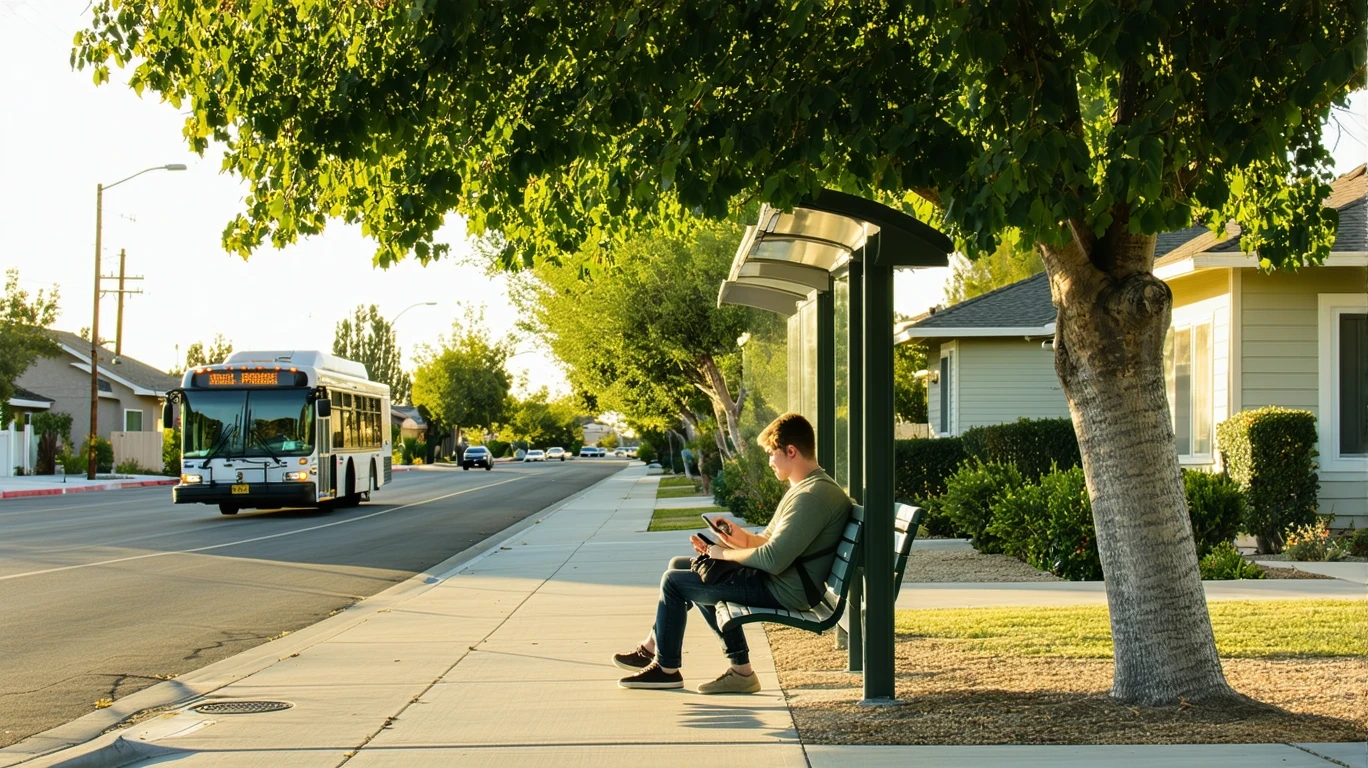
Public transit in Hemet centers around bus service. There is no rail presence, and the bus network functions primarily as a corridor-based system rather than a comprehensive grid. Routes tend to follow major arterials and connect key commercial zones, but coverage thins quickly in residential neighborhoods, especially those on the city’s edges.
Transit works best for riders whose origins and destinations align with established routes and who have schedules flexible enough to accommodate service gaps. It does not work well for multi-stop trips, late-night travel, or reaching areas outside the core corridors. For someone living near a well-served route and commuting to a destination along that same line, bus service can be functional. For everyone else—especially those in peripheral subdivisions or managing complex household logistics—it introduces delays, transfers, and unpredictability that make driving the more practical choice.
The city’s land-use mix does create some transit-supportive conditions: residential and commercial uses coexist in certain areas, meaning that some riders can access work, groceries, or services without leaving the corridor. But the pedestrian infrastructure needed to bridge the last half-mile—from the bus stop to the door—often isn’t there, which limits transit’s real-world utility even where service exists.
Driving & Car Dependence Reality
Driving in Hemet is not optional for most households; it’s structural. The city’s layout, the spacing of destinations, and the lack of pedestrian connectivity all assume vehicle access. Parking is generally abundant, traffic congestion is not a daily stressor, and the road network supports relatively straightforward navigation. For car owners, Hemet offers low-friction mobility: you can get where you need to go without the delays, costs, or complexity common in denser metros.
But that ease comes with a tradeoff. Car dependence means exposure to fuel prices, which in California tend to run higher than the national average. It means maintenance, insurance, registration, and the baseline cost of vehicle ownership—expenses that don’t disappear even if you drive less. And it means that households without reliable access to a car face significant limitations in employment options, errand efficiency, and social participation.
The city’s sprawl also shapes how people structure their days. Errands are often batched into driving loops rather than completed on foot. Work commutes—especially for those employed outside Hemet—can involve significant mileage, and the lack of viable transit alternatives means that every adult in a household typically needs their own vehicle. This isn’t a place where one-car households thrive unless both partners work from home or share highly compatible schedules.
Commuting Patterns & Daily Mobility
Commuting in Hemet often means commuting out of Hemet. Many residents work in nearby cities or regional employment centers, and those trips are almost exclusively car-based. The lack of rail transit and limited bus service to neighboring areas means that commuters absorb the full cost and time burden of driving, including exposure to fuel price swings and the wear that long-distance commuting imposes on vehicles.
For those who work locally, commutes tend to be shorter and more predictable, but they still require a car. The city’s pedestrian infrastructure and transit coverage don’t support walking or busing to work for most residents, even those living relatively close to their workplace. The result is a commuting culture that prioritizes flexibility and control—both of which come from owning and operating a personal vehicle—over the cost savings or environmental benefits that transit might offer in a different setting.
Daily mobility beyond commuting follows a similar pattern. Parents managing school drop-offs, households running errands, and residents accessing healthcare or recreation all default to driving. The city’s park density is strong, and green space is well-integrated, but reaching those parks usually requires a car. The same is true for accessing the corridor-clustered grocery stores and food options: even when destinations are plentiful, the infrastructure to reach them without driving is not.
Who Transit Works For — and Who It Doesn’t
Public transit in Hemet serves a narrow slice of the population well. It works for residents who live near major bus routes, travel along those routes to work or services, and have schedules that accommodate infrequent service. It works for non-commuters—retirees, part-time workers, students—who can plan trips around the bus schedule rather than the other way around. And it works for households willing to trade time and convenience for the cost savings of not owning a car.
It does not work for most commuters, especially those traveling outside Hemet or managing tight schedules. It does not work for parents coordinating school, work, and after-school activities. It does not work for residents in peripheral neighborhoods where bus service is sparse or nonexistent. And it does not work for anyone whose daily routine involves multiple stops, irregular hours, or destinations that fall outside the main corridors.
Renters in central areas with access to bus lines may find transit functional for some trips, but they will still likely need a car for others. Homeowners in outlying subdivisions face even steeper challenges: transit service rarely extends into those areas, and the distances involved make walking or biking impractical. For transit-dependent households—those without access to a vehicle—Hemet imposes significant constraints on employment, errands, and mobility, constraints that shape not just convenience but economic opportunity.
Transportation Tradeoffs in Hemet
The choice between transit and driving in Hemet is less a choice than a forced outcome. Driving offers control, predictability, and the ability to manage complex schedules and multi-stop trips. It allows households to live in peripheral neighborhoods, access jobs outside the city, and handle the logistics of family life without constant friction. But it also locks in ongoing costs—fuel, maintenance, insurance—and ties household budgets to variables like gas prices and vehicle reliability.
Transit, where it exists, offers lower direct costs but introduces time penalties, coverage gaps, and inflexibility that most households find unworkable for daily life. It can supplement driving for specific trips—an occasional ride to a corridor destination, a backup when a car is in the shop—but it rarely serves as a primary mobility solution. The infrastructure simply isn’t there to support it, and the city’s layout doesn’t reward those who try.
The real tradeoff in Hemet isn’t between transit and driving; it’s between accepting car dependence and the costs that come with it, or choosing a different city where transit and walkability play a larger role. For those who value low-density living, manageable traffic, and the autonomy that comes with driving, Hemet delivers. For those hoping to minimize transportation costs or avoid car ownership, it imposes barriers that are difficult to overcome.
FAQs About Transportation in Hemet (2026)
Is public transit usable for daily commuting in Hemet?
For most residents, no. Bus service exists but operates on limited routes and schedules that don’t align well with typical commuting patterns, especially for those working outside Hemet. Transit may work for a small number of corridor-based trips, but the majority of commuters rely on personal vehicles.
Do most people in Hemet rely on a car?
Yes. The city’s infrastructure, layout, and pedestrian connectivity all assume car ownership. Households without reliable vehicle access face significant limitations in employment, errands, and daily mobility.
Which areas of Hemet are easiest to live in without a car?
Areas near major bus routes and within walking distance of corridor-clustered grocery and food options offer the most transit and pedestrian access, but even these areas present challenges. Peripheral neighborhoods and subdivisions are largely inaccessible without a vehicle.
How does commuting in Hemet compare to nearby cities?
Hemet’s car dependence is typical for inland Southern California suburbs, but its lack of rail transit and limited bus coverage mean fewer alternatives than in larger regional hubs. Commuting out of Hemet generally requires driving, and those trips can involve significant mileage and fuel exposure.
Can you get by with one car per household in Hemet?
It depends on household structure and work arrangements. Single-person households or couples with highly compatible schedules may manage with one vehicle, but families with multiple working adults or complex logistics typically need more than one car to avoid daily friction.
How Transportation Fits Into the Cost of Living in Hemet
Transportation in Hemet isn’t just a line item; it’s a structural factor that shapes where you can live, where you can work, and how much flexibility you have in daily life. Car dependence means that vehicle ownership, fuel exposure, and maintenance costs are baseline expenses for most households, not optional ones. Those costs interact with housing decisions—peripheral homes may be cheaper, but they increase driving distance and fuel consumption—and with employment options, since job accessibility depends almost entirely on vehicle access.
For a fuller picture of how transportation costs fit into monthly expenses, budget planning, cost breakdown, the Monthly Spending article provides numeric context and household-level breakdowns. But the key takeaway here is that transportation in Hemet is less about optimizing routes or comparing fares and more about accepting the baseline reality: this is a car-dependent city, and the infrastructure rewards those who own vehicles while penalizing those who don’t.
If you’re evaluating whether Hemet works for your household, start with an honest assessment of your transportation needs and constraints. If you have reliable vehicle access, flexible work arrangements, and a tolerance for driving-based logistics, Hemet’s low-friction road network and manageable traffic will feel like advantages. If you’re hoping to minimize car use, rely on transit, or avoid the ongoing costs of vehicle ownership, Hemet will present obstacles that are difficult to work around. The city’s mobility structure is clear, consistent, and unlikely to change in the near term—so the question isn’t whether Hemet will adapt to your transportation preferences, but whether your household can adapt to Hemet’s.
How this article was built: In addition to public economic data, this article incorporates location-based experiential signals derived from anonymized geographic patterns—such as access density, walkability, and land-use mix—to reflect how day-to-day living actually feels in Hemet, CA.