
Hemet is considered relatively affordable in 2026, with a median home value of $277,200 and median rent of $1,357 per month. The value proposition depends on housing entry cost versus car dependence, as transportation exposure often outweighs day-to-day price differences.
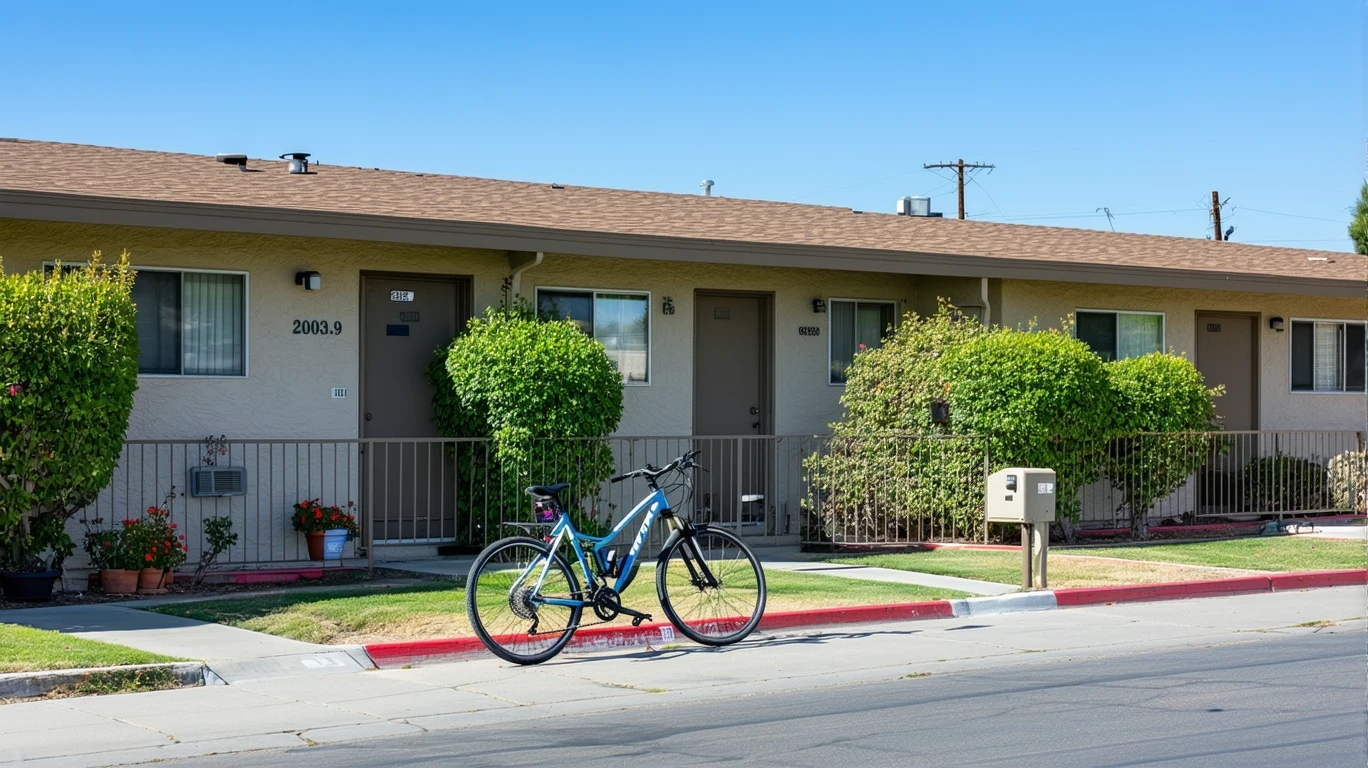
Overall Cost of Living Snapshot
Over the last five years, Hemet’s cost structure has remained anchored by accessible housing entry points while transportation and utility seasonality have emerged as the primary swing factors for household budgets. The city’s regional price parity index sits at 100, indicating alignment with the national baseline—but that figure masks significant internal variation in how costs actually land.
Housing dominates the financial landscape here, not because it’s expensive in absolute terms, but because it represents the largest single commitment most households make. At $277,200 for a median home and $1,357 for median rent, Hemet offers a lower barrier to entry than much of California. Yet the structure of costs shifts dramatically depending on whether you’re renting short-term, buying with intent to stay, or commuting out of the area for work.
What surprises newcomers is rarely the grocery bill or the gas station receipt—it’s the cumulative weight of car dependency in a region where walkable errands are limited, and the seasonal utility swings driven by extended cooling seasons in triple-digit summer heat. Electricity rates of 34.71¢/kWh mean that air conditioning isn’t a luxury; it’s a recurring, non-negotiable expense that can reshape monthly cash flow from June through September.
The verdict: Hemet’s cost pressure is back-loaded. Upfront housing costs are manageable, but ongoing transportation needs and energy exposure create a secondary layer of financial friction that builds over time.
Housing Costs (Primary Driver)
Housing in Hemet functions as both the entry point and the anchor. For renters, $1,357 per month buys access to a market that remains significantly below state norms, though the rental stock tends to cluster along commercial corridors rather than distribute evenly across neighborhoods. For buyers, $277,200 opens the door to ownership in a way that feels increasingly rare across California, particularly for households priced out of coastal or metro-adjacent markets.
The renting-versus-owning calculus here isn’t just about monthly payment comparisons—it’s about exposure to different cost structures over time. Renters face the risk of lease renewals in a market where supply is corridor-clustered, meaning options narrow quickly if you need to move. Owners, meanwhile, lock in a mortgage payment but inherit responsibility for maintenance, property taxes, and insurance in a region where summer heat accelerates wear on roofs, HVAC systems, and exterior finishes.
Hemet reads as a buying market for households planning to stay, and a transitional rental market for those testing fit or commuting elsewhere. The housing stock itself is mixed in height and form, with both residential and commercial land use present, creating pockets of walkable access alongside car-dependent subdivisions.
| Housing Type | Cost Anchor | What That Buys You |
|---|---|---|
| Median Home | $277,200 | Ownership entry below state norms, exposure to maintenance and seasonal wear |
| Median Rent | $1,357/month | Flexibility with corridor-clustered options, renewal risk in constrained supply |
Utilities & Energy Risk
Electricity in Hemet isn’t just a line item—it’s a seasonal cost driver that reshapes household exposure from late spring through early fall. At 34.71¢ per kWh, the rate itself sits well above national averages, but the real pressure comes from volume. Extended cooling seasons mean air conditioning runs not for occasional comfort, but as a baseline necessity during months of triple-digit heat.
For illustrative context, a typical household using 1,000 kWh per month would face roughly $347 in electricity costs before fees and taxes during peak summer months. That figure can climb significantly in larger homes, older construction with poor insulation, or households with multiple occupants and daytime cooling needs.
Natural gas, priced at $23.78 per MCF (roughly 100 therms), plays a smaller role here than in colder climates. Heating demand is minimal, and most gas usage concentrates in water heating and cooking. The risk profile is asymmetric: electricity dominates summer exposure, while gas remains a minor, stable cost year-round.
Risk classification: Major. Utility volatility in Hemet is not speculative—it’s structural. Households without strategies to manage cooling costs (programmable thermostats, insulation upgrades, behavioral shifts) face recurring summer bill spikes that compress discretionary spending and limit financial flexibility.
Groceries & Daily Costs
Grocery density in Hemet exceeds high thresholds, meaning access to food retail is broadly available rather than concentrated in a single district. This doesn’t guarantee low prices, but it does create competitive pressure and reduce the need for long drives to stock a pantry. Food establishment density sits in the medium band, indicating that while grocery shopping is accessible, prepared food and dining options are more corridor-dependent.
Day-to-day grocery costs align closely with national baselines when adjusted for regional price parity. Staples like bread, eggs, and chicken reflect typical pricing patterns, though California’s broader cost structure means that even “average” prices can feel elevated compared to lower-cost regions. The practical impact for households is less about sticker shock on individual items and more about cumulative pressure over time—especially for larger families or those managing dietary restrictions that limit flexibility.
The real friction in daily errands isn’t price—it’s logistics. With car-oriented infrastructure and limited pedestrian density, even short trips require vehicle use, adding incremental fuel and maintenance costs that compound over weeks and months.
Transportation Reality
Hemet’s transportation structure is unambiguous: this is a car-dependent city. Pedestrian infrastructure falls below low thresholds, and while bus service is present, it functions as a supplemental option rather than a primary mobility solution for most households. The ratio of pedestrian paths to road network is low, meaning that even nearby errands—groceries, pharmacies, schools—typically require driving.
Gas prices of $5.51 per gallon translate into recurring exposure for anyone commuting out of the area or managing multi-stop errands across a dispersed layout. For illustrative context, a typical commuter driving 25 miles round trip in a vehicle averaging 25 MPG would use about one gallon per day, or roughly $5.51 in fuel costs per commute. Over a month, that’s $110 to $165 depending on workdays and additional trips—before accounting for insurance, maintenance, registration, or depreciation.
The unemployment rate of 5.3% suggests a labor market that requires flexibility, and for many households, that flexibility means commuting to Riverside, Temecula, or other nearby employment centers. Transportation isn’t a convenience cost here—it’s a structural requirement that shapes where people live, how they work, and what financial margin they need to maintain stability.
Cost Exposure Profiles
In Hemet, cost exposure divides along three primary axes: housing entry versus long-term ownership, transportation dependence, and utility volatility. Each creates a different pressure point depending on household structure and decision timing.
Low-exposure situations: Homeowners who bought before recent price increases, work locally or remotely, and have implemented energy-efficient cooling strategies face the most stable cost structure. Their largest expenses—mortgage, property taxes—are predictable, and their transportation and utility costs remain within manageable bands. Renters in smaller units with short commutes and minimal cooling needs also benefit from lower cumulative exposure, though they trade that stability for less control over future housing costs.
High-exposure situations: Households renting in corridor-clustered markets while commuting long distances face compounding pressure. Lease renewals introduce housing uncertainty, daily commutes generate ongoing fuel and vehicle costs, and summer utility bills spike without the ability to invest in efficiency upgrades. Families with multiple vehicles, school-age children requiring transportation, and larger homes with higher cooling loads experience the most acute cost friction, as each category reinforces the others.
The structure of Hemet’s cost landscape rewards those who can lock in housing early, minimize transportation dependence, and manage seasonal energy exposure. For those navigating rental markets, long commutes, or high cooling needs, the city’s affordability advantage narrows quickly under the weight of recurring, non-discretionary expenses.
Frequently Asked Questions
Is Hemet more affordable than Riverside in 2026? Hemet generally offers lower housing entry costs than Riverside, with median home values and rents sitting below metro-adjacent norms. However, transportation costs can offset that advantage for households commuting into Riverside or other employment centers, making the comparison highly dependent on work location and vehicle dependence.
What does a typical cost profile look like in Hemet? A typical profile centers on moderate housing costs, high transportation exposure due to car dependency, and significant seasonal utility swings driven by extended cooling needs. Grocery and daily costs align with national baselines, but the cumulative weight of vehicle ownership and summer electricity bills creates secondary financial pressure that builds over time.
Do utilities cost more in Hemet than nearby areas? Electricity rates in Hemet are elevated compared to national averages, and the extended cooling season amplifies usage volume. While natural gas remains a minor cost, summer utility bills tend to be higher than in cooler or coastal areas where air conditioning demand is less intense or prolonged.
What costs tend to surprise newcomers in Hemet? Newcomers are often caught off guard by the cumulative impact of car dependency and summer utility spikes. While housing entry costs feel manageable, the ongoing need for vehicle ownership, fuel, and seasonal cooling creates a secondary cost layer that isn’t immediately visible when comparing rent or mortgage payments alone.
Are property taxes higher in Hemet than Temecula? Property tax rates in California are governed by Proposition 13, meaning assessed values drive tax bills more than jurisdictional differences. Hemet’s lower median home values generally result in lower absolute property tax payments compared to higher-priced markets like Temecula, though effective rates remain similar across the region.
Is Hemet a good fit for retirees managing fixed incomes? Hemet offers accessible housing entry points and lower baseline costs than many California markets, which can appeal to retirees. However, car dependency, limited walkable infrastructure, and high summer utility costs require careful planning for those on fixed incomes, particularly if transportation or cooling needs are significant.
How does Hemet’s cost structure compare to other Inland Empire cities? Hemet tends to sit on the more affordable end of the Inland Empire spectrum, with lower housing costs than metro-adjacent cities but similar transportation and utility exposure. The tradeoff is often between upfront affordability and access to employment, amenities, or transit options that reduce long-term recurring costs.
What financial margin do households need to live comfortably in Hemet? Comfort depends on housing type, commute length, and household size, but the standard affordability heuristic suggests keeping housing costs below 30% of gross monthly income. Beyond that, households should budget for transportation as a significant recurring expense, plan for summer utility spikes, and maintain reserves for vehicle maintenance and unexpected repairs in a car-dependent environment.
How this article was built: In addition to public economic data, this article incorporates location-based experiential signals derived from anonymized geographic patterns—such as access density, walkability, and land-use mix—to reflect how day-to-day living actually feels in Hemet, CA.