
Do you really need a car to live in Broomfield? For most people, yes—but the answer depends more on where you live within the city than whether you own a vehicle at all. Broomfield sits in a transitional zone between Denver’s urban core and the sprawl of the northern suburbs, and that in-between character shapes how people move around every day. Some neighborhoods offer genuine pedestrian infrastructure and bus access, while others demand a car for nearly every errand. Understanding which parts of the city support which lifestyle is the key to making transportation work without constant friction.
How People Get Around Broomfield
Broomfield operates as a car-first city with pockets of walkability scattered throughout. The pedestrian-to-road ratio is notably high in certain areas, meaning sidewalks, crosswalks, and pedestrian paths are more developed than in many comparable suburbs. But that infrastructure doesn’t blanket the entire city—it clusters in specific corridors and neighborhoods, leaving much of Broomfield reliant on driving for daily needs.
What newcomers often misunderstand is that Broomfield isn’t uniformly suburban. The city includes both low-rise residential zones and mixed-height areas where residential and commercial land uses sit side by side. That mix creates neighborhoods where you can walk to a coffee shop or grocery store, and others where the nearest services are a five-minute drive. The layout reflects decades of growth that prioritized car access but didn’t entirely abandon pedestrian planning.
The result is a city where your transportation reality depends heavily on your address. Live near one of the walkable pockets, and you’ll find yourself driving less than you expected. Settle into a quieter residential area farther from commercial corridors, and you’ll be in the car for nearly everything.
Public Transit Availability in Broomfield
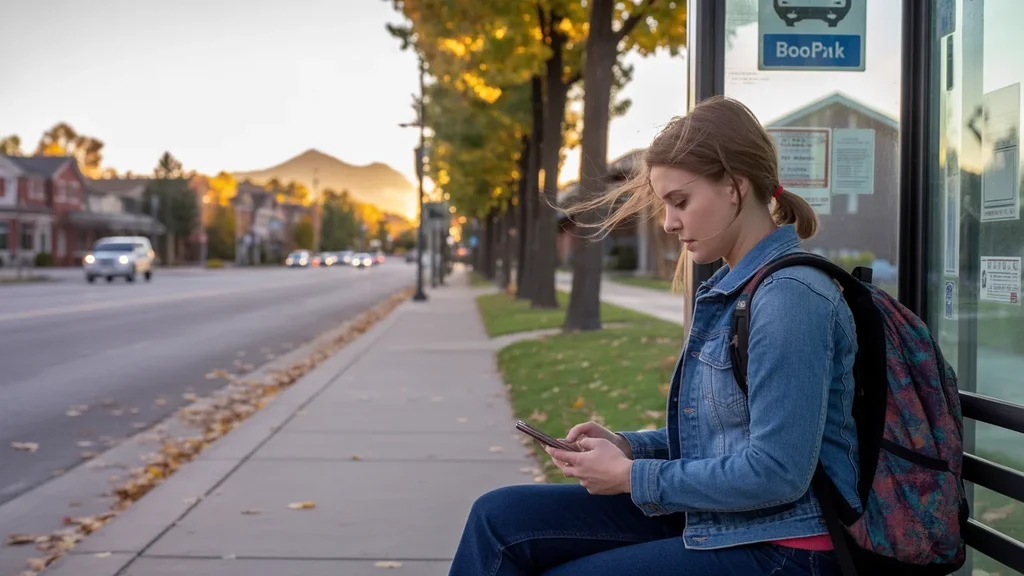
Public transit in Broomfield centers around bus service, with no rail options currently available. Bus stops are present throughout the city, and the service plays a supplemental role for residents who live near key routes. Transit works best along the corridors where commercial and residential uses overlap—the same areas where errands are more accessible on foot.
Where transit falls short is in coverage and reach. Bus service doesn’t extend uniformly across the city, and routes tend to favor north-south and east-west arterials rather than residential side streets. That means residents in peripheral neighborhoods or areas with lower density often find themselves outside practical walking distance to a stop. Late-hour service is limited, and multi-stop trips that require transfers add friction that many households aren’t willing to absorb.
Public transit in Broomfield often centers around systems such as RTD (Regional Transportation District), which connects the city to Denver and surrounding areas. For residents commuting into Denver or traveling to regional hubs, bus service can reduce the need to drive every day. But for intra-city errands—grocery runs, school pickups, evening activities—the bus network doesn’t offer the frequency or convenience that would make it a car replacement.
Driving & Car Dependence Reality
For most Broomfield residents, driving isn’t optional—it’s the default. The city’s layout, with commercial services clustered along corridors and residential areas spread across a wide footprint, makes car ownership the path of least resistance. Parking is abundant and free in most areas, which removes one of the friction points that discourages driving in denser cities.
Car dependence here isn’t about preference; it’s about structure. Errands are corridor-clustered rather than broadly accessible, meaning you can’t count on finding what you need within a short walk from most homes. Families managing school drop-offs, after-school activities, and weekend logistics face compounding challenges without a vehicle. Even in the walkable pockets, a car remains useful for trips outside the immediate neighborhood.
The tradeoff is predictability. Driving gives you control over timing, routing, and the ability to handle multi-stop trips without waiting for connections. But it also locks you into fuel costs, maintenance, insurance, and the time spent behind the wheel. In Broomfield, that tradeoff tilts heavily toward driving for most households.
Commuting Patterns & Daily Mobility
Commuting in Broomfield typically involves either a drive to a local employer or a longer trip into Denver or Boulder. The city’s position between major employment centers means residents face a range of commute structures. Some work locally and enjoy short, predictable drives. Others absorb longer commutes in exchange for Broomfield’s housing options and suburban character.
Multi-stop commutes—dropping kids at school, running an errand, then heading to work—are common, and they favor car dependency. Public transit doesn’t accommodate that kind of routing flexibility, and the time cost of transferring between buses makes it impractical for households juggling multiple daily obligations.
Who benefits from proximity? Residents who work in Broomfield or nearby suburbs, and those whose schedules allow them to avoid peak-hour congestion. Who absorbs commute friction? Households commuting into Denver without flexibility, and those living in areas where bus service doesn’t align with their work location or hours.
Who Transit Works For — and Who It Doesn’t
Public transit in Broomfield works best for single adults or couples without complex logistics, living near bus corridors, and commuting to destinations well-served by regional routes. If your daily routine involves a predictable trip to Denver or a nearby hub, and you’re willing to plan around bus schedules, transit can reduce your car dependency.
Transit doesn’t work well for families managing school schedules, after-school activities, and weekend errands. It also struggles to serve residents in peripheral neighborhoods where stops are sparse and walking distances are long. Renters in walkable pockets near commercial corridors have the best shot at reducing car use, but even they typically find themselves driving for some trips.
Homeowners in lower-density areas face the steepest car dependence. The infrastructure simply doesn’t support a car-free or car-light lifestyle outside the walkable zones, and the time cost of relying on transit for daily needs becomes prohibitive.
Transportation Tradeoffs in Broomfield
Choosing between transit and driving in Broomfield isn’t about cost alone—it’s about control, predictability, and flexibility. Driving offers the ability to handle complex schedules, multi-stop trips, and last-minute changes without waiting for a bus. It also means absorbing fuel, maintenance, and insurance as fixed costs, along with the time spent in traffic during peak hours.
Transit offers lower direct costs and eliminates parking concerns, but it requires living near a stop, planning around schedules, and accepting longer trip times for anything beyond a single-destination commute. The tradeoff tilts toward driving for most households because the city’s layout rewards car ownership with convenience and speed.
For households willing to prioritize location—choosing a home in one of the walkable pockets near bus service—it’s possible to reduce driving frequency without eliminating it entirely. But that choice comes with housing tradeoffs, as those areas tend to be more competitive and may not offer the yard space or quiet that draws many people to Broomfield in the first place.
FAQs About Transportation in Broomfield (2026)
Is public transit usable for daily commuting in Broomfield?
Public transit works for daily commuting if you live near a bus route and your destination aligns with regional service into Denver or nearby hubs. For intra-city errands or complex schedules, transit becomes less practical. Most residents find that bus service supplements driving rather than replacing it.
Do most people in Broomfield rely on a car?
Yes. The majority of Broomfield residents depend on a car for daily life. The city’s layout, with services clustered along corridors and residential areas spread across a wide footprint, makes driving the most efficient option for most households.
Which areas of Broomfield are easiest to live in without a car?
The walkable pockets near commercial corridors, where pedestrian infrastructure is well-developed and bus stops are accessible, offer the best chance of reducing car dependency. These areas tend to have mixed land use, with residential and commercial uses close together. Even there, most residents keep a car for trips outside the immediate neighborhood.
How does commuting in Broomfield compare to nearby cities?
Broomfield sits between Denver’s denser urban core and the more spread-out northern suburbs. Commuting here involves less congestion than Denver but more car dependence than Boulder’s more transit-oriented layout. The city offers a middle ground—shorter commutes than outer suburbs, but less transit access than the urban core.
Can you bike for transportation in Broomfield?
Cycling infrastructure exists in some parts of Broomfield, particularly in pockets where bike-to-road ratios are moderate. But the infrastructure isn’t citywide, and many routes require sharing roads with cars. Biking works for recreational trips and short errands in certain neighborhoods, but it’s not a reliable car replacement for most daily needs.
How Transportation Fits Into the Cost of Living in Broomfield
Transportation in Broomfield isn’t just a line item—it’s a structural factor that shapes where you can live, how much time you spend commuting, and how much flexibility you have in daily life. Car dependence means absorbing fuel, maintenance, and insurance as ongoing costs, but it also means predictability and control. Transit offers lower direct costs but requires proximity to service and a willingness to plan around schedules.
The real cost of transportation here isn’t just what you spend on gas or bus fare—it’s the time and friction you absorb depending on where you live and how you move. Choosing a home in a walkable pocket near bus service can reduce driving frequency, but it won’t eliminate the need for a car entirely. For a clearer picture of how transportation fits into your overall monthly spending in Broomfield: the real pressure points, including housing, utilities, and other fixed costs, the Monthly Budget article offers detailed context.
Broomfield rewards residents who understand its layout and choose their location accordingly. If you’re willing to drive for most trips, the city offers suburban space and access to regional employment centers. If you’re hoping to minimize car use, focus on the walkable pockets and accept that you’ll still need a vehicle for some errands. Either way, transportation here is less about what you pay per trip and more about how the city’s structure fits your daily routine.
How this article was built: In addition to public economic data, this article incorporates location-based experiential signals derived from anonymized geographic patterns—such as access density, walkability, and land-use mix—to reflect how day-to-day living actually feels in Broomfield, CO.