
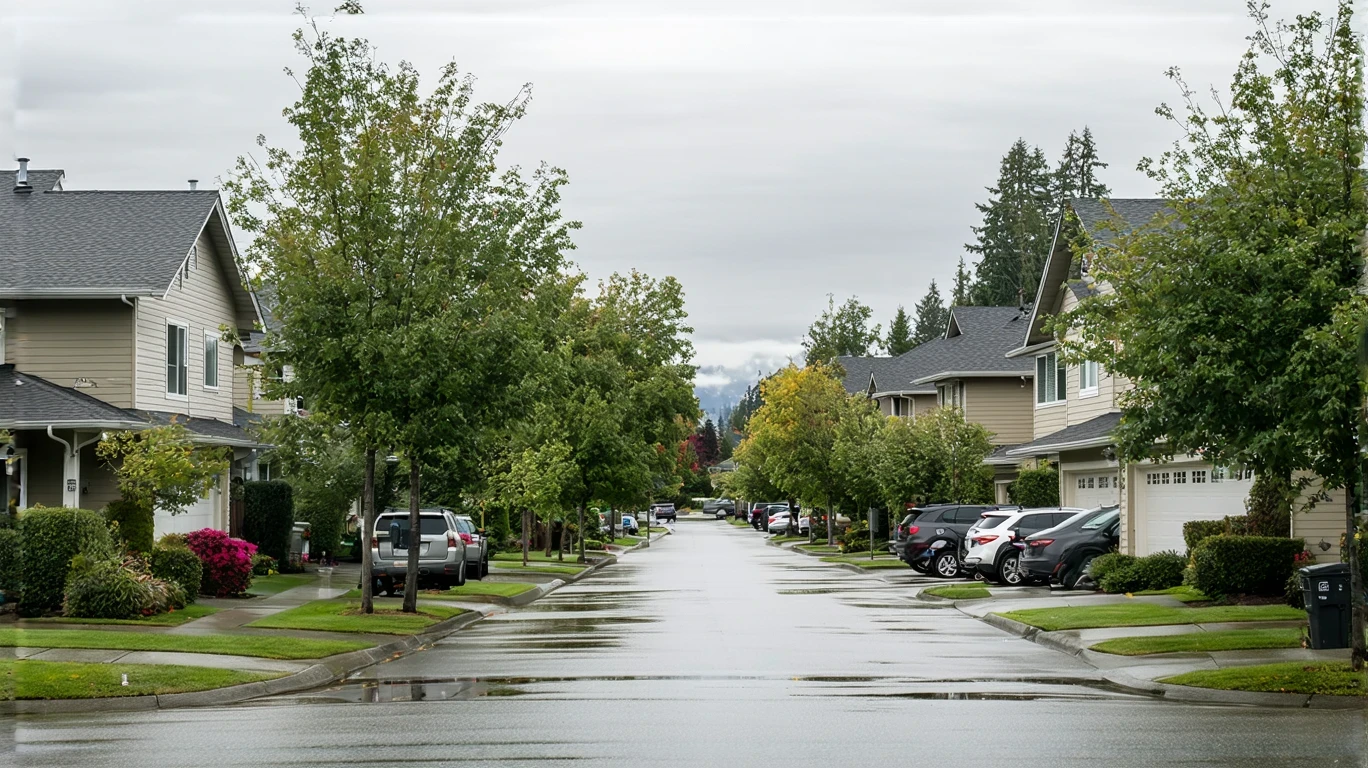
Kent and Seattle sit within the same metro area, share the same utility providers, and face identical gas prices—yet the cost experience between them diverges sharply depending on what a household prioritizes. Kent offers lower housing entry costs and more single-family options, while Seattle concentrates amenities, transit density, and walkable infrastructure in exchange for steeper rents and home prices. In 2026, the decision between these two cities isn’t about which is universally cheaper; it’s about which cost pressures a household can absorb and which tradeoffs align with daily routines.
Families seeking yard space and willing to drive longer distances often find Kent’s housing market more accessible, while smaller households prioritizing transit access and reduced car dependence may accept Seattle’s higher housing costs to eliminate commute friction. The same gross income can feel stable in one city and stretched in the other, not because of a single expense category, but because of how housing, transportation, and time costs interact across different household structures.
This comparison explains where cost pressure concentrates in each city, how different households experience those differences, and which structural factors—commute patterns, housing form, and daily logistics—drive the gap between them.
Housing Costs
Kent’s median home value sits at $478,400, while Seattle’s reaches $879,900—a substantial entry barrier difference that shapes the entire housing decision. For buyers, that gap translates directly into down payment requirements, mortgage approval thresholds, and monthly principal obligations. Kent’s lower entry point opens single-family homeownership to households who would face condo or townhome options in Seattle, if they could qualify at all.
Renters see a smaller but still meaningful spread: Kent’s median gross rent stands at $1,742 per month, compared to Seattle’s $1,945 per month. That difference reflects not just price, but housing form—Kent’s rental stock skews toward larger units and single-family homes, while Seattle offers more apartments and smaller footprints in denser neighborhoods. Renters prioritizing space per dollar often find Kent more accommodating, while those valuing walkability and transit proximity may find Seattle’s higher rent offsets transportation savings.
The housing stock itself drives much of the cost behavior. Kent’s landscape includes more low-rise residential development with yards and driveways, while Seattle’s building profile tilts more vertical, with mid-rise and high-rise structures concentrated in urban cores. That structural difference means Kent households typically manage larger utility footprints, lawn care, and vehicle storage, while Seattle households trade square footage for reduced car dependence and proximity to services.
| Housing Type | Kent | Seattle |
|---|---|---|
| Median Home Value | $478,400 | $879,900 |
| Median Gross Rent | $1,742/month | $1,945/month |
| Typical Housing Form | Single-family, low-rise | Mixed, more vertical |
First-time buyers often face easier qualification in Kent, but they inherit longer commutes and higher transportation exposure. Families prioritizing yard space and room for children find Kent’s housing stock better aligned with those needs, even if the tradeoff involves more driving. Renters sensitive to monthly obligations may prefer Kent’s lower baseline, while those who value reducing car ownership costs may find Seattle’s rent premium offsets what they’d otherwise spend on fuel, parking, and maintenance.
Housing takeaway: Kent fits households willing to accept car dependence and longer commutes in exchange for lower entry costs and more space. Seattle fits those who can absorb higher housing costs to reduce transportation friction and gain walkable access to services. The decision hinges on whether a household prioritizes front-loaded savings or ongoing convenience.
Utilities and Energy Costs
Both cities share identical utility rate structures—13.33¢/kWh for electricity and $15.51/MCF for natural gas—so differences in utility exposure stem entirely from housing form, building age, and household behavior rather than provider pricing. Kent’s larger single-family homes typically consume more baseline energy for heating and cooling, while Seattle’s apartment-heavy stock benefits from shared walls and smaller conditioned spaces.
The Pacific Northwest’s mild, marine-influenced climate keeps heating and cooling demands moderate compared to extreme-weather regions, but winter heating still dominates utility bills. Homes in Kent, especially older single-family construction, face higher heating exposure due to larger square footage and less insulation efficiency. Seattle’s newer mid-rise and high-rise buildings often incorporate better envelope performance, reducing per-unit energy waste even when total building consumption runs high.
Household size amplifies these differences. A family of four in a Kent single-family home manages higher baseline usage across heating, hot water, and appliance loads, while a couple in a Seattle apartment benefits from reduced square footage and shared structural efficiency. Older homes in both cities introduce volatility—drafty windows, aging HVAC systems, and poor insulation can spike winter bills unpredictably, but Kent’s housing stock skews older on average, increasing the likelihood of encountering these issues.
Utility cost predictability also varies by housing type. Apartment renters in Seattle often see more stable monthly bills due to smaller footprints and modern construction, while Kent homeowners face greater seasonal swings and maintenance-driven spikes. Time-of-use billing structures, where available, reward households with flexible schedules, but the benefit depends on whether daily routines allow shifting usage to off-peak hours—a harder fit for families managing rigid school and work schedules.
Utility takeaway: Kent households experience higher baseline energy exposure due to larger homes and older construction, with greater seasonal volatility. Seattle households benefit from smaller footprints and newer building stock, leading to more predictable utility costs. Families in single-family homes face the steepest exposure, while smaller households in apartments enjoy the most stability.
Groceries and Daily Expenses
Both Kent and Seattle show high food and grocery establishment density, meaning access to supermarkets, discount chains, and specialty stores exists broadly across both cities. The regional price parity index sits at 113 for both, indicating identical baseline cost pressure for grocery staples—bread, eggs, milk, and produce face the same price environment whether purchased in Kent or Seattle. The difference lies not in prices themselves, but in how daily shopping patterns and convenience spending interact with each city’s layout.
Kent’s car-oriented structure encourages bulk shopping trips to big-box stores and warehouse clubs, where households can stock up and minimize per-unit costs. Families with storage space and vehicles benefit from this model, turning grocery spending into a planned, infrequent task. Seattle’s denser, more walkable neighborhoods support frequent smaller trips to neighborhood markets, corner stores, and prepared food options—convenient, but prone to incremental spending that adds up over time.
Dining out and convenience spending diverge more sharply. Seattle’s concentration of restaurants, cafes, and takeout options creates constant temptation for quick meals, coffee runs, and impulse purchases. A household that defaults to grabbing lunch or coffee out of convenience can see daily expenses creep upward without dramatic per-item price increases. Kent’s layout, with fewer walkable commercial corridors, naturally limits spontaneous spending but requires more intentional meal planning and home cooking to avoid driving for every errand.
Single adults and couples in Seattle face the highest exposure to convenience spending creep—walkable access to cafes and restaurants makes it easy to substitute prepared food for home cooking. Families in Kent, managing larger grocery volumes, benefit more from bulk purchasing power and planned shopping trips, though they sacrifice the flexibility of grabbing items on foot. Households sensitive to incremental spending may find Kent’s structure imposes discipline by default, while those valuing spontaneity and variety may prefer Seattle’s density despite the cost.
Grocery takeaway: Kent fits households who can plan ahead, buy in bulk, and minimize convenience spending through car-based shopping trips. Seattle fits those who value walkable access and frequent small purchases, but must actively manage the cost creep that comes with constant proximity to prepared food and cafes. Price sensitivity matters less than spending habits and access patterns.
Taxes and Fees
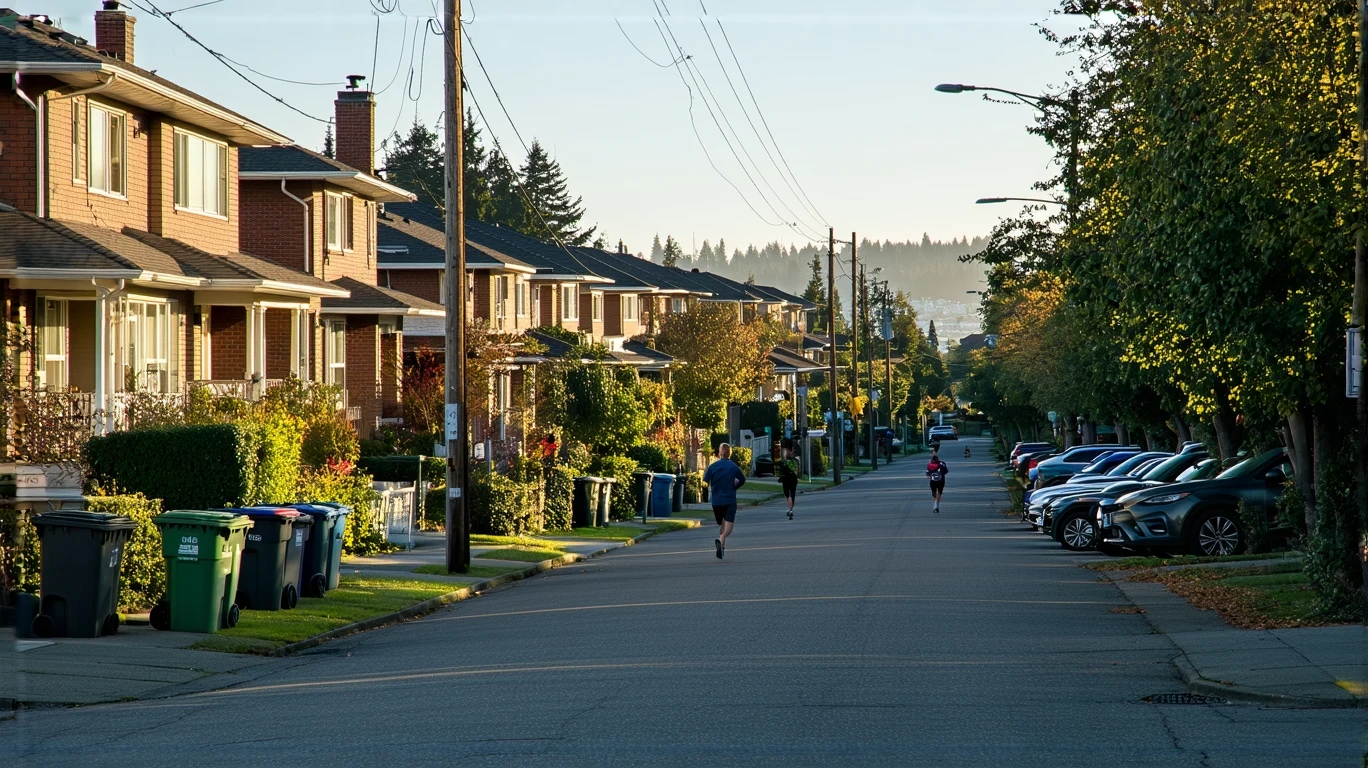
Washington State imposes no personal income tax, so neither Kent nor Seattle households face state-level income withholding—a structural advantage that shifts tax burden toward consumption and property. Sales tax applies uniformly across the region, meaning everyday purchases carry the same tax rate whether made in Kent or Seattle. The primary tax difference between the two cities emerges in property taxes, which vary based on assessed home values, local levies, and special district assessments.
Kent homeowners, with a median home value of $478,400, face lower absolute property tax bills than Seattle homeowners at $879,900, even if effective rates remain similar. That difference compounds over time—lower assessed values mean smaller annual obligations, reducing the ongoing cost of ownership. However, Kent’s suburban layout often includes HOA fees for newer developments, covering landscaping, common areas, and sometimes trash or water service. These fees add predictability but also lock in recurring costs that renters avoid entirely.
Seattle homeowners absorb higher property tax totals due to elevated home values, but they also benefit from greater access to city-funded services, transit infrastructure, and maintenance without relying on private HOAs. Renters in both cities avoid property tax exposure directly, though landlords pass through a portion via rent. The key difference for renters lies in utility billing—some Seattle apartments bundle water, sewer, and trash into rent, while Kent single-family rentals more often bill separately, introducing variability.
Long-term residents and homeowners feel tax differences most acutely. A household planning to stay several years in Kent locks in lower property tax exposure, while a Seattle household pays more annually but gains transit access and urban services that reduce other costs. Recent movers and renters experience less differentiation, as their tax exposure remains indirect and absorbed into rent or HOA structures rather than billed separately.
Tax takeaway: Kent homeowners face lower property tax obligations due to lower home values, but may encounter HOA fees that add recurring costs. Seattle homeowners pay higher property taxes but gain access to denser city services and transit infrastructure. Renters in both cities see minimal direct tax differences, with variability driven more by lease terms and utility billing structures than tax policy.
Transportation & Commute Reality
Kent’s average commute clocks in at 30 minutes, compared to Seattle’s 27 minutes—a modest difference on paper, but one that masks deeper structural distinctions in how people move through daily life. Kent shows a long commute percentage of 48.3%, meaning nearly half of workers face extended travel times, while Seattle’s 43.2% suggests slightly better proximity to employment centers. More telling: only 12.0% of Kent workers operate from home, compared to just 6.3% in Seattle, indicating that Kent’s layout supports remote work less naturally despite its suburban character.
Both cities benefit from rail transit presence, but the experience differs sharply. Seattle’s denser, more walkable neighborhoods allow residents to reach stations on foot, use transit for errands, and reduce car dependency across multiple trip types. Kent’s rail access exists, but lower pedestrian infrastructure density and moderate bike-to-road ratios mean most residents still drive to stations or rely on cars for non-commute trips. The result: Kent households often maintain full car ownership even with transit nearby, while some Seattle households eliminate vehicles entirely.
Gas prices sit at $5.26/gal in both cities, so fuel cost differences emerge purely from usage patterns. A Kent household commuting 25 miles round trip five days a week burns more fuel than a Seattle household walking to a rail station or biking to work. Parking costs, insurance, and maintenance add further separation—Seattle’s urban core imposes higher parking fees and congestion exposure, but households who can avoid car ownership sidestep those costs altogether. Kent’s layout assumes car ownership, making those expenses non-negotiable for most.
Commute time versus commute cost creates the central tradeoff. Kent households may spend less on housing but absorb more in fuel, vehicle wear, and time lost to longer drives. Seattle households pay more in rent or mortgage but gain back hours and reduce transportation spending by relying on transit, walking, or cycling. For families managing school drop-offs, errands, and activities, Kent’s car-dependent structure adds logistical friction that Seattle’s walkable density reduces—though at the cost of smaller living spaces.
Cost Structure Comparison
Housing pressure dominates the cost experience in both cities, but the nature of that pressure differs fundamentally. Kent front-loads savings through lower home prices and rent, allowing households to qualify more easily and secure more space. Seattle concentrates cost in monthly housing obligations, but that higher baseline often replaces what Kent households spend on transportation, parking, and commute time. The question isn’t which city costs less overall—it’s which cost structure aligns with a household’s daily routines and long-term priorities.
Utilities introduce more volatility in Kent due to larger single-family homes and older construction, while Seattle’s apartment-heavy stock and newer buildings deliver more predictable monthly bills. Families managing larger homes feel this difference most acutely, as heating and cooling costs swing seasonally in ways that smaller Seattle units avoid. Renters in both cities see less differentiation, though Kent’s separate utility billing can surprise households accustomed to bundled rent structures.
Grocery and daily spending pressure depends less on prices—which remain identical across both cities—and more on access patterns and convenience temptation. Kent’s car-oriented layout encourages planned, bulk shopping that minimizes per-unit costs but requires storage and transportation. Seattle’s walkable density supports spontaneous errands and frequent small purchases, which adds flexibility but invites incremental spending creep. Single adults and couples in Seattle face the highest exposure to convenience costs, while families in Kent benefit from bulk purchasing discipline.
Transportation patterns matter more in Kent, where car ownership and fuel costs remain non-negotiable for most households despite rail access. Seattle’s denser transit network and higher bike infrastructure allow some households to eliminate vehicles entirely, converting monthly car payments and insurance into housing budget. Commute time differences appear modest numerically, but Kent’s higher long-commute percentage and lower work-from-home rate signal greater dependence on driving for both work and errands.
For households sensitive to housing entry barriers, Kent offers a clearer path to ownership and space. For those prioritizing time savings and reduced car dependence, Seattle’s higher housing costs may feel justified by the elimination of commute friction and parking hassles. The better choice depends on which costs dominate the household—front-loaded savings and space in Kent, or ongoing convenience and transit access in Seattle.
How the Same Income Feels in Kent vs Seattle
Single Adult
Housing becomes the first non-negotiable cost, with Seattle’s higher rent claiming a larger share of gross monthly income upfront. Flexibility exists in transportation—Seattle’s transit density and bike infrastructure allow eliminating car ownership entirely, converting insurance and fuel costs into housing budget. Kent’s lower rent frees up cash initially, but car ownership remains mandatory, locking in monthly payments, fuel, and parking that Seattle singles can avoid. The tradeoff centers on whether the household values lower baseline obligations or the ability to walk to errands and work without vehicle dependence.
Dual-Income Couple
Two incomes create more cushion, but the cost structure still diverges based on commute patterns and housing priorities. In Kent, both partners likely drive, doubling fuel and vehicle costs but gaining access to larger apartments or starter homes. In Seattle, one or both may rely on transit or biking, reducing transportation spending but accepting smaller living spaces and higher rent. Flexibility disappears faster in Seattle if both partners work in opposite directions or outside transit corridors, while Kent’s car-dependent model imposes time costs that Seattle’s walkability reduces. The decision hinges on whether the couple prioritizes space and ownership potential or time savings and reduced logistics friction.
Family with Kids
School proximity, yard space, and activity logistics become non-negotiable, shifting the balance sharply. Kent’s single-family housing stock and lower entry costs fit families needing multiple bedrooms and outdoor space, but school drop-offs, sports, and errands all require driving. Seattle’s denser neighborhoods offer walkable schools and parks in some areas, but family-sized housing costs escalate quickly, and car ownership often remains necessary despite transit access. Utility costs rise more steeply in Kent due to larger homes, while Seattle families face tighter quarters but more predictable bills. The primary difference is less about price and more about whether the family can absorb housing costs to reduce daily driving, or prefers lower entry costs despite longer commutes and car dependence.
Decision Matrix: Which City Fits Which Household?
| Decision factor | If you’re sensitive to this… | Kent tends to fit when… | Seattle tends to fit when… |
|---|---|---|---|
| Housing entry + space needs | Down payment size, square footage, yard access | You prioritize lower entry costs and single-family space over proximity | You can absorb higher housing costs for smaller footprints in walkable areas |
| Transportation dependence + commute friction | Fuel costs, parking fees, commute time, car ownership | You accept car dependence and longer drives to reduce housing costs | You value transit access and bike infrastructure enough to pay more in rent |
| Utility variability + home size exposure | Seasonal bill swings, heating costs, building age | You can manage larger utility footprints and seasonal volatility | You prefer predictable bills from smaller, newer units with shared walls |
| Grocery strategy + convenience spending creep | Bulk shopping, meal planning, impulse purchases | You plan ahead and buy in bulk to minimize per-unit costs | You value walkable access to food and accept higher convenience spending |
| Fees + friction costs (HOA, services, upkeep) | Property taxes, HOA dues, maintenance obligations | You accept potential HOA fees for lower property tax exposure | You prefer higher property taxes in exchange for city-funded services |
| Time budget (schedule flexibility, errands, logistics) | Commute hours, errand efficiency, activity coordination | You tolerate longer drives and car-based errands for lower housing costs | You prioritize walkability and transit to reduce time spent on logistics |
Lifestyle Fit
Kent and Seattle offer sharply different daily rhythms, shaped less by culture and more by infrastructure and layout. Kent’s moderate pedestrian-to-road ratio supports walking in pockets—parks, some residential streets—but most errands and activities require driving. Rail transit exists, but reaching it often involves a car trip first, limiting its utility for spontaneous travel. Families benefit from integrated green space, with park density exceeding high thresholds and water features present, making outdoor recreation accessible without long drives. Schools and playgrounds meet moderate density thresholds, supporting family life without requiring constant cross-town trips.
Seattle’s walkable pockets extend more broadly, with higher pedestrian infrastructure and a bike-to-road ratio that exceeds high thresholds. Cycling isn’t just recreational—it’s a practical commute and errand option for those comfortable navigating urban streets. Rail transit connects neighborhoods more seamlessly, and the presence of hospitals alongside clinics means healthcare access doesn’t require driving to distant medical centers. The more vertical building profile concentrates amenities within walking distance, reducing the need to plan every outing around parking and drive time. Food and grocery density remains high in both cities, but Seattle’s layout makes it easier to grab items on foot rather than dedicating a car trip.
Commute times hover near 30 minutes in Kent and 27 minutes in Seattle, but the experience differs—Kent’s longer commutes often involve highway driving and parking searches, while Seattle’s may include walking to transit or biking through protected lanes. Recreation and outdoor access feel similar in both cities, with integrated park systems and water features present, though Kent’s layout assumes you’ll drive to trailheads while Seattle’s density allows walking to green space from many neighborhoods. Cultural amenities and dining options concentrate more heavily in Seattle, but Kent’s proximity to the broader metro area keeps those experiences accessible for households willing to drive.
Kent households spend more time in cars, even for short trips, but gain yard space and lower housing entry costs. Seattle households walk, bike, or ride transit more frequently, reducing vehicle dependence but accepting smaller living spaces and higher rent.
Frequently Asked Questions
Is Kent or Seattle cheaper for renters in 2026?
Kent’s median gross rent sits at $1,742 per month, compared to Seattle’s $1,945 per month, giving Kent a lower baseline. However, Kent renters typically need a car for commuting and errands, adding fuel, insurance, and maintenance costs that Seattle renters can sometimes avoid through transit and biking. The cheaper option depends on whether a household can eliminate car ownership in Seattle or must maintain one regardless—if a car remains necessary in both cities, Kent’s lower rent provides more breathing room.
How much more does it cost to buy a home in Seattle compared to Kent in 2026?
Seattle’s median home value reaches $879,900, while Kent’s sits at $478,400. That gap affects down payment requirements, mortgage qualification, and monthly principal obligations, making Kent more accessible for first-time buyers and families seeking single-family space. However, the cost difference doesn’t account for transportation—Kent homeowners often face longer commutes and higher fuel costs, while Seattle homeowners may reduce or eliminate car dependence, shifting where money gets spent rather than simply lowering total obligations.
Do utilities cost more in Kent or Seattle in 2026?
Both cities share identical electricity rates at 13.33¢/kWh and natural gas prices at $15.51/MCF, so provider pricing doesn’t differ. Utility exposure varies by housing type—Kent’s larger single-family homes consume more energy for heating and cooling, while Seattle’s apartment-heavy stock benefits from smaller footprints and shared walls. Families in older Kent homes face the highest seasonal volatility, while Seattle renters in newer buildings see the most predictable bills. The difference lies in housing form and building age, not utility rates.
Which city is better for families trying to balance housing costs and commute time in 2026?
Kent offers lower home prices and more single-family options, fitting families who prioritize yard space and room for children. However, nearly half of Kent workers face long commutes, and car ownership remains essential for school drop-offs, activities, and errands. Seattle provides shorter average commutes and better transit access, but family-sized housing costs escalate quickly, and many neighborhoods still require cars despite walkability. The better fit depends on whether a family can absorb higher housing costs to reduce driving, or prefers lower entry costs despite transportation friction.
Does living in Kent instead of Seattle actually save money when you factor in transportation costs in 2026?
Kent’s lower rent and home prices create front-loaded savings, but transportation costs often offset that advantage. With 48.3% of Kent workers facing long commutes and only 12.0% working from home, most households drive frequently and maintain full car ownership. Seattle’s higher housing costs may feel justified for households who can eliminate a vehicle, convert car payments into rent, and reduce fuel and parking expenses. The answer depends on whether a household’s work and lifestyle allow reducing car dependence—if not, Kent’s lower housing baseline provides more flexibility.
Conclusion
Kent and Seattle present distinct cost structures rather than a simple cheaper-versus-expensive comparison. Kent delivers lower housing entry costs, more single-family space, and reduced property tax exposure, but assumes car ownership and longer commutes as non-negotiable. Seattle concentrates cost in housing, with higher rent and home prices, but offers transit density, walkable errands, and bike infrastructure that allow some households to eliminate vehicles and reclaim commute time. The cities share identical utility rates, grocery prices, and regional cost pressures, so differences emerge from how housing form, transportation dependence, and daily logistics interact with household priorities.
Families seeking yard space and willing to drive find Kent’s market more accommodating, while smaller households prioritizing transit access and reduced car dependence may accept Seattle’s housing premium to eliminate transportation friction. Single adults and couples face the starkest tradeoff—Kent’s lower rent but mandatory car costs versus Seattle’s higher rent but optional vehicle ownership. The decision hinges on which cost pressures a household can absorb and which tradeoffs align with daily routines, not on which city costs less in isolation.
How this article was built: In addition to public economic data, this article incorporates location-based experiential signals derived from anonymized geographic patterns—such as access density, walkability, and land-use mix—to reflect how day-to-day living actually feels in Kent, WA.