
Is Lemon Grove expensive to live in? Lemon Grove is considered moderately priced to expensive in 2026, with regional costs running about 11% above the national baseline. The main exposure is transportation fuel and utility rates rather than day-to-day grocery pressure, though housing entry cost remains the largest unknown for most households.
You’re trying to figure out if Lemon Grove works with your budget, but every cost calculator gives you a different answer. Rent estimates vary by hundreds of dollars. Utility “averages” don’t match what your coworker actually pays. And no one mentions that gas here costs more than almost anywhere else in the country. You need to know what actually drives expenses in this city—and which costs you can control versus which ones you’re simply exposed to.
This guide breaks down the cost structure in Lemon Grove by explaining what dominates household pressure, where surprises typically emerge, and how different household types experience the same city very differently. It’s not a budget template—it’s a decision map.
Overall Cost of Living Snapshot
Lemon Grove sits in the San Diego metro area with a regional price parity index of 111, meaning the overall cost of goods and services runs about 11% higher than the national average. That’s a moderate premium, not extreme—but it’s unevenly distributed across categories.
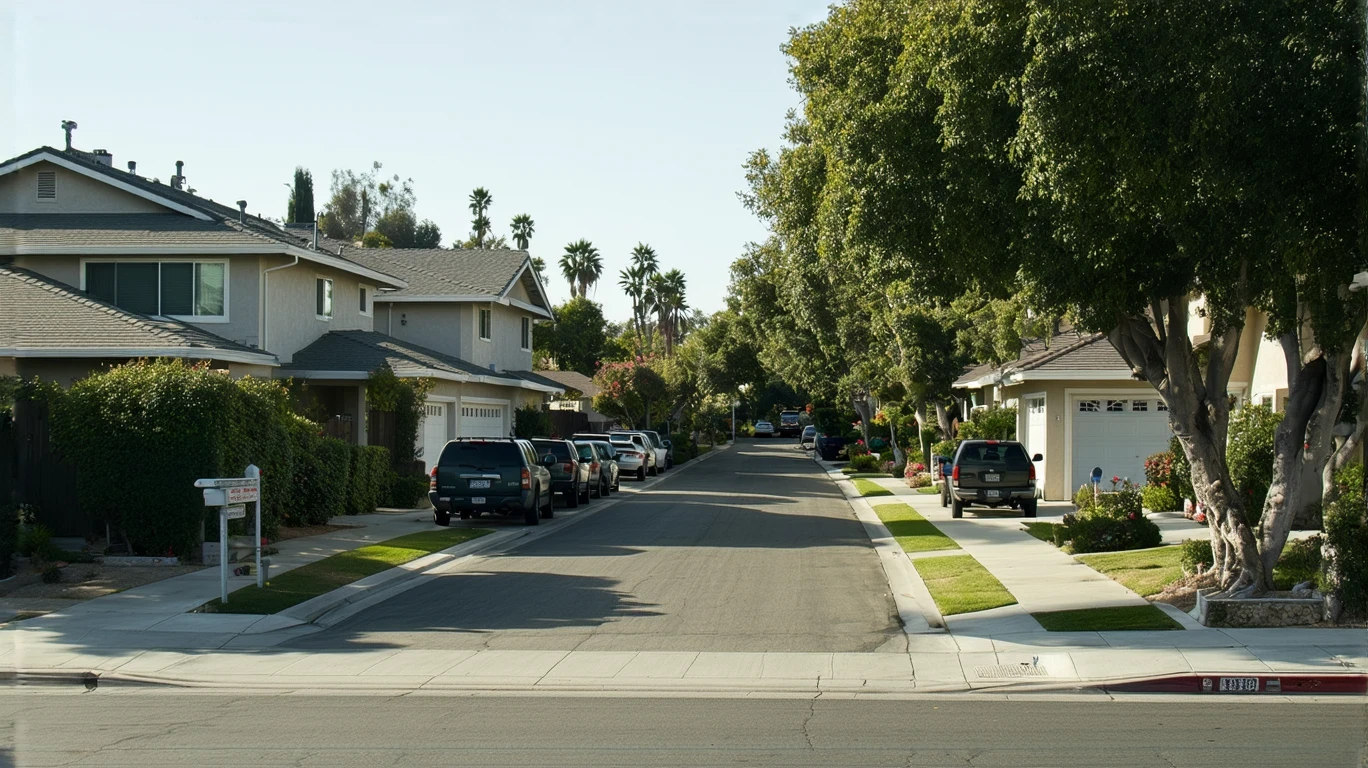
The shape of costs here is defined by three forces: elevated energy rates, extremely high transportation fuel costs, and strong access to daily errands that reduces some logistical friction. The city shows mixed walkability with rail transit present, but car ownership remains the norm for most households. Grocery and food establishment density is high, which keeps daily errands accessible without long drives. Family infrastructure is strong (schools and playgrounds meet density thresholds), and park access is well integrated throughout the city.
The primary cost driver is the combination of housing entry (magnitude unknown but regionally elevated) and transportation exposure. Gas prices of $5.76 per gallon place Lemon Grove among the most expensive fuel markets in the United States. Utility rates are also elevated: electricity runs 34.71¢ per kWh, and natural gas costs $23.78 per MCF. These aren’t optional expenses—they’re structural exposures tied to climate, commute patterns, and housing type.
Driver verdict: Housing and vehicle ownership dominate cost pressure in Lemon Grove. Surprises come from fuel costs and seasonal utility swings, not from groceries or daily errands. Households that can reduce vehicle dependence or commute length gain the most control over recurring expenses.
Housing Costs (Primary Driver)
Housing data for Lemon Grove is not available in the current feed, but the regional price parity index and metro context suggest that both ownership and rental costs reflect San Diego-area pricing pressure. In this market, housing entry cost—whether as a down payment or first-month rent and deposit—is typically the largest single financial hurdle for newcomers.
The renting vs owning decision in Lemon Grove hinges on timeline and mobility. Renting offers flexibility and eliminates exposure to property tax increases, maintenance volatility, and insurance escalation—all of which are common in California coastal and near-coastal markets. Owning builds equity and stabilizes the housing payment over time, but it requires absorbing upfront costs and ongoing ownership expenses that renters avoid.
Lemon Grove functions as a residential city within the San Diego metro, with strong family infrastructure and integrated park access. It’s not a transitional or temporary-housing market—it’s a place where both renters and owners establish households. The decision between renting and owning should be driven by how long you plan to stay and whether you value payment predictability (owning) over expense flexibility (renting).
| Housing Type | Cost Anchor | What That Buys You |
|---|---|---|
| Renting | Unknown | Flexibility, no maintenance exposure, lower entry cost |
| Owning | Unknown | Equity accumulation, payment stability, exposure to maintenance and tax volatility |
Conclusion: Lemon Grove supports both renting and owning. The choice depends on timeline, savings position, and tolerance for ownership volatility.
Utilities & Energy Risk
Utility costs in Lemon Grove are shaped by California’s elevated energy rates and the region’s climate exposure. Electricity runs 34.71¢ per kWh—well above the national average—and natural gas costs $23.78 per MCF (roughly $0.24 per therm). These rates are not negotiable, and they apply to all households regardless of usage discipline.
For illustrative context, a household using 1,000 kWh per month would face a baseline electricity cost of approximately $347 before fees and taxes. Actual bills vary widely based on cooling and heating needs, home insulation, and appliance efficiency. Lemon Grove’s climate includes warm summers and mild winters, meaning cooling dominates seasonal utility exposure. Homes without efficient insulation or older AC systems face the highest swings.
Natural gas usage is typically lower in this climate compared to cold-weather regions, but the per-unit cost is elevated. Households using gas for heating, water heating, or cooking should expect moderate but noticeable bills during cooler months.
Risk classification: Moderate. Utility costs are elevated by rate structure, not by extreme climate exposure. Households can reduce volatility through efficiency upgrades, thermostat discipline, and appliance choices, but they cannot eliminate the baseline rate premium.
Groceries & Daily Costs
Grocery costs in Lemon Grove reflect the regional price parity index of 111, meaning food prices run about 11% above the national baseline. Derived estimates for common items include bread at $2.05 per pound, eggs at $2.78 per dozen, and milk at $4.47 per half-gallon. Ground beef runs $7.48 per pound, which is notably elevated compared to many U.S. markets.
The city shows high grocery and food establishment density, meaning residents have strong access to shopping options without long drives. This reduces logistical friction and allows households to shop more frequently, compare prices, and avoid bulk-buying pressure. The accessibility of daily errands is one of Lemon Grove’s structural advantages—it lowers the hidden costs of time, fuel, and planning that car-dependent suburban areas often impose.
For households used to lower-cost regions, the grocery adjustment is noticeable but not extreme. The bigger impact comes from dining out, prepared foods, and convenience purchases, which tend to reflect the broader California cost environment.
Transportation Reality
Transportation in Lemon Grove is defined by two realities: rail transit is present, but car ownership remains the norm for most households. The city shows mixed pedestrian infrastructure and some cycling presence, meaning walkability exists in pockets but is not comprehensive. Daily errands are broadly accessible due to high grocery and food density, which reduces the need for long drives to stock up on essentials.
The dominant cost exposure is fuel. Gas prices in Lemon Grove run $5.76 per gallon, among the highest in the nation. For a household commuting 25 miles round trip in a vehicle averaging 25 MPG, that’s roughly $5.76 per day in fuel alone—before maintenance, insurance, or parking. Over a month, that single commute costs approximately $115 in gas. Households with two commuters or longer distances face proportionally higher exposure.
Rail transit offers an alternative for some trips, but the mixed walkability and low-rise urban form suggest that most residents still rely on personal vehicles for work, errands beyond the immediate neighborhood, and family logistics. The transportation decision in Lemon Grove is not whether to own a car—it’s how much you’ll drive it and whether your commute or work schedule allows you to reduce fuel consumption.
Transportation as recurring exposure: Fuel costs are not one-time or occasional—they’re a weekly or daily drain that scales with distance and frequency. Households that can work remotely, carpool, or use transit for commuting gain significant control over this expense. Those with long commutes or multiple vehicles face transportation costs that rival or exceed grocery spending.
Cost Exposure Profiles
Cost pressure in Lemon Grove is not uniform—it depends on housing tenure, commute length, and vehicle count. Here’s how different exposures shape household experience:
Low-exposure situation: A renter with a short or transit-accessible commute, no second vehicle, and energy-efficient housing faces moderate cost pressure. Grocery and utility costs are elevated but manageable. The biggest controllable expense is transportation, and this household has already minimized it.
High-exposure situation: A homeowner with a long commute, two vehicles, and older housing stock faces compounding cost pressure. Fuel costs are extreme, utility bills swing with the seasons, and ownership expenses (maintenance, insurance, property taxes) add volatility. This household is exposed to multiple cost drivers simultaneously, with limited ability to reduce any single one.
The difference between these profiles is not income—it’s structure. Lemon Grove rewards households that can reduce transportation dependence and manage energy usage. It penalizes those locked into long commutes or inefficient housing without the flexibility to change either.
Frequently Asked Questions
Is Lemon Grove more affordable than other San Diego-area cities in 2026? Lemon Grove tends to offer more accessible housing entry costs compared to coastal San Diego neighborhoods, but it shares the same elevated fuel, utility, and grocery cost structure. The trade-off is typically housing price versus commute length.
What does a typical cost profile look like in Lemon Grove? Most households face moderate grocery and utility costs, elevated transportation expenses due to high gas prices, and housing costs that reflect the broader San Diego metro market. The biggest variable is commute-related fuel spending.
Do utilities cost more in Lemon Grove than nearby areas? Utility rates in Lemon Grove reflect California’s statewide energy pricing structure, which is elevated compared to most U.S. markets. Costs are similar to other inland San Diego-area cities, with cooling-season exposure as the primary driver.
What costs tend to surprise newcomers in Lemon Grove? Fuel costs surprise most newcomers—$5.76 per gallon is extreme by national standards. Utility bills during summer cooling months also tend to exceed expectations, especially in older or poorly insulated homes.
Are property taxes higher in Lemon Grove than in nearby cities? Property tax rates in California are governed by Proposition 13, which caps increases for existing owners. Effective rates depend on assessed value and local voter-approved measures, but the structure is consistent across the region.
Can you live in Lemon Grove without a car? Rail transit is present and daily errands are broadly accessible due to high grocery density, but mixed walkability means car-free living is feasible only for households with flexible work arrangements or transit-aligned commutes. Most residents own vehicles.
How do grocery costs in Lemon Grove compare to the rest of California? Grocery costs in Lemon Grove are about 11% above the national average, which is moderate for California. Coastal metro areas tend to run higher, while inland regions outside major metros run lower.
What’s the biggest cost difference between renting and owning in Lemon Grove? Renters avoid property tax, maintenance, and insurance volatility but face potential rent increases at lease renewal. Owners stabilize their housing payment over time but absorb upfront costs and ongoing ownership expenses that renters never see.
How this article was built: In addition to public economic data, this article incorporates location-based experiential signals derived from anonymized geographic patterns—such as access density, walkability, and land-use mix—to reflect how day-to-day living actually feels in Lemon Grove, CA.