
Is La Mesa expensive to live in? La Mesa is considered expensive in 2026, with a median home value of $684,200 and median rent of $1,819 per month. The value proposition depends on housing entry cost versus car dependence and how much you drive daily.
You’re staring at a spreadsheet, trying to figure out if La Mesa works on your income. The rent number looks manageable—until you add car payments, gas at $5.34 a gallon, and summer electricity bills in a place where air conditioning isn’t optional. The real question isn’t whether La Mesa is expensive. It’s what makes it expensive, and whether those costs hit your household harder than others.
This guide breaks down the cost structure in La Mesa: what dominates, what surprises newcomers, and where your biggest exposures actually sit.
Overall Cost of Living Snapshot
La Mesa sits 11% above the national baseline for regional price parity, meaning goods, services, and housing all cost more here than in most of the country. But that index doesn’t tell you where the pressure actually lands.
Housing is the primary cost driver. Whether you’re renting or buying, shelter absorbs the largest share of household budgets. Transportation comes second—not because gas is unusually expensive by California standards, but because daily life here assumes you own a car and use it frequently. Electricity rates run higher than much of the U.S., and while natural gas prices sit at $23.78 per MCF, heating demand remains light year-round.
Compared to coastal San Diego neighborhoods, La Mesa offers a lower entry point for both renters and buyers. Compared to inland Riverside or San Bernardino counties, it costs more—but you’re trading distance for proximity to jobs, healthcare, and transit options.
Driver verdict: Housing entry cost dominates. Surprises come from transportation fuel consumption and seasonal electricity swings, not groceries or utilities in isolation.
Housing Costs (Primary Driver)
The median home value in La Mesa is $684,200. For renters, the median gross rent is $1,819 per month. These numbers reflect a market where ownership remains the long-term norm, but renting serves as the primary entry point for newcomers and younger households.
Owning in La Mesa means clearing a six-figure down payment barrier and taking on property taxes, insurance, and maintenance—all of which rise over time. Renting avoids that upfront cost but leaves you exposed to annual lease renewals in a market where landlords hold pricing power. Neither path is cheap, but they create different cash flow patterns.
This is not a transitional city where people rent short-term and leave. It’s a place where renters either stay long enough to buy locally or move farther out to afford ownership elsewhere.
| Housing Type | Cost Anchor | What That Buys You |
|---|---|---|
| Renting | $1,819/month median | Entry without equity; exposure to annual rent resets |
| Buying | $684,200 median | Equity and stability; high entry barrier and ongoing ownership costs |
Conclusion: La Mesa is a buying-dominant market. Renting works as a bridge, not a permanent cost-reduction strategy.
Utilities & Energy Risk
Electricity in La Mesa costs 34.71¢ per kWh, which is high by national standards but typical for Southern California. Air conditioning drives summer usage, and while winters are mild, households still see seasonal swings tied to cooling loads rather than heating.
Natural gas is priced at $23.78 per MCF (roughly equivalent to $0.24 per therm). Heating demand stays low most of the year, so gas bills remain a minor line item compared to electricity. The bigger risk is electricity volatility during heat events, when usage spikes and bills follow.
Risk classification: Moderate. Electricity is the primary utility exposure, and it’s driven by behavior (thermostat settings, time of use) more than weather extremes. Gas remains stable and low-impact.
Groceries & Daily Costs
La Mesa offers broadly accessible food and grocery options, with high density of both supermarkets and smaller food retailers spread throughout the city. You won’t need to drive far for weekly shopping, and competition among stores keeps some downward pressure on prices—though California’s overall cost structure still applies.
Grocery costs here reflect the regional price environment: higher than the Midwest or South, comparable to other San Diego County suburbs. The difference between La Mesa and pricier coastal areas isn’t the grocery stores themselves—it’s that housing costs leave less room in the budget for everything else.
For households stretching to afford rent or a mortgage, grocery spending becomes one of the few controllable levers. But the pressure comes from housing pressure, not inflated food prices.
Transportation Reality
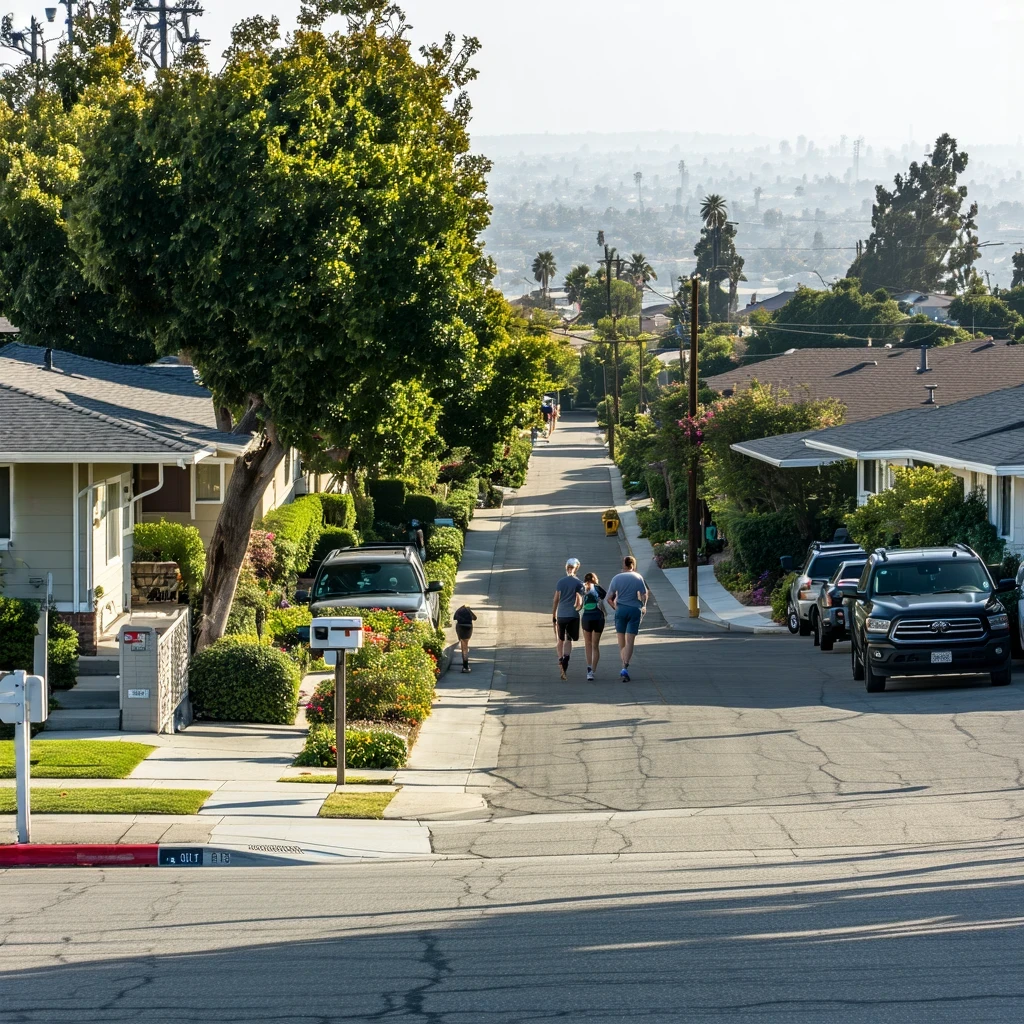
La Mesa has rail transit service and moderate pedestrian infrastructure in parts of the city, but day-to-day life still assumes car ownership. While some errands are walkable and transit exists as an option, most households rely on personal vehicles for commuting, shopping, and logistics.
Gas costs $5.34 per gallon. If you’re commuting into San Diego or east toward El Cajon daily, fuel becomes a recurring monthly expense that rivals or exceeds a modest utility bill. The car itself—payment, insurance, maintenance—adds another layer of fixed cost that doesn’t show up in rent or mortgage figures but shapes household cash flow just as firmly.
Compared to denser urban cores where car ownership is optional, La Mesa’s transportation model increases baseline expenses. Compared to distant exurbs with cheaper housing, it reduces commute length and time cost—but not fuel cost, given California pricing.
Cost Exposure Profiles
Cost pressure in La Mesa concentrates in three areas: housing entry, transportation dependence, and electricity volatility. How much each one affects you depends on structure, not income alone.
Low-exposure situations: You own your home outright or bought years ago when values were lower. You work locally or from home, minimizing fuel consumption. You manage cooling costs carefully and avoid peak electricity rates. Your monthly obligations stay predictable, and surprises are rare.
High-exposure situations: You’re renting and facing annual lease renewals with little leverage. You commute daily into San Diego or beyond, burning through expensive gas. You run air conditioning heavily during summer months without adjusting usage patterns. Every cost category swings upward at once, and there’s no equity offset.
The city doesn’t exclude people by income—it rewards those who’ve locked in housing costs early and those who’ve minimized transportation dependence. Renters with long commutes face compounding pressure that owners with short commutes avoid entirely.
Frequently Asked Questions
Is La Mesa more affordable than coastal San Diego in 2026? Yes. La Mesa’s median home value and rent both run lower than many coastal neighborhoods, though it still costs more than inland Riverside or San Bernardino counties. You’re paying for proximity without paying beachfront premiums.
What does a typical cost profile look like in La Mesa? Housing dominates, followed by transportation fuel and vehicle costs. Electricity creates seasonal swings, but groceries and gas utilities remain smaller line items. The profile favors homeowners with short commutes over renters who drive long distances daily.
Do utilities cost more in La Mesa than nearby areas? Electricity rates are high by national standards but typical for Southern California. Natural gas stays cheap because heating demand is minimal. Utility costs are moderate overall, with electricity being the only meaningful variable.
What costs tend to surprise newcomers in La Mesa? Transportation fuel adds up faster than expected, especially for households commuting into San Diego daily. Summer electricity bills also surprise renters who aren’t used to managing cooling costs in older buildings without efficiency upgrades.
Are property taxes higher in La Mesa than nearby cities? Property taxes in California are governed by Proposition 13, so rates stay relatively consistent across counties. The bigger difference is assessed home values—higher purchase prices mean higher absolute tax bills, even at the same rate.
Can you live in La Mesa without a car? It’s possible near transit corridors and in walkable pockets, but most households find car ownership necessary for work commutes, errands beyond the immediate area, and household logistics. Rail service helps, but it doesn’t eliminate vehicle dependence for most people.
How does La Mesa compare to El Cajon or Santee for cost of living? La Mesa tends to cost more for housing but offers shorter average commutes into San Diego and better access to urban amenities. El Cajon and Santee may offer lower entry costs, but transportation trade-offs and time costs shift depending on where you work.
Does La Mesa’s cost structure favor renters or buyers? Buyers. Ownership locks in the largest cost component and builds equity over time. Renters face ongoing exposure to market-rate resets and gain no equity offset, making long-term renting more expensive relative to ownership—if you can clear the entry barrier.
How this article was built: In addition to public economic data, this article incorporates location-based experiential signals derived from anonymized geographic patterns—such as access density, walkability, and land-use mix—to reflect how day-to-day living actually feels in La Mesa, CA.
—