
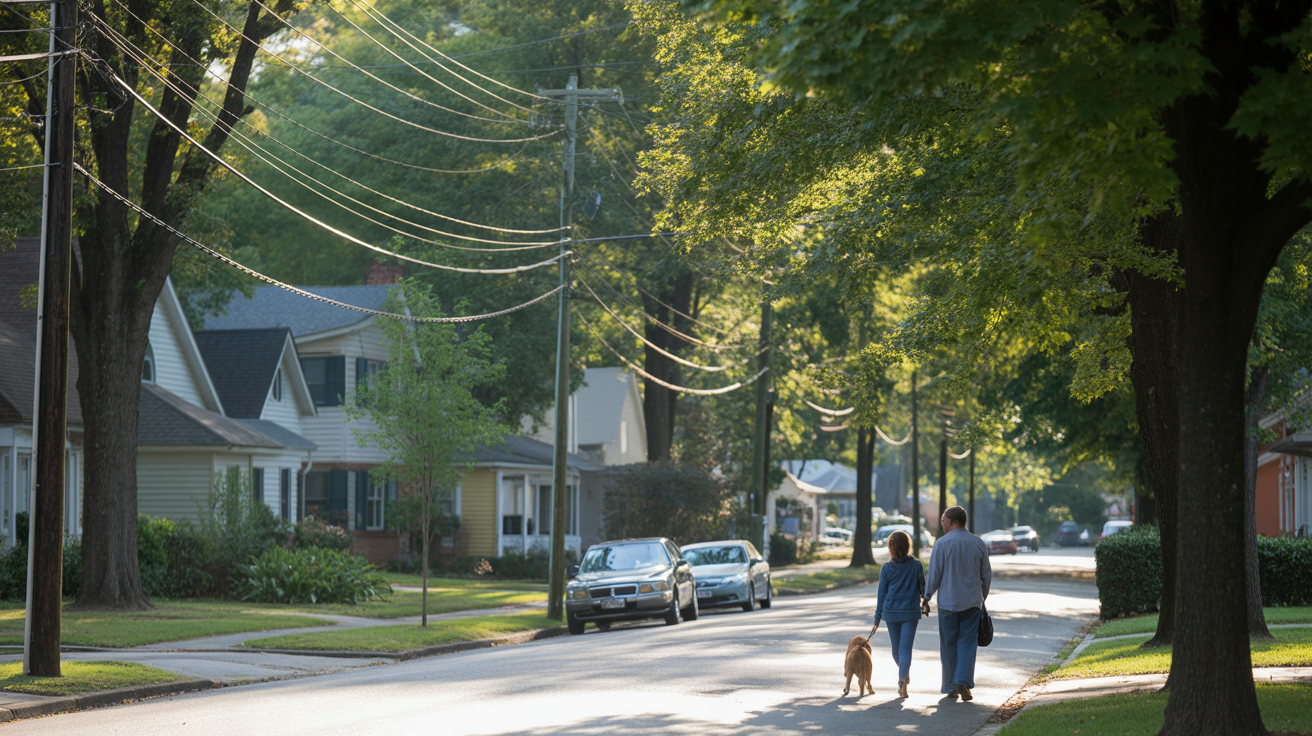
Here’s a common myth: Cary is always more expensive than Garner, so if you’re trying to save money in the Raleigh metro, Garner is the obvious choice. The reality is more nuanced. While housing entry costs differ significantly between these two Wake County neighbors, the better financial fit depends entirely on which cost pressures dominate your household—and how you actually live day-to-day.
Both Garner and Cary sit within the Raleigh metro, share the same regional economy, and experience similar climate patterns. Yet the way costs show up—and the tradeoffs households face—diverge in meaningful ways. Garner offers lower housing entry barriers and a more car-dependent lifestyle, while Cary provides stronger transit infrastructure, more walkable errands, and denser family amenities at a higher upfront cost. For households moving to the area in 2026, the decision isn’t about which city is cheaper overall; it’s about which cost structure aligns with your income sources, commute patterns, household size, and tolerance for friction in daily logistics.
This comparison explains where cost pressure concentrates differently in Garner versus Cary, how the same income feels different depending on infrastructure and access, and which households are more exposed to volatility, predictability challenges, or time costs in each city.
Housing Costs
Housing is where the structural difference between Garner and Cary becomes most visible. Garner’s median home value sits at $288,900, while Cary’s reaches $477,400. For renters, the gap is narrower but still present: Garner’s median gross rent is $1,371 per month, compared to Cary’s $1,538 per month. These aren’t just price differences—they reflect different housing markets, different buyer and renter pools, and different expectations around space, age of housing stock, and proximity to employment centers.
In Garner, the lower entry cost opens the door to homeownership for households that might be priced out of Cary, particularly first-time buyers or families prioritizing square footage and yard space over walkable access to retail and dining. The housing stock skews toward low-rise, single-family homes, which means more space per dollar but also higher exposure to utilities, maintenance, and transportation costs. Renters in Garner face less month-to-month pressure than renters in Cary, but the rental market is more corridor-clustered, meaning access to grocery stores, schools, and services often requires a car.
Cary’s higher housing costs reflect a different value proposition: denser infrastructure, stronger transit options (including rail), more walkable errands, and a mixed-height urban form that includes both single-family homes and newer apartment complexes. For dual-income households or families prioritizing school and playground density, Cary’s housing premium buys predictability in daily logistics—less driving, shorter errands, and more flexibility in how you move through the week. But that premium is front-loaded: whether you’re renting or buying, the entry barrier is steeper, and ongoing housing obligations consume a larger share of gross income.
| Housing Type | Garner | Cary |
|---|---|---|
| Median Home Value | $288,900 | $477,400 |
| Median Gross Rent | $1,371/month | $1,538/month |
For renters, the difference between Garner and Cary is less about monthly obligation and more about what that rent buys in terms of access and convenience. Garner renters trade lower rent for higher car dependence and more time spent on errands. Cary renters pay more but gain proximity to grocery stores, transit stops, and family-oriented amenities that reduce friction in daily routines. For homeowners, the gap widens: Garner’s lower purchase price reduces mortgage pressure but increases exposure to transportation and time costs, while Cary’s higher purchase price concentrates financial pressure upfront but stabilizes ongoing logistics.
Housing takeaway: Garner fits households where housing entry cost is the primary constraint and car ownership is already assumed. Cary fits households willing to absorb higher housing costs in exchange for reduced transportation dependence and denser access to schools, parks, and errands. The choice hinges on whether your household is more exposed to upfront affordability barriers or ongoing time and transportation friction.
Utilities and Energy Costs
Utilities in Garner and Cary are governed by the same regional infrastructure: electricity costs 13.47¢/kWh and natural gas runs $17.87/MCF in both cities. Because they share the same climate zone in central North Carolina, seasonal exposure to heating and cooling is nearly identical. Summers bring extended heat that drives air conditioning usage, while winters are mild with occasional cold snaps that require heating but rarely sustain heavy natural gas consumption. The cost difference between the two cities, then, isn’t in the rates—it’s in how housing stock and urban form shape usage patterns.
Garner’s low-rise, single-family housing stock means larger homes on average, which translates to more square footage to heat and cool. Older homes in Garner may lack modern insulation or energy-efficient windows, increasing baseline electricity usage during summer months and natural gas usage during winter. Because Garner’s layout is more car-oriented and spread out, homes are more likely to be detached, with less shared-wall efficiency than you’d find in Cary’s mixed-height developments. For families in Garner, utility costs are less predictable and more sensitive to home age, size, and maintenance decisions.
Cary’s mixed urban form—which includes both single-family homes and newer apartment complexes—offers more variability in utility exposure. Renters in newer apartment buildings benefit from shared-wall efficiency and modern HVAC systems, which stabilize monthly bills and reduce seasonal volatility. Homeowners in Cary face similar exposure to Garner if they own larger, older single-family homes, but Cary’s denser layout and newer construction overall mean that the average household experiences slightly more predictable utility costs. The difference isn’t dramatic, but it shows up in how much month-to-month bills swing during peak summer and winter months.
For both cities, the primary utility cost driver is cooling. Central North Carolina’s extended summer heat means air conditioning dominates the energy budget from May through September. Heating costs are lower and more predictable, concentrated in December through February. Households in older homes—regardless of city—face higher exposure to both cooling and heating volatility, while households in newer construction or apartments experience more stable bills year-round.
Utility takeaway: Garner households in larger, older single-family homes face higher utility volatility and less predictable seasonal bills. Cary households in newer apartments or mixed-height developments experience more stable utility costs due to shared-wall efficiency and modern construction. The difference is less about rates and more about housing stock age, size, and form.
Groceries and Daily Expenses
Grocery and daily spending pressure in Garner and Cary reflects the same regional price environment—both cities share the same Regional Price Parity index of 98, meaning costs are slightly below the national baseline. Staples like bread ($1.81/lb), chicken ($2.01/lb), eggs ($2.45/dozen), and milk ($3.95/half-gallon) cost the same in both cities. The difference isn’t in prices—it’s in how access, density, and daily logistics shape spending patterns and convenience creep.
Garner’s grocery landscape is corridor-clustered, meaning food and grocery options concentrate along major roads rather than being distributed throughout neighborhoods. This layout favors households that plan weekly shopping trips and are comfortable driving to big-box stores or regional grocery chains. For single adults or couples, this structure works fine—you consolidate errands, stock up, and minimize trips. For families managing school pickups, after-work schedules, and weekend activities, the lack of walkable grocery access increases reliance on convenience spending: last-minute takeout, coffee runs, or quick stops at gas stations for missing ingredients. That friction adds up, not in higher grocery prices but in more frequent, smaller, less-planned purchases.
Cary’s grocery infrastructure is broadly accessible, with food and grocery density exceeding regional thresholds. This means more options within shorter distances, more walkable access to neighborhood stores, and less need to consolidate all errands into a single weekly trip. For families, this reduces friction: you can grab milk on the way home from school, pick up dinner ingredients without a dedicated car trip, or walk to a coffee shop instead of driving. The tradeoff is that Cary’s denser retail environment includes more specialty stores, prepared food options, and dining-out opportunities—which can increase spending if households aren’t disciplined about distinguishing between convenience and habit.
For single adults, the difference is subtle. Garner requires more planning and car trips but offers access to the same big-box discounters and regional chains. Cary offers more walkable convenience but also more temptation to spend on prepared foods and dining out. For couples, Cary’s infrastructure reduces time costs and makes it easier to avoid last-minute convenience spending, while Garner rewards households that batch errands efficiently. For families, Cary’s density is a clear advantage: less driving, more flexibility, and fewer gaps in the weekly routine that force expensive quick fixes.
Grocery takeaway: Garner fits households that plan ahead, batch errands, and prioritize big-box access over walkable convenience. Cary fits households that value reduced friction in daily errands and are willing to trade higher exposure to dining-out temptation for lower time costs and more flexible logistics. The difference is structural, not price-based.
Taxes and Fees

Garner and Cary sit in the same county (Wake County) and share the same state tax structure, so property tax rates, sales taxes, and state-level fees are identical. The difference in tax and fee exposure comes from housing values, homeownership rates, and the prevalence of HOA fees and special assessments tied to neighborhood infrastructure.
Property taxes in both cities are based on assessed home values, which means Cary homeowners face higher absolute property tax bills due to higher median home values. A home assessed at Cary’s median of $477,400 generates a larger annual property tax obligation than a home assessed at Garner’s median of $288,900, even though the rate is the same. For long-term homeowners, this difference compounds over time, particularly if property values appreciate faster in Cary due to stronger demand for transit-accessible, walkable neighborhoods. Renters in both cities are indirectly exposed to property taxes through rent, but the effect is more pronounced in Cary, where landlords’ higher property tax obligations may be passed through in the form of higher base rents.
HOA fees are more common in Cary, particularly in newer developments and mixed-use neighborhoods where shared amenities like pools, greenways, and landscaping are bundled into monthly or annual fees. These fees add predictability—trash, water, and exterior maintenance are often included—but they also add a fixed, non-negotiable cost that doesn’t fluctuate with usage. In Garner, HOA fees are less prevalent, and homeowners are more likely to manage their own trash service, landscaping, and exterior upkeep. This structure offers more control but also more variability: a broken fence or unplanned tree removal can create sudden, unbudgeted expenses.
For renters, the fee structure is simpler in Garner, where utilities are typically billed separately and landlords rarely bundle services. In Cary, some apartment complexes include water, trash, or parking in the base rent, which stabilizes monthly bills but makes it harder to control usage-based costs. For homeowners, Cary’s higher reliance on HOA fees and bundled services reduces volatility but increases fixed obligations, while Garner’s lower prevalence of HOAs offers more flexibility but exposes households to more unpredictable maintenance and service costs.
Tax and fee takeaway: Cary homeowners face higher property tax obligations due to higher home values and more frequent HOA fees, which increase predictability but reduce flexibility. Garner homeowners face lower property taxes and fewer HOA fees, which lowers fixed costs but increases exposure to unplanned maintenance expenses. Renters in both cities are indirectly affected, but Cary renters pay more upfront while Garner renters retain more control over variable costs.
Transportation & Commute Reality
Transportation costs in Garner and Cary are shaped less by gas prices—which sit at $3.71/gallon in both cities—and more by how transit infrastructure, commute patterns, and daily errands interact with car dependence. Garner’s average commute is 27 minutes, with 45.3% of workers facing long commutes and only 8.2% working from home. Cary’s commute data isn’t available, but the experiential signals tell a clear story: Cary has rail transit, notable bike infrastructure, and broadly accessible errands, while Garner relies on bus-only service and corridor-clustered retail.
In Garner, car ownership is effectively non-negotiable. The pedestrian-to-road ratio is high in pockets, meaning some neighborhoods support walking, but the overall layout requires a car for groceries, medical appointments, and most errands. The 27-minute average commute reflects a mix of local jobs and commutes into Raleigh or other parts of the metro. For single-car households, this creates scheduling friction: if one partner commutes to Raleigh and the other needs the car for errands, daily logistics become a puzzle. For dual-car households, the cost pressure is straightforward—gas, insurance, and maintenance for two vehicles, plus the time cost of longer commutes for nearly half the workforce.
Cary’s rail presence changes the calculus. Households with one partner commuting into Raleigh or Durham can rely on transit instead of driving, which reduces gas consumption, parking costs, and wear on a second vehicle. The bike-to-road ratio exceeds high thresholds, meaning cycling is a viable option for errands, school drop-offs, or short commutes within Cary itself. For families, this infrastructure reduces the pressure to own two cars or to coordinate schedules around a single vehicle. The tradeoff is that Cary’s housing costs are higher, so the transportation savings need to be weighed against the upfront housing premium.
For single adults, Garner’s car dependence means budgeting for a reliable vehicle, gas, and insurance, plus the time cost of driving to work and errands. Cary offers more flexibility: a single adult near a rail stop can reduce car usage significantly, lowering both cash costs and time spent in traffic. For couples, Garner works if both partners are comfortable driving and commutes are predictable, while Cary works better if one partner can use transit or bike infrastructure to reduce the need for a second car. For families, Cary’s denser errands and transit options reduce the logistical burden of managing school, work, and household errands across multiple vehicles.
Transportation takeaway: Garner fits households that already own reliable vehicles and are comfortable with longer, car-dependent commutes. Cary fits households that can leverage rail transit, bike infrastructure, or walkable errands to reduce car dependence and lower transportation time costs. The difference is less about gas prices and more about how much of your week is spent coordinating vehicles, commutes, and errands.
Cost Structure Comparison
Housing pressure dominates the cost experience in both cities, but the nature of that pressure differs. In Garner, the challenge is ongoing: lower entry costs make homeownership or renting more accessible upfront, but the car-dependent layout increases transportation time and costs, and the corridor-clustered errands infrastructure adds friction to daily routines. In Cary, the challenge is front-loaded: higher home values and rents create a steeper entry barrier, but the payoff is reduced transportation dependence, denser access to schools and groceries, and more predictable daily logistics.
Utilities introduce similar exposure in both cities due to identical rates and shared climate, but housing stock age and form create differences in volatility. Garner’s older, larger single-family homes face more seasonal swing in heating and cooling costs, while Cary’s mixed-height developments and newer construction offer more stable, predictable bills. For households sensitive to month-to-month variability, Cary’s infrastructure provides a buffer that Garner’s layout doesn’t.
Daily living costs—groceries, errands, convenience spending—are structurally different. Garner rewards households that plan ahead, batch errands, and minimize last-minute trips. Cary rewards households that value time savings and reduced friction, even if that means higher exposure to dining-out temptation or specialty retail. For families managing complex schedules, Cary’s broadly accessible errands reduce the hidden costs of missed ingredients, last-minute takeout, and coordination failures. For single adults or couples with flexible schedules, Garner’s layout is less of a burden.
Transportation patterns matter more in Garner, where nearly half the workforce faces long commutes and car ownership is essential. Cary’s rail and bike infrastructure shift the equation: households that can use transit or cycling reduce both cash costs and time costs, which offsets some of the housing premium. For dual-income households where one partner works in Raleigh or Durham, Cary’s transit access can eliminate the need for a second car entirely, while Garner assumes two vehicles for most families.
The better choice depends on which costs dominate your household. Households sensitive to upfront housing affordability may prefer Garner, even if that means higher transportation and time costs. Households sensitive to daily friction, commute unpredictability, or the logistical burden of managing errands across a car-dependent layout may prefer Cary, even if that means absorbing a higher housing entry cost. For households where income is stable but time is scarce—dual-income professionals, families with school-age children—Cary’s infrastructure reduces the invisible costs of coordination and planning. For households where income is tighter but schedules are flexible, Garner’s lower housing costs provide more breathing room, as long as car dependence and longer commutes are manageable.
How the Same Income Feels in Garner vs Cary
Single Adult
For a single adult, housing becomes the first non-negotiable cost, and the difference between Garner and Cary is whether you’re locking in lower rent or buying proximity to transit and walkable errands. In Garner, flexibility exists in choosing a smaller apartment or house to keep rent low, but that flexibility disappears when you factor in car dependence—you’ll need a reliable vehicle, insurance, and gas no matter where you live. In Cary, rent is higher, but if you’re near a rail stop or in a walkable neighborhood, you can reduce car usage and reclaim time spent commuting or running errands. The role of commute friction is significant: Garner’s 27-minute average commute and 45.3% long-commute rate mean more time in the car, more gas consumption, and less flexibility in how you structure your week.
Dual-Income Couple
For a dual-income couple, the non-negotiable costs shift to housing and transportation coordination. In Garner, lower rent or mortgage payments free up income for other priorities, but the car-oriented layout means you’ll likely need two vehicles if both partners work, which adds insurance, maintenance, and gas costs. Flexibility exists in batching errands and planning around predictable schedules, but that flexibility disappears if one partner’s commute is long or unpredictable. In Cary, higher housing costs are front-loaded, but rail transit and bike infrastructure mean one partner might not need a car at all, reducing the pressure to own and maintain two vehicles. The role of housing form matters here: Cary’s mixed-height developments and newer apartments offer more predictable utility costs, while Garner’s older single-family homes introduce more seasonal volatility.
Family with Kids
For a family, the non-negotiable costs expand to include housing, transportation, and the time cost of managing school, errands, and household logistics. In Garner, lower housing entry costs provide more space and yard access, but the corridor-clustered errands and car dependence mean more driving, more coordination, and more exposure to last-minute convenience spending when schedules don’t align. Flexibility exists in choosing a larger home for less money, but that flexibility disappears when you account for the time spent shuttling kids to school, activities, and appointments across a spread-out layout. In Cary, higher housing costs buy proximity to schools, playgrounds, and walkable grocery stores, which reduces the logistical burden and lowers the risk of expensive quick fixes like takeout or missed errands. The role of commute friction and car dependence is amplified for families: Cary’s transit and bike infrastructure mean fewer vehicles, fewer trips, and more predictable daily routines, while Garner assumes two cars and more time spent managing movement.
Decision Matrix: Which City Fits Which Household?
| Decision factor | If you’re sensitive to this… | Garner tends to fit when… | Cary tends to fit when… |
|---|---|---|---|
| Housing entry + space needs | You prioritize lower upfront costs and more square footage over walkable access | You’re willing to trade convenience for space and can absorb car-dependent logistics | You value proximity to transit, schools, and errands enough to pay a housing premium |
| Transportation dependence + commute friction | You want to minimize car ownership, reduce commute time, or avoid long drives | You already own reliable vehicles and your commute patterns are predictable | You can use rail transit or bike infrastructure to reduce or eliminate a second car |
| Utility variability + home size exposure | You prefer predictable monthly bills and want to avoid seasonal swings | You’re comfortable managing older housing stock and can absorb utility volatility | You prioritize newer construction or apartments with shared-wall efficiency |
| Grocery strategy + convenience spending creep | You want to minimize friction in daily errands and avoid last-minute takeout costs | You plan weekly shopping trips and batch errands efficiently without walkable access | You value walkable grocery access and want to reduce time spent coordinating errands |
| Fees + friction costs (HOA, services, upkeep) | You want predictable, bundled services or prefer control over variable maintenance costs | You’re willing to manage your own upkeep and accept occasional unplanned expenses | You prefer bundled HOA services that stabilize costs even if they’re higher upfront |
| Time budget (schedule flexibility, errands, logistics) | You have limited time to manage household logistics and want to reduce coordination burden | You have flexible schedules and can absorb longer commutes or car-dependent errands | You need to minimize time spent driving, planning, and coordinating daily routines |
Lifestyle Fit
Beyond cost structure, Garner and Cary offer different lifestyle textures that indirectly shape expenses. Garner’s low-rise, car-oriented layout favors households that value space, privacy, and yard access. The pedestrian-to-road ratio is high in pockets, meaning some neighborhoods support walking, but the overall experience is suburban and spread out. Parks and water features are present, and school density meets moderate thresholds, but the infrastructure is less concentrated than in Cary. For families seeking a quieter, more traditional suburban feel with lower housing entry costs, Garner delivers—but that lifestyle assumes car ownership, longer commutes, and more time spent managing logistics.
Cary’s mixed-height urban form and denser infrastructure create a different rhythm. Rail transit, notable bike infrastructure, and broadly accessible errands mean less time in the car and more flexibility in how you move through the week. Family infrastructure is strong, with both schools and playgrounds meeting density thresholds, and the urban form supports a mix of single-family homes and newer apartments. For dual-income professionals or families prioritizing walkable access to schools, parks, and grocery stores, Cary’s lifestyle reduces friction and time costs, even if the upfront housing premium is steeper. The tradeoff is less space per dollar and more exposure to HOA fees and bundled services.
Both cities share the same climate—extended summer heat, mild winters, and moderate humidity—so lifestyle differences tied to weather are minimal. The unemployment rate is identical at 3.1%, reflecting the same regional economy and job market. The distinction is in how infrastructure shapes daily routines: Garner rewards households that plan ahead and batch activities, while Cary rewards households that value spontaneity, reduced car dependence, and shorter distances between home, work, and errands.
Quick fact: Garner’s median household income is $77,171, while Cary’s is $125,317, reflecting different income profiles but not necessarily different cost-of-living pressures—the key is how income interacts with housing, transportation, and time costs.
Quick fact: Cary’s rail transit and bike infrastructure reduce the need for a second vehicle in many households, which can offset the higher housing costs for dual-income couples or families where one partner commutes into Raleigh or Durham.
Frequently Asked Questions
Is Garner or Cary more affordable for families in 2026?
Garner offers lower housing entry costs and more space per dollar, which benefits families prioritizing yard access and square footage. Cary offers denser family infrastructure—schools, playgrounds, and walkable errands—which reduces time costs and logistical friction. The better fit depends on whether your family is more exposed to upfront housing affordability or ongoing transportation and coordination burdens.
How do transportation costs differ between Garner and Cary in 2026?
Garner requires car ownership for nearly all households, with a 27-minute average commute and 45.3% of workers facing long commutes. Cary’s rail transit and bike infrastructure allow some households to reduce or eliminate a second car, lowering gas, insurance, and maintenance costs. The difference is less about gas prices and more about how much of your week is spent coordinating vehicles and commutes.
Do utilities cost more in Garner or Cary?
Utilities cost the same in both cities—electricity is 13.47¢/kWh and natural gas is $17.87/MCF—but exposure differs based on housing stock. Garner’s older, larger single-family homes face more seasonal volatility in heating and cooling costs, while Cary’s mixed-height developments and newer apartments offer more predictable, stable bills.
Which city is better for renters in 2026, Garner or Cary?
Garner’s median rent of $1,371/month is lower than Cary’s $1,538/month, but Garner renters face higher car dependence and more friction in daily errands. Cary renters pay more upfront but gain walkable access to grocery stores, transit stops, and family amenities, which reduces time costs and convenience spending. The better fit depends on whether you prioritize lower monthly rent or reduced logistical burden.
How does the same income feel different in Garner vs Cary?
In Garner, lower housing costs free up income for other priorities, but car dependence and longer commutes increase transportation and time costs. In Cary, higher housing costs are front-loaded, but transit access, walkable errands, and denser family infrastructure reduce ongoing friction and coordination burdens. The same