
Can you live in Garner without a car? It’s one of the first questions people ask when considering a move here, and the honest answer shapes everything from where you look for housing to how you think about your daily routine. Garner sits just southeast of Raleigh, close enough to feel connected to the capital’s infrastructure but far enough out that it developed with a distinctly suburban layout—and that layout determines how most people get around.
Understanding transportation options in Garner means recognizing that this isn’t a city built around transit hubs or walkable commercial corridors. It’s a place where driving provides the most flexibility and control, where transit exists but serves specific corridors and purposes, and where your mobility strategy needs to match both your location within Garner and your daily patterns. The goal here isn’t to tell you what you should do—it’s to explain how transportation actually works so you can make decisions that fit your situation.
How People Get Around Garner
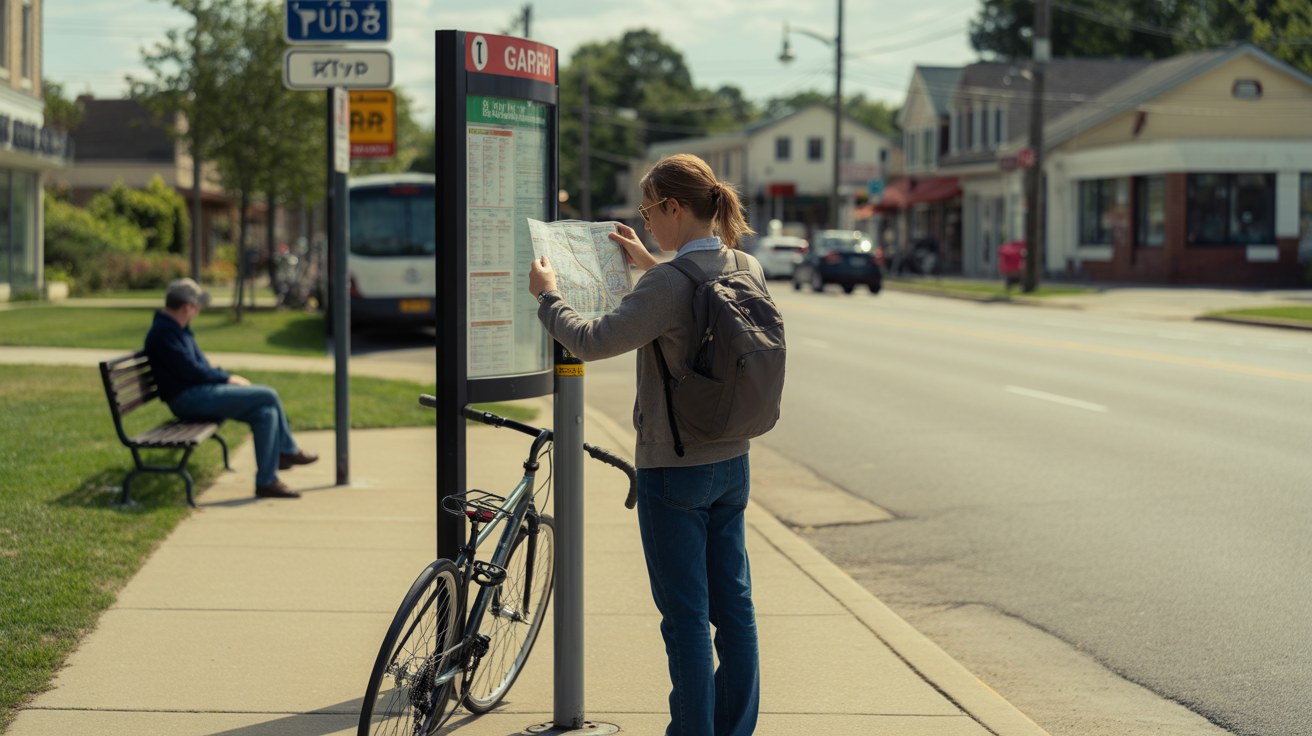
Garner operates primarily as a car-first community. The street network, residential subdivisions, and commercial development all reflect a pattern common to suburbs that grew rapidly in the 1980s and beyond: separated land uses, wider spacing between destinations, and limited pedestrian infrastructure connecting neighborhoods to shopping or services. Most residents rely on personal vehicles for commuting, errands, school runs, and recreational trips.
That doesn’t mean transit is absent—it means transit plays a supporting role rather than a primary one. The regional bus system connects parts of Garner to Raleigh and other nearby areas, and for residents living near key routes or working along served corridors, it can provide a viable option for specific trips. But the coverage is selective, and the frequency and span of service reflect the realities of a lower-density suburban environment.
What newcomers often misunderstand is that proximity to Raleigh doesn’t automatically translate to Raleigh-level transit access. Garner’s development pattern prioritizes automotive convenience, and the infrastructure—parking availability, road capacity, drive-through services—reinforces that priority. If you’re moving here expecting to replicate a car-free or car-light lifestyle you had in a denser urban core, the friction will be immediate and constant.
Public Transit Availability in Garner
Public transit in Garner often centers around systems such as GoRaleigh and GoTriangle, which provide regional bus connections linking Garner to Raleigh, Research Triangle Park, and other parts of Wake County. These services tend to work best for commuters traveling along major corridors during peak hours, particularly those heading into Raleigh for work or accessing employment centers in the Research Triangle.
Transit coverage is concentrated rather than comprehensive. Routes typically follow main roads like US 70, Garner Road, and other high-traffic arteries, serving park-and-ride lots, shopping centers, and transfer points. If you live near one of these corridors and work somewhere the bus reaches directly, transit can be a practical option. But if your home or workplace sits in one of Garner’s many residential subdivisions set back from main roads, getting to and from the bus becomes its own logistical challenge.
Where transit tends to fall short is in coverage of neighborhoods, evening and weekend service, and trip flexibility. The system is designed to move commuters efficiently along established routes, not to provide spontaneous mobility throughout the day. Late-night service is limited, and making multi-stop errands or non-work trips by bus often requires significant time investment and careful planning.
This doesn’t make transit useless—it makes it specialized. For someone with a predictable schedule, a workplace near a transit stop, and a home within reasonable reach of a route, the bus can reduce driving frequency and provide a lower-stress commute option. For households juggling childcare pickups, irregular work hours, or frequent errands across dispersed locations, transit becomes impractical quickly.
Driving & Car Dependence Reality
Driving in Garner isn’t just common—it’s structurally necessary for most households. The layout of the city, with residential areas separated from commercial zones and limited walkable connections, means that daily tasks like grocery shopping, medical appointments, and school runs almost always require a vehicle. Even short trips that might be walkable in distance often lack safe or direct pedestrian routes.
Parking is abundant and typically free, which removes one of the friction points that makes driving costly or inconvenient in denser cities. Shopping centers, restaurants, medical offices, and employers provide dedicated lots, and street parking concerns are rare. This ease of parking reinforces the car-dependent pattern—there’s no penalty for driving, and often a significant penalty for not driving.
The tradeoff is that car ownership becomes a baseline cost rather than an optional one. Households need to budget for vehicle purchase or lease, insurance, maintenance, fuel, and registration. For families, multiple cars are often necessary, particularly when adults work in different locations or children have activities that require simultaneous transportation.
Sprawl also affects commute flexibility. While Garner is close to Raleigh, “close” still means navigating traffic on US 70, I-40, or other connectors during peak hours. Commute times vary significantly depending on where in Garner you live and where you’re headed, and traffic congestion can turn a geographically short trip into a time-consuming one. The predictability of driving—knowing you can leave when you want and take the most direct route—often outweighs the time cost for most residents.
Commuting Patterns & Daily Mobility
Commuting from Garner typically means driving to Raleigh, Research Triangle Park, or other employment centers in Wake County. The pattern is largely single-occupancy vehicle trips during morning and evening peaks, with some carpooling among coworkers or family members. The structure of most jobs—fixed start times, limited remote flexibility, need for a vehicle during the workday—makes solo driving the default.
For residents working in Raleigh’s downtown or near transit-served areas, the bus can provide an alternative that avoids parking costs and reduces commute stress. But this works best for people with straightforward, direct routes and schedules that align with peak service hours. Multi-stop commutes, irregular shifts, or jobs requiring a vehicle for work purposes push people back toward driving.
Daily mobility beyond commuting—errands, appointments, social activities—almost universally requires a car. The spacing of destinations and lack of walkable commercial districts mean that even routine tasks involve driving. Households with children face additional complexity, as school locations, extracurricular activities, and childcare pickups rarely align geographically or temporally in ways that transit can accommodate.
Who benefits from proximity in Garner are those living closer to Raleigh’s edge or near major corridors, where commute times stay manageable and access to urban amenities remains reasonable. Who absorbs commute friction are those in subdivisions farther from main roads or employment centers, where every trip starts with navigating local streets before reaching faster routes.
Who Transit Works For — and Who It Doesn’t
Transit in Garner works best for single adults or couples without children, particularly renters living near bus routes and working in Raleigh or Research Triangle Park. If your job is near a transit stop, your schedule is consistent, and you can structure errands around weekends or occasional car access (through car-sharing, rentals, or a partner’s vehicle), the bus can reduce your transportation costs and provide a viable car-free or car-light lifestyle.
It also works for commuters who want to avoid driving stress and parking costs but still own a car for non-work trips. Using transit for the daily commute while keeping a vehicle for errands, weekend activities, and flexibility is a common hybrid approach that balances cost control with practical mobility.
Transit doesn’t work well for families with children, particularly those managing school schedules, extracurriculars, and childcare. The logistics of getting multiple people to different places at different times, often with gear or groceries, require the flexibility and capacity that only personal vehicles provide. Similarly, shift workers, people with irregular hours, or those whose jobs require travel during the day find transit’s limited span and frequency incompatible with their needs.
Homeowners in subdivisions away from main corridors face the added challenge of getting to transit in the first place. Without walkable access to bus stops, the car becomes necessary even to use the bus, which eliminates most of the cost and convenience benefits. For these households, driving isn’t a choice—it’s the only practical option.
Renters have more flexibility to prioritize transit access when choosing where to live, selecting apartments or homes near routes and adjusting their housing search to match their transportation strategy. Owners, particularly those already settled in neighborhoods built around automotive access, have less ability to adapt and must work within the infrastructure that exists.
Transportation Tradeoffs in Garner
The core tradeoff between transit and driving in Garner is control versus cost. Driving gives you complete control over timing, routing, and capacity—you leave when you want, stop where you need, and carry what you must. The cost is ongoing vehicle expenses, which become a fixed part of household budgets regardless of how much you drive.
Transit offers lower direct costs for those who can use it effectively, but it requires sacrificing flexibility and accepting longer, less direct trips. The time cost of waiting, transferring, and walking to and from stops adds up, and the inability to make spontaneous stops or handle last-minute changes creates friction that many households find unacceptable.
Predictability also differs. Driving is predictable in outcome—you know you’ll get there, even if traffic slows you down. Transit is predictable in schedule but less so in outcome, as missed connections, service delays, or route changes can cascade into significant disruptions. For households with tight schedules or high stakes (getting to childcare on time, making medical appointments), that unpredictability is a dealbreaker.
The exposure tradeoff is subtler. Car ownership exposes you to maintenance surprises, fuel price swings, and insurance costs, but it insulates you from service cuts, route changes, or transit funding decisions. Transit dependence exposes you to system changes outside your control but reduces your vulnerability to vehicle breakdowns or repair costs. Neither option is risk-free—the question is which risks you’re better positioned to manage.
FAQs About Transportation in Garner (2026)
Is public transit usable for daily commuting in Garner?
Public transit can work for daily commuting if you live near a bus route and work along a served corridor, particularly in Raleigh or Research Triangle Park. The system is designed primarily for peak-hour commuters, so it’s most practical for people with consistent schedules and straightforward routes. For households needing flexibility, multiple stops, or off-peak travel, transit becomes much harder to rely on exclusively.
Do most people in Garner rely on a car?
Yes. Garner’s suburban layout, separated land uses, and limited pedestrian infrastructure make car ownership the norm for most households. Driving provides the flexibility and coverage that transit can’t match across the city’s spread-out residential and commercial areas. Even people who use transit for commuting often still own a car for errands, family logistics, and non-work trips.
Which areas of Garner are easiest to live in without a car?
Areas near major bus corridors and closer to Raleigh’s edge offer the best chance of reducing car dependence, though truly car-free living remains difficult anywhere in Garner. Renters have more ability to prioritize transit access when choosing housing, and those willing to combine occasional car-sharing or rideshare use with transit can make it work. Neighborhoods set back from main roads or deeper into residential subdivisions require a car for practical daily life.
How does commuting in Garner compare to nearby cities?
Commuting from Garner involves more driving and less transit flexibility than living in central Raleigh, but it also means easier parking and less congestion within the city itself. Compared to other suburbs in Wake County, Garner offers reasonable access to Raleigh and Research Triangle Park, though commute times depend heavily on where you live within Garner and where you’re headed. The tradeoff is typically lower housing costs in exchange for longer or more car-dependent commutes.
How Transportation Fits Into the Cost of Living in Garner
Transportation in Garner isn’t just a budget line—it’s a structural factor that shapes where you can live, how much time you spend commuting, and what kind of flexibility you have in daily life. The car-dependent layout means that vehicle costs are largely unavoidable for most households, and those costs interact with housing decisions in important ways.
Choosing housing closer to work or transit can reduce commute time and fuel costs, but those locations may come with higher rent or purchase prices. Choosing more affordable housing farther out often means longer commutes and higher transportation expenses, which can offset the housing savings. The total cost picture requires looking at both together, not treating them as separate decisions.
For a fuller sense of how transportation costs fit into monthly expenses and interact with other budget categories, the Monthly Budget article provides broader context. The key insight is that transportation in Garner is less about optimizing individual trips and more about understanding how your location, work situation, and household structure determine your realistic mobility options—and then planning accordingly.
Garner rewards people who accept its car-oriented structure and plan around it. It’s harder on those who expect urban-level transit or who need to minimize vehicle costs. Knowing which category you fall into before you move, and choosing your neighborhood and housing with that reality in mind, makes the difference between transportation that works quietly in the background and transportation that becomes a constant source of friction and expense.
How this article was built: This article draws on structural analysis of Garner’s development patterns, regional transit systems, and suburban mobility realities to explain how transportation actually works for different household types.