
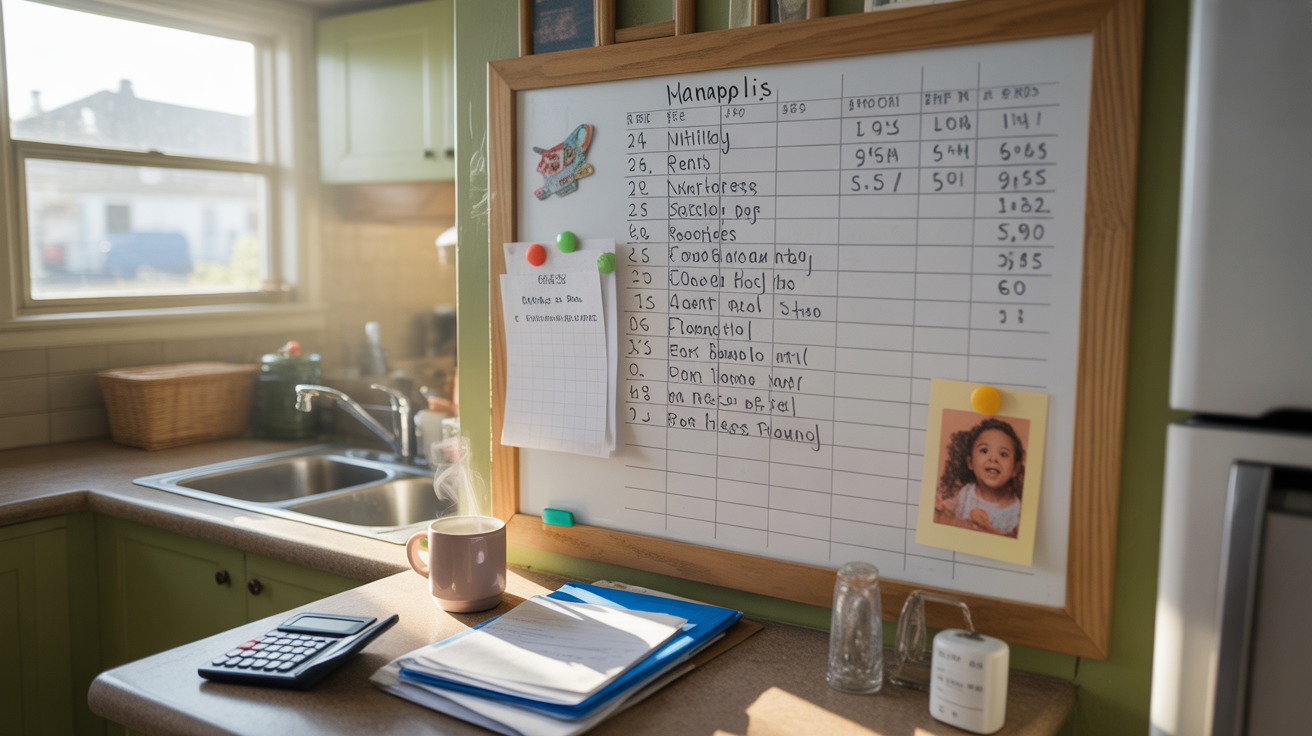
Quick Quiz: How Far Does $4,000/Month Actually Go in Kannapolis?
| Expense | Jasmine | Sam & Elena | The Ortiz Family |
|---|---|---|---|
| Gross Monthly Income | $3,000 | $7,000 | $9,500 |
| Rent/Mortgage | $1,200 | $1,800 | $2,200 |
| Utilities | $250 | $500 | $600 |
| Food | $400 | $800 | $1,200 |
| Transportation | $100 | $500 | $800 |
| Kids/Pets | $0 | $0 | $500 |
| Misc/Other | $1,000 | $1,000 | $2,000 |
| Savings | $50 | $1,400 | $2,200 |
Before you dive into the details, test your instinct: In Kannapolis, NC, if you’re bringing home $4,000 a month, which expense typically takes the biggest bite—housing, transportation, or the combination of utilities and errands logistics? If you guessed housing alone, you’re only seeing part of the picture. The real budget pressure in Kannapolis comes from how costs stack when you account for commute patterns, sparse grocery and food accessibility, and the coordination required to manage daily errands in a place where only 5.5% of workers have the option to work from home.
Understanding your monthly budget in Kannapolis means recognizing that the city’s cost structure isn’t defined by a single dominant expense—it’s shaped by the interplay of moderate housing costs (median rent sits at $1,078 per month, and the median home value is $213,300), transportation exposure driven by a 25-minute average commute and a gas price of $3.77 per gallon, and a daily errands landscape where food establishment density falls below typical thresholds. Newcomers often underestimate how the need to drive frequently for groceries, the reality that 39.5% of workers face long commutes, and the limited work-from-home flexibility combine to create a budget that’s less about one large line item and more about managing a steady accumulation of moderate, recurring costs.
Kannapolis sits in the Charlotte metro area with a regional price parity index of 97, meaning the overall cost level runs slightly below the national baseline. But that modest advantage gets complicated quickly once you factor in how people actually move through the city. Rail service is present, offering some commute flexibility, and the pedestrian-to-road ratio in certain pockets supports walkability. Yet the sparse distribution of food and grocery establishments means that even in neighborhoods with sidewalk infrastructure, residents still depend heavily on cars for routine errands. The result is a monthly budget shaped not by extremes, but by the steady friction of coordinating work, home, and household logistics in a place where convenience requires planning.
A Simple Budget Map: How Costs Behave by Household Type
Rather than guess at totals, it’s more useful to see how each major cost category behaves depending on your household structure. The table below shows how housing, utilities, food, transportation, and fees play out for three representative household types in Kannapolis. Where exact spending figures aren’t available in the data, categories are described by their cost behavior—whether they’re stable, volatile, exposure-driven, or efficiency-sensitive—so you can understand what changes your budget most.
| Category | Jasmine (single renter) | Sam & Elena (couple) | Ortiz family (2 kids, owners) |
|---|---|---|---|
| Housing (Rent or Mortgage) | $1,078/month median rent; stable and predictable | Shared rent or mortgage on $213,300 median home; stable base cost | Mortgage on $213,300 median home; fixed but size-sensitive for maintenance and taxes |
| Utilities | Electricity 13.68¢/kWh, natural gas $17.87/MCF; solo burden, seasonal swings | Shared load reduces per-person exposure; seasonal but manageable | Larger footprint increases exposure; efficiency-sensitive, seasonal volatility higher |
| Food (Groceries + Eating Out) | Sparse food/grocery density increases travel frequency; flexible but planning-dependent | Shared grocery trips reduce per-person friction; sparse accessibility still requires car coordination | Larger household volume; sparse errands accessibility adds time and fuel burden to routine shopping |
| Transportation | Gas $3.77/gal, 25min average commute, 39.5% long commute rate, 5.5% WFH; high solo exposure, rail present but limited daily utility | Dual commute coordination; rail offers some flexibility, but sparse errands mean car dependency remains | Multiple commute/school/activity trips; low school density and sparse errands create complex logistics, commute-dependent |
| Fees / Friction Costs | Minimal admin burden; trash, water/sewer typically bundled or billed separately | Moderate; may include HOA if owning, shared responsibility reduces per-person friction | Higher admin load; HOA possible, trash, water/sewer, seasonal upkeep (HVAC, lawn), episodic and coordination-heavy |
| Discretionary (life + surprises) | Flexible but compressed by solo housing and commute exposure | Shared fixed costs free up more discretionary room; still sensitive to dual commute burden | Discretionary-compressed by larger household, healthcare routine-local only (clinics present, no hospital), activity coordination |
| What Changes This Most | Commute distance and frequency; ability to reduce solo car dependency | Commute coordination and housing choice (rent vs. own) | School/activity logistics, home size, and seasonal utility efficiency |
Methodology: This guide uses only city-level figures provided in the IndexYard data feed for 2026. Where exact category totals aren’t provided, categories are described directionally to show budget behavior rather than a receipt-accurate total.
The Real Cost Drivers in Kannapolis
In Kannapolis, the budget stress point is rarely one big bill—it’s the stack of small “friction” costs that show up after move-in. Housing anchors the budget at a moderate level: $1,078 per month for median rent or a mortgage based on the $213,300 median home value. But once you layer in utilities—electricity at 13.68¢ per kWh and natural gas at $17.87 per MCF—and account for North Carolina’s warm, humid summers and mild but occasionally cold winters, seasonal swings in heating and cooling create noticeable monthly volatility. For context, a typical household using around 1,000 kWh per month would face roughly $137 in electricity costs before fees, and that figure climbs during peak cooling months.
Transportation adds another layer of persistent pressure. With an average commute time of 25 minutes, a gas price of $3.77 per gallon, and 39.5% of workers facing long commutes, the cost of getting to work is material for most households. Assuming a standard work schedule and a typical 25-mile round-trip commute in a vehicle averaging 25 MPG, illustrative monthly fuel costs would run around $83 for commuting alone—before errands, appointments, or weekend travel. Rail service is present and offers some flexibility for workers commuting into Charlotte, but the sparse distribution of food and grocery establishments means that day-to-day errands still require a car. Only 5.5% of Kannapolis workers have the option to work from home, so most residents are managing both a regular commute and the logistical burden of driving to access routine services.
The interaction between getting around Kannapolis and the city’s errands accessibility creates a compounding effect: even in neighborhoods with walkable pockets and higher pedestrian-to-road ratios, the low density of food establishments and moderate grocery density mean that convenience isn’t spontaneous—it requires planning and travel. For families, this friction intensifies. School density falls below typical thresholds, playground density sits in the moderate range, and healthcare access is limited to routine local clinics (no hospital is present in the city). The result is a budget shaped not by extremes, but by the steady accumulation of trips, coordination, and time spent managing household logistics in a car-dependent environment.
Common Friction Costs in Kannapolis
- HOA or association dues: Common in newer subdivisions and townhome communities; may cover lawn care, exterior maintenance, or shared amenities, but add a recurring monthly or annual fee.
- Trash and recycling: Billing structures vary; some areas include trash service in municipal fees, while others require separate private contracts.
- Water and sewer: Typically billed separately from rent or mortgage; costs are usage-based and can vary by household size and efficiency.
- Parking and permits: Generally not a major expense in Kannapolis, but some apartment complexes or townhome communities may charge for assigned or covered parking.
- Seasonal upkeep: HVAC servicing before summer and winter, lawn care during growing months, and occasional storm preparation (securing outdoor items, checking drainage) are routine in the region’s climate.
How Households Keep the Budget Under Control (Without Living Like a Monk)
Keeping a monthly budget manageable in Kannapolis isn’t about deprivation—it’s about understanding which levers you actually control and using them strategically. The biggest opportunity lies in reducing transportation exposure: choosing housing closer to work or near the rail line can cut commute frequency and fuel costs, while consolidating errands into fewer trips helps offset the sparse accessibility of food and grocery options. Timing grocery shopping to avoid multiple small trips, carpooling when possible, and coordinating household errands around existing commute routes all reduce the cumulative burden of car dependency without requiring lifestyle sacrifice.
On the utilities side, managing seasonal swings comes down to efficiency and timing. Running cooling and heating systems strategically—using programmable thermostats, closing blinds during peak heat, and servicing HVAC systems before heavy-use seasons—helps stabilize monthly bills without guesswork. In North Carolina’s climate, where summers are hot and humid but winters are generally mild, the cooling season dominates utility exposure, so small adjustments in air conditioning use can have noticeable effects. Households in larger homes or those with older HVAC systems face higher efficiency sensitivity, making preemptive maintenance and usage habits more impactful.
For families managing the Ortiz-level complexity—school drop-offs, activity coordination, routine healthcare trips to local clinics, and grocery runs in a low-density errands environment—the key is reducing decision fatigue and trip fragmentation. Batching errands, choosing housing near schools or activity hubs (even if options are limited), and building routines that minimize backtracking all help keep transportation and time costs predictable. Discretionary spending stays flexible when fixed costs are stable, so focusing on the categories you can control—commute footprint, utility efficiency, and errands planning—creates room for life and surprises without constant budget stress.
Practical Tactics to Manage Monthly Costs
- Consolidate errands into fewer trips: Sparse food and grocery density makes trip planning essential; batching errands reduces fuel costs and time burden.
- Choose housing near work or rail access: Proximity to employment or the rail line cuts commute frequency and exposure, especially important given the 39.5% long commute rate.
- Service HVAC before peak seasons: Preemptive maintenance reduces emergency repair costs and stabilizes cooling and heating efficiency during high-use months.
- Use programmable thermostats: Automate temperature adjustments during work hours and overnight to reduce unnecessary heating and cooling without manual effort.
- Coordinate carpools or shared commutes: Splitting fuel and wear-and-tear costs with coworkers or neighbors lowers solo transportation exposure.
- Shop grocery sales and plan meals: Reduces both food costs and trip frequency, offsetting the accessibility gap created by sparse food establishment density.
- Monitor water and electricity usage: Small behavioral changes—shorter showers, full dishwasher and laundry loads, turning off lights—add up over time without lifestyle compromise.
- Review and negotiate recurring fees: HOA dues, trash service, and subscription costs often go unexamined; periodic review can identify savings opportunities or unnecessary charges.
FAQs About Monthly Budgets in Kannapolis (2026)
What’s the biggest budget surprise for people moving to Kannapolis?
Most newcomers underestimate how much transportation and errands logistics add to the monthly budget. With sparse food and grocery density, a 25-minute average commute, and only 5.5% of workers able to work from home, the need to drive frequently—and the fuel costs at $3.77 per gallon—creates steady pressure that compounds over time.
Is $3,500 a month enough to live comfortably in Kannapolis?
It depends on your household type and commute footprint. For a single renter like Jasmine, $1,078 median rent, moderate utilities, and solo commute exposure would leave room for food, transportation, and discretionary spending, though comfort depends on keeping transportation and errands friction low. For a couple or family, $3,500 would be tighter, especially if managing dual commutes, larger utility loads, or the coordination costs that come with low school density and sparse errands accessibility.
How much do utilities typically cost in Kannapolis each month?
Electricity runs 13.68¢ per kWh and natural gas is priced at $17.87 per MCF. For illustrative context, a household using around 1,000 kWh monthly would see roughly $137 in electricity costs before fees, with higher bills during summer cooling months. Natural gas costs are more seasonal, spiking during colder stretches but generally moderate given the region’s mild winters.
Does living in Kannapolis require owning a car?
For most households, yes. While rail service is present and certain neighborhoods have walkable pockets with higher pedestrian infrastructure, the sparse distribution of food and grocery establishments means that routine errands require a car. With 39.5% of workers facing long commutes and only 5.5% working from home, car dependency is the norm for both commuting and daily logistics.
What’s the best way to reduce monthly costs in Kannapolis without sacrificing quality of life?
Focus on the categories you control: reduce commute distance by choosing housing near work or rail access, consolidate errands to minimize fuel costs, and manage utility efficiency through programmable thermostats and seasonal HVAC maintenance. These adjustments lower exposure to the city’s primary cost drivers—transportation and utilities—without requiring lifestyle compromise or constant budgeting vigilance.
How Day-to-Day Living Actually Feels in Kannapolis
Living in Kannapolis means managing a budget shaped by structure, not spontaneity. The city’s sparse food establishment density and moderate grocery accessibility mean that running out for a quick ingredient or grabbing takeout isn’t always a five-minute errand—it’s a deliberate trip that requires a car, planning, and time. Even in neighborhoods where the pedestrian-to-road ratio supports walking, the low density of daily errands destinations means that convenience is something you coordinate, not something you stumble into. For single renters like Jasmine, this translates to batching grocery runs and planning meals to avoid multiple trips. For families like the Ortiz household, it means layering school drop-offs, grocery shopping, and activity coordination into a weekly logistics puzzle, all while navigating a commute environment where 39.5% of workers face long trips and only 5.5% have the flexibility to work from home.
Rail service offers some relief for commuters heading into Charlotte, and the presence of walkable pockets in parts of the city provides pleasant, pedestrian-friendly streetscapes. But the rail doesn’t solve the daily errands gap, and walkability doesn’t eliminate the need to drive for groceries, routine healthcare (clinics are present, but no hospital), or family activities in a place where school density falls below typical thresholds. The result is a lived experience where monthly costs are less about big, shocking bills and more about the steady accumulation of fuel, time, and coordination required to manage work, home, and household logistics in a car-dependent environment. It’s not unmanageable—but it does require intentionality, and that intentionality shapes how households allocate both money and time throughout the month.
How this article was built: In addition to public economic data, this article incorporates location-based experiential signals derived from anonymized geographic patterns—such as access density, walkability, and land-use mix—to reflect how day-to-day living actually feels in Kannapolis, NC.
Planning Your Next Step
The monthly budget reality in Kannapolis comes down to three primary drivers: moderate housing costs anchored by $1,078 median rent or a $213,300 median home value, transportation exposure shaped by a 25-minute average commute and $3.77 per gallon gas prices in a car-dependent environment, and the persistent friction created by sparse food and grocery accessibility that requires planning and travel for routine errands. Understanding how these costs behave—and how they interact with your household type, commute footprint, and daily logistics—gives you the clarity to make decisions that fit your budget without constant stress.
If you want to dig deeper into how housing costs break down and what the rent-versus-buy tradeoff looks like in Kannapolis, explore the housing costs guide. For a closer look at how utilities behave seasonally and what drives heating and cooling exposure, check the utilities breakdown. And if you’re trying to understand how food costs and grocery shopping patterns play out in a sparse accessibility environment, the grocery costs guide walks through the pressure points and planning strategies that help keep this category manageable. The key is knowing which levers you control, using them strategically, and building a budget that supports the life you want—not just the bills you have to pay.