
Homeownership in Whitney comes with costs that don’t show up in the purchase price. Beyond the mortgage, buyers face property taxes tied to Clark County’s assessment cycles, homeowners insurance shaped by desert climate exposure, and maintenance demands driven by triple-digit summer heat and arid conditions. Utility bills swing with the extended cooling season, and exterior upkeep—landscaping, stucco repair, HVAC longevity—requires more frequent attention than in temperate climates. These hidden expenses don’t eliminate the value of ownership, but they do change the financial texture of living here, especially for households accustomed to milder regions or those stretching to meet the $271,700 median home value.
Whitney sits within the Las Vegas metro, a position that shapes both rental demand and ownership tradeoffs. Renters pay a median of $1,350 per month, a figure that reflects proximity to employment corridors and the suburb’s role as a commuter anchor. Owners, meanwhile, navigate a cost structure where predictability and volatility coexist: fixed mortgage payments paired with utility bills that spike in summer and maintenance schedules dictated by heat, dust, and sun exposure. The choice between renting and buying here isn’t just about monthly math—it’s about which risks you’re willing to manage and which costs you can absorb when they arrive without warning.
The Housing Market in Whitney Today
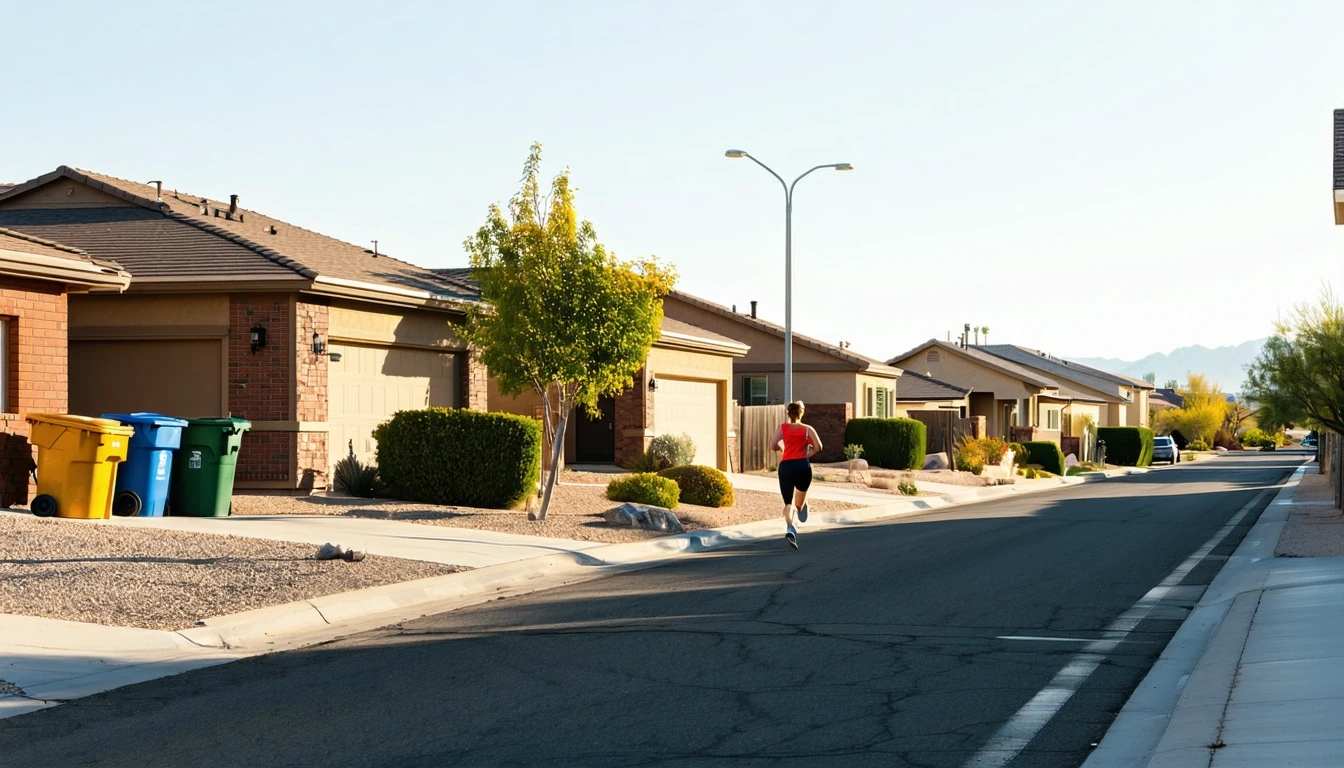
Whitney’s housing market operates within the gravitational pull of the broader Las Vegas metro, where affordability relative to coastal California and the Pacific Northwest has drawn steady migration for years. The $271,700 median home value positions Whitney as accessible compared to many Western markets, but that figure doesn’t account for the full ownership experience. The suburb’s housing stock reflects decades of growth tied to the metro’s expansion: single-family homes dominate, but apartment clusters and mixed-use pockets exist, particularly along commercial corridors where food and grocery density exceeds high thresholds. This variation in urban form—captured by mixed building heights and land-use patterns—means housing options range from low-rise apartment complexes to detached homes with yards, each carrying distinct cost behaviors.
What newcomers often misunderstand is how Whitney’s climate and infrastructure shape ongoing expenses. The extended cooling season isn’t a minor detail; it’s the primary driver of utility volatility and a major factor in maintenance planning. Exterior surfaces—roofs, stucco, paint—degrade faster under intense sun and temperature swings. Landscaping requires either drought-tolerant design or higher water costs. HVAC systems work harder and fail sooner. These aren’t catastrophic expenses, but they’re persistent, and they compound over time in ways that renters avoid entirely. The market reflects this: rental availability remains steady, fed by households who prefer to let landlords absorb those risks, and by investors who understand the metro’s commuter demand.
The unemployment rate of 5.8% and median household income of $58,624 per year provide context for housing pressure. Rent at $1,350 per month represents a substantial share of gross income for median earners, and ownership—while offering long-term stability—requires enough financial cushion to handle the irregular but inevitable costs that desert living imposes. Whitney isn’t a market where housing is out of reach, but it is one where the cost experience diverges sharply depending on whether you rent or own, and whether you’ve planned for the exposures that don’t appear in the listing price.
Renting in Whitney
Renting in Whitney at $1,350 per month places households in a market shaped by metro proximity and suburban infrastructure. The figure represents median gross rent, meaning it includes some—but not all—utility costs, and it reflects a range of housing types: older apartment complexes near commercial corridors, newer builds with amenities, and single-family rentals in neighborhoods where ownership turnover has created investor inventory. Location within Whitney matters. Areas with walkable pockets and high pedestrian-to-road ratios offer more errand accessibility on foot, reducing the friction of car dependency for daily tasks. Elsewhere, the suburban form assumes vehicle ownership, and renters in those areas face the same transportation costs as owners without the equity-building offset.
Rental pressure in Whitney doesn’t come from scarcity—it comes from income-to-rent ratios. For median earners, $1,350 per month is a significant commitment, and it leaves limited room for the utility spikes that accompany summer cooling or the transportation costs tied to commuting within the metro. Renters avoid property tax exposure, maintenance obligations, and the capital risk of ownership, but they also absorb rent increases when landlords pass through rising insurance premiums, property tax adjustments, or utility rate changes. The rental experience here is stable in the short term but exposed to external cost pressures over time, particularly as the metro’s housing demand remains tied to migration patterns and employment growth in the broader Las Vegas area.
What renters gain in Whitney is flexibility and insulation from ownership-specific risks. They don’t pay for HVAC replacements, roof repairs, or landscaping overhauls. They can relocate without selling into a volatile market or absorbing transaction costs. For households prioritizing mobility, testing the metro before committing, or avoiding the capital requirements of ownership, renting makes sense. But the tradeoff is clear: rent doesn’t build equity, and it doesn’t lock in long-term cost predictability. When lease renewals arrive, the price reflects current market conditions, not the household’s original entry point.
Owning a Home in Whitney
Ownership in Whitney begins with the $271,700 median home value, but the cost structure extends far beyond the purchase price and mortgage payment. Property taxes in Clark County are tied to assessed values and local levies, and while the rate isn’t provided in available data, the exposure is real: taxes adjust over time, and they don’t disappear when the mortgage is paid off. Homeowners insurance in desert climates reflects heat-related risks, including roof degradation, exterior damage from sun exposure, and the potential for monsoon-season wind or hail. These aren’t annual catastrophes, but they’re persistent cost drivers that renters never see.
Maintenance in Whitney is dictated by climate intensity. Triple-digit summer heat accelerates wear on roofs, exterior paint, and stucco. HVAC systems run longer and harder than in temperate regions, leading to more frequent repairs and earlier replacement cycles. Landscaping either requires drought-tolerant design—which carries upfront costs—or higher water bills to sustain traditional yards. Even minor upkeep, like sealing windows or maintaining insulation, takes on greater importance when cooling costs dominate household budgets during the extended summer season. Owners who underestimate these expenses find themselves managing irregular but unavoidable outlays that renters simply don’t face.
Ownership also brings governance exposure. Homeowners associations exist in many Whitney neighborhoods, particularly in planned developments and newer subdivisions. HOA fees, when present, cover common-area maintenance, landscaping, and sometimes exterior insurance, but they also represent a fixed monthly cost that doesn’t build equity and can increase over time. Even in non-HOA areas, owners must navigate local regulations around water use, exterior modifications, and property maintenance standards. The autonomy of ownership is real, but it comes with obligations that extend beyond the mortgage payment and property tax bill.
What ownership offers in Whitney is long-term cost predictability where it matters most: the mortgage payment. Once locked in, that figure doesn’t change, even as rents rise and the metro’s housing market shifts. Owners also gain equity over time, a form of forced savings that renters don’t access. For households planning to stay in the area, willing to manage climate-driven maintenance, and capable of absorbing irregular expenses, ownership provides stability and financial upside. For those prioritizing flexibility or uncertain about long-term plans, the cost structure and risk profile may not justify the commitment.
Apartment vs House in Whitney — Cost Behavior Comparison
| Expense Category | Apartment | House |
|---|---|---|
| Cooling-Season Utility Exposure | Lower square footage and shared-wall insulation reduce cooling load during extended summer heat | Larger footprint and exposed exterior surfaces increase cooling costs; HVAC works harder in triple-digit temperatures |
| Exterior Maintenance | Landlord or HOA absorbs roof, stucco, and paint degradation from sun and heat exposure | Owner responsible for all exterior upkeep; desert climate accelerates wear on roofs, paint, and stucco |
| Landscaping & Water | Typically managed by property owner; tenant avoids water costs for outdoor irrigation | Owner pays for drought-tolerant landscaping installation or higher water bills to maintain traditional yards |
| HVAC Longevity | Landlord covers repairs and replacement; tenant insulated from system failure costs | Owner faces shorter HVAC lifespan due to extended cooling season; replacement costs fall entirely on household |
| Property Tax & Insurance | Indirectly priced into rent but not separately invoiced; no direct exposure to assessment changes | Owner pays property taxes and homeowners insurance directly; both adjust over time and persist after mortgage payoff |
Why these categories differ in Whitney: The comparison above isolates cost behaviors shaped by Whitney’s desert climate, suburban housing stock, and ownership structure. Categories like groceries, transportation, and internet were excluded because they don’t vary meaningfully between apartment and house living in this market. The distinctions shown reflect how climate intensity, building form, and responsibility allocation create divergent cost experiences for renters versus owners in Whitney specifically.
Utilities & Upkeep Differences
Utility exposure in Whitney is dominated by cooling, not heating. The extended summer season drives electricity usage far above what households in temperate climates experience, and the difference between apartment and house living is substantial. Apartments benefit from smaller square footage and shared-wall construction, which reduces the surface area exposed to triple-digit heat. Houses, by contrast, have larger footprints, more windows, and roofs that absorb direct sun for hours each day. The result is higher cooling costs and greater strain on HVAC systems, which translates to more frequent repairs and earlier replacement cycles for homeowners.
Maintenance intensity also diverges. Apartment tenants are insulated from the costs of roof replacement, exterior painting, and stucco repair—all of which degrade faster in Whitney’s climate. Homeowners, meanwhile, must plan for these expenses on shorter cycles than they would in regions with milder weather. Landscaping adds another layer: apartments typically include outdoor maintenance in rent or HOA fees, while homeowners either invest in drought-tolerant design upfront or pay ongoing water costs to sustain grass and non-native plants. Neither option is inexpensive, and both require active management.
The electricity rate of 14.38¢/kWh and natural gas price of $9.29/MCF provide context, but the real cost driver is usage intensity. A house in Whitney running air conditioning from late spring through early fall will consume far more electricity than an apartment with shared walls and less exposed surface area. This isn’t a minor seasonal adjustment—it’s a dominant cost factor that persists for months and compounds over the years of ownership. Renters avoid the capital risk of HVAC failure and roof replacement, but they also lack control over insulation quality, thermostat settings in common areas, and the efficiency of building systems. Homeowners gain that control but assume the full financial burden when systems fail or efficiency upgrades become necessary.
Rent vs Buy: Long-Term Exposure in Whitney
The long-term cost difference between renting and owning in Whitney isn’t about totals—it’s about which risks you’re willing to manage and which costs you can predict. Renters face lease renewals that reflect current market conditions, meaning rent can rise when the metro’s housing demand increases or when landlords pass through higher insurance, tax, or utility costs. That exposure is ongoing and unpredictable, but it’s also capped at the lease term: if the market softens or a better option appears, renters can relocate without selling a home or absorbing transaction costs.
Owners, by contrast, lock in their mortgage payment, which provides stability against the rent increases that renters experience. But ownership introduces different volatility: property taxes adjust over time, insurance premiums rise with climate risk and replacement costs, and maintenance expenses arrive irregularly but inevitably. In Whitney, where cooling-season utility bills spike and desert conditions accelerate exterior wear, these costs are not minor. They don’t follow a predictable schedule, and they don’t stop when the mortgage is paid off. Owners who plan for this variability—by maintaining cash reserves and budgeting for HVAC replacement, roof work, and landscaping—gain long-term cost control and equity accumulation. Those who don’t may find themselves financially strained by expenses that renters never encounter.
The structural difference is control versus flexibility. Owners control their housing cost baseline through the fixed mortgage payment and build equity over time, but they absorb all maintenance risk and capital exposure. Renters avoid those risks entirely and retain the ability to relocate when circumstances change, but they sacrifice long-term cost predictability and equity-building. In Whitney, where the housing market is shaped by metro proximity, climate intensity, and suburban infrastructure, the choice depends on how long you plan to stay, whether you can manage irregular expenses, and whether you value stability over mobility.
FAQs About Housing Costs in Whitney
Is renting or buying more affordable in Whitney, NV?
Affordability depends on time horizon and risk tolerance, not just monthly cost. Renting at $1,350 per month avoids property taxes, maintenance, and insurance, but it exposes households to lease renewals that reflect current market conditions. Buying at the $271,700 median home value locks in the mortgage payment and builds equity, but it requires managing property taxes, desert-climate maintenance, and cooling-season utility spikes. Short-term renters and those prioritizing flexibility often find renting more manageable; long-term residents willing to absorb ownership risks gain cost stability and equity over time.
What hidden costs do homeowners face in Whitney, NV?
Homeowners in Whitney face property taxes, homeowners insurance, and maintenance costs that don’t appear in the purchase price. Desert climate conditions accelerate roof degradation, exterior paint wear, and HVAC strain, leading to more frequent repairs and earlier replacement cycles. Landscaping requires either upfront investment in drought-tolerant design or ongoing water costs. HOA fees, where applicable, add another fixed monthly expense. These costs are irregular but persistent, and they continue even after the mortgage is paid off.
How does Whitney’s climate affect housing costs?
Whitney’s extended cooling season and triple-digit summer heat drive utility costs higher and increase maintenance frequency. Air conditioning dominates electricity usage for months, and HVAC systems experience shorter lifespans due to constant strain. Exterior surfaces—roofs, stucco, paint—degrade faster under intense sun and temperature swings. Landscaping either requires drought-tolerant plants or higher water bills. Renters are partially insulated from these costs, but owners face them directly and must plan for their compounding effect over time.
Does Whitney, NV have high property taxes?
Property tax rates for Whitney are not provided in available data, but exposure exists for all homeowners in Clark County. Taxes are based on assessed home values and local levies, and they adjust over time as assessments change. Unlike mortgage payments, property taxes don’t disappear when the loan is paid off—they remain a permanent cost of ownership. Renters don’t pay property taxes directly, though landlords may pass through increases via rent adjustments.
Are apartments or houses more expensive to maintain in Whitney, NV?
Houses are more expensive to maintain in Whitney due to larger square footage, exposed exterior surfaces, and owner responsibility for all repairs. Desert climate accelerates roof, paint, and stucco wear, and HVAC systems work harder in houses than in apartments with shared-wall insulation. Apartments shift maintenance costs to landlords or HOAs, and tenants avoid expenses like HVAC replacement, roof repair, and landscaping. Homeowners gain control and equity but absorb all maintenance risk and cost.
Making Housing Choices in Whitney
Housing costs in Whitney are shaped by metro proximity, desert climate, and suburban infrastructure. Renters at $1,350 per month gain flexibility and avoid maintenance risk, but they face ongoing exposure to lease renewals and lack long-term cost predictability. Owners at the $271,700 median home value lock in mortgage payments and build equity, but they absorb property taxes, insurance, and maintenance costs that intensify in Whitney’s climate. The choice isn’t about which option costs less—it’s about which cost structure aligns with your time horizon, financial reserves, and tolerance for irregular expenses.
Households planning to stay in the area, capable of managing cooling-season utility spikes and climate-driven maintenance, and seeking long-term stability will find ownership advantageous. Those prioritizing mobility, testing the metro before committing, or lacking the reserves to handle unexpected repairs may find renting more sustainable. Whitney’s housing market offers both paths, but the cost experience diverges sharply depending on which risks you’re willing to manage and which predictability you value most.
How this article was built: In addition to public economic data, this article incorporates location-based experiential signals derived from anonymized geographic patterns—such as access density, walkability, and land-use mix—to reflect how day-to-day living actually feels in Whitney, NV.
For a broader view of Whitney Affordability: What’s Easy, What’s Expensive, or to understand What a Budget Has to Handle in Whitney, explore the related guides. If you’re planning a move to the area, Pods vs trucks: which move is best for you? offers practical logistics insight.