
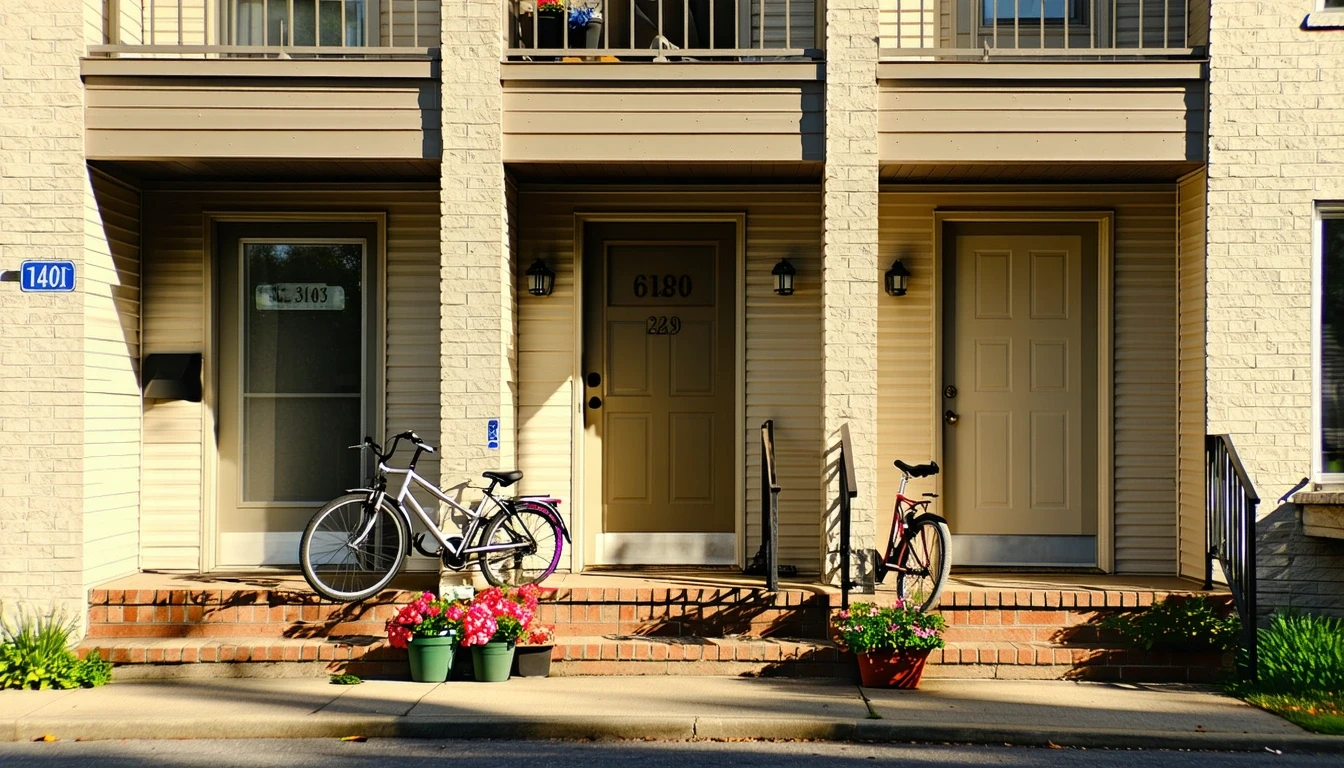
Apartment vs House: Monthly Cost Comparison in Versailles
| Expense Category | Apartment | House |
|---|---|---|
| Base Rent/Mortgage | $935 median rent | Mortgage on $258,000 median home |
| Utilities (Heating & Cooling) | Lower total usage; shared walls reduce exposure | Higher exposure; standalone structure, larger square footage |
| Maintenance & Upkeep | Landlord responsibility; minimal direct cost | Owner responsibility; HVAC, roof, yard, appliances |
| Outdoor Space & Privacy | Limited; shared grounds, proximity to neighbors | Private yard; distance from adjacent units |
| Location Flexibility | Easier to relocate near errands corridors or Lexington commute routes | Fixed location; benefits from stable neighborhoods, school access |
Table reflects cost behavior differences driven by Versailles’s low-rise housing character, mixed mobility texture, and corridor-clustered errands accessibility. Categories like parking and internet were omitted because they do not vary meaningfully by housing type in this market.
The Housing Market in Versailles Today
Versailles sits within the Lexington metro area, close enough to function as a commuter suburb but distinct enough to maintain its own small-town character. The median home value of $258,000 reflects this position: more accessible than Lexington’s core neighborhoods, yet shaped by proximity to regional employment and amenities. The city’s low regional price parity index of 77 means a dollar stretches further here than in most U.S. markets, creating purchasing power advantages for both renters and buyers.
What newcomers often misunderstand is how Versailles’s layout affects housing decisions. The city’s low-rise building profile and corridor-clustered grocery and food access mean that where money goes depends heavily on location within the city. Homes near commercial corridors reduce errand friction, while those farther out require more driving. The mixed pedestrian-to-road ratio indicates some walkable pockets exist, but car ownership remains the primary mode for most households. This isn’t a walkable downtown grid or a fully car-dependent sprawl—it’s a middle ground that rewards intentional location choices.
The housing market here also reflects strong family infrastructure. Playground density exceeds high thresholds, and school density sits in the medium band, signaling a development pattern oriented toward families with children. This drives demand for single-family homes with yards and stable neighborhoods, which in turn shapes the rental market’s character and availability.
Renting in Versailles
The median gross rent of $935 per month positions Versailles as a relatively affordable rental market, especially given the regional price parity advantage. For households earning the median income of $55,606 per year, rent consumes roughly 20% of gross income—well below the standard 30% affordability heuristic. This creates breathing room for renters, though the total cost picture depends on car ownership, which is nearly unavoidable given the city’s mobility texture and errands accessibility patterns.
Rental stock in Versailles skews toward smaller apartment complexes and single-family rentals rather than large multifamily towers. The low-rise character of the city limits high-density apartment supply, so renters face a market shaped more by individual landlords and small property managers than by corporate apartment communities. This can mean more variation in unit quality, lease terms, and responsiveness, but it also offers flexibility in finding housing that fits specific needs.
Location within Versailles matters significantly for renters. Units near the corridors where grocery and food establishments cluster reduce the frequency of longer drives, while those farther out increase reliance on planned trips. Renters who commute to Lexington should weigh proximity to major routes against rent levels, as the time and fuel costs of a longer commute can erode the savings from a lower rent figure.
Rental volatility in Versailles is shaped by regional demand rather than hyperlocal scarcity. Lease renewals can shift with metro-area trends, particularly if Lexington’s housing pressure pushes more renters outward. Renters gain mobility and avoid maintenance responsibility, but they also remain exposed to renewal increases and landlord decisions about property improvements or sale.
Owning a Home in Versailles
At a median home value of $258,000, ownership in Versailles is accessible for households with stable income and manageable debt. The city’s low regional price parity amplifies purchasing power, meaning the same dollar amount buys more house here than in higher-cost metros. For families prioritizing space, yard access, and proximity to schools and playgrounds, ownership offers both financial predictability and alignment with the city’s family-oriented infrastructure.
Ownership in Versailles brings exposure to costs that renters avoid. Property taxes, while not specified in available data, represent a recurring obligation that rises with assessed value and local fiscal needs. Maintenance and repair costs—HVAC systems, roofing, plumbing, and yard upkeep—fall entirely on the owner. In a climate that requires both heating in winter and cooling in summer, HVAC longevity and efficiency become meaningful cost factors over time. Older housing stock, common in small towns with established neighborhoods, can increase the frequency and scale of repair needs.
Homeowners also gain control over their environment. They can invest in energy efficiency, choose their own contractors, and modify their property to suit their household’s needs. In a city where errands are corridor-clustered and car dependency is the norm, owning a home with a garage and driveway reduces daily friction. The stability of ownership aligns well with Versailles’s strong family infrastructure, where households plan to stay long enough for children to benefit from local schools and playgrounds.
Ownership here is not a speculative bet on rapid appreciation. It’s a hedge against rent volatility and a way to lock in housing costs in a market where the regional price parity advantage makes ownership comparatively affordable. Buyers should expect modest, steady value changes rather than dramatic swings, and they should plan for the full cost of ownership—taxes, insurance, maintenance, and utilities—not just the mortgage payment.
Utilities & Upkeep Differences
Versailles experiences a climate that demands both heating and cooling, with cold winters and warm, humid summers. This dual exposure means utility costs fluctuate seasonally, and the type of housing directly affects the intensity of that fluctuation. Apartments, with shared walls and smaller square footage, insulate occupants from some of the thermal extremes. A standalone house, by contrast, exposes more surface area to the elements, increasing both heating and cooling loads.
Electricity in Versailles is priced at 14.27¢ per kWh, and natural gas costs $12.72 per MCF. For illustrative context, a typical household using 1,000 kWh per month would face a baseline electric bill around $143 before fees and taxes. Homes relying on natural gas for heating in winter months might use roughly 1 MCF per month during colder stretches, adding another $13 or so to monthly costs. These figures are illustrative and exclude delivery fees, taxes, and seasonal variation, but they provide a sense of the cost structure.
Apartment dwellers generally see lower utility bills because they heat and cool less space, and shared walls reduce thermal loss. Landlords sometimes include water, trash, or even gas in the rent, further simplifying budgeting. Homeowners, especially those in older or larger houses, face higher and more variable utility costs. They also control efficiency investments—programmable thermostats, insulation upgrades, and HVAC maintenance—that can reduce long-term exposure, though these require upfront spending and technical attention.
Upkeep costs differ sharply. Apartment renters pay for maintenance indirectly through rent, but they don’t handle emergency repairs or capital replacements. Homeowners budget for everything: a failing water heater, a roof nearing the end of its lifespan, or a lawn that requires mowing and seasonal care. In Versailles, where housing stock includes older homes in established neighborhoods, deferred maintenance can become a significant cost burden if not anticipated during purchase.
Rent vs Buy: Long-Term Exposure in Versailles
The decision between renting and buying in Versailles is less about monthly payment math and more about exposure to different kinds of cost volatility over time. Renters face renewal risk: landlords can raise rent in response to regional demand, metro-area trends, or property improvements. In a city connected to Lexington’s housing market, that exposure is real, even if Versailles itself remains more affordable. Renters also preserve mobility, which matters for households whose employment or family circumstances might shift.
Owners, by contrast, lock in their largest housing cost—the mortgage principal and interest—at the time of purchase. Property taxes, insurance, and maintenance still vary, but the core payment remains stable. In a low regional price parity environment like Versailles, this stability is amplified: the purchasing power advantage applies not just at purchase but throughout the ownership period, as long as the household remains in place. Owners also build equity, though that equity is illiquid and subject to market conditions at the time of sale.
Over time, ownership in Versailles rewards households that plan to stay. The strong family infrastructure, stable neighborhoods, and access to schools and playgrounds align with longer tenures. Renters who anticipate relocating—whether for work, family, or lifestyle reasons—avoid the transaction costs and illiquidity of ownership. They also avoid the risk of unexpected repairs, which can be significant in older housing stock.
The tradeoff is not financial in a simple sense. It’s about control, predictability, and alignment with household plans. Ownership offers more control and long-term cost stability but demands more capital, attention, and commitment. Renting offers flexibility and simplicity but exposes households to decisions made by landlords and regional market forces. In Versailles, where car dependency and corridor-clustered errands already require planning, the housing choice should reflect how much additional complexity and commitment a household is willing to manage.
How Day-to-Day Living Shapes Housing Decisions in Versailles
Housing costs in Versailles don’t exist in isolation—they interact with how people actually move through the city and manage daily logistics. The mixed pedestrian-to-road ratio means some neighborhoods support short walks to nearby amenities, but the corridor-clustered pattern of grocery and food establishments means most households still rely on cars for weekly errands. This affects both renters and owners, but in different ways.
Renters who choose apartments near commercial corridors reduce the frequency of longer drives, lowering fuel costs and time spent on errands. Those who rent farther out may pay less in rent but absorb higher transportation costs and more planning friction. For renters, location flexibility is an advantage: a lease renewal offers a chance to relocate closer to work, errands, or preferred amenities without the transaction costs of selling a home.
Homeowners, by contrast, make a fixed location choice. A house near schools and playgrounds—where Versailles’s infrastructure is strongest—offers stability for families, but it locks the household into a specific commute and errands pattern. The low-rise character of the city means most homes come with driveways and garages, reducing the daily friction of car dependency. Owners also control their immediate environment, which matters in a city where outdoor space and privacy are more accessible in houses than in the limited apartment stock.
The absence of hospital or clinic facilities in Versailles, combined with limited transit options, reinforces car dependency for all housing types. Households that need routine medical care or specialized services will drive to Lexington, and that reality shapes the total cost of living regardless of whether someone rents or owns. The city’s layout rewards those who plan around corridors and major routes, and it penalizes those who assume walkability or transit will fill the gaps.
FAQs About Housing Costs in Versailles
Is it cheaper to rent or buy in Versailles, KY?
Renting at $935 per month offers lower upfront costs and flexibility, while buying at a median home value of $258,000 provides long-term cost stability and equity building. The choice depends on how long you plan to stay and whether you value mobility or predictability more.
How much do utilities cost for a house in Versailles?
Utility costs depend on home size, age, and efficiency, but Versailles’s climate requires both heating and cooling. Electricity is priced at 14.27¢ per kWh, and natural gas costs $12.72 per MCF. Standalone houses face higher exposure than apartments due to larger square footage and more surface area.
What drives housing costs in Versailles compared to Lexington?
Versailles benefits from a regional price parity index of 77, meaning lower costs than the national baseline. Proximity to Lexington creates commuter demand, but Versailles’s smaller scale and lower density keep home values and rents more accessible than Lexington’s core neighborhoods.
Are there many apartments available in Versailles?
The city’s low-rise building character limits large multifamily apartment supply. Rental stock includes smaller apartment complexes and single-family rentals, offering variety but less availability than higher-density markets. Location near commercial corridors increases convenience for renters.
What should first-time buyers know about owning a home in Versailles?
Ownership here is accessible relative to median income, but buyers should budget for property taxes, insurance, maintenance, and utilities—not just the mortgage. Older housing stock may require more frequent repairs, and car ownership is essential for most households given the city’s mobility and errands patterns.
Making Housing Choices in Versailles
Housing costs in Versailles reflect a market shaped by proximity to Lexington, a low regional price parity advantage, and a development pattern oriented toward families and car-dependent households. Renters gain affordability and flexibility, but they remain exposed to renewal volatility and the need for intentional location choices near errands corridors. Owners lock in long-term cost stability and gain control over their environment, but they absorb maintenance risk and commit to a fixed location in a city where car dependency is the norm.
The decision between renting and buying here is not about finding the cheapest option—it’s about aligning housing costs with how you plan to live. Families prioritizing stability, space, and access to schools and playgrounds will find ownership well-suited to Versailles’s infrastructure. Households prioritizing mobility, simplicity, or shorter tenures will find renting more aligned with their needs, especially if they choose locations that reduce driving friction.
Understanding monthly expenses beyond rent or mortgage—utilities, transportation, and maintenance—is essential for making housing decisions that fit both your budget and your daily life. Versailles offers accessible housing costs relative to income, but the total cost picture depends on where you live within the city and how you navigate its layout. For more context on how housing fits into the broader cost structure, see the tradeoffs behind the total.
How this article was built: In addition to public economic data, this article incorporates location-based experiential signals derived from anonymized geographic patterns—such as access density, walkability, and land-use mix—to reflect how day-to-day living actually feels in Versailles, KY.