
Upper Arlington sits just northwest of Columbus, a high-income suburb known for tree-lined streets, strong schools, and a housing market that reflects both demand and quality of life. With a median home value of $526,800 and median rent at $1,423 per month, this is not a market shaped by affordability—it’s shaped by access, stability, and the kind of infrastructure that makes daily life easier. Understanding housing costs here means understanding what you’re paying for beyond the structure itself: walkable pockets, integrated parks, broadly accessible grocery and food options, and a commute that averages just 19 minutes to Columbus.
This article breaks down the cost structure of renting versus owning in Upper Arlington, explains how ownership exposure behaves over time, and clarifies which household types fit—or struggle—in this market.
The Housing Market in Upper Arlington Today
Upper Arlington’s housing market is driven by proximity, reputation, and infrastructure. The city functions as a commuter suburb with a median household income of $144,705 per year, attracting families and professionals who prioritize school quality, park access, and the ability to run errands without constant car dependency. The regional price parity index of 88 indicates that overall costs run below the national baseline, but housing itself commands a premium tied to location and amenity density.
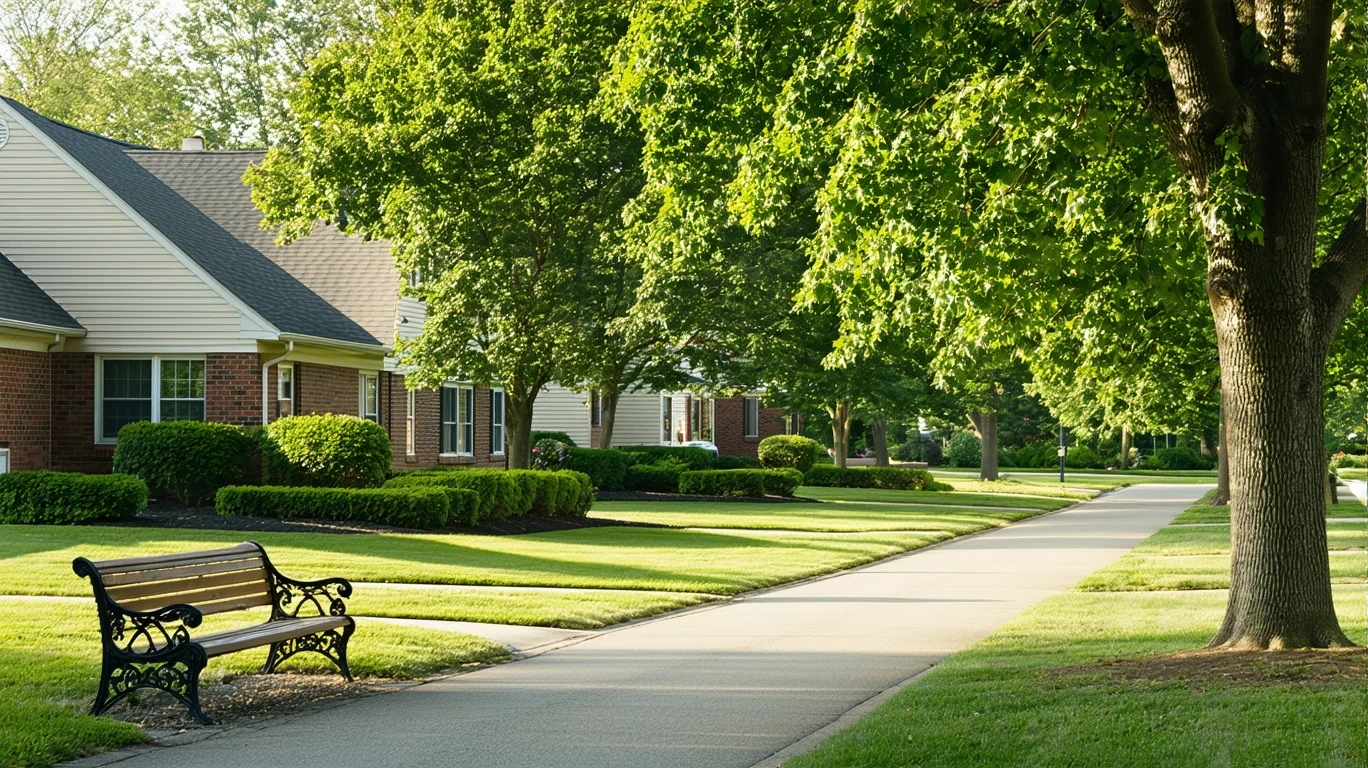
What distinguishes this market is the combination of walkable pockets—areas where pedestrian infrastructure exceeds typical suburban ratios—and broadly accessible food and grocery options. This isn’t a sprawling bedroom community where every trip requires a car. The mixed land use and integrated green space create a texture where homeownership isn’t just about square footage; it’s about buying into a system that reduces daily friction. That structural advantage shows up in home values and rent alike.
The unemployment rate of 4.0% reflects a stable local economy, and the 19-minute average commute keeps Upper Arlington competitive for Columbus workers who want suburban quality of life without long drives. For newcomers, the surprise is often not the home price itself but the limited rental inventory and the premium renters pay for access to the same infrastructure that drives ownership demand.
Renting in Upper Arlington
Renting in Upper Arlington means competing for limited inventory in a market where ownership dominates. At $1,423 per month for median gross rent, renters are paying for location, school access, and the same walkable errands infrastructure that owners value. Rental stock tends to cluster in areas with mixed land use, where apartments and smaller homes sit near commercial corridors, but availability is constrained by the fact that most housing is owner-occupied single-family homes.
Renters here face a tradeoff: they avoid property tax exposure, maintenance responsibility, and the upfront capital required to buy, but they pay a premium for flexibility in a market where landlords know demand is steady. The broadly accessible grocery and food density means renters can manage daily errands without a car in some pockets, which reduces transportation costs and adds value to rental locations near commercial nodes.
For renters sensitive to cost volatility, the risk is lease renewal pressure. In a high-income suburb with strong demand and limited supply, rent increases are driven by market conditions, not tenant income. Renters who need predictability over the long term often find that ownership, despite the higher entry cost, offers more control over housing expense trajectory.
Owning a Home in Upper Arlington
Owning a home in Upper Arlington at a median value of $526,800 means locking in a base cost and accepting exposure to property taxes, maintenance, insurance, and utilities. The ownership model here is built for households with stable, high incomes who prioritize long-term predictability over short-term flexibility. Once you own, your principal and interest are fixed (for most mortgages), but your tax bill, insurance premium, and maintenance needs will shift over time in ways that reflect both the home’s age and local policy decisions.
Property taxes in Ohio are set locally, and while the specific rate isn’t provided here, owners should expect annual tax bills that reflect both the home’s assessed value and the city’s funding priorities for schools, parks, and infrastructure. These taxes are not optional, and they don’t stabilize the way a mortgage does—they respond to reassessments, voter-approved levies, and changes in municipal budgets.
Maintenance exposure in Upper Arlington is shaped by climate and housing stock. Cold winters and warm summers mean heating and cooling systems work hard, and older homes in established neighborhoods may require roof, HVAC, or insulation upgrades that renters never see. Owners also control when and how they address deferred maintenance, which creates both flexibility and risk depending on household cash flow.
The integrated park network and walkable pockets add value to ownership by reducing the need for private recreational spending and making daily errands less car-dependent. Owners aren’t just buying a house—they’re buying access to a system that lowers household logistics burden and increases quality of life in ways that don’t show up on a mortgage statement.
Apartment vs House in Upper Arlington — Cost Behavior Comparison
| Expense Category | Apartment | House |
|---|---|---|
| Base Housing Cost | Rent covers structure and often some utilities; no equity build | Mortgage builds equity but requires property tax, insurance, and maintenance on top |
| Heating & Cooling | Smaller footprint and shared walls reduce exposure; electric or gas depending on building | Larger square footage and standalone structure increase seasonal utility load; natural gas heating common in cold months |
| Maintenance Responsibility | Landlord handles structural repairs, HVAC, and exterior work; tenant handles interior damage | Owner absorbs all costs: roof, HVAC, plumbing, foundation, landscaping; timing and quality are controllable but unpredictable |
| Outdoor Space & Upkeep | Limited or shared; no lawn care or snow removal burden | Private yards common; owner handles mowing, landscaping, snow clearing, or hires services |
| Parking & Storage | Often assigned or limited; storage space minimal | Garage and driveway typical; basement or attic storage available in most homes |
Why these categories differ in Upper Arlington: The city’s cold winters and warm summers create noticeable heating and cooling exposure, especially in standalone houses with larger square footage. The prevalence of single-family homes with private yards shifts maintenance and outdoor upkeep onto owners, while apartment renters avoid those costs entirely. Categories like HOA fees or parking permits were excluded because they don’t apply uniformly across Upper Arlington’s housing stock, and their presence depends on specific neighborhood or building governance rather than citywide patterns.
Utilities & Upkeep Differences
Utility exposure in Upper Arlington is shaped by Ohio’s seasonal extremes. At 17.59¢ per kWh for electricity and $11.03 per MCF for natural gas, households face noticeable costs during both heating and cooling seasons. Houses, with their larger footprints and standalone construction, see higher seasonal swings than apartments, where shared walls and smaller square footage reduce heating and cooling loads.
Natural gas heating dominates in winter months, and older homes with less insulation or aging HVAC systems will see higher usage. Cooling costs rise in summer, though Upper Arlington’s tree canopy and integrated green space provide some passive shading that reduces heat island effects compared to less vegetated suburbs. Apartment dwellers benefit from shared infrastructure and landlord-managed systems, which smooth out both cost and responsibility.
Maintenance differences are structural, not just financial. Homeowners in Upper Arlington control when they replace a roof, upgrade insulation, or service an HVAC system, but they also absorb the full cost and timing risk. Renters delegate that responsibility to landlords, which removes control but also removes exposure to large, irregular expenses. In a city where housing stock includes both newer builds and older homes near the urban core, maintenance variability is significant, and buyers should expect deferred upkeep to surface during ownership.
Rent vs Buy: Long-Term Exposure in Upper Arlington
The decision to rent or buy in Upper Arlington is less about monthly affordability and more about control, predictability, and exposure over time. Renters face lease renewal risk in a market where demand is strong and supply is limited. Rent can rise at the landlord’s discretion (subject to lease terms), and tenants have no mechanism to lock in long-term costs. That volatility is the tradeoff for avoiding maintenance, property taxes, and the capital required to buy.
Owners, by contrast, lock in their principal and interest payments (on fixed-rate mortgages) but accept exposure to property taxes, insurance, and maintenance—all of which can shift due to policy changes, weather events, or the home’s aging. Property taxes in Ohio respond to reassessments and voter-approved levies, meaning ownership doesn’t eliminate cost growth; it just redirects it. Insurance premiums and maintenance needs tend to rise as homes age, and owners must budget for irregular, high-cost repairs like roofs, HVAC replacements, or foundation work.
The long-term advantage of ownership in Upper Arlington is control and equity. Owners build equity with each payment, and they control decisions about upgrades, efficiency improvements, and when to sell. Renters retain flexibility and avoid large capital outlays, but they don’t benefit from home value appreciation or the ability to stabilize their largest monthly expense. In a high-income suburb where housing demand remains strong, ownership offers a hedge against future rent increases, but only for households with the income and savings to manage upfront and ongoing costs.
How this article was built: In addition to public economic data, this article incorporates location-based experiential signals derived from anonymized geographic patterns—such as access density, walkability, and land-use mix—to reflect how day-to-day living actually feels in Upper Arlington, OH.
FAQs About Housing Costs in Upper Arlington
Is renting or buying more common in Upper Arlington?
Ownership dominates Upper Arlington’s housing market. Most of the housing stock consists of single-family homes, and rental inventory is limited, which drives up rent for the apartments and smaller homes that are available. Renters here are often in transition or prioritizing flexibility over long-term cost control.
How do property taxes in Upper Arlington compare to other Ohio suburbs?
Property taxes in Ohio are set locally and vary by school district, county, and municipal funding priorities. Upper Arlington’s strong school system and park infrastructure require funding, which typically translates to higher tax rates than less amenity-rich suburbs. Specific rates aren’t provided here, but prospective buyers should request tax estimates based on assessed home values during the purchase process.
What drives utility costs in Upper Arlington homes?
Seasonal heating and cooling dominate utility exposure. Cold winters require natural gas heating, and warm summers drive air conditioning use. Larger homes with older insulation or aging HVAC systems see the highest bills. Apartments, with smaller footprints and shared walls, experience lower seasonal swings.
Does Upper Arlington’s walkability reduce housing costs?
Walkability doesn’t reduce housing costs—it increases them. The ability to handle daily errands on foot, access integrated parks, and live in neighborhoods with high pedestrian-to-road ratios creates demand, which drives up both home values and rent. The cost savings come later, in reduced transportation and recreational spending, not in the housing price itself.
Are older homes in Upper Arlington more expensive to maintain?
Yes. Older homes in established neighborhoods often require roof replacements, HVAC upgrades, insulation improvements, and plumbing or electrical work that newer builds don’t face for years. Buyers should budget for deferred maintenance and expect irregular, high-cost repairs as part of ownership in Upper Arlington’s older housing stock.
Making Housing Choices in Upper Arlington
Housing costs in Upper Arlington reflect the city’s infrastructure, reputation, and proximity to Columbus. At $526,800 for a median home and $1,423 for median rent, this is a market built for high-income households who prioritize stability, school quality, and access to walkable errands and integrated parks. Renters pay a premium for flexibility in a supply-constrained market, while owners accept long-term exposure to property taxes, maintenance, and utilities in exchange for equity and control.
The decision between renting and buying here isn’t about which is cheaper—it’s about which exposure profile fits your household’s income, timeline, and tolerance for cost variability. Renters avoid capital requirements and maintenance risk but face lease renewal pressure in a competitive market. Owners lock in predictability where they can and manage volatility where they must, benefiting from equity growth and the ability to control their largest monthly expense over time.
For a broader look at monthly expenses beyond housing, or to understand how housing fits into Upper Arlington’s overall cost structure, explore the related guides on IndexYard. Housing is the largest cost most households face, but it’s the interaction with transportation, utilities, and daily errands that determines whether a place works for your household—or doesn’t.