
How Grocery Costs Feel in Taylorsville
Grocery prices in Taylorsville run modestly below the national average, with the region’s overall cost structure sitting about 4% under the U.S. baseline. That gap shows up most clearly in staples—bread, chicken, rice, eggs—where per-pound and per-unit prices tend to land a few cents to a few dimes lower than what shoppers see in higher-cost metros. For households moving from coastal cities or expensive urban centers, the difference registers quickly. A gallon of milk, a dozen eggs, and a loaf of bread don’t feel like budget busters here. But the relief is relative, not transformative. Families buying in volume, especially those with multiple children or specific dietary needs, still feel price pressure when carts fill up with proteins, dairy, and fresh produce.
With a median household income of $81,417 per year, most Taylorsville households have enough earnings cushion to absorb typical grocery spending without acute stress. But income alone doesn’t determine how grocery costs feel day to day. Household size, dietary preferences, and store choice create wide variation in weekly spending. A single professional buying for one feels grocery costs very differently than a family of five loading up on snacks, school lunches, and weekend meals. The former might spend $50 to $70 per week and barely notice; the latter can easily push $200 to $250 and feel every price swing on ground beef, cheese, and packaged goods. Taylorsville’s grocery landscape offers enough store variety and density that households can choose their price tier, but that choice requires intentionality—defaulting to convenience or proximity often means paying more.
Singles and young professionals notice grocery costs primarily when they’re comparison shopping or tracking discretionary spending. A $30 produce haul or a $15 protein purchase doesn’t strain a budget, but it does compete with dining out, entertainment, and travel. Retirees on fixed incomes, by contrast, feel grocery price pressure more acutely. Even modest weekly spending becomes a meaningful percentage of monthly cash flow when Social Security or pension income is the primary source. For these households, a 10% swing in staple prices—or a shift from discount to mid-tier stores—can mean adjusting other categories or cutting back on variety.
Grocery Price Signals (Illustrative)
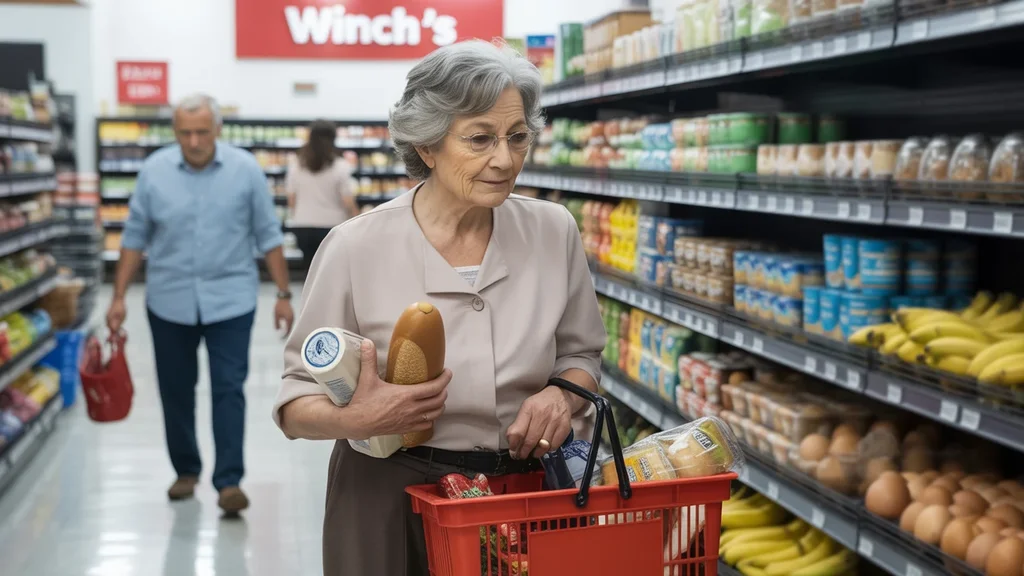
These prices illustrate how staple items tend to compare locally—not a full shopping list. They’re derived estimates based on national baseline data adjusted by regional price parity, and they reflect typical pricing patterns rather than store-specific or week-specific snapshots. Derived estimate based on national baseline adjusted by regional price parity; not an observed local price.
| Item | Price |
|---|---|
| Bread | $1.78/lb |
| Cheese | $4.49/lb |
| Chicken | $1.97/lb |
| Eggs | $2.40/dozen |
| Ground Beef | $6.47/lb |
| Milk | $3.86/half-gallon |
| Rice | $1.03/lb |
Bread, rice, and chicken sit comfortably below national averages, making them reliable budget anchors for meal planning. Eggs and milk hover near typical U.S. pricing, offering neither significant savings nor premium cost. Ground beef and cheese, however, carry more weight—literally and financially. At $6.47 per pound, ground beef becomes a meaningful line item for families cooking multiple meals per week, and cheese at $4.49 per pound adds up quickly for households that rely on it for lunches, snacks, and dinners. These aren’t outlier prices, but they’re high enough that volume buyers feel the difference between discount and premium store tiers.
The price gaps between these items also reveal where households can gain the most control. Swapping ground beef for chicken a few times per week, buying rice in bulk, or choosing store-brand bread over name-brand options can shift weekly spending by $10 to $20 without requiring drastic changes in diet or routine. The savings aren’t dramatic on a per-item basis, but they compound over time, especially for families managing tight budgets or trying to redirect cash flow toward housing, utilities, or savings.
Store Choice and Price Sensitivity
Taylorsville’s grocery environment is defined by accessibility and tier variety. The city’s food and grocery establishment density exceeds typical thresholds, meaning most residents live within a short drive—or even a walkable distance—of multiple store options. That density creates real choice, not just theoretical availability. Discount grocers, mid-tier chains, and premium organic markets all operate within the city, and households can shift between them based on budget priorities, convenience, or product preferences. But the price gap between tiers is wide enough to matter. A family that shops exclusively at discount stores might spend 20% to 30% less per week than one that defaults to premium or specialty grocers, even when buying similar items.
Discount stores anchor the low end of the price spectrum, offering no-frills environments, limited selection, and aggressive pricing on staples. These stores work best for households that prioritize cost over variety and are willing to plan meals around what’s available rather than what’s preferred. Mid-tier chains occupy the middle ground, balancing price, selection, and convenience. They’re where most Taylorsville households do the majority of their shopping, especially families juggling work, school, and activities who need one-stop efficiency. Premium grocers cater to shoppers seeking organic produce, specialty items, prepared foods, and curated selection. They’re less about saving money and more about saving time or meeting specific dietary goals.
For families with children, store choice becomes a weekly negotiation between budget discipline and household logistics. A single parent working full-time might choose a mid-tier store close to home or on the commute route, even if a discount grocer five miles away would save $15 per trip. The time cost and mental load of an extra stop often outweigh the dollar savings. Retirees, by contrast, often have more schedule flexibility and less tolerance for price variation. They’re more likely to split shopping across stores—buying shelf-stable staples at discount grocers and fresh items at mid-tier chains—to maximize value without sacrificing quality.
What Drives Grocery Pressure Here
Income provides the baseline for grocery affordability, but household size determines how far that income stretches. A couple earning $81,000 per year can absorb $150 to $200 per week in grocery spending without feeling pinched. A family of five at the same income level feels significantly more pressure, especially if dietary needs include fresh produce, proteins, and snacks for school-aged children. The math isn’t linear—doubling household size more than doubles grocery costs because waste increases, preferences diverge, and convenience purchases (pre-packaged snacks, grab-and-go meals) become harder to avoid.
Regional distribution patterns also shape how grocery costs feel in Taylorsville. The city benefits from proximity to regional distribution hubs and a competitive retail environment, which keeps prices from spiking the way they might in more isolated or rural markets. Seasonal variability exists but tends to be moderate. Produce prices fluctuate with growing seasons, and holiday demand pushes up costs on baking staples, dairy, and proteins in November and December. But Taylorsville doesn’t experience the extreme swings seen in cities dependent on long-distance shipping or vulnerable to supply chain bottlenecks.
The city’s walkable pockets and broadly accessible food density mean that running errands and restocking staples doesn’t require extensive planning or long drives for most residents. That accessibility reduces the friction of price shopping—households can realistically compare options across stores without burning extra time or fuel. It also lowers the penalty for forgetting an item or running out mid-week, since a quick trip to restock is usually feasible. For families managing complex schedules, that convenience has real value, even if it doesn’t show up as a line item on a receipt.
Practical Ways People Manage Grocery Costs
Households in Taylorsville manage grocery costs primarily through store selection, meal planning, and volume purchasing. Choosing a discount grocer for pantry staples and a mid-tier chain for fresh items is one of the most common strategies, especially among families and retirees who have time to make multiple stops. Meal planning reduces impulse purchases and waste, both of which inflate weekly spending without adding value. Buying rice, pasta, canned goods, and frozen proteins in bulk lowers per-unit costs and smooths out week-to-week volatility, though it requires upfront cash and storage space.
Seasonal shopping—buying produce when it’s abundant and cheap, then preserving or freezing it—works well for households with freezer capacity and cooking routines that support batch preparation. Store loyalty programs and digital coupons offer modest savings, particularly on branded items and rotating weekly specials. These tools don’t transform grocery budgets, but they reduce costs incrementally without requiring major behavioral shifts. Avoiding pre-packaged and convenience foods is another high-impact lever. A rotisserie chicken costs more than a whole raw chicken; pre-cut vegetables cost more than whole produce; single-serve snacks cost more per ounce than bulk bags. The tradeoff is time and effort, which not all households can spare.
Cooking at home consistently is the most effective way to control food costs, but it’s also the hardest to sustain. It requires planning, skill, and time—all of which compete with work, childcare, and other responsibilities. Households that succeed tend to build routines around simple, repeatable meals rather than trying to optimize every dinner. Leftovers, slow cookers, and one-pan meals reduce decision fatigue and keep grocery spending predictable.
Groceries vs Eating Out (Directional)
The tradeoff between cooking at home and eating out isn’t purely financial—it’s also about time, energy, and household complexity. Cooking at home almost always costs less per meal, but the gap varies depending on what you’re comparing. A home-cooked dinner for four might cost $12 to $18 in ingredients; the same meal at a casual restaurant could run $50 to $70 before tip. For a single professional, the math is tighter. A $10 homemade meal versus a $15 takeout order feels less consequential, especially when factoring in prep and cleanup time.
Families with children feel the grocery-versus-dining tradeoff most acutely. Feeding multiple people at restaurants gets expensive quickly, and kids’ preferences often mean ordering more than necessary or dealing with waste. Cooking at home offers more control over cost and nutrition, but it also demands consistency and planning. A week of home-cooked dinners might save $100 compared to frequent takeout, but that savings evaporates if half the groceries spoil or if exhaustion leads to last-minute restaurant orders.
Retirees and couples without children often strike a middle path, cooking most meals at home but dining out occasionally for convenience or social reasons. The financial impact is manageable because portion sizes are smaller and frequency is controlled. For these households, groceries remain the primary food expense, with dining out functioning as a discretionary add-on rather than a budget necessity.
FAQs About Grocery Costs in Taylorsville (2026)
Is it cheaper to shop in bulk in Taylorsville? Buying in bulk lowers per-unit costs on shelf-stable items like rice, pasta, canned goods, and frozen proteins, and Taylorsville’s store density includes options for volume purchasing. The savings are most meaningful for families or households with storage space and predictable consumption patterns.
Which stores in Taylorsville are best for low prices? Discount grocers offer the lowest prices on staples and everyday items, while mid-tier chains balance cost and convenience. Premium grocers focus on specialty products and prepared foods rather than budget pricing. Splitting shopping across tiers—staples at discount stores, fresh items at mid-tier chains—maximizes value for many households.
How much more do organic items cost in Taylorsville? Organic produce, dairy, and proteins typically carry a premium over conventional options, though the gap varies by item and store. Households prioritizing organic products should expect to pay more per pound and per unit, with the difference most noticeable on high-volume purchases like milk, eggs, and fresh vegetables.
How do grocery costs for two adults in Taylorsville tend to compare to nearby cities? Taylorsville’s regional price parity sits slightly below the national average, which generally translates to modestly lower grocery costs compared to higher-cost metros in the region. The difference is most visible in staples and everyday items, though premium products and specialty goods tend to price more uniformly across cities.
How do households in Taylorsville think about grocery spending when cooking at home? Most households treat grocery spending as a controllable expense that responds to planning, store choice, and meal routines. Cooking at home consistently keeps costs lower than frequent dining out, but it requires time and effort that not all households can sustain. Families and retirees tend to prioritize grocery budgets more heavily than singles or young professionals, who often trade some cost efficiency for convenience.
How Groceries Fit Into the Cost of Living in Taylorsville
Groceries sit in the middle tier of household expenses in Taylorsville—more controllable than housing, less volatile than utilities, and more predictable than transportation. A typical household might spend 10% to 15% of gross income on food at home, though that percentage climbs for families with children and drops for high-earning couples or singles. The modest regional price relief on staples helps, but it doesn’t eliminate the need for intentional budgeting, especially when housing costs claim 25% to 35% of income and utilities add seasonal variability.
Understanding how groceries interact with other expenses requires looking at the full monthly structure—what’s fixed, what’s flexible, and where trade-offs happen. For a complete breakdown of how grocery spending fits alongside rent, utilities, transportation, and discretionary costs, see A Month of Expenses in Taylorsville: What It Feels Like. That article walks through the full cost picture, including how different household types allocate income and where pressure points emerge.
Grocery costs in Taylorsville are manageable for most households, but they’re not negligible. Price-conscious shopping, meal planning, and store tier selection all matter, particularly for families and retirees managing tighter budgets. The city’s food accessibility and store variety create real opportunity for households willing to engage with the choices available. The difference between passive shopping and intentional strategy can shift weekly spending by 15% to 25%, which compounds into meaningful annual savings—or frees up cash for other priorities. The key is recognizing that grocery costs aren’t fixed. They respond to behavior, and Taylorsville’s retail environment rewards households that treat food spending as an active decision rather than a passive outcome.
How this article was built: In addition to public economic data, this article incorporates location-based experiential signals derived from anonymized geographic patterns—such as access density, walkability, and land-use mix—to reflect how day-to-day living actually feels in Taylorsville, UT.