
“I tried to make it work without a car for about three weeks,” a newcomer to Shelbyville told me last fall. “Then I realized the grocery store, the doctor, my kid’s daycare — none of it lines up unless you’re driving.”
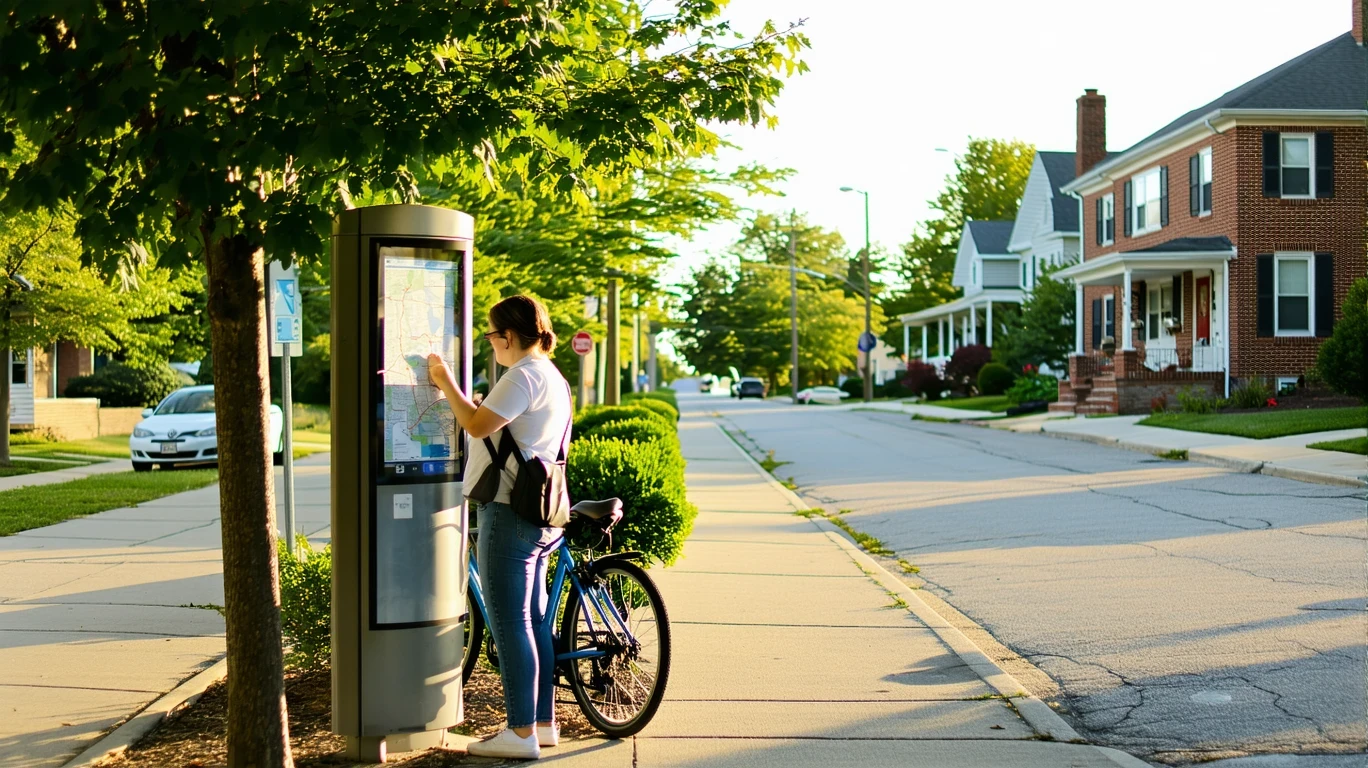
How People Get Around Shelbyville
Understanding transportation options in Shelbyville starts with recognizing its structure: this is a small town where daily life is built around the car. The street grid includes moderate pedestrian infrastructure in certain areas — sidewalks exist, and some blocks feel walkable — but the distances between home, work, groceries, and services almost always require a vehicle.
Shelbyville’s layout reflects a low-rise, mixed-use development pattern. Residential neighborhoods sit alongside commercial corridors, and both residential and commercial land use are present throughout the city. But that proximity doesn’t translate into walkable access for most households. Food and grocery establishments cluster along specific corridors rather than spreading evenly across neighborhoods, which means even short errands often involve getting in the car.
Newcomers sometimes assume that a town this size will feel more compact or that public transit will fill the gaps. In practice, Shelbyville functions as a car-first environment where alternative transportation plays a minimal role in daily mobility.
Public Transit Availability in Shelbyville
Public transit does not serve as a primary transportation option in Shelbyville. The infrastructure that supports daily commuting, errands, and household logistics here is oriented around private vehicles, not buses or rail.
For residents accustomed to cities where transit provides a viable alternative to driving, Shelbyville represents a different mobility reality. There are no frequent bus routes connecting neighborhoods to employment centers, no rail stations offering regional access, and no transit hubs that anchor daily movement patterns.
This absence shapes everything: where people choose to live, how they structure their day, and what kinds of backup plans they need when a car is in the shop. Transit isn’t a supplement to driving here — it’s effectively not part of the equation.
Driving & Car Dependence Reality
In Shelbyville, driving isn’t a preference — it’s the infrastructure default. The town’s geographic spread, the distance between residential areas and commercial corridors, and the limited density of services all reinforce car dependence.
Parking is generally accessible and uncontested. Streets are wide, driveways are standard, and most commercial areas provide surface lots. This makes car ownership logistically simple, but it also means that households without reliable vehicles face significant friction in managing daily life.
The pedestrian-to-road ratio sits in a moderate band, meaning some blocks support walking, but the overall network prioritizes vehicle movement. Cycling infrastructure is minimal, and bike-to-road ratios remain low. For most residents, the car is the only tool that reliably closes the distance between home and the rest of life.
Commuting Patterns & Daily Mobility
Commuting in Shelbyville typically means driving to work, often toward Louisville or other nearby employment centers. The town itself offers local jobs, but many residents commute outward for higher wages or specialized roles.
Daily mobility isn’t just about the commute to work. It’s also about daycare drop-offs, grocery runs, medical appointments, and school pickups. In Shelbyville, these trips don’t chain together easily on foot or by transit. Instead, they require planning around a vehicle and the flexibility to move between dispersed points throughout the day.
For households with two working adults, this often means two cars. For single parents or one-vehicle households, it means careful scheduling and limited margin for error. The structure of the town doesn’t accommodate spontaneous errands or last-minute changes without a car in the driveway.
Who Transit Works For — and Who It Doesn’t
Transit doesn’t work for anyone in Shelbyville in the traditional sense, because the infrastructure isn’t present. But it’s worth understanding who feels that absence most acutely.
Renters in the town’s more central areas might hope for walkable access to groceries or services, but the corridor-clustered layout means even those closer to commercial zones still face gaps. Families with school-aged children need to coordinate pickups and extracurriculars across town, which requires a vehicle. Older adults or individuals without a driver’s license face isolation unless they can rely on friends, family, or ride services.
Car ownership isn’t optional here — it’s the baseline assumption that shapes housing, employment, and social access. Households that can’t meet that assumption face compounding limitations.
Transportation Tradeoffs in Shelbyville
The tradeoff in Shelbyville isn’t between transit and driving — it’s between accepting car dependence or struggling without it.
Driving offers control, flexibility, and the ability to manage a dispersed set of daily obligations. It allows residents to live in lower-density neighborhoods, access employment in nearby cities, and handle errands on their own schedule. But it also means every adult in the household needs a vehicle, and day-to-day costs include fuel, insurance, maintenance, and the occasional repair.
Walking works in pockets — certain blocks near mixed-use corridors support short trips on foot — but it doesn’t replace the car for most households. Biking remains a recreational activity rather than a transportation solution, given the limited infrastructure and the distances involved.
The lack of transit doesn’t make Shelbyville unlivable, but it does narrow the range of people for whom it works well. If you’re comfortable with car ownership and the logistics it entails, the town’s layout is straightforward. If you’re not, the friction is constant.
FAQs About Transportation in Shelbyville (2026)
Is public transit usable for daily commuting in Shelbyville?
No. Public transit infrastructure is not present in a form that supports daily commuting or errands. Residents rely on private vehicles for nearly all transportation needs.
Do most people in Shelbyville rely on a car?
Yes. The town’s layout, the distance between services, and the absence of transit options make car ownership the standard expectation for adults living here.
Which areas of Shelbyville are easiest to live in without a car?
No area of Shelbyville functions well without a car. Some blocks closer to commercial corridors offer moderate walkability for very short trips, but groceries, healthcare, and employment still require driving.
How does commuting in Shelbyville compare to nearby cities?
Shelbyville operates as a car-dependent small town, whereas nearby Louisville offers more transit options and denser, more walkable neighborhoods. Commuting from Shelbyville often means driving toward Louisville or other regional employment centers.
Can you get by with one car per household in Shelbyville?
It depends on household structure. Single-person households or couples with aligned schedules can manage with one vehicle, but families with multiple working adults or complex daily logistics typically need two cars to avoid constant coordination friction.
How Transportation Fits Into the Cost of Living in Shelbyville
Transportation in Shelbyville isn’t just a line item — it’s a structural requirement that shapes housing decisions, time allocation, and household logistics. Because the town lacks transit and walkable density, every adult typically needs access to a vehicle, which means fuel, insurance, registration, and maintenance become non-negotiable expenses.
Gas prices in the area currently sit at $3.74 per gallon, but the bigger cost driver is the need for multiple vehicles per household and the ongoing exposure to repair and replacement cycles. Households that can absorb those costs find Shelbyville’s layout manageable. Those that can’t face compounding challenges in accessing work, services, and daily errands.
For a fuller picture of how transportation costs interact with housing, utilities, and other expenses, see A Month of Expenses in Shelbyville: What It Feels Like.
If you’re considering a move to Shelbyville, the question isn’t whether you’ll need a car — it’s whether your household can sustain the vehicles, logistics, and time required to make this town work. For families comfortable with driving and suburban rhythms, Shelbyville offers affordable housing and a quieter pace. For those hoping to reduce car dependence or rely on transit, the infrastructure simply isn’t here.
How this article was built: In addition to public economic data, this article incorporates location-based experiential signals derived from anonymized geographic patterns—such as access density, walkability, and land-use mix—to reflect how day-to-day living actually feels in Shelbyville, KY.
—