
What “Living Comfortably” Means in Santa Clara
Comfort in Santa Clara isn’t about luxury—it’s about having enough margin that housing doesn’t dictate every other choice, utility swings don’t create anxiety, and you can occasionally say yes to dinner out without mental math. It means your commute doesn’t consume your evening, your kids can walk to school safely, and you’re not constantly weighing whether to fix something or live with it.
In a city where the median home value sits at $1,440,200 and median rent reaches $2,841 per month, comfort often hinges on whether two incomes are in play, whether you’re willing to trade space for walkability, and how much volatility you can absorb month to month. The median household income here is $165,352 per year, but that figure masks enormous variation in how different household types experience financial pressure.
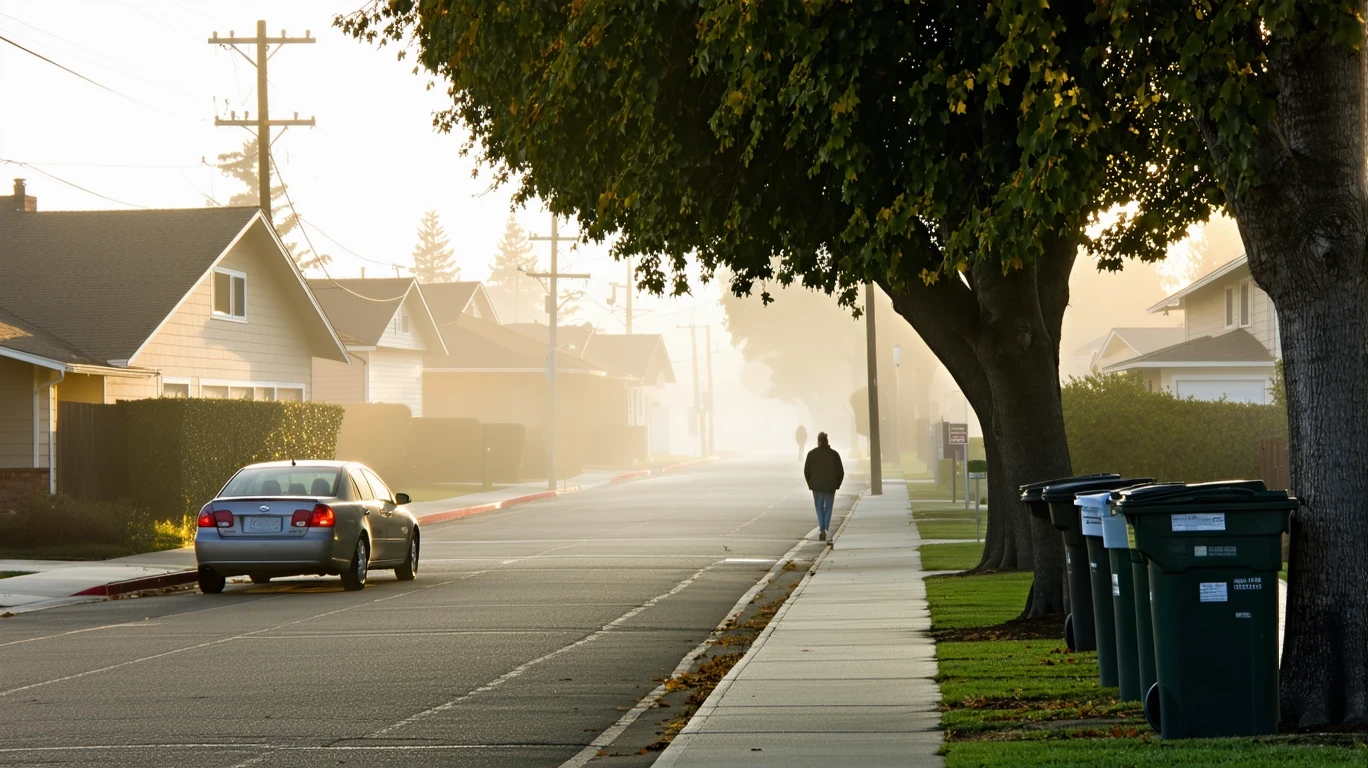
Comfort also depends on expectations. Santa Clara offers walkable pockets with substantial pedestrian infrastructure, rail transit access, and broadly accessible grocery and food options—meaning car dependency is lower than in many Silicon Valley suburbs. Parks are integrated throughout the city, schools and playgrounds are plentiful, and the urban form mixes residential and commercial uses even while maintaining a low-rise character. For families who value being able to walk to errands or let kids bike to school, that infrastructure reduces logistical friction in ways that aren’t captured in rent or mortgage figures.
But comfort here also means accepting that even at the median income, families often feel stretched. Singles and couples without children navigate different tradeoffs, and the same salary that feels workable for one household can feel precarious for another.
Where Income Pressure Shows Up First
Housing is the overwhelming driver of financial stress in Santa Clara. Whether you’re renting or buying, the cost is high enough that it shapes every downstream decision—how much you save, whether you can afford a second car, how often you eat out, and whether you have any cushion for surprises.
Renters at $2,841 per month are dedicating a substantial share of income to housing before utilities, parking, or renters insurance enter the picture. Buyers face not only the purchase price but property taxes, insurance premiums that have risen sharply across California, and maintenance costs that accumulate quickly in an older housing stock. Even households earning well above the median often find themselves choosing between space, location, and financial breathing room.
Utilities add another layer of exposure. Electricity rates at 33.22¢/kWh are among the highest in the country, and while Santa Clara’s mild climate reduces heating and cooling intensity compared to inland areas, summer air conditioning and year-round baseline usage still produce bills that swing unpredictably. Natural gas at $22.96/MCF affects heating months, though the burden is lighter than in colder regions.
Transportation pressure is more nuanced. Gas prices at $5.94/gallon are steep, but the average commute is just 23 minutes, and the presence of rail transit and strong bike infrastructure means many households can reduce car dependency if they’re willing to adjust routines. For families, though, the calculus changes—school drop-offs, weekend activities, and grocery runs often require a vehicle even in walkable neighborhoods.
For families, the pressure multiplies. Childcare, after-school programs, and the desire for more than one bedroom all compound housing costs. Even with excellent school density and playground access, the financial load of raising children here is significant, and many families find that two professional incomes are necessary just to maintain stability.
How the Same Income Feels Different by Household
A single adult earning $80,000 in Santa Clara faces a different reality than a couple earning $160,000 combined, and both face different pressures than a family of four at the same combined income.
For single adults, rent is the dominant constraint. At $2,841 for a median unit, many singles either rent with roommates, accept a longer commute from a cheaper neighboring area, or live in a studio or one-bedroom and accept that housing will consume a large share of income. The upside is that Santa Clara’s walkable pockets, transit access, and high density of food and grocery options reduce the need for a car, which helps offset some costs. Social life and dining out remain accessible, but building savings or considering homeownership often feels distant.
Couples without children, especially dual-income professionals, often find Santa Clara more manageable. Two incomes can cover rent or a mortgage more comfortably, and the ability to split transportation, utilities, and household costs creates meaningful breathing room. The city’s mixed-use neighborhoods and access to parks and outdoor spaces support an active lifestyle without requiring constant driving. Couples in this position often feel they can enjoy the area’s amenities, save modestly, and maintain some discretionary spending—but homeownership still requires either significant savings or acceptance of a smaller space.
Families face the steepest climb. Even at the median household income of $165,352 per year, the combination of housing, childcare, and the need for more space creates relentless pressure. The city’s strong family infrastructure—high school and playground density, safe streets for biking and walking—reduces logistical complexity and gives kids more independence, which matters daily. But the financial load remains heavy. Many families find that both parents working full-time is non-negotiable, and even then, the margin for error is thin. Saving for college, building an emergency fund, or upgrading housing often requires sacrifices elsewhere.
The Comfort Threshold (Qualitative)
Comfort in Santa Clara begins when housing stops dictating every other decision. It’s the point where you can absorb a surprise car repair, a higher-than-expected utility bill, or an unplanned medical expense without reshuffling your entire month. It’s when you can say yes to a weekend trip, a nicer dinner, or a small home improvement without guilt or anxiety.
For most households, this threshold is reached when income exceeds what’s needed to cover monthly expenses by a meaningful margin—not 5%, but closer to 20% or more. That margin allows for saving, for discretionary spending, and for the psychological relief of not living paycheck to paycheck.
The threshold varies by household type. Singles and couples without children may reach it sooner, especially if they’re willing to live modestly and take advantage of the city’s walkability and transit access. Families typically need significantly more income to feel the same sense of ease, because their fixed costs—housing, childcare, food—are higher and less flexible.
What’s consistent across household types is that the threshold is higher in Santa Clara than in most of the country. The baseline costs are elevated, and the tradeoffs required to live here—whether in space, commute, or lifestyle—mean that comfort isn’t just about income. It’s about whether your priorities align with what the city offers and what it demands in return.
Why Online Cost Calculators Get Santa Clara Wrong
Most cost-of-living calculators reduce Santa Clara to a set of averages: median rent, typical utilities, estimated transportation. They produce a total and imply that if your income covers it, you’ll be fine. But totals don’t explain pressure, and averages don’t capture the decisions people actually face.
Calculators assume you’ll behave like the median household—one car, moderate utilities, occasional dining out. They don’t account for whether you value walkability enough to pay more for location, whether you’re willing to share housing to reduce costs, or whether your work schedule allows you to use transit. They don’t reflect that families experience costs differently than singles, or that the same rent feels different depending on whether it’s 20% of your income or 40%.
They also miss the texture of daily life. Santa Clara’s infrastructure—walkable streets, rail access, high grocery density, abundant parks—reduces friction in ways that don’t show up in a budget line. A family that can walk kids to school, bike to the store, and reach a park in five minutes experiences less logistical stress than one that requires a car for every errand, even if the rent is identical. Conversely, the absence of a hospital means certain healthcare needs require travel, which adds time and complexity not captured in a “healthcare” cost estimate.
People often feel surprised after moving because the calculators didn’t prepare them for how housing costs interact with lifestyle expectations, or how much of their income would go to rent before they even started thinking about savings, dining, or travel. The numbers were accurate, but the story was incomplete.
How to Judge Whether Your Income Fits Santa Clara
Rather than asking “Is my income high enough?”, ask whether your income and priorities align with how Santa Clara actually works.
How sensitive are you to housing tradeoffs? If you need significant space, private outdoor areas, or a detached home, your income will need to stretch further. If you’re comfortable in a smaller unit, or value walkability and transit access over square footage, your income will go further.
Can you absorb seasonal or unexpected cost swings? Utility bills fluctuate with weather and usage. Insurance premiums and property taxes rise. Can your income handle a $200 surprise without stress, or does that derail your month?
Is time or money your limiting factor? Santa Clara’s short average commute, rail access, and walkable errands mean you can often trade money for time—living closer, driving less, walking more. But if your income is tight, you may need to accept a longer commute or fewer conveniences to make the numbers work.
How much flexibility do you expect month to month? If you want regular discretionary spending—dining out, entertainment, travel—you’ll need income well above what’s required to cover fixed costs. If you’re comfortable with a tighter routine and fewer variables, a lower income may suffice.
Do you have a second income, or could you? For families especially, dual incomes often make the difference between constant pressure and manageable stability. If you’re relying on one income, the margin for comfort is much narrower.
These questions don’t produce a number, but they clarify whether your financial reality and lifestyle expectations match what Santa Clara requires.
Needs vs. Wants: Monthly Expense Priorities in Santa Clara
| Category | Type | Notes |
|---|---|---|
| Rent or mortgage | Need | Dominates budget; median rent $2,841/month |
| Utilities (electric, gas, water) | Need | Electricity at 33.22¢/kWh; bills swing seasonally |
| Groceries | Need | Broadly accessible; high grocery density citywide |
| Transportation (gas, transit, car costs) | Need | Gas $5.94/gal; rail and bike infrastructure reduce car dependency |
| Childcare (if applicable) | Need | Major cost for families; strong school/playground density helps logistics |
| Health insurance & routine care | Need | Clinics present locally; hospital care requires travel |
| Internet & phone | Need | Essential for work and daily life |
| Renters or homeowners insurance | Need | Required and rising, especially for homeowners |
| Savings & emergency fund | Need | Critical buffer; often sacrificed under pressure |
| Dining out & takeout | Want | High food establishment density makes this accessible |
| Entertainment & subscriptions | Want | Flexible; often first to cut under pressure |
| Travel & weekend trips | Want | Discretionary; requires margin beyond fixed costs |
| Gym, hobbies, classes | Want | Integrated parks and outdoor spaces offer free alternatives |
| Home upgrades & décor | Want | Deferred when income is tight |
This breakdown reflects typical expense priorities in Santa Clara. The line between “need” and “want” shifts depending on household type, income level, and personal values—but housing, utilities, and transportation consistently dominate the budget.
FAQs About Living Comfortably in Santa Clara
Is the median household income enough to live comfortably in Santa Clara?
For couples without children, the median income of $165,352 per year often provides a workable foundation, especially if both partners are employed. For families, that same income can feel stretched—housing, childcare, and the need for more space create pressure that leaves little margin. Singles earning half the median face tighter constraints and often rely on roommates or smaller units to make it work.
Can you live in Santa Clara without a car?
Yes, more easily than in many Silicon Valley suburbs. Santa Clara has rail transit access, notable bike infrastructure, and broadly accessible grocery and food options within walkable distances. Singles and couples without children often find car-free or one-car living feasible. Families typically need a vehicle for school logistics and weekend activities, but the city’s infrastructure reduces how often you need to drive compared to more car-dependent areas.
What income level makes homeownership realistic in Santa Clara?
With a median home value of $1,440,200, homeownership generally requires household income well above the median, substantial savings for a down payment, and willingness to accept higher property taxes and insurance costs. Many buyers are dual-income professionals or have significant equity from a previous home. Affordability depends heavily on how much space you need and whether you’re willing to consider smaller or older properties.
How do families manage the cost of living here?
Most families rely on two incomes and make tradeoffs—smaller homes, older units, or neighborhoods farther from work. The city’s strong family infrastructure—high school and playground density, safe streets for walking and biking—reduces daily logistical stress, which helps even when finances are tight. Many families also defer savings, limit discretionary spending, and carefully manage variable costs like utilities and dining out.
Does living in Santa Clara feel more expensive than other Bay Area cities?
Santa Clara sits in the middle of the Bay Area cost spectrum—less expensive than Palo Alto or San Francisco, but more expensive than many East Bay or South Bay suburbs. What distinguishes it is the combination of high baseline costs and strong infrastructure: you pay a premium, but you gain walkability, transit access, and family-friendly amenities that reduce some logistical and transportation burdens. Whether that tradeoff feels worth it depends on your household type and priorities.
How this article was built: In addition to public economic data, this article incorporates location-based experiential signals derived from anonymized geographic patterns—such as access density, walkability, and land-use mix—to reflect how day-to-day living actually feels in Santa Clara, CA.
Santa Clara can work well for some households—but only if expectations match reality. The city offers infrastructure, access, and quality of life that many places lack, but it demands income, flexibility, and a clear sense of what you’re willing to trade to live here.