
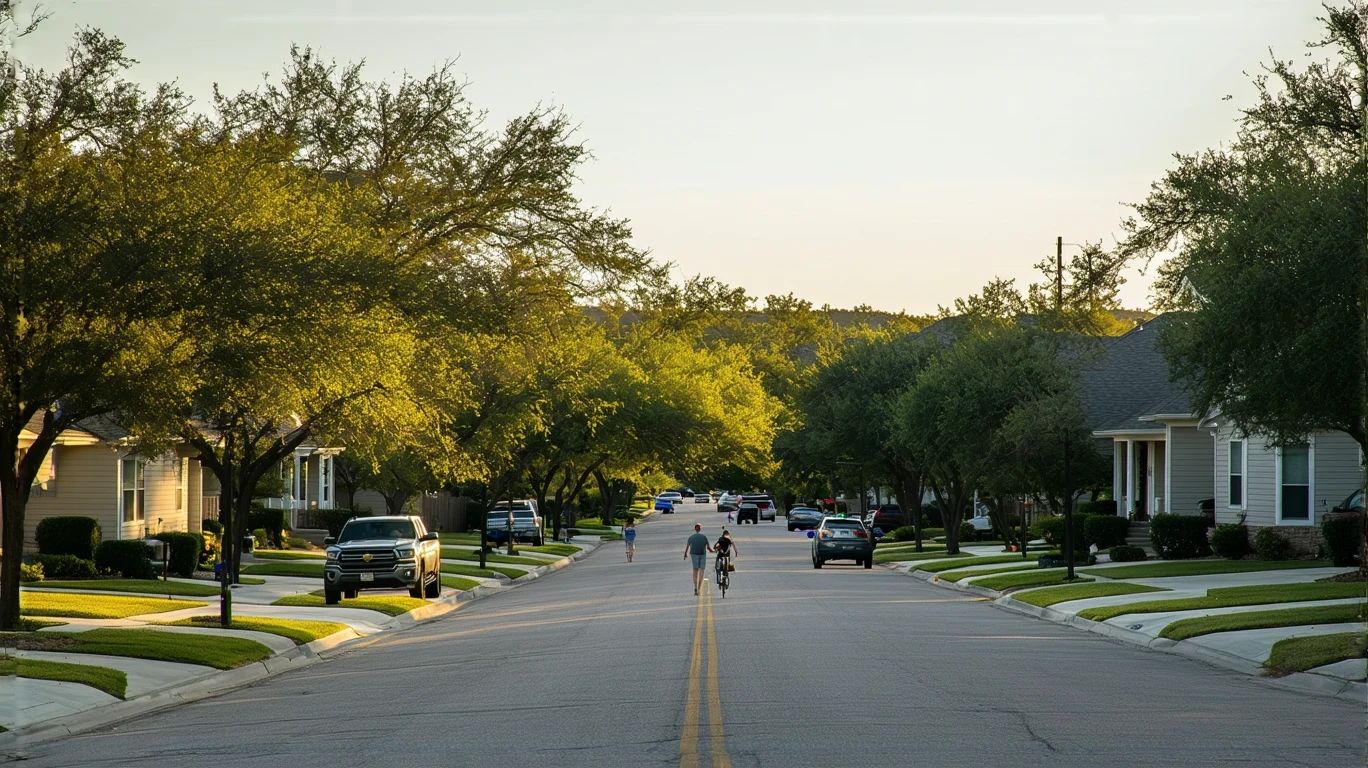
Why Students Choose San Marcos
What makes San Marcos a compelling choice for college students navigating today’s housing market and cost pressures? For the tens of thousands of students attending Texas State University, the answer lies in a combination of below-national-average costs, walkable infrastructure in key areas, and access to rail transit—advantages that reduce both financial and logistical burdens during academic years. San Marcos earns a student-friendliness score of 78 out of 100, reflecting strong fundamentals in affordability and mobility, balanced against a grocery landscape that requires more planning than some peer college towns.
The city’s regional price parity index of 95 means overall costs run about 5% below the national baseline, creating breathing room in monthly budgets. Combined with a 3.4% unemployment rate, the local job market supports students seeking part-time work to offset expenses. The presence of rail transit and areas with high pedestrian-to-road ratios means students can realistically consider life without a car—a significant cost avoidance in a state known for driving culture. However, grocery density falls below typical thresholds, meaning weekly shopping often involves longer trips or reliance on convenience options near campus.
San Marcos sits between Austin and San Antonio, offering access to larger metro job markets, internships, and cultural scenes while maintaining a more affordable base. The city’s mixed-use areas integrate residential and commercial spaces, supporting the kind of spontaneous, walkable lifestyle that defines the college experience. For students prioritizing cost control and transit access over full-service neighborhood amenities, San Marcos delivers a practical foundation for academic years.
Housing Options for Students
The off-campus rental market in San Marcos reflects both the university’s enrollment scale and the city’s broader housing stock. Median gross rent stands at $1,251 per month, a figure that typically represents a one-bedroom apartment or the total cost of a two-bedroom unit split between roommates. Purpose-built student housing complexes near campus often offer per-bedroom leasing, allowing students to sign individual contracts without liability for roommates’ payments—a structure that reduces financial risk but sometimes commands a premium over traditional apartments.
Shared housing remains the most common approach: a two-bedroom apartment at median rent translates to roughly $625 per person per month before utilities, while a four-bedroom house or apartment can push individual shares below $500 in older or less centrally located properties. Studio and one-bedroom units serve students prioritizing privacy or graduate students with assistantships, though these typically start around $900–$1,100 depending on proximity to campus and amenities like parking or in-unit laundry. Lease terms generally follow the academic calendar, with 12-month contracts standard and some complexes offering 9- or 10-month options at higher monthly rates.
Deposit requirements usually equal one month’s rent, with some landlords requesting last month’s rent upfront as well. Roommate-matching services operate through university housing offices and private platforms, though many students connect through social media groups or departmental networks. On-campus housing provides a fallback for underclassmen, though availability tightens after freshman year, pushing most students into the off-campus market by sophomore year. The city’s mixed building heights—ranging from low-rise complexes to mid-rise structures—mean housing quality varies significantly by neighborhood, making in-person tours essential before signing.
Getting Around: Transportation and Campus Access
San Marcos benefits from infrastructure that supports multiple mobility strategies, reducing the financial and logistical weight of car ownership for students willing to adapt their routines. The presence of rail transit provides a backbone for regional trips, connecting students to Austin and San Antonio without the cost of gas, insurance, and parking. Areas near campus demonstrate high pedestrian-to-road ratios, meaning sidewalks, crossings, and pathways are dense enough to make walking a primary mode for daily errands and class attendance—a structural advantage that translates directly into lower monthly transportation costs.
Cycling infrastructure exists in pockets, with bike-to-road ratios in the medium band, supporting students who invest in a reliable bike and lock. Campus shuttle services typically operate on fixed routes during academic terms, offering free transportation between major residential areas and university facilities, though coverage and frequency vary by time of day. Parking on or near campus often requires permits that cost several hundred dollars per semester, and competition for spaces remains intense during peak hours, adding friction to car-dependent routines.
For students who do bring vehicles, gas prices average $3.80 per gallon, and a typical commuter driving 25 miles round trip at 25 MPG would spend roughly $152 per month on fuel alone for five days a week—before insurance, maintenance, or parking fees. Ride-sharing serves as a backup for late-night returns or grocery runs, though costs accumulate quickly with regular use. The practical calculus: students living within walkable pockets or along transit routes can avoid $200–$400 per month in car-related expenses, a savings that often offsets slightly higher rent in those areas.
Student Cost of Living
Monthly expenses for students in San Marcos vary significantly based on housing arrangements, transportation choices, and lifestyle expectations, but the city’s below-national-average cost structure provides a foundation for manageable budgets. A frugal student sharing a multi-bedroom apartment, cooking most meals, using transit or biking, and limiting discretionary spending can operate on roughly $1,100–$1,300 per month including rent, food, and essentials. A moderate lifestyle—occasional dining out, ride-sharing when convenient, and regular social activities—typically pushes monthly costs to $1,500–$1,700. Students prioritizing convenience, privacy, or frequent entertainment may find themselves closer to $2,000–$2,300 per month, particularly if living solo or maintaining a vehicle.
Food costs reflect the city’s sparse grocery density: students who plan weekly shopping trips to larger stores can keep grocery bills around $200–$250 per month, while those relying on convenience stores or frequent takeout may spend $350–$450. Campus dining plans offer predictability but often cost more per meal than home cooking, making them a tradeoff between time and money. Textbook expenses vary wildly by major and semester, with some students spending under $100 using rentals and digital editions, while others face $400–$600 for specialized courses—costs that hit hardest at semester start.
Part-time job opportunities benefit from the 3.4% unemployment rate, with retail, food service, tutoring, and campus positions typically paying $10–$15 per hour. Students working 15–20 hours per week can generate $600–$1,200 per month before taxes, covering a significant portion of living expenses and reducing reliance on loans or family support. The presence of both residential and commercial land uses in mixed areas creates job density within walking or biking distance for many students, reducing the need to commute for work.
Monthly Student Budget in San Marcos
Here’s what a typical monthly student budget might look like in San Marcos:
| Expense Category | Shared Housing | Solo Living |
|---|---|---|
| Rent (per person) | $625 | $1,050 |
| Utilities (electric, water, internet) | $75 | $140 |
| Groceries & Food | $250 | $280 |
| Transportation (transit/bike) | $40 | $40 |
| Textbooks & Supplies (averaged) | $100 | $100 |
| Entertainment & Social | $120 | $150 |
| Personal Care & Misc | $80 | $100 |
| Total | $1,290 | $1,860 |
Estimates based on average student spending patterns and local costs; excludes tuition, fees, and health insurance. Transportation assumes transit/bike use; add $200–$400/month for car ownership. Utilities reflect typical share in multi-bedroom units; solo living includes full responsibility.
Student-Friendly Amenities and Services
San Marcos supports student routines through a combination of campus resources and local infrastructure, though the city’s amenity density varies by neighborhood. Coffee shops with reliable Wi-Fi cluster near campus and in mixed-use areas, serving as de facto study spaces for students seeking alternatives to crowded libraries. The university’s own library system provides extended hours during finals, computer labs, and group study rooms, while public library branches offer quieter environments and community resources beyond the academic calendar.
Recreational facilities include campus gyms available to enrolled students, often included in activity fees, alongside city parks where park density falls in the moderate range and water features provide outdoor study and relaxation spots. Intramural sports, club organizations, and fitness classes operate through university recreation departments, creating low-cost or free options for staying active. However, the city’s limited family infrastructure—reflected in low school and playground density—suggests fewer full-service neighborhoods with extensive public amenities, concentrating student life closer to campus zones.
Healthcare access centers on clinics rather than hospital facilities, with the university health center handling routine care, prescriptions, and mental health counseling for enrolled students, typically covered by health fees. Off-campus, local clinics and pharmacies provide additional options, though students facing serious medical needs may travel to larger facilities in Austin or San Antonio. Mental health resources have expanded in recent years, with both university counseling services and community providers offering sliding-scale fees, though appointment availability can tighten during high-stress academic periods.
Student discounts appear at local businesses, particularly restaurants, entertainment venues, and service providers near campus, though the extent varies and often requires asking or showing a student ID. Campus job boards and career services connect students with part-time positions, internships, and post-graduation opportunities, leveraging the university’s regional employer relationships and the city’s position between two major metro areas.
Social Scene and Nightlife
The social fabric of student living in San Marcos weaves together campus-organized events, local nightlife, and the natural environment that defines Central Texas. University student organizations span academic, cultural, recreational, and advocacy interests, providing structured social networks and leadership opportunities. Intramural sports leagues and club teams operate year-round, offering competitive and casual options for students seeking physical activity and community beyond the classroom.
Local nightlife concentrates along key corridors, with bars, live music venues, and restaurants catering to the college demographic. The city’s position on the San Marcos River creates a distinctive outdoor social scene, with tubing, swimming, and riverside gatherings forming a central part of warm-weather student culture—a natural amenity that costs little beyond equipment rental and transportation. Festivals, concerts, and community events occur throughout the year, though the intensity peaks during the academic calendar when student attendance drives demand.
The dating scene and broader social networking benefit from the university’s enrollment scale, creating a large peer group within a concentrated geographic area. Mixed-use urban form supports spontaneous social interactions, with residential and commercial spaces integrated in ways that encourage walking between apartments, coffee shops, and entertainment venues. However, students seeking highly specialized cultural programming or niche social scenes may find themselves traveling to Austin, where the larger metro offers greater diversity of options at the cost of time and transportation expenses.
Safety and Practical Considerations
Campus safety infrastructure includes university police, emergency call boxes, late-night escort services, and well-lit pathways, with crime statistics generally reflecting the challenges common to mid-sized university towns—property crime more prevalent than violent crime, and prevention focused on securing belongings and traveling in groups after dark. Off-campus neighborhoods vary in safety profiles, making research and visits essential before signing leases, particularly in areas farther from campus where student density thins and neighborhood character shifts.
Emergency services operate through city police, fire, and EMS, with response times generally adequate for urban and suburban zones, though the absence of a nearby hospital means serious medical emergencies require transport to regional facilities. Campus security measures include ID-card building access, surveillance systems, and active threat protocols, with regular communication through university alert systems during incidents or weather events.
Academic support services—tutoring centers, writing labs, supplemental instruction, and office hours—provide essential scaffolding for student success, particularly in high-enrollment introductory courses where individual attention can be scarce. Career services offer resume reviews, interview prep, job fairs, and employer connections, with particular strength in regional industries like education, healthcare, technology, and public service. Internship opportunities benefit from proximity to Austin’s tech and government sectors and San Antonio’s military and healthcare infrastructure, allowing students to gain experience without relocating.
FAQs About Student Life in San Marcos
What’s the average cost of student living in San Marcos?
Students sharing housing typically spend $1,100–$1,700 per month depending on lifestyle choices, with shared apartments, transit use, and home cooking at the lower end, and solo living or car ownership pushing costs higher. The city’s below-national-average price structure (RPP 95) provides a cost advantage compared to many peer college towns, though individual expenses vary based on housing location, transportation mode, and discretionary spending.
How safe is it for students to live off-campus?
Safety varies by neighborhood, with areas closer to campus generally benefiting from higher student density, better lighting, and more foot traffic. Property crime—particularly bike theft and car break-ins—remains the primary concern, making secure locks, parking choices, and awareness of surroundings important. Students should visit neighborhoods at different times of day, talk to current renters, and review campus crime maps before committing to off-campus housing.
Are there good part-time job opportunities?
The 3.4% unemployment rate signals a healthy job market, and the combination of university employment (libraries, labs, dining, recreation) and local businesses (retail, food service, tutoring) creates steady demand for part-time workers. Typical wages range from $10–$15 per hour, with some specialized positions (lab assistants, peer tutors) paying more. The presence of mixed-use areas means many jobs sit within walking or biking distance for students living near campus.
What’s the social scene like for college students?
San Marcos offers a blend of campus-organized activities, local nightlife, and outdoor recreation centered on the San Marcos River. The university’s enrollment scale ensures a large peer group and diverse student organizations, while the city’s mixed-use urban form supports walkable access to restaurants, bars, and entertainment. Students seeking highly specialized cultural programming may supplement local options with trips to Austin, but day-to-day social life remains concentrated and accessible within San Marcos.
Making the Decision: Is San Marcos Right for Your College Years?
San Marcos presents a compelling case for students who prioritize affordability, walkable infrastructure in key areas, and access to rail transit over full-service neighborhood amenities. The city’s below-national-average costs, strong part-time job market, and high pedestrian-to-road ratios in certain zones create a foundation for managing monthly expenses without a car—a significant advantage in a state where driving typically dominates. The presence of Texas State University ensures student-focused housing, social infrastructure, and a peer community large enough to support diverse interests and networks.
However, the city’s sparse grocery density and limited family infrastructure mean students must plan shopping trips more deliberately and may find fewer full-service neighborhoods outside core campus areas. Healthcare access centers on clinics rather than hospitals, and students with ongoing medical needs should verify provider networks and proximity before committing. The mixed building heights and varied housing stock quality require careful evaluation of individual properties rather than relying on neighborhood reputation alone.
For students and families evaluating what shapes the cost of living in San Marcos, the decision hinges on transportation strategy and lifestyle expectations. Those willing to embrace transit, biking, and walkable routines will find the city’s infrastructure supportive and cost-effective. Students requiring frequent car use, extensive grocery options within walking distance, or immediate access to specialized healthcare may face more friction. The city’s position between Austin and San Antonio offers a safety valve—access to larger metro resources when needed—while maintaining a more affordable base for daily life.
Prospective students should visit during the academic term, explore neighborhoods on foot and by bike, test transit routes, and talk to current students about their actual routines and costs. The gap between marketing materials and lived experience narrows when you observe how people actually move through the city, where they shop, and what tradeoffs they’ve accepted. San Marcos delivers strong fundamentals for student living, but the fit depends on aligning the city’s structural advantages with your specific priorities and constraints during these formative years.
How this article was built: In addition to public economic data, this article incorporates location-based experiential signals derived from anonymized geographic patterns—such as access density, walkability, and land-use mix—to reflect how day-to-day living actually feels in San Marcos, TX.