
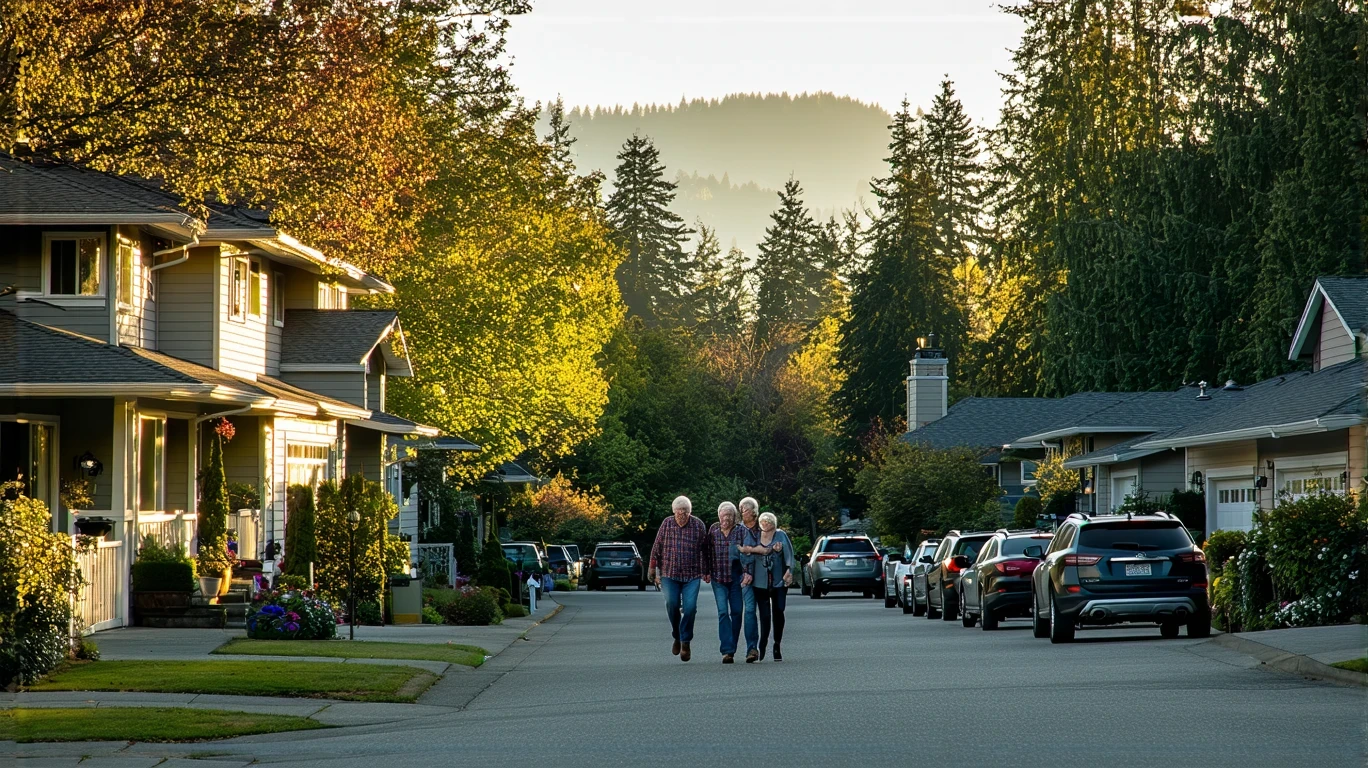
Is Sammamish the Ideal Place to Spend Your Golden Years?
Sammamish presents a compelling but complex picture for retirees. Nestled on the Eastside of the Seattle metro area, this affluent suburban community offers natural beauty, excellent safety, and proximity to world-class healthcare—but it comes with housing costs that can strain fixed incomes and a community infrastructure built more for families than dedicated senior living. The question isn’t whether Sammamish is pleasant—it clearly is—but whether its particular mix of advantages and expenses aligns with your retirement priorities and budget.
What draws retirees here tends to be the combination of Pacific Northwest natural amenity, low crime rates, and access to Seattle’s medical infrastructure without living in the urban core. The mild climate means fewer extreme weather challenges, and Washington’s lack of state income tax protects retirement income from Social Security, pensions, and withdrawals. For retirees who already own property here or who prioritize outdoor access and proximity to family over dedicated senior programming, Sammamish can work beautifully. For those seeking walkable downtowns, robust senior centers, or affordable entry points, the fit becomes more complicated.
We’d assign Sammamish a retirement suitability score of 72 out of 100. It earns high marks for safety, healthcare access, and environmental quality, but loses points for housing affordability, car dependency, and limited senior-specific infrastructure. This is a place that rewards retirees who value natural surroundings and have the financial cushion to absorb higher costs, but it may not suit those looking for tight-knit senior communities or budget-conscious retirement living.
Healthcare Access for Seniors
Healthcare access is one of Sammamish’s strongest retirement advantages. While the city itself doesn’t have a major hospital within its borders, it sits within easy reach of several nationally recognized systems. Overlake Medical Center in Bellevue is roughly 15 minutes away and offers comprehensive services including cardiology, orthopedics, and oncology with strong Medicare acceptance. Swedish Medical Center and UW Medicine facilities in Seattle—about 25 to 35 minutes depending on traffic—provide tertiary care and specialty services that smaller regional hospitals can’t match. For routine care, Sammamish has multiple primary care clinics, urgent care facilities, and outpatient specialty practices that serve the senior population well.
Specialist availability is robust across the Eastside. Cardiology, endocrinology, rheumatology, and geriatric medicine are all accessible within a short drive, and most providers accept Medicare and common supplement plans. Physical therapy and rehabilitation services are widely available, both in clinical settings and through home health agencies. Prescription access is straightforward, with major pharmacy chains well-represented and many offering delivery or mail-order options that help seniors avoid unnecessary trips.
The main healthcare consideration isn’t quality or availability—it’s logistics. Sammamish is car-dependent, and seniors who can no longer drive will need to arrange transportation for medical appointments. Some practices and hospitals offer shuttle services, and ride-hailing apps are widely used, but this adds a layer of planning and cost that wouldn’t exist in a more transit-rich or walkable environment. For couples where one partner drives, or for retirees comfortable with ride services, this is manageable. For those who prefer not to rely on cars, it’s a meaningful limitation.
Senior-Friendly Amenities and Services
Sammamish’s amenity landscape reflects its character as a family-oriented suburb rather than a retirement destination. The city has parks, trails, and recreational facilities that are accessible and well-maintained, but dedicated senior centers and programming are more limited than in communities with older demographic profiles. The Sammamish Community and Aquatic Center offers fitness classes and social activities, some of which cater to older adults, but it’s not a senior-specific hub. For more robust senior programming, many Sammamish retirees look to neighboring Bellevue or Issaquah, both of which have established senior centers with daily activities, meal programs, and social groups.
Transportation options for seniors without cars are modest. King County Metro provides bus service, but routes are infrequent and not designed for the kind of spontaneous errands or social visits that define active retirement. Some local nonprofits and faith communities offer volunteer driver programs, and ride-hailing services fill many gaps, but there’s no dedicated senior shuttle system. For grocery shopping, delivery services from major chains are widely available and increasingly popular, which helps reduce the transportation burden for routine needs.
Lifelong learning opportunities exist primarily through nearby institutions. Bellevue College offers community education classes, and the King County Library System—including the Sammamish branch—provides programming, book clubs, and technology help that many retirees appreciate. The cultural scene leans toward family and outdoor activities rather than senior-specific events, but proximity to Seattle means access to museums, theaters, and concerts is only a short drive away for those who seek it.
Cost of Living for Retirees
Housing costs are the defining financial challenge for retirees in Sammamish. Single-family homes, which dominate the housing stock, typically command prices well into the seven figures, putting ownership out of reach for most retirees moving in on fixed incomes. Condos and townhomes offer more accessible entry points but still tend to run higher than in many other parts of the country. For retirees who already own property here, the equation is different—staying put means no new mortgage, but it also means ongoing exposure to property taxes, maintenance, and the opportunity cost of not downsizing or relocating to a lower-cost area.
Property taxes in Washington are based on assessed value, and Sammamish’s high home values translate to substantial annual bills. Washington does offer a property tax exemption program for seniors with limited income and equity, which can provide meaningful relief for qualifying households, but the income thresholds are modest and many retirees won’t meet them. For those who do qualify, the exemption can reduce or defer a portion of the tax burden, making it easier to age in place without selling.
Utilities in the Pacific Northwest are shaped by the mild climate and the region’s reliance on hydroelectric power. Electricity costs are generally moderate, and heating needs are less intense than in colder climates, though the wet, cool winters mean some heating expense is unavoidable. Natural gas or electric heat pumps are common, and many homes are reasonably energy-efficient. Some utility providers offer senior discount programs or budget billing options that help smooth out seasonal variation. The bigger picture is that while utilities aren’t a major cost driver, they’re also not negligible, and they add to the overall expense load that retirees on fixed incomes must manage.
Washington’s lack of state income tax is a significant advantage for retirees. Social Security benefits, pension income, IRA and 401(k) withdrawals, and investment income are all exempt from state taxation, which can translate to thousands of dollars in annual savings compared to states with income taxes. This benefit is most valuable for retirees with substantial retirement income; for those living primarily on Social Security, the advantage is smaller. Medicare supplement insurance costs in the Seattle metro area tend to run in line with national averages, though shopping around and comparing plans is essential to avoid overpaying.
Monthly Retirement Budget in Sammamish
Here’s what a typical monthly retirement budget might look like in Sammamish:
| Expense Category | Modest Lifestyle | Comfortable Lifestyle |
|---|---|---|
| Housing (mortgage/rent or property tax + insurance) | $1,800 | $3,200 |
| Healthcare (premiums, co-pays, medications) | $500 | $700 |
| Food (groceries and occasional dining) | $550 | $800 |
| Transportation (car payment, insurance, gas, maintenance) | $400 | $600 |
| Utilities (electricity, gas, water, internet) | $250 | $300 |
| Entertainment and hobbies | $200 | $450 |
| Miscellaneous (clothing, personal care, home maintenance) | $300 | $500 |
| Total Monthly | $4,000 | $6,550 |
Estimates based on average senior spending patterns and local costs. Housing assumes owned home with property tax and insurance for modest tier, and higher property tax or partial mortgage for comfortable tier. Figures are illustrative and will vary based on individual circumstances.
The modest budget assumes an owned home with no mortgage, basic healthcare needs, limited dining out, and careful spending. The comfortable budget allows for more discretionary spending, occasional travel, dining, and hobbies, and may include a remaining mortgage or higher property taxes. Both budgets assume car ownership, which is functionally necessary in Sammamish. Retirees without significant housing equity or pension income may find even the modest budget challenging to sustain without drawing down savings or working part-time.
Community and Social Opportunities
Sammamish’s social fabric is shaped by its family-oriented character, which means retirees often need to be proactive in building their own networks rather than stepping into pre-existing senior communities. Faith communities are active and many offer small groups, volunteer opportunities, and intergenerational programming that can provide meaningful connection. Volunteer opportunities exist through local nonprofits, schools, and environmental organizations, and many retirees find purpose and community through regular volunteer commitments.
Recreation programs through the city’s parks department include fitness classes, walking groups, and seasonal events that draw participants of all ages. While these aren’t senior-specific, they’re accessible and provide opportunities to meet neighbors and stay active. Hobby clubs—gardening, book clubs, hiking groups—tend to form informally or through platforms like Meetup, and retirees who enjoy outdoor activities will find no shortage of trails, lakes, and parks to explore, often in the company of others.
Proximity to family is a major draw for many retirees who choose Sammamish. The Eastside’s strong job market and school systems mean adult children often settle here, and grandparents find that living nearby allows for regular involvement without the intensity of daily caregiving. For out-of-town relatives visiting, Seattle-Tacoma International Airport is about 40 minutes away, and the area offers plenty of lodging and activities that make visits enjoyable.
Cultural activities and seasonal events tend to be family-focused—farmers markets, summer concerts, holiday celebrations—but retirees who enjoy these settings will find them welcoming. For more adult-oriented cultural programming, Seattle’s theaters, museums, and music venues are accessible, though the drive and parking can be a barrier for evening events. The overall social experience in Sammamish rewards retirees who are comfortable in mixed-age settings and who take initiative in building their own circles, rather than those seeking ready-made senior communities.
Aging in Place Considerations
Aging in place in Sammamish is feasible for retirees with the financial resources to modify their homes and arrange for services as needs change. Home modification services—ramps, grab bars, stairlifts, bathroom conversions—are available through local contractors, and occupational therapists can assess homes and recommend changes that improve safety and accessibility. The challenge is that many Sammamish homes are multi-level with stairs, which can become a barrier as mobility declines. Single-story homes or main-floor master suites are more conducive to aging in place, but they’re not the norm.
In-home care availability is strong across the Eastside. Home health agencies, private caregivers, and visiting nurse services are well-established, and many retirees are able to remain in their homes longer by bringing in part-time or full-time help. The cost of in-home care is substantial, however, and not covered by Medicare except in limited circumstances. For retirees planning to age in place, budgeting for future care needs—or securing long-term care insurance—is essential.
Assisted living and memory care options exist in nearby Bellevue, Issaquah, and Redmond, offering a range of care levels and price points. Sammamish itself has limited senior housing facilities, so transitioning to assisted living typically means leaving the city. For couples where one partner needs more care than the other, this can create difficult decisions about proximity and visitation.
Walkability in Sammamish is limited. The city is designed around car travel, and while there are sidewalks in many neighborhoods, distances between home, services, and amenities are too great for most seniors to walk routinely. This makes car dependency a central aging-in-place consideration—retirees need to plan for what happens when driving is no longer safe or possible. The mild climate is a plus; there are no extended periods of extreme heat or cold that make getting around dangerous, and snow and ice are rare. Seasonal challenges are more about rain and shorter daylight in winter, which can affect mood and motivation but don’t pose the same physical risks as harsher climates.
Emergency services in Sammamish are responsive and well-equipped, and the city’s low crime rate means safety concerns are minimal. Disaster preparedness is relevant primarily for earthquake risk, which is present throughout the Pacific Northwest. Retirees should have emergency supplies, a communication plan, and awareness of how to shut off utilities if needed, but day-to-day safety is not a major concern.
FAQs About Retirement in Sammamish
What’s the average cost of retirement in Sammamish?
Retirement costs in Sammamish vary widely depending on housing situation and lifestyle, but a modest retirement typically requires at least $4,000 per month, while a comfortable lifestyle may run $6,500 or more. Housing is the dominant expense, and retirees who own their homes outright face lower monthly costs than those renting or carrying a mortgage. Where Your Money Goes in Sammamish provides a broader look at how expenses stack up across categories.
How good is healthcare access for seniors?
Healthcare access is excellent in terms of quality and proximity. Major hospital systems like Overlake, Swedish, and UW Medicine are all within 15 to 35 minutes, and specialist care is widely available across the Eastside. The main limitation is transportation—Sammamish is car-dependent, so seniors who don’t drive need to arrange rides for appointments. Medicare acceptance is strong, and most providers are accustomed to working with senior patients.
Are there active senior communities?
Sammamish doesn’t have the kind of dedicated senior communities or 55+ developments common in retirement-focused areas. Social opportunities exist through faith communities, volunteer groups, parks programs, and informal clubs, but retirees need to be proactive in building their networks. For those who prefer ready-made senior communities with daily programming, nearby Bellevue offers more infrastructure, or retirees may want to consider purpose-built retirement communities elsewhere in the region.
What are the tax implications of retiring in Washington?
Washington has no state income tax, which is a significant advantage for retirees. Social Security, pension income, and retirement account withdrawals are not taxed at the state level, which can save thousands of dollars annually compared to states with income taxes. Property taxes are based on assessed value and can be substantial given Sammamish’s high home values, but a senior property tax exemption program offers relief for qualifying low-income households. There is no estate tax for estates under the state threshold, which is currently in the millions.
Making the Move: Is Sammamish Right for Your Retirement?
Sammamish offers a high quality of life for retirees who can afford it and who value natural beauty, safety, and proximity to excellent healthcare over walkability and dedicated senior infrastructure. It’s a place that works best for retirees who already own property here, who have family nearby, or who prioritize outdoor access and a quiet suburban environment. The lack of state income tax and the mild climate are real advantages, and for retirees with comfortable retirement income, the day-to-day experience can be deeply satisfying.
The drawbacks are equally clear. Housing pressure makes entry expensive, and car dependency creates logistical challenges as mobility declines. The community is family-focused rather than senior-focused, which means social opportunities require more initiative and may feel less tailored to retiree interests. For those on modest fixed incomes, the cost structure can be difficult to sustain without drawing down savings faster than planned.
If you’re considering Sammamish for retirement, start by honestly assessing your financial cushion and your transportation needs. Visit during the wet winter months, not just the beautiful summer, to get a realistic sense of the climate and pace of life. Talk to retirees already living here about their experiences with healthcare, social connection, and aging in place. And compare Sammamish not just to other Eastside suburbs, but to retirement communities in lower-cost parts of Washington or neighboring states where your retirement income might stretch further and senior infrastructure might be more developed. The right choice depends on what you’re optimizing for—and whether Sammamish’s particular strengths align with your priorities and resources.