
74 out of 100 residents say they’re happy in Sammamish — but what does that happiness look like day to day, and who tends to feel it most? Sammamish sits on the Eastside of Seattle, a planned suburban city known for its excellent schools, wooded neighborhoods, and family-oriented infrastructure. The vibe here is quiet, safe, and comfortable — but that same tranquility can feel isolating or limiting depending on what you’re looking for. Understanding the emotional tone of Sammamish means understanding the tradeoffs: who thrives in this environment, who feels restless, and what kinds of friction show up in everyday life.
The Emotional Landscape of Sammamish
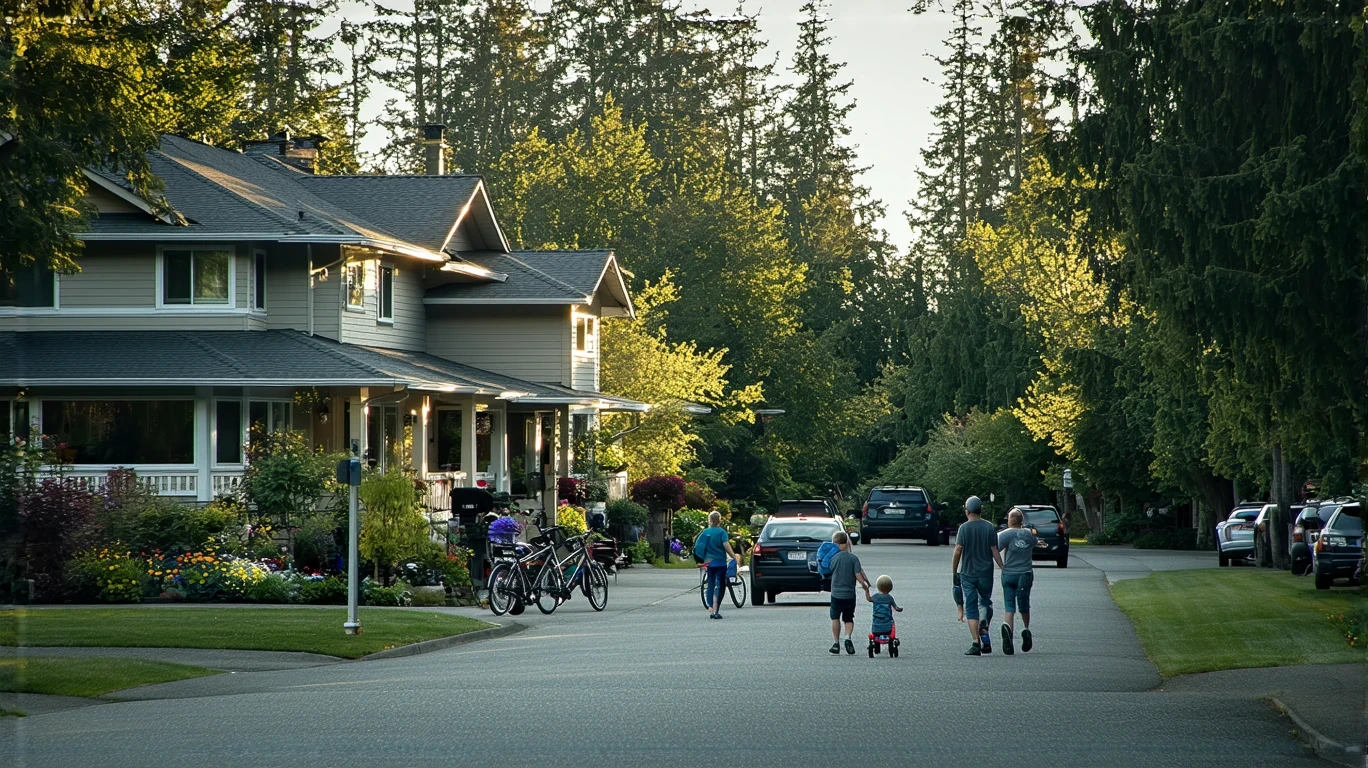
Sammamish tends to reward people who want predictability, natural beauty, and a strong sense of community investment. The city feels protective of its character — residents often describe it as a place where neighbors know each other, kids play outside, and the pace of life slows down intentionally. There’s pride in the schools, the parks, and the sense that the city was designed with families in mind.
But that same intentionality can feel restrictive. Sammamish lacks the spontaneity, walkable texture, and cultural variety that urban or mixed-use environments offer. Dining and entertainment options are limited, and much of daily life requires driving. For people who crave density, nightlife, or the energy of a bustling downtown, Sammamish can feel too quiet — even sterile. The city’s affluence is visible and can create social pressure around lifestyle expectations, from home upkeep to extracurricular involvement.
The emotional profile here is less about “happy vs unhappy” and more about alignment: if you’re looking for a safe, green, family-centered environment and you’re comfortable with car dependency and limited nightlife, Sammamish tends to feel like home. If you’re looking for spontaneity, walkability, or cultural diversity, the city can feel like a compromise.
Social Media Buzz in Sammamish
On platforms like Reddit, Facebook groups, and neighborhood forums, Sammamish conversations tend to cluster around a few recurring themes: school quality, traffic on the Plateau, trail access, and the tension between preserving the city’s quiet character and accommodating growth. The tone is generally civil and community-focused, though frustration surfaces around commute times, limited dining options, and the cost of maintaining the lifestyle the city represents.
Composite sentiment from public discussion includes statements like:
- “It’s a great place to raise kids, but you have to be okay with driving everywhere — there’s no real downtown to walk to.”
- “The schools are worth it, but the social scene can feel pretty homogenous if you’re not in the family-with-kids phase.”
- “I love the trails and the parks, but I miss having a coffee shop or bookstore I could just walk to on a Saturday morning.”
The emotional tone is protective but self-aware. Residents tend to acknowledge the tradeoffs openly: they know Sammamish isn’t for everyone, and they’re okay with that. There’s less defensiveness than in some suburban communities, but also less appetite for dramatic change.
Local News Tone
Local coverage of Sammamish tends to frame the city through the lens of growth management, school funding, environmental stewardship, and community identity. The tone is generally positive but measured, reflecting a city that takes planning seriously and wants to preserve what makes it distinct. Recurring topic buckets include:
- “Community Debates What Growth Should Look Like”
- “New Amenities Arrive as Town Identity Evolves”
- “Residents Weigh Convenience vs Quiet”
- “Trail Expansions and Park Improvements Draw Praise”
- “Traffic Concerns Persist as Eastside Development Continues”
The framing is rarely alarmist. Instead, it reflects a community that wants to maintain control over its character while adapting to regional pressures. The emotional undertone is one of cautious optimism: pride in what’s been built, awareness of what’s at stake, and ongoing negotiation over what comes next.
Review-Based Public Perception
On platforms like Google, Yelp, and neighborhood review sites, Sammamish tends to receive praise for its schools, parks, safety, and natural beauty. Families who moved here for those reasons often describe feeling like they made the right choice. The city delivers on its core promise: a quiet, green, family-friendly environment with strong public services.
Criticism tends to focus on what’s missing rather than what’s broken. Common complaints include:
- Limited dining and entertainment options — “You have to drive to Issaquah or Bellevue for anything interesting.”
- Lack of walkability — “Everything requires a car, even short trips.”
- Social homogeneity — “It can feel a bit insular if you’re not in the same life stage as most of your neighbors.”
- Cost of entry — “It’s expensive to live here, and that creates a certain kind of pressure to keep up.”
Newer planned areas tend to feel more uniform and amenity-focused, while older pockets of the city offer slightly more character and tree cover. But even within those distinctions, the overall vibe remains consistent: comfortable, quiet, and family-oriented.
Comparison to Nearby Cities
| Aspect | Sammamish | Issaquah | Redmond |
|---|---|---|---|
| Overall Vibe | Quiet, family-focused, nature-oriented | Slightly more walkable, small-town feel with outdoor access | Tech-forward, more urban energy, mixed-use development |
| Walkability | Low — car-dependent for most errands | Moderate — downtown core is walkable | Moderate to high in core areas |
| Dining & Nightlife | Limited — mostly chains and casual spots | Better variety, local spots, breweries | Stronger dining scene, more variety |
| Family Appeal | Very high — schools and parks are top-tier | High — strong schools, outdoor culture | High — tech-oriented families, good schools |
| Social Diversity | Homogenous — mostly families, affluent | Slightly more varied, outdoor-oriented crowd | More diverse — tech workers, younger professionals |
Sammamish offers the most insulated, nature-forward suburban experience of the three. If you want a true retreat from urban energy and you’re willing to drive for most amenities, it tends to feel like the best fit. Issaquah offers a bit more walkability and local character while still maintaining strong schools and outdoor access — it’s a middle ground. Redmond skews more urban, with better dining, more mixed-use development, and a younger, tech-oriented population. The choice depends on how much quiet you want versus how much spontaneity and variety you need.
What Locals Are Saying
Here’s how residents across different life stages and priorities tend to describe the experience of living in Sammamish:
- “We moved here for the schools and the safety, and it’s delivered on both. But I do miss being able to walk to a coffee shop or meet friends without planning it days in advance.” — Parent of two elementary-aged kids
- “It’s peaceful, and the trails are amazing. I run Pine Lake Loop a few times a week. But if you’re looking for nightlife or cultural events, you’re going to be disappointed.” — Remote worker, early 30s
- “The community here is tight-knit, which is great if you’re plugged in. If you’re not, it can feel a little cliquish. Everyone’s kids are in the same activities, and that creates a certain social structure.” — Newcomer, moved from Seattle
- “I love that it’s quiet and green, but I do feel like I’m driving all the time. Even getting groceries is a 10-minute drive. It’s not a big deal, but it’s something to adjust to.” — Young professional, renting
- “We’ve been here for 15 years, and we’ve watched it grow. It’s still a great place, but it’s definitely more crowded than it used to be. The traffic on the Plateau can be frustrating during commute hours.” — Long-time resident
- “If you’re retired and you want space, nature, and a slower pace, Sammamish is hard to beat. But you do need to be comfortable driving, because there’s not much within walking distance.” — Retiree, downsized from larger home
- “It’s a beautiful place, and I feel lucky to live here. But I do think there’s a certain lifestyle expectation — nice cars, well-kept yards, kids in travel sports. It’s subtle, but it’s there.” — Parent, works in tech
Does Sammamish Feel Like a Good Fit?
Sammamish tends to work best for people who prioritize safety, schools, natural beauty, and a slower pace of life — and who are comfortable with car dependency and limited urban amenities. It’s a city that rewards families, outdoor enthusiasts, and anyone looking for a predictable, well-maintained suburban environment. The emotional tone is calm, protective, and community-focused.
It tends to frustrate people who crave walkability, spontaneity, cultural variety, or nightlife. If you need to be able to walk to dinner, meet friends without planning, or feel surrounded by diverse social energy, Sammamish will likely feel too quiet or too homogenous.
The city’s happiness isn’t universal — it’s conditional. But for the people it’s designed for, it delivers consistently. If you’re considering Sammamish, the question isn’t “Is it a happy place?” but rather “Does this kind of happiness match what I’m looking for?” To explore how that translates into day-to-day costs, housing tradeoffs, or lifestyle requirements, those dimensions can help clarify whether the emotional fit aligns with the practical realities.
The perspectives shown reflect commonly expressed local sentiment and recurring themes in public discussion, rather than individual accounts.