
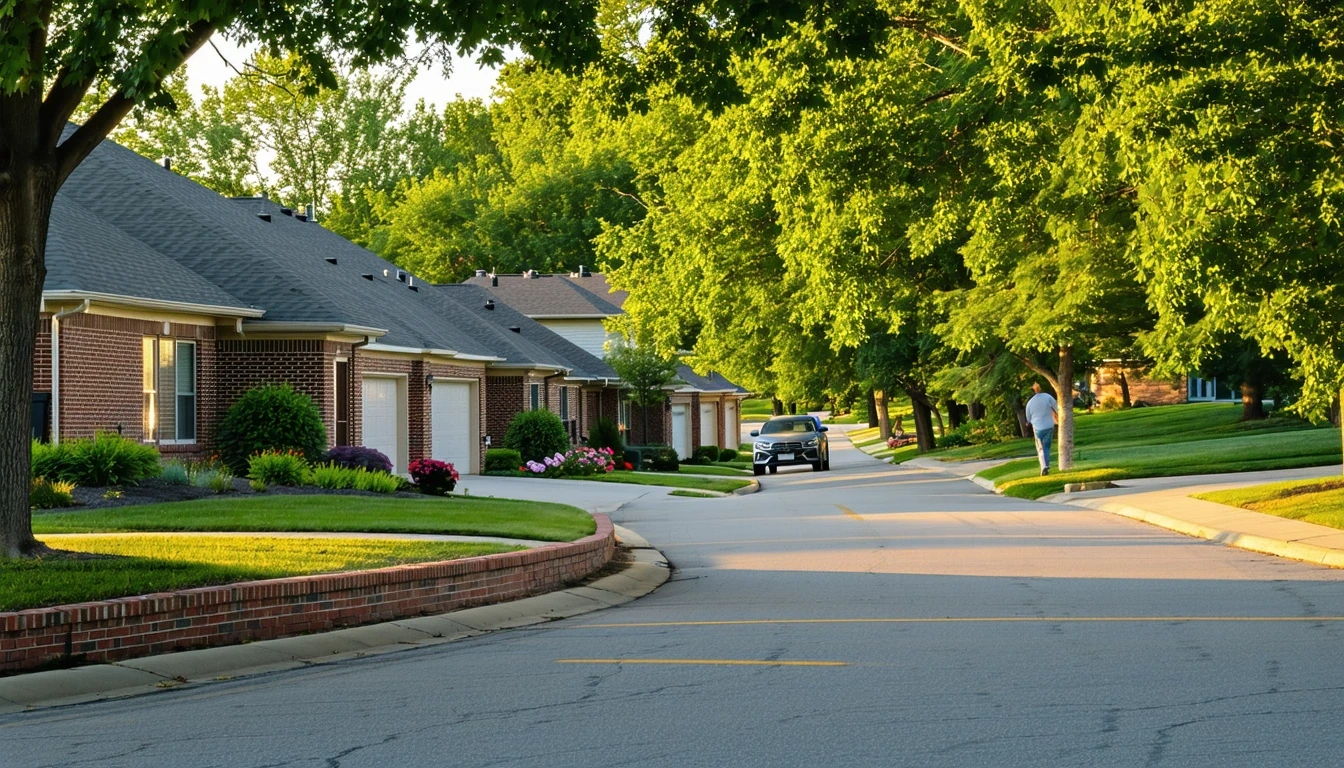
St. Peters vs O’Fallon, 2026: Lower rent in St. Peters ($1,186/month) vs O’Fallon ($1,311/month). Lower home values in St. Peters ($237,100) vs O’Fallon ($283,600). Lower electricity in St. Peters (11.91¢/kWh) vs O’Fallon (13.12¢/kWh). Lower natural gas in St. Peters ($16.48/MCF) vs O’Fallon ($28.51/MCF). Hospital access in O’Fallon; clinics only in St. Peters. More cycling infrastructure in St. Peters. Both cities: 3.1% unemployment, identical regional price level.
St. Peters and O’Fallon sit within the same St. Louis metro area, share similar regional economies, and attract households looking for suburban space with reasonable access to the broader metro. Yet the two cities structure cost exposure differently—not in total dollars, but in where financial pressure concentrates and how predictably it arrives. For households deciding between them in 2026, the choice hinges less on which city costs less overall and more on which cost drivers dominate your household’s budget, risk tolerance, and daily logistics.
Both cities offer family-oriented suburban environments with moderate school density, parks, and mixed land use that supports both residential and commercial activity. But O’Fallon requires higher upfront housing commitment and exposes households to greater utility rate volatility, while St. Peters offers lower baseline housing and energy costs alongside more extensive cycling infrastructure. The better fit depends on whether your household prioritizes lower entry barriers and ongoing predictability, or accepts higher baseline costs in exchange for hospital access and a more uniform low-rise residential character.
Housing Costs
Housing entry costs differ substantially between St. Peters and O’Fallon. In St. Peters, the median home value stands at $237,100, while O’Fallon’s median reaches $283,600. For buyers, that gap translates directly into down payment size, mortgage principal, and the monthly obligation that follows for decades. Renters face a similar pattern: St. Peters’ median gross rent sits at $1,186 per month, compared to $1,311 per month in O’Fallon. These aren’t small differences—they represent the baseline housing commitment before utilities, maintenance, or any discretionary spending enters the picture.
The structural difference matters most for first-time buyers and cost-sensitive renters. In St. Peters, a household can enter homeownership or secure rental housing with a lower monthly obligation, preserving flexibility for other expenses or unexpected costs. O’Fallon’s higher baseline means less room for error: a larger share of gross income goes to housing before anything else gets paid. For families planning to stay several years, that front-loaded cost pressure in O’Fallon may feel justified by neighborhood character or perceived stability. But for households where housing affordability determines whether other goals—saving, travel, education—remain possible, St. Peters offers more breathing room.
Both cities feature predominantly single-family housing stock, with apartments and townhomes concentrated along commercial corridors. In St. Peters, the mixed building height profile suggests a broader range of housing types, from low-rise apartments to mid-density residential. O’Fallon’s low-rise character reflects a more uniform suburban layout, where single-family homes dominate and multifamily options remain limited. That uniformity can mean fewer rental choices and less flexibility for households looking to downsize, upsize, or test a neighborhood before committing to ownership.
| Housing Type | St. Peters | O’Fallon |
|---|---|---|
| Median Home Value | $237,100 | $283,600 |
| Median Gross Rent | $1,186/month | $1,311/month |
Housing takeaway: Renters and first-time buyers face lower entry costs and ongoing obligations in St. Peters. O’Fallon requires a higher baseline housing commitment, which matters most for households where flexibility and predictability determine whether other financial goals remain achievable. The difference isn’t about total affordability—it’s about how much housing pressure dominates the budget before other costs arrive.
Utilities and Energy Costs
Utility rate structures create different exposure patterns in St. Peters and O’Fallon, particularly during heating season. St. Peters residents pay 11.91¢ per kilowatt-hour for electricity, while O’Fallon’s rate reaches 13.12¢/kWh. Natural gas pricing diverges even more sharply: St. Peters’ rate sits at $16.48 per thousand cubic feet (MCF), compared to O’Fallon’s $28.51/MCF. In a region where winter heating relies heavily on natural gas and summer cooling drives electricity usage, these rate differences translate into predictable seasonal cost pressure—especially for larger homes or older housing stock with less efficient insulation.
The natural gas gap matters most during extended cold periods, when furnaces run continuously and usage climbs. A household in O’Fallon faces nearly 75% higher natural gas rates than a comparable household in St. Peters, meaning the same heating behavior costs substantially more. For families in larger single-family homes—common in both cities—that rate difference compounds with square footage. Smaller apartments or newer construction with better insulation dampen the impact, but households in older or larger homes feel the difference acutely. Electricity rate differences, while smaller in percentage terms, still add up over months of air conditioning use during hot, humid St. Louis summers.
Utility cost exposure also varies by household composition and daily routines. Single adults or couples in apartments face lower baseline usage and less seasonal volatility, making rate differences less decisive. Families with children, remote workers, or anyone home during peak heating and cooling hours experience higher usage and greater rate sensitivity. In O’Fallon, that sensitivity translates into less predictable monthly bills and more pressure to manage thermostat settings, upgrade insulation, or accept higher costs as unavoidable. St. Peters’ lower rates don’t eliminate seasonal swings, but they reduce the magnitude of exposure and preserve more budget flexibility during extreme weather.
Utility takeaway: St. Peters offers lower electricity and natural gas rates, reducing seasonal cost volatility for households in larger or older homes. O’Fallon’s higher rates increase heating season exposure, particularly for families or remote workers with higher baseline usage. The difference matters most when utility costs compete with other priorities—predictability in St. Peters vs higher baseline housing commitment in O’Fallon.
Groceries and Daily Expenses
Both St. Peters and O’Fallon share the same regional price level (RPP index of 96), meaning grocery staples, household goods, and everyday purchases face similar baseline pricing. The decision between the two cities doesn’t hinge on whether milk or eggs cost more in one place—it hinges on how food and grocery options are distributed, how much convenience costs, and whether your household’s shopping habits align with what’s accessible without added friction.
Both cities show corridor-clustered food and grocery density, meaning supermarkets, discount grocers, and prepared food options concentrate along major commercial corridors rather than spreading evenly across neighborhoods. For households with cars and flexible schedules, that clustering poses little burden—you drive to the store, stock up, and return home. But for households relying on walkability, transit, or tight schedules, corridor clustering increases the time cost of errands and reduces the ability to make quick, frequent trips. St. Peters’ more extensive cycling infrastructure offers some mitigation for households comfortable biking to stores, but both cities remain car-oriented for most grocery logistics.
Daily expense pressure differs more by household size and shopping strategy than by city. Single adults and couples can shop less frequently, rely on smaller grocery hauls, and absorb occasional convenience spending without destabilizing their budgets. Families managing larger volumes face more pressure: bulk shopping becomes necessary, meal planning matters more, and the cost of convenience—grabbing takeout, buying prepared foods, or making multiple trips—adds up quickly. In both cities, access to big-box stores and discount grocers exists, but the time and planning required to use them consistently determines whether grocery costs remain predictable or creep upward through convenience spending.
Grocery takeaway: Grocery pricing remains comparable between St. Peters and O’Fallon due to shared regional price levels. The real difference lies in how corridor-clustered food access interacts with your household’s transportation options, schedule flexibility, and shopping habits. Families and car-dependent households face similar grocery logistics in both cities; cycling infrastructure in St. Peters offers marginal advantage for smaller, more frequent trips.
Taxes and Fees

Property taxes, local fees, and recurring service charges shape ongoing cost obligations differently for homeowners and renters in St. Peters and O’Fallon. While specific tax rates aren’t provided in the available data, the structural difference in median home values creates predictable tax exposure patterns: higher home values in O’Fallon mean higher assessed values, which translate into higher annual property tax bills even if millage rates remain similar. For homeowners, that difference compounds over years of ownership, affecting long-term budget predictability and the true cost of staying in place.
Renters don’t pay property taxes directly, but landlords pass those costs through in rent pricing. O’Fallon’s higher median rent reflects not just housing demand but also the underlying tax and fee burden landlords face. In both cities, renters may encounter additional fees for trash collection, water, sewer, or parking depending on lease structure and property type. Multifamily buildings sometimes bundle these services into rent; single-family rentals often bill them separately, creating less predictable monthly obligations. Households comparing the two cities should account for how fees are structured in specific properties, not just the advertised rent figure.
Homeowners in both cities may also encounter HOA fees, special assessments, or municipal service charges that vary by neighborhood and housing type. Newer subdivisions and planned communities—more common in O’Fallon’s low-rise residential character—often carry HOA fees that cover landscaping, common area maintenance, or amenity access. Those fees add predictability (services are bundled) but reduce flexibility (you pay whether you use them or not). Older neighborhoods in St. Peters may lack HOAs entirely, giving homeowners more control but also more responsibility for maintenance and upkeep costs.
Taxes and fees takeaway: O’Fallon’s higher home values create higher property tax exposure for owners and indirectly affect rent pricing. HOA fees and service charges vary by neighborhood and housing type in both cities, but O’Fallon’s newer, more uniform residential character increases the likelihood of bundled fees. Long-term homeowners face more predictable but less flexible cost structures in O’Fallon; St. Peters offers lower baseline housing costs but may require more active management of maintenance and services.
Transportation & Commute Reality
Both St. Peters and O’Fallon function as car-oriented suburbs where most households rely on personal vehicles for commuting, errands, and daily logistics. Neither city emitted a transit signal in the available data, indicating that public transportation options—if present—remain limited in scope and unlikely to serve as a primary commuting mode for most residents. Gas prices differ slightly: St. Peters averages $2.64 per gallon, while O’Fallon sits at $2.49 per gallon. That gap matters over time for households driving frequently, but the larger transportation question centers on how much driving your household requires and whether either city offers meaningful alternatives.
St. Peters shows notable cycling infrastructure, with bike-to-road ratios exceeding high thresholds. That doesn’t mean most residents bike to work—it means the city has invested in paths, lanes, and connectivity that make cycling viable for some trips, particularly shorter errands, recreation, or school runs. O’Fallon’s cycling presence remains more limited, concentrated in pockets rather than distributed broadly. For households with flexible schedules, nearby destinations, and a willingness to bike, St. Peters reduces car dependency at the margins. For everyone else, both cities require a car for nearly everything.
Commute patterns depend heavily on where you work within the broader St. Louis metro. Both cities sit on the metro’s outer edges, meaning commutes to downtown St. Louis, Clayton, or other employment centers involve significant drive time. The time cost of commuting—not just fuel expense—becomes the dominant transportation burden. Households working locally or remotely face less pressure; those commuting daily into denser parts of the metro experience transportation as a time tax that compounds with housing and utility costs. Neither city offers a structural advantage here—the decision hinges on where your job is and whether you can tolerate the drive.
Cost Structure Comparison
Housing pressure dominates the cost experience differently in St. Peters and O’Fallon. St. Peters offers lower entry costs for both renters and buyers, reducing the baseline monthly obligation and preserving flexibility for other expenses. O’Fallon requires higher upfront and ongoing housing commitments, which matters most for first-time buyers, single-income households, or anyone where housing affordability determines whether other financial goals remain achievable. The gap isn’t marginal—it’s the difference between housing as a manageable fixed cost and housing as the cost that crowds out everything else.
Utilities introduce more volatility in O’Fallon, particularly during heating season. The natural gas rate difference compounds with home size and age, meaning families in larger or older homes face less predictable bills and more pressure to manage usage actively. St. Peters’ lower electricity and natural gas rates don’t eliminate seasonal swings, but they reduce exposure and make utility costs more predictable month to month. For households sensitive to budget volatility—those with irregular income, tight margins, or competing financial priorities—St. Peters offers more stability.
Transportation patterns matter similarly in both cities: car ownership and regular driving remain non-negotiable for most households. St. Peters’ cycling infrastructure offers marginal relief for households willing and able to bike for some trips, but the structural reality remains car-dependent. The slight gas price advantage in O’Fallon doesn’t offset the higher housing and utility baseline. For households where commute time and fuel costs already strain the budget, neither city offers a structural escape—the decision hinges on whether you can work locally or tolerate long drives into the metro core.
Daily living costs—groceries, household goods, convenience spending—remain comparable due to shared regional pricing. The real difference lies in how corridor-clustered food access interacts with your transportation options and schedule. Families managing larger grocery volumes face similar logistics in both cities; St. Peters’ cycling infrastructure provides slight advantage for smaller, more frequent trips, but most households will drive regardless.
Healthcare access differs meaningfully: O’Fallon has hospital presence, while St. Peters relies on clinics and pharmacies for routine care. For households with chronic conditions, young children, or anyone where emergency access matters, O’Fallon reduces travel friction and time cost during urgent situations. For healthy households using healthcare infrequently, the difference remains abstract until it isn’t—and then it matters acutely.
The better choice depends on which costs dominate your household. If housing entry and ongoing predictability matter most, St. Peters offers lower baseline exposure and more budget flexibility. If you can absorb higher housing and utility costs in exchange for hospital access and a more uniform residential character, O’Fallon fits. Neither city is universally cheaper—they distribute cost pressure differently, and the right fit depends on where your household feels financial friction most acutely.
How the Same Income Feels in St. Peters vs O’Fallon
Single Adult
For a single adult, housing becomes the first non-negotiable cost, and St. Peters’ lower rent baseline preserves more income for discretionary spending, savings, or absorbing unexpected expenses. O’Fallon’s higher rent reduces that flexibility immediately, meaning less room for dining out, travel, or building an emergency fund. Both cities require a car for commuting and errands, so transportation costs remain similar. Utility bills stay manageable in smaller apartments, but O’Fallon’s higher rates still chip away at budget predictability during extreme weather. St. Peters feels less financially tight for single adults prioritizing flexibility over neighborhood uniformity.
Dual-Income Couple
A dual-income couple can absorb O’Fallon’s higher housing costs more easily, but the tradeoff becomes whether that extra monthly obligation is worth reduced flexibility elsewhere. In St. Peters, lower housing and utility baselines mean more income available for savings, home improvements, or lifestyle spending. O’Fallon’s hospital access and low-rise residential character may appeal to couples planning for children or prioritizing neighborhood stability. Both cities require two cars if both partners commute, so transportation costs double regardless. The decision hinges on whether the couple values predictability and financial breathing room or accepts higher baseline costs for perceived long-term stability.
Family with Kids
For families, housing size and utility exposure compound quickly. Larger homes mean higher heating and cooling costs, and O’Fallon’s elevated natural gas rates make winter months less predictable. St. Peters’ lower housing entry costs and utility rates preserve more income for childcare, activities, and savings. Both cities offer moderate school density and park access, so family infrastructure feels comparable. O’Fallon’s hospital presence reduces friction during emergencies or routine pediatric care, which matters more as children age. Families sensitive to budget volatility or managing single incomes feel the cost structure differences more acutely—St. Peters offers more predictability, while O’Fallon requires higher baseline commitment with less flexibility for unexpected expenses.
Decision Matrix: Which City Fits Which Household?
| Decision factor | If you’re sensitive to this… | St. Peters tends to fit when… | O’Fallon tends to fit when… |
|---|---|---|---|
| Housing entry + space needs | Down payment size, monthly rent or mortgage obligation, and flexibility for other expenses | You prioritize lower baseline housing costs and preserving budget flexibility | You can absorb higher upfront and ongoing housing costs for uniform residential character |
| Transportation dependence + commute friction | Daily driving requirements, fuel costs, and time spent commuting | You value cycling infrastructure for marginal trip reduction and slightly higher gas prices feel manageable | You accept car dependency and benefit from slightly lower gas prices despite higher housing baseline |
| Utility variability + home size exposure | Seasonal bill swings, heating and cooling costs, and budget predictability | You want lower electricity and natural gas rates to reduce seasonal volatility | You can manage higher utility rates and accept less predictable heating season bills |
| Grocery strategy + convenience spending creep | Shopping frequency, access to discount grocers, and time cost of errands | You can use cycling infrastructure for smaller trips and manage corridor-clustered grocery access | You rely on car-based grocery logistics and accept similar corridor-clustered access patterns |
| Fees + friction costs (HOA, services, upkeep) | Predictability of monthly obligations, bundled services, and maintenance responsibility | You prefer lower property tax exposure and more control over maintenance and service costs | You accept higher property taxes and potential HOA fees for bundled services and neighborhood uniformity |
| Time budget (schedule flexibility, errands, logistics) | Healthcare access, emergency response time, and daily errand friction | You use healthcare infrequently and prioritize lower baseline costs over hospital proximity | You value hospital presence for emergencies, pediatric care, or chronic condition management |
Lifestyle Fit
Both St. Peters and O’Fallon offer suburban environments with moderate park access, water features, and mixed land use that supports residential and commercial activity. Families find adequate school density in both cities, though specific school quality and district boundaries require separate research. St. Peters’ mixed building height profile suggests a broader range of housing types and neighborhood textures, while O’Fallon’s low-rise character reflects a more uniform suburban layout. For households prioritizing neighborhood consistency and predictable residential character, O’Fallon delivers. For those valuing housing type diversity and more varied urban form, St. Peters offers more options.
Recreation and outdoor access feel comparable in both cities. Park density sits in the moderate range, and water features add visual interest and recreational opportunities. Neither city offers extensive trail networks or destination parks, but both provide adequate green space for routine outdoor activity. St. Peters’ notable cycling infrastructure makes biking more viable for recreation and short errands, particularly for families comfortable navigating mixed-use corridors on bikes. O’Fallon’s more limited cycling presence means most outdoor activity happens in parks or requires driving to trailheads elsewhere in the metro.
Healthcare access differs meaningfully in daily life. O’Fallon’s hospital presence reduces travel time and friction during emergencies, specialist visits, or inpatient care. St. Peters residents rely on clinics and pharmacies for routine needs but must travel to neighboring communities for hospital services. For families with young children, elderly relatives, or anyone managing chronic conditions, that proximity matters—not every day, but acutely when it does. For healthy households using healthcare infrequently, the difference remains less visible until an urgent need arises.
St. Peters: Median household income $88,708/year. O’Fallon: Median household income $104,863/year. Both cities share 3.1% unemployment and identical regional price levels, indicating similar economic stability and job market conditions within the broader St. Louis metro.
Frequently Asked Questions
Is St. Peters or O’Fallon cheaper for renters in 2026?
St. Peters offers lower median gross rent at $1,186 per month compared to O’Fallon’s $1,311 per month. That baseline difference matters most for cost-sensitive renters or those prioritizing budget flexibility. O’Fallon’s higher rent reflects not just housing demand but also higher property tax exposure and utility rate structures that landlords pass through. Renters in St. Peters face lower ongoing housing obligations, preserving more income for other expenses or savings.
Which city has lower utility costs, St. Peters or O’Fallon?
St. Peters has lower electricity rates (11.91¢/kWh vs 13.12¢/kWh) and substantially lower natural gas rates ($16.48/MCF vs $28.51/MCF). Those differences compound during heating season, particularly for households in larger or older homes. O’Fallon’s higher utility rates increase seasonal bill volatility and reduce budget predictability. Families, remote workers, or anyone home during peak heating and cooling hours feel the difference most acutely.
How do housing entry costs compare between St. Peters and O’Fallon in 2026?
St. Peters’ median home value sits at $237,100, while O’Fallon’s reaches $283,600. For buyers, that gap translates into larger down payments, higher mortgage principals, and greater ongoing monthly obligations in O’Fallon. First-time buyers and households where housing affordability determines financial flexibility face lower entry barriers in St. Peters. O’Fallon requires higher upfront and ongoing commitment, which matters most when housing costs crowd out other financial goals.
Does St. Peters or O’Fallon have better healthcare access?
O’Fallon has hospital presence, reducing travel time and friction for emergency care, specialist visits, and inpatient services. St. Peters relies on clinics and pharmacies for routine care, requiring travel to neighboring communities for hospital services. For families with young children, chronic conditions, or anyone where emergency access matters, O’Fallon’s hospital proximity reduces time cost and logistical burden during urgent situations.
Which city is better for families comparing St. Peters and O’Fallon?
Both cities offer moderate school density, park access, and family-oriented suburban environments. St. Peters provides lower housing and utility costs, preserving more budget flexibility for childcare, activities, and savings. O’Fallon offers hospital access and a more uniform low-rise residential character, which may appeal to families prioritizing neighborhood consistency. The better fit depends on whether your family values lower baseline costs and predictability or accepts higher housing commitment for hospital proximity and residential uniformity.
Conclusion
St. Peters and O’Fallon distribute cost pressure differently, and the better choice depends on which financial exposures your household can absorb and which you need to minimize. St. Peters offers lower housing entry costs, reduced utility rate exposure, and more extensive cycling infrastructure, making it the better fit for renters, first-time buyers, and households prioritizing budget predictability and flexibility. O’Fallon requires higher baseline housing and utility commitments but delivers hospital access and a more uniform low-rise residential character, fitting households that can absorb those costs in exchange for perceived stability and reduced healthcare travel friction.
Neither city eliminates the need for car ownership, and both function as car-oriented suburbs where commuting, errands, and daily logistics require personal vehicles. Grocery costs remain comparable due to shared regional pricing, and both cities show corridor-clustered food access that favors households with cars and flexible schedules. The decision hinges not on total cost of living but on where cost pressure concentrates in your household—housing and utilities in O’Fallon, or lower baseline exposure with more budget breathing room in St. Peters. Evaluate your household’s income stability, sensitivity to seasonal bill swings, healthcare needs, and tolerance for higher upfront housing costs before choosing. Both cities offer viable suburban living within the St. Louis metro; the right fit depends on which cost structure aligns with your financial priorities and daily logistics in 2026.
How this article was built: In addition to public economic data, this article incorporates location-based experiential signals derived from anonymized geographic patterns—such as access density, walkability, and land-use mix—to reflect how day-to-day living actually feels in St. Peters, MO.