
“It’s a solid place if you know what you’re getting—quiet, practical, good for families. But if you’re hoping for a walkable downtown vibe or tons of local character, you might feel like something’s missing.”
That’s the tension at the heart of life in St. Peters. It’s a city that works exceptionally well for people who want suburban predictability, school access, and the ability to drive to what they need without fighting traffic. But it’s also a place where the infrastructure feels selectively urban—pockets of walkability, clusters of convenience, and bike lanes that exist but don’t necessarily replace the car for most households.
Understanding whether St. Peters feels like home depends less on whether it’s “good” and more on whether its particular mix of accessibility, pace, and tradeoffs matches what you’re actually looking for in daily life.
What St. Peters Feels Like Day to Day
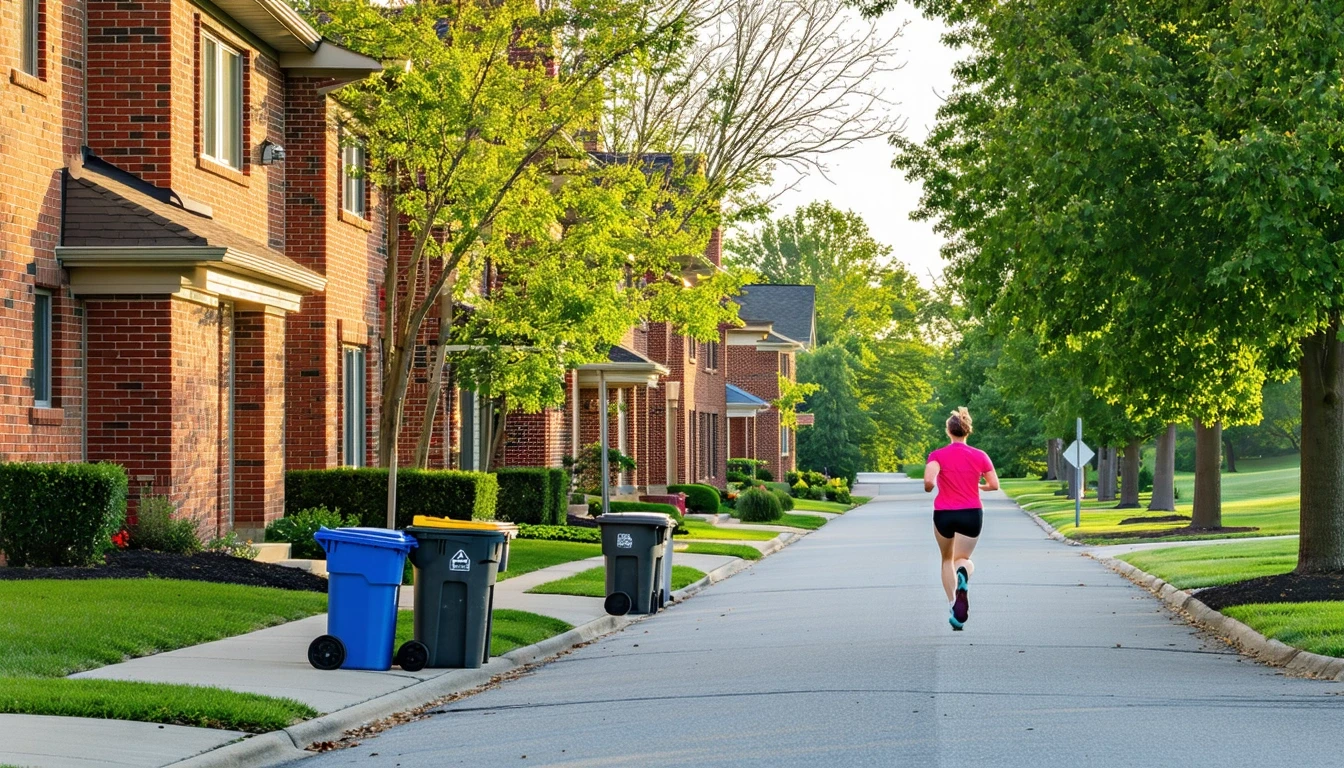
St. Peters occupies a specific emotional space in the St. Louis metro: it’s not trying to be urban, but it’s not purely residential either. The city has mixed building character—some areas feel like classic suburban subdivisions, others have a bit more commercial presence woven in. There are corridors where you can knock out errands in a single trip, and there are neighborhoods where you’d need to drive to reach anything.
The pedestrian infrastructure is more developed than many comparable suburbs, particularly in certain pockets. You’ll find sidewalks, bike lanes, and crossings that suggest someone thought about non-car movement. But the overall structure still assumes most people are driving most of the time. If you’re someone who wants the option to walk or bike occasionally—especially for recreation or short trips—you’ll find that infrastructure. If you’re someone who needs to rely on it daily, you’ll likely feel the gaps.
Green space is present and accessible, with parks distributed throughout the city and water features that add a bit of natural relief. It’s not wilderness, but it’s enough to break up the suburban grid and give families, dog walkers, and casual joggers somewhere to go without a long drive.
For families, the city offers school access and some playground infrastructure, though playground density is lighter than school availability. That imbalance shows up in how people talk about raising kids here: schools feel stable and reachable, but the informal play infrastructure—neighborhood parks, tot lots, spontaneous outdoor gathering spots—can feel sparse depending on where you land.
Healthcare access is routine and local, with clinics and pharmacies available but no hospital within city limits. For everyday medical needs, you’re covered. For anything more serious, you’re driving.
The Emotional Texture of St. Peters
The recurring emotional note in St. Peters is pragmatic contentment. People who feel at home here tend to value reliability, space, and the ability to control their routines without a lot of friction. They appreciate that errands are straightforward, that traffic is manageable, and that the city doesn’t demand constant adaptation.
But there’s also a thread of restlessness among people who moved here expecting more texture. The corridor-clustered errands model means convenience exists, but it’s not evenly distributed. If you’re near one of the commercial spines, life feels easy. If you’re tucked into a residential pocket, you’re driving for everything, and that repetition can start to feel limiting.
The bike infrastructure gets mentioned often, but with mixed feelings. It’s there, and it’s more substantial than in many peer suburbs, but it doesn’t always connect in ways that make it practical for daily errands. People who bike for exercise or leisure appreciate it. People who hoped to reduce car dependency often find themselves defaulting back to driving.
There’s also a subtle tension around identity. St. Peters doesn’t have a strong “downtown” or central gathering place that defines the city emotionally. That works fine for people who prefer low-key, distributed living. But for people who want a sense of place—a main street, a plaza, a neighborhood hub—it can feel like the city lacks a center of gravity.
What People Are Talking About Online
In local Facebook groups and regional Reddit threads, St. Peters discussions tend to cluster around a few recurring themes: convenience, schools, traffic patterns, and the slow creep of change.
Convenience gets praised often, especially by people who value proximity to shopping, dining chains, and big-box retail. “Everything you need is here, and you’re not sitting in traffic to get it,” is a common refrain. But that convenience is also described as somewhat homogenous—lots of the same chains, not a lot of local flavor.
Schools generate steady, positive mentions, particularly from families who moved specifically for school access. The tone is less about rankings and more about stability: parents feel like their kids are in a predictable, well-resourced environment.
Traffic complaints are mild but persistent. People don’t describe gridlock, but they do mention congestion around certain commercial corridors during peak times. The irritation isn’t about long delays—it’s about the feeling that a city this suburban shouldn’t have bottlenecks at all.
Change is a quieter but more emotionally charged topic. As the city continues to grow and add housing, some long-time residents express concern about losing the “small-town feel” they moved here for. Newer residents, meanwhile, sometimes wish the city would add more walkable, mixed-use development to break up the car-oriented monotony.
“It’s a great place to raise kids, but I do miss having a real downtown to walk around in.”
“Honestly, it’s exactly what I wanted—quiet, safe, and I can get to Target in five minutes.”
“The bike trails are nice, but I still drive everywhere. It’s just easier.”
How Local Coverage Frames the City
Local news and community coverage tend to frame St. Peters through the lens of growth, infrastructure, and quality-of-life maintenance. The tone is rarely dramatic—this isn’t a city dealing with major upheaval or crisis. Instead, coverage reflects steady, incremental change and the debates that come with it.
Typical themes include:
- “New Development Brings Amenities and Questions About Density”
- “Residents Weigh Convenience Against Suburban Character”
- “City Expands Recreational Infrastructure as Population Grows”
- “School District Updates Draw Family Interest”
- “Traffic Adjustments Planned for Commercial Corridors”
The framing is generally neutral to positive, with an undertone of civic pride. St. Peters is portrayed as a city that’s doing well, managing growth, and trying to balance competing priorities. There’s less focus on conflict and more on process—how the city is evolving, what’s being added, and how residents are adjusting.
What Reviews and Public Perception Reveal
On platforms like Google Reviews, Nextdoor, and regional forums, St. Peters gets steady praise from people whose expectations align with what the city offers. Families, commuters, and people seeking suburban ease tend to rate their experience highly. The complaints, when they appear, are less about failure and more about mismatched expectations.
Positive themes include:
- Safe, quiet neighborhoods with well-maintained streets
- Good school access and family-friendly parks
- Convenient shopping and dining without long drives
- Lower stress compared to denser parts of the metro
Critical themes include:
- Lack of walkable, mixed-use neighborhoods
- Limited local dining and entertainment variety
- Feeling of sameness across commercial areas
- Bike infrastructure that doesn’t fully replace car dependency
Neighborhood variation exists but isn’t always easy to decode from reviews. Newer planned areas tend to feel more polished and amenity-rich, while older pockets can feel more established but less connected to the city’s newer infrastructure investments.
How St. Peters Compares to Nearby Cities
| City | Vibe | Walkability | Family Fit |
|---|---|---|---|
| St. Peters | Practical suburban comfort with selective walkable pockets | Corridor-based; bike lanes present but car primary | Strong school access, moderate playground density |
| O’Fallon, MO | Newer suburban growth with family focus | Car-dependent with planned trail networks | High family infrastructure, newer amenities |
| St. Charles | Historic downtown core with suburban sprawl | Walkable downtown district, car-dependent elsewhere | Strong schools, more varied neighborhood character |
St. Peters sits between O’Fallon’s newer, more uniform suburban model and St. Charles’s historic-downtown-plus-sprawl structure. If you want a true walkable downtown experience, St. Charles offers that in its core district. If you want the newest housing stock and family amenities, O’Fallon may feel more polished. St. Peters offers a middle path: more infrastructure variety than O’Fallon, less downtown character than St. Charles, and a slightly older, more settled feel than either.
The choice often comes down to what you’re willing to trade. St. Peters gives you housing tradeoffs that lean toward space and school access without requiring you to live in a brand-new subdivision. But if you’re hoping for a main street to stroll or a dense, walkable neighborhood grid, you’ll feel the absence.
What Locals Are Saying
“We moved here for the schools and the space, and we got exactly that. It’s not exciting, but it’s stable, and that’s what we needed.”
“I like that I can bike around my neighborhood, but I still drive to the grocery store. The infrastructure is there, it just doesn’t connect the way I hoped it would.”
“It’s quiet, maybe too quiet. I miss having a coffee shop I could walk to or a downtown area to browse on weekends.”
“For families, it’s hard to beat. The parks are clean, the schools are solid, and you’re close enough to St. Louis for anything you can’t find here.”
“I thought I’d love the suburban pace, but after a year, everything started to feel the same. Same chains, same drives, same routines.”
“If you’re okay with driving, it’s great. If you’re trying to reduce car time, you’ll hit a wall pretty quickly.”
“It’s a good place to land if you’re commuting into the city but want to come home to something calmer. Just don’t expect a lot of local nightlife or culture.”
Does St. Peters Feel Like a Good Fit?
St. Peters works best for people who want suburban ease, school stability, and the flexibility to drive where they need to go without dealing with urban congestion. It’s a city that rewards pragmatic priorities: space, safety, convenience, and predictability. If those are your anchors, you’ll likely feel at home quickly.
It tends to frustrate people who want walkable density, neighborhood texture, or a strong sense of place. The infrastructure exists in pockets, but it doesn’t add up to a car-optional lifestyle. The amenities are there, but they’re distributed along corridors rather than woven into neighborhoods. The city feels functional and stable, but not particularly distinctive.
If you’re deciding whether St. Peters fits, ask yourself: Do I value routine and control over spontaneity and variety? Am I comfortable driving for most errands, even if bike lanes exist? Do I want a quiet home base more than I want a vibrant local scene?
If the answer is yes, St. Peters will likely feel like a relief. If the answer is no, you may find yourself restless within a year.
For a clearer picture of where money goes each month or what shapes quality of life factors beyond housing and commuting, those lenses can help you test whether the city’s structure matches your actual daily needs.
How this article was built: In addition to public economic data, this article incorporates location-based experiential signals derived from anonymized geographic patterns—such as access density, walkability, and land-use mix—to reflect how day-to-day living actually feels in St. Peters, MO.
The perspectives shown reflect commonly expressed local sentiment and recurring themes in public discussion, rather than individual accounts.