
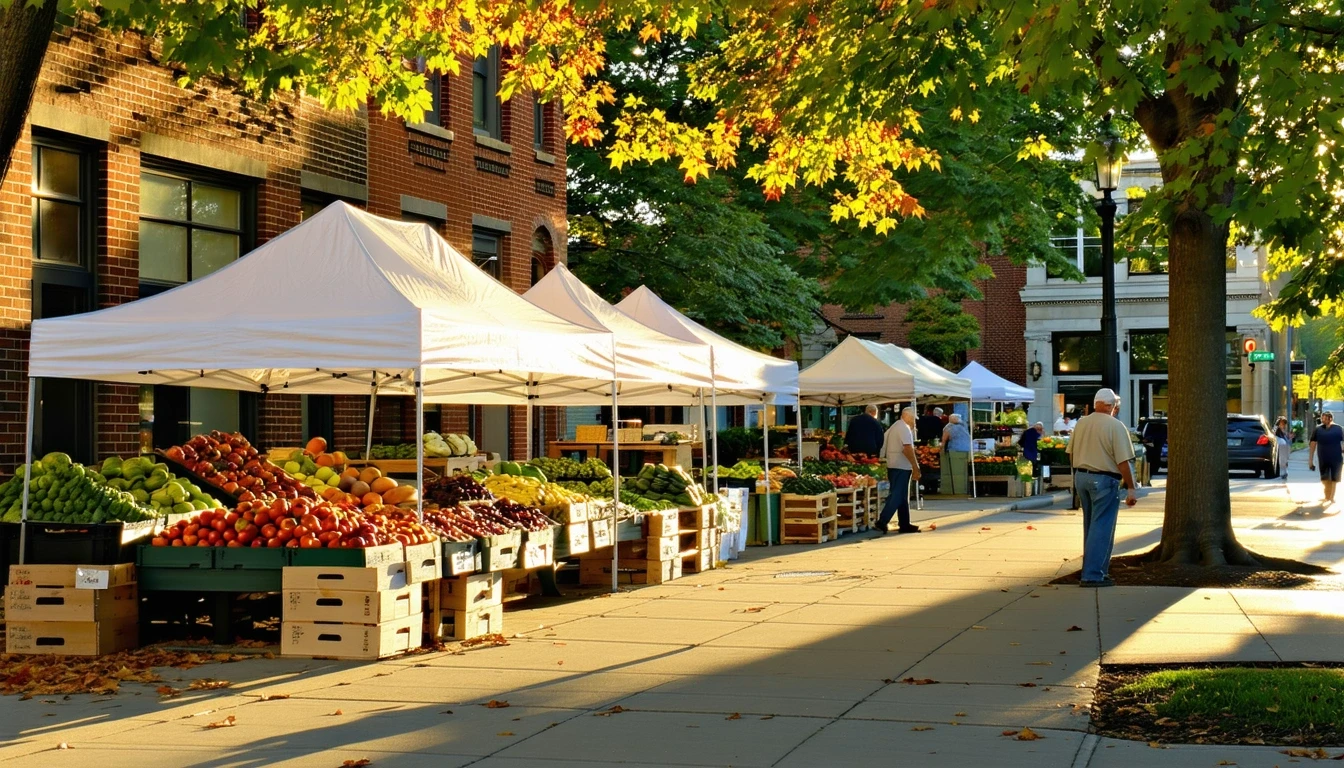
How Grocery Costs Feel in Royal Oak
Grocery prices in Royal Oak, MI track slightly below the national baseline, reflecting a regional price environment that runs about 5% under the U.S. average. That modest discount shows up across staple categories—dairy, protein, grains—and creates a starting point that feels less pressured than many metro areas. For households earning near or above the city’s median income of $92,799 per year, routine grocery runs rarely dominate financial planning. The combination of below-average pricing and strong household earnings means food costs sit comfortably within reach for many residents, even as national food inflation continues to shape headlines.
That said, grocery pressure is never uniform. Singles living on one income, retirees managing fixed budgets, and families with three or more members all experience Royal Oak’s food costs differently. A two-person household buying mostly familiar brands and cooking at home several nights a week will find the weekly trip manageable and predictable. Larger families, especially those stretching a single paycheck, feel the cumulative weight of multiple gallons of milk, several pounds of protein, and constant restocking of pantry basics. The price-per-item advantage matters most when household size and income align favorably; when they don’t, even modest per-unit costs add up quickly.
What sets Royal Oak apart isn’t rock-bottom pricing—it’s the density and variety of grocery options. The city’s commercial corridors and mixed-use neighborhoods support a high concentration of food retailers, from discount chains to mid-tier supermarkets to premium organic markets. That accessibility, combined with walkable pockets and well-developed pedestrian infrastructure, means residents can compare prices across multiple stores without long drives or logistical friction. For cost-conscious shoppers, that structural advantage translates into real control: the ability to shift between store tiers, catch sales, and avoid getting locked into a single retailer’s pricing cycle.
Grocery Price Signals (Illustrative)
These prices illustrate how staple items tend to compare locally—not a full shopping list. They’re derived estimates based on national baselines adjusted for regional price parity, and they reflect typical pricing patterns rather than store-specific or week-specific snapshots. Use them as reference points for understanding relative cost positioning in Royal Oak, not as guarantees of what you’ll pay at checkout.
| Item | Typical Price |
|---|---|
| Bread (per pound) | $1.72 |
| Cheese (per pound) | $4.54 |
| Chicken (per pound) | $1.93 |
| Eggs (per dozen) | $2.23 |
| Ground beef (per pound) | $6.37 |
| Milk (per half-gallon) | $3.86 |
| Rice (per pound) | $1.01 |
Derived estimate based on national baseline adjusted by regional price parity; not an observed local price.
Eggs and milk—two of the most price-volatile categories nationally—sit in a range that feels neither cheap nor punishing. Ground beef, consistently one of the higher-ticket proteins, reflects the same modest regional discount. Chicken remains the most budget-friendly animal protein, and rice offers an anchor for households stretching meals across multiple days. Cheese, bread, and eggs form the backbone of quick meals, and their combined cost determines how easily a household can keep breakfast, lunch, and snacks stocked without planning every purchase.
These individual prices matter less than their cumulative rhythm. A household buying two gallons of milk, a dozen eggs, two pounds of chicken, and a loaf of bread each week will spend somewhere in the neighborhood of $18–$20 on just those four items (illustrative context, before sales or substitutions). Multiply that baseline by the number of people eating at home, add produce, snacks, and pantry staples, and the weekly total grows quickly. The per-item savings relative to higher-cost metros help, but they don’t eliminate the fundamental math: more people, more meals, more money.
Store Choice & Price Sensitivity
Grocery costs in Royal Oak vary significantly by store tier, and understanding that range is essential for managing food spending. Discount grocers—no-frills chains focused on private-label goods and limited selection—offer the lowest per-item pricing and appeal most to households prioritizing cost over convenience or brand loyalty. Mid-tier supermarkets, the most common format in the city, balance competitive pricing with broader selection, familiar brands, and better produce quality. Premium grocers—organic-focused markets, specialty stores, and upscale chains—charge noticeably more but attract shoppers seeking specific dietary options, prepared foods, or a more curated shopping experience.
The difference between discount and premium tiers isn’t trivial. A household that shops exclusively at a discount grocer might spend 20–30% less per week than one buying the same categories at a premium market (illustrative directional context, not a precise calculation). That gap widens for organic produce, specialty dairy, and prepared items, where premium stores command significant markups. For families on tight budgets, sticking to discount or mid-tier stores becomes a necessity, not a preference. For higher-earning households, the premium tier offers convenience and quality but at a cost that adds up over time.
Royal Oak’s high grocery density and walkable corridors make it easier to move between store tiers without major logistical friction. A shopper can hit a discount chain for pantry staples, a mid-tier supermarket for fresh protein and produce, and a premium market for specific items—all within a few miles and without highway driving. That flexibility matters most for households with time to plan and compare, but it’s less accessible to those working multiple jobs, managing young children, or lacking reliable transportation. Store choice is a lever, but it’s one that requires both awareness and capacity to pull.
What Drives Grocery Pressure Here
Income is the primary determinant of how grocery costs feel in Royal Oak. Households earning near or above the city’s median can absorb week-to-week price swings, stock up during sales, and occasionally shop at premium stores without financial stress. Those earning below the median—especially single-income households or families with one part-time earner—experience grocery costs as a recurring pressure point that requires active management. The regional price discount helps, but it doesn’t override the basic arithmetic: if 10–15% of gross income goes to food, and income is constrained, every price increase or unplanned purchase creates tension.
Household size amplifies that pressure. A single adult or couple without children can keep weekly grocery spending predictable and relatively low, even with occasional restaurant meals or premium purchases. Add one child, and costs rise noticeably; add two or three, and the grocery budget becomes one of the largest recurring household expenses after housing. Larger families face constant restocking cycles—milk runs out faster, snacks disappear overnight, and meal planning becomes a logistical necessity rather than a casual choice. The per-person cost of feeding a family doesn’t scale linearly, but it scales relentlessly.
Regional distribution patterns also shape the grocery experience in Royal Oak. The city’s location within the Detroit metro area ensures consistent supply chains and competitive pricing across multiple retail formats. Seasonal variability exists—produce prices shift with growing seasons, holiday demand drives up certain proteins, and winter weather occasionally disrupts restocking—but these fluctuations are less extreme than in more isolated or rural markets. The result is a relatively stable pricing environment where week-to-week changes are noticeable but rarely disruptive, and where store choice and shopping habits matter more than timing or seasonality.
Practical Ways People Manage Grocery Costs
The most effective strategy for controlling grocery spending in Royal Oak is store-tier awareness. Households that anchor their routine shopping at discount or mid-tier grocers, reserving premium stores for specific items only, maintain lower baseline costs without sacrificing variety. Shopping multiple stores in a single trip—possible due to the city’s high grocery density and accessible corridors—allows for targeted purchasing: bulk staples at the discount chain, fresh produce at the mid-tier supermarket, specialty items at the premium market. This approach requires planning and time, but it delivers meaningful cost control for households willing to invest the effort.
Buying in bulk reduces per-unit costs for non-perishable staples—rice, pasta, canned goods, frozen vegetables—and helps smooth out weekly spending volatility. Larger package sizes and multi-buy promotions lower the effective price per serving, though they require upfront cash and adequate storage space. For families, bulk buying aligns well with high consumption rates; for singles or couples, it works best for items with long shelf lives and consistent use. The key is avoiding bulk purchases of perishable goods that spoil before they’re consumed, which erases any savings and adds waste.
Meal planning and cooking from scratch remain the most reliable levers for reducing grocery costs. Households that plan weekly menus around sale items, seasonal produce, and versatile proteins (chicken, eggs, beans) spend less and waste less than those shopping without a list or relying heavily on convenience foods. Cooking larger batches and using leftovers for lunches stretches each grocery dollar further and reduces the temptation to eat out when time is short. These habits require consistency and some culinary confidence, but they offer the most direct path to lowering food expenses without sacrificing nutrition or satisfaction.
Loyalty programs, digital coupons, and store apps provide incremental savings for households willing to engage with them. Many mid-tier and premium grocers offer app-based discounts, personalized offers, and fuel rewards tied to purchase volume. These programs don’t transform grocery costs, but they shave a few dollars off each trip and reward consistent shopping at a single chain. For households already shopping strategically, loyalty programs add a small but steady benefit; for those stretched thin on time, the administrative overhead may outweigh the savings.
Groceries vs Eating Out (Directional)
The tradeoff between cooking at home and eating out shapes grocery spending in ways that aren’t always obvious. A household that cooks most meals at home will see higher grocery bills but lower restaurant spending; one that eats out frequently will spend less at the supermarket but more overall on food. In Royal Oak, the density of dining options—from fast-casual chains to independent restaurants—makes eating out convenient and tempting, especially for dual-income households with limited evening time. The cost difference between a home-cooked meal and a restaurant equivalent is significant, but the time and effort saved by eating out often feel worth the premium.
For a two-person household, cooking dinner at home might cost $8–$12 in groceries per meal (illustrative context, depending on protein and sides), while the same meal at a mid-tier restaurant runs $30–$50 before tip. Over a week, the difference between cooking six nights and eating out three times can shift food spending by $60–$100 or more. That gap narrows slightly for takeout or fast-casual options, but it never disappears. Households managing tight budgets treat eating out as an occasional reward rather than a routine convenience; those with more income flexibility use it to reclaim time and reduce meal-planning friction.
The real tension isn’t between groceries and dining—it’s between time, money, and energy. Cooking saves money but requires planning, shopping, prep, and cleanup. Eating out saves time but costs more and offers less control over ingredients and portion sizes. Royal Oak’s grocery accessibility and store variety tilt the equation slightly toward home cooking by reducing the friction of restocking and comparison shopping. But for households already stretched thin, the convenience of prepared food—whether from a restaurant, a grocery deli, or a meal kit service—often wins, even when the cost is higher.
How Day-to-Day Grocery Shopping Actually Works in Royal Oak
The structure of Royal Oak makes routine grocery shopping less of a logistical burden than in many suburban cities. Because food and grocery establishments are distributed broadly rather than concentrated in a single commercial zone, most residents live within a short drive—or even a walk—of multiple store options. The city’s walkable pockets and high pedestrian-to-road ratio mean that households near downtown or along main corridors can handle small restocking trips on foot, saving time and avoiding the need to plan every purchase around a car trip. For larger weekly hauls, the mixed land use and accessible street grid make it easy to chain together stops at different store tiers without backtracking or highway merges.
This accessibility matters most for households managing unpredictable schedules or frequent small-batch shopping. A parent running low on milk or eggs can make a quick stop on the way home from work without rerouting significantly. A couple cooking dinner can grab a missing ingredient from a nearby market without turning it into a separate errand. The ability to treat grocery shopping as a flexible, low-friction task rather than a once-a-week expedition reduces both planning overhead and the cost of last-minute purchases, since competitive store density keeps prices in check even for convenience runs.
FAQs About Grocery Costs in Royal Oak (2026)
Is it cheaper to shop in bulk in Royal Oak? Bulk buying lowers per-unit costs for non-perishable staples and high-use items, especially at discount or warehouse-format stores. It works best for larger households with consistent consumption rates and adequate storage space, but it requires upfront cash and careful planning to avoid waste on perishable goods.
Which stores in Royal Oak are best for low prices? Discount grocery chains offer the lowest per-item pricing, focusing on private-label goods and limited selection. Mid-tier supermarkets balance competitive pricing with broader variety and better produce quality, while premium grocers charge more for organic, specialty, and prepared options. Shopping across multiple tiers based on category delivers the most cost control.
How much more do organic items cost in Royal Oak? Organic produce, dairy, and proteins typically carry premiums that range from modest to significant depending on store tier and category. Premium grocers charge the highest markups, while mid-tier supermarkets offer more competitive organic pricing. Households prioritizing organic on a budget often buy selectively, focusing on high-impact categories and accepting conventional options elsewhere.
How do grocery costs for two adults in Royal Oak tend to compare to nearby cities? Royal Oak’s regional price parity sits slightly below the national average, which translates into modestly lower grocery costs compared to higher-cost metros. The city’s strong median income and high grocery density create a favorable environment for food spending, though individual household experience depends heavily on store choice, dietary preferences, and shopping habits.
How do households in Royal Oak think about grocery spending when cooking at home? Most households treat grocery costs as a controllable expense that responds to planning, store choice, and meal habits. Cooking from scratch, buying in bulk, and shopping across multiple store tiers all reduce per-meal costs, but they require time and consistency. Families with tight budgets prioritize discount and mid-tier stores; higher-earning households trade cost for convenience and quality at premium markets.
Does Royal Oak’s grocery accessibility reduce overall food costs? The city’s high density of food retailers and walkable corridors make it easier to compare prices, catch sales, and avoid getting locked into a single store’s pricing cycle. That structural advantage doesn’t lower prices directly, but it gives cost-conscious shoppers more control and flexibility, which can translate into meaningful savings over time for households willing to shop strategically.
How does household size affect grocery pressure in Royal Oak? Larger families face higher absolute grocery costs due to greater consumption volume, even when per-unit prices are modest. The regional price discount helps, but it doesn’t eliminate the cumulative burden of feeding multiple people daily. Singles and couples experience grocery costs as manageable and predictable; families with three or more members treat food spending as a major recurring expense that requires active planning and cost control.
How Groceries Fit Into the Cost of Living in Royal Oak
Grocery costs in Royal Oak sit comfortably in the middle tier of household expenses—less dominant than housing, more predictable than transportation, and more controllable than utilities. For most households, food spending represents a recurring obligation that responds to behavior and planning rather than a fixed cost that must simply be absorbed. That responsiveness makes groceries one of the few major expense categories where households retain meaningful agency: store choice, meal planning, and shopping habits all influence the final number in ways that rent, property taxes, and insurance premiums do not.
The city’s below-national pricing and strong median income create a baseline environment where grocery costs rarely become a crisis for households earning near or above the median. For those below that threshold—especially single-income families, retirees, and part-time workers—food spending requires more active management, but the density of store options and accessible shopping corridors provide the tools to do so. The real advantage isn’t that groceries are cheap in Royal Oak; it’s that the city’s structure makes it easier to shop strategically, compare prices, and avoid the logistical friction that locks households into higher-cost routines.
Understanding grocery costs in isolation, however, misses the larger picture. Food spending interacts with housing affordability, transportation needs, and income stability to determine overall financial pressure. A household paying modest rent and cooking most meals at home will experience Royal Oak’s cost of living very differently than one stretching to cover a mortgage and relying on takeout several nights a week. For a complete view of what a budget has to handle in Royal Oak, including how groceries fit alongside housing, utilities, transportation, and discretionary spending, the Monthly Budget article provides the full breakdown. Grocery costs are one piece of the puzzle—important, controllable, and worth understanding—but never the whole story.
How this article was built: In addition to public economic data, this article incorporates location-based experiential signals derived from anonymized geographic patterns—such as access density, walkability, and land-use mix—to reflect how day-to-day living actually feels in Royal Oak, MI.