
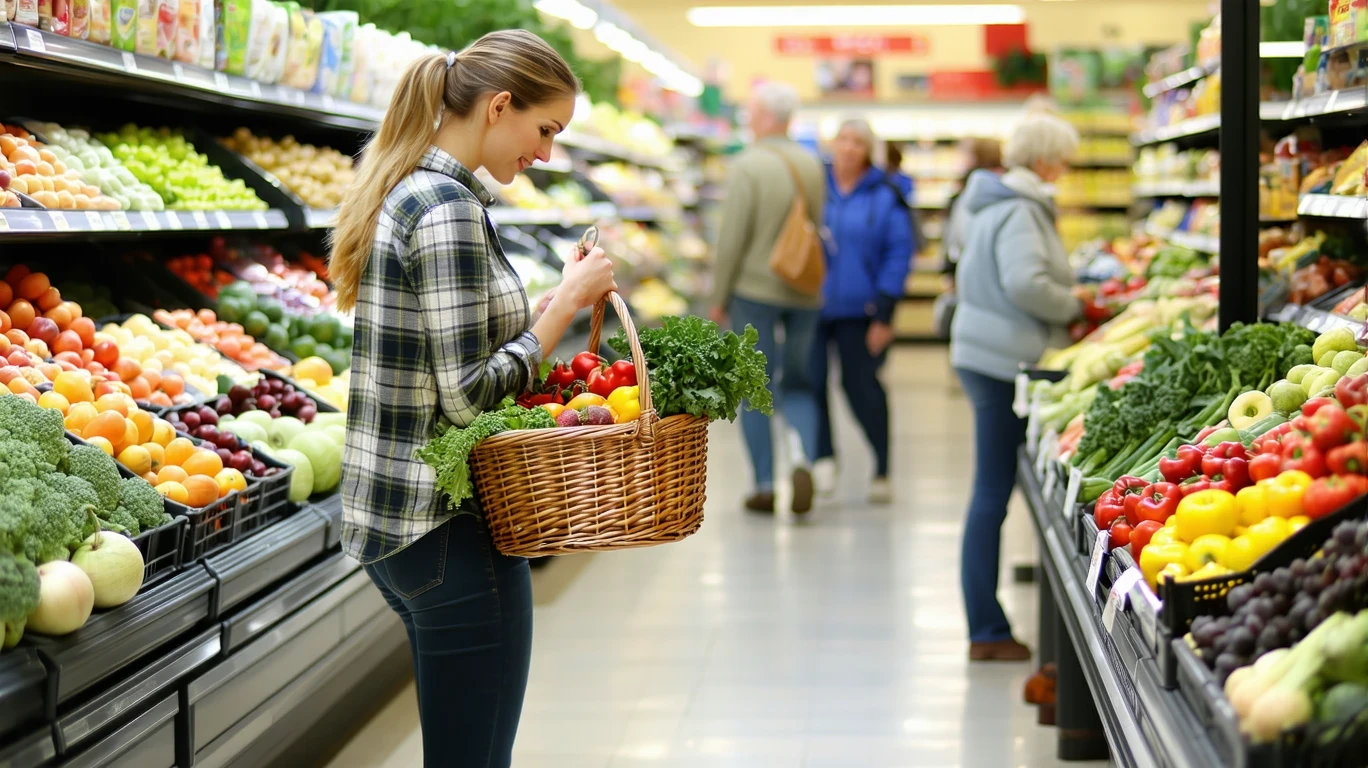
How Grocery Costs Feel in Plymouth
Can you stay under $100 at the grocery store in Plymouth? For a single adult buying staples for the week, it’s possible—but it requires intentional choices about where you shop and what goes in the cart. For a household of three or four, that same $100 disappears quickly, especially when you’re restocking pantry basics, fresh produce, and proteins all at once. Grocery prices in Plymouth sit roughly in line with the broader Twin Cities metro, meaning they don’t shock newcomers from Minneapolis or St. Paul, but they do command attention from anyone moving in from lower-cost regions or managing a tight household budget.
The pressure isn’t uniform. Singles and couples without kids often find grocery costs manageable, especially if they’re comfortable rotating between discount grocers and mid-tier chains. Families with school-age children, on the other hand, feel the weight more acutely—not because any single item is wildly expensive, but because volume adds up fast. A gallon of milk here, a few pounds of chicken there, snacks for lunches, and suddenly the weekly run is $150 or more. With a median household income of $130,131 per year, many Plymouth households can absorb grocery costs without restructuring their lives, but that doesn’t mean food spending goes unnoticed. It’s still one of the few flexible line items where small decisions—store choice, brand loyalty, meal planning—make a tangible difference.
What makes grocery costs feel tighter or looser in Plymouth isn’t just the price tags themselves, but how they interact with housing and transportation. When you’re already spending a significant share of income on a mortgage or rent—median home value is $447,600, and median rent is $1,625 per month—grocery bills become one of the few areas where you can exercise real control week to week. That’s why store choice and shopping habits matter so much here. The difference between a discount grocer and a premium market isn’t trivial when you’re feeding a family of four, and Plymouth residents have access to both ends of that spectrum.
Grocery Price Signals (Illustrative)
To understand how staple items tend to compare locally, it helps to look at a few common grocery anchors. These prices illustrate relative positioning in Plymouth—not a complete shopping list or a guarantee of what you’ll pay at checkout, but a sense of how everyday items are priced in the current environment. Derived estimate based on national baseline adjusted by regional price parity; not an observed local price.
| Item | Typical Price |
|---|---|
| Bread (per pound) | $1.81/lb |
| Cheese (per pound) | $4.78/lb |
| Chicken (per pound) | $2.03/lb |
| Eggs (per dozen) | $2.35/dozen |
| Ground beef (per pound) | $6.70/lb |
| Milk (per half-gallon) | $4.07/half-gallon |
| Rice (per pound) | $1.06/lb |
These numbers reflect how Plymouth sits within the regional pricing landscape—not dramatically cheaper than the metro core, but not inflated either. Ground beef at $6.70 per pound and chicken at $2.03 per pound show the kind of protein cost structure that shapes weekly meal planning. Eggs at $2.35 per dozen and milk at $4.07 per half-gallon are the kinds of staples that add up quietly, especially in households with kids who go through both quickly. Bread, cheese, and rice round out the pantry basics, and while none of these items individually break the budget, their cumulative weight is what drives the grocery conversation in Plymouth.
What’s important to understand is that these prices don’t represent a single store or a single shopping trip. They’re illustrative anchors that help explain why some households feel grocery pressure and others don’t. If you’re shopping exclusively at discount grocers and buying store brands, your actual costs will run lower. If you’re prioritizing organic produce, specialty items, or premium cuts of meat, your cart total will climb. The range between those two experiences is wide, and that’s where household strategy comes into play.
Store Choice & Price Sensitivity
Grocery price pressure in Plymouth varies significantly by store tier, and understanding that range is essential for managing food costs effectively. At the discount end—chains focused on private-label goods, no-frills layouts, and high-volume turnover—a household can cut grocery spending substantially compared to shopping at premium markets. These stores thrive on efficiency and limited selection, which translates to lower per-unit costs on staples like bread, eggs, dairy, and canned goods. For budget-conscious families or individuals willing to sacrifice brand variety for savings, discount grocers offer a clear path to keeping weekly spending under control.
Mid-tier stores occupy the middle ground, offering a balance between price and convenience. These are the chains most Plymouth households default to—familiar names with decent produce sections, a mix of national and store brands, and enough variety to handle most meal plans without requiring multiple stops. Prices here are higher than discount grocers but not prohibitively so, and the shopping experience feels more comfortable for people who value selection and store layout. For families juggling work schedules and school pickups, the time saved by shopping at a single mid-tier store often outweighs the modest savings available at a discount grocer across town.
Premium markets cater to a different set of priorities: organic produce, specialty ingredients, prepared foods, and a curated shopping environment. Prices at these stores can run 20–40% higher than mid-tier chains, and the gap widens further when comparing to discount grocers. For households with higher incomes or specific dietary preferences, the premium tier offers value in the form of quality, sourcing transparency, and convenience. But for families watching every dollar, shopping here regularly can push grocery costs into uncomfortable territory. The key insight is that Plymouth residents have access to all three tiers, and the choice between them is one of the most direct levers available for controlling food spending.
What Drives Grocery Pressure Here
Income plays a significant role in how grocery costs feel in Plymouth. With a median household income of $130,131 per year, many families have enough financial cushion to absorb grocery spending without restructuring their entire budget. But income alone doesn’t determine pressure—household size and composition matter just as much. A single adult earning $60,000 can shop comfortably at mid-tier stores and occasionally splurge at premium markets. A family of four with the same income, however, faces a very different reality. Volume drives the difference: more mouths to feed, more snacks to pack, more milk and eggs cycling through the fridge each week.
Regional distribution and access patterns also shape the grocery experience in Plymouth. The city’s suburban layout means most residents drive to the grocery store rather than walk, and store density varies across neighborhoods. Some areas have multiple options within a few miles, making it easy to compare prices or split shopping between a discount grocer for staples and a mid-tier store for fresh items. Other parts of Plymouth require longer drives to reach certain store tiers, which adds friction to the decision-making process. When the nearest discount grocer is fifteen minutes away, the time cost of saving $20 on groceries starts to feel less appealing, especially for working parents managing tight schedules.
Seasonality introduces another layer of variability, though it’s more about availability and quality than dramatic price swings. Fresh produce prices fluctuate throughout the year, with local growing seasons offering brief windows of lower costs on certain items. Winter months bring higher prices on berries, tomatoes, and other warm-weather crops, while root vegetables and storage-friendly produce hold steadier. Meat and dairy prices tend to be less seasonal but still respond to broader supply chain conditions, which can create short-term spikes that households notice at checkout. The key takeaway is that grocery costs in Plymouth aren’t static—they shift subtly over time, and households that pay attention to those shifts can adjust their buying patterns accordingly.
Practical Ways People Manage Grocery Costs
The most effective way to manage grocery costs in Plymouth is to shop with intention rather than habit. That means planning meals around what’s already in the pantry, making a list before heading to the store, and resisting the impulse buys that cluster near checkout lanes. Households that commit to meal planning—even loosely—tend to waste less food and spend less overall, because they’re buying ingredients with specific uses in mind rather than filling the cart with items that might go unused. Batch cooking and freezing portions also helps stretch grocery dollars, especially for families who can dedicate a few hours on the weekend to preparing meals in advance.
Store loyalty programs and digital coupons offer another avenue for reducing costs, though the savings tend to be incremental rather than transformative. Many mid-tier and premium grocers run weekly promotions tied to loyalty cards, and households that check those deals before shopping can shave a few dollars off each trip. Discount grocers, by contrast, typically skip the loyalty infrastructure and bake lower prices into their everyday model. The choice between chasing deals at mid-tier stores or defaulting to consistently low prices at discount grocers depends on how much time and mental energy a household wants to invest in optimizing grocery spending.
Buying in bulk works well for non-perishable staples—rice, pasta, canned goods, frozen vegetables—but requires upfront cash and storage space. For families with room in the pantry and freezer, bulk buying reduces the per-unit cost of items that get used regularly. Singles and couples in smaller apartments may find bulk purchases less practical, since they lack the space to store large quantities and risk waste if items expire before they’re consumed. The key is to match buying strategy to household size and consumption patterns, rather than assuming bulk is always cheaper.
Groceries vs Eating Out (Directional)
The tradeoff between cooking at home and eating out is one of the most visible decision points in household food spending. Groceries require time and effort—shopping, meal prep, cooking, cleanup—but they deliver lower per-meal costs, especially when cooking for multiple people. Eating out or ordering takeout eliminates that labor but comes with a significant price premium. For a family of four, a single restaurant meal can easily cost what two or three home-cooked dinners would, and that gap widens when you factor in tips, delivery fees, and the tendency to order more than you’d cook at home.
In Plymouth, where many households have dual incomes and busy schedules, the convenience of eating out or grabbing prepared meals holds real appeal. But leaning too heavily on restaurants and takeout can push total food spending well beyond what grocery costs alone would suggest. The households that manage this balance most effectively tend to cook at home most nights and treat eating out as an occasional convenience or social activity, rather than a default solution to weeknight dinner. That approach keeps grocery spending visible and controllable, while still allowing for flexibility when time is tight or the week has been long.
Prepared foods from grocery stores—rotisserie chickens, deli sandwiches, meal kits—occupy a middle ground between cooking from scratch and eating out. They’re more expensive than raw ingredients but cheaper than restaurant meals, and they save time without requiring a full kitchen session. For households trying to reduce takeout spending without committing to nightly cooking, prepared grocery items offer a practical compromise. The key is to recognize that every food dollar spent outside the home—whether at a restaurant, a drive-through, or the grocery deli counter—reduces the efficiency of the grocery budget and shifts the cost structure toward convenience rather than value.
FAQs About Grocery Costs in Plymouth (2026)
Is it cheaper to shop in bulk in Plymouth?
Bulk buying can lower per-unit costs on non-perishable staples like rice, pasta, and canned goods, but it requires upfront cash and storage space. For families with room in the pantry and consistent consumption patterns, bulk purchases make sense; for singles or couples in smaller apartments, the savings may not justify the space or risk of waste.
Which stores in Plymouth are best for low prices?
Discount grocers focused on private-label goods and high-volume turnover offer the lowest prices on staples. Mid-tier chains provide more variety and convenience at moderately higher costs, while premium markets cater to organic and specialty preferences with prices that can run significantly higher. The best choice depends on household priorities—budget, time, or product selection.
How much more do organic items cost in Plymouth?
Organic produce, dairy, and meat typically carry a noticeable premium over conventional options, though the exact gap varies by item and store. Households prioritizing organic goods should expect to spend more per trip, especially at premium markets where organic selection is broadest. Shopping for organic staples at discount grocers, when available, can help narrow that gap.
How do grocery costs for two adults in Plymouth tend to compare to nearby cities?
Plymouth’s grocery prices align closely with the broader Twin Cities metro, meaning they feel similar to what you’d encounter in Minneapolis, St. Paul, or other first-ring suburbs. Residents moving in from lower-cost regions may notice the difference, but those coming from other metro areas typically find the pricing familiar and manageable.
How do households in Plymouth think about grocery spending when cooking at home?
Most households treat grocery costs as one of the few flexible budget categories where intentional choices—store selection, meal planning, minimizing waste—can make a tangible difference. Cooking at home consistently keeps food spending lower and more predictable than relying on takeout or restaurants, especially for families where volume drives total costs.
Do seasonal price changes affect grocery costs in Plymouth?
Fresh produce prices fluctuate with growing seasons, with some items costing more in winter when they’re shipped from distant regions. Meat and dairy prices tend to be steadier but still respond to broader supply conditions. Households that adjust their buying patterns to favor in-season produce can smooth out some of that variability.
How does grocery spending fit into overall household expenses in Plymouth?
Groceries represent a meaningful but manageable share of monthly spending for most Plymouth households, especially compared to housing and transportation. Because food costs are more flexible than fixed expenses like rent or car payments, they become a natural place to adjust when budgets tighten or when households want to redirect money toward other priorities.
How Groceries Fit Into the Cost of Living in Plymouth
Grocery costs in Plymouth sit in the middle tier of household expenses—less dominant than housing, but more variable than utilities and more controllable than transportation for most families. With a median home value of $447,600 and median rent of $1,625 per month, housing commands the largest share of income for most residents, leaving groceries to compete with utilities, gas, insurance, and discretionary spending for the remaining budget. The advantage groceries have over those other categories is flexibility: you can’t easily reduce your rent or mortgage payment, but you can shift where and how you shop for food.
That flexibility makes grocery spending one of the most direct levers households have for managing your monthly budget in Plymouth. When income tightens or unexpected expenses arise, many families instinctively adjust their grocery habits—switching to discount stores, cutting back on premium items, cooking more at home—because those changes deliver immediate, visible results. The tradeoff is time and effort: saving money on groceries requires planning, discipline, and sometimes inconvenience, whether that means driving farther to a cheaper store or spending Sunday afternoon batch-cooking meals for the week.
For a complete picture of how groceries fit into the broader cost structure of living in Plymouth—including housing, utilities, transportation, and other fixed and variable expenses—readers should consult the full monthly budget breakdown. That article provides the context needed to understand how much room a household has for food spending after covering non-negotiable costs, and how different income levels and household sizes experience the balance between fixed obligations and flexible spending. Groceries are just one piece of the puzzle, but they’re a piece you can actually shape through intentional choices, and that makes them worth understanding in detail.
How this article was built: In addition to public economic data, this article incorporates location-based experiential signals derived from anonymized geographic patterns—such as access density, walkability, and land-use mix—to reflect how day-to-day living actually feels in Plymouth, MN.