
Pflugerville sits in the Austin metro’s northern arc, where housing costs reflect both the region’s growth momentum and the practical realities of suburban infrastructure. The median home value here is $321,200, while median gross rent runs $1,677 per month. With median household income at $111,151 per year, the entry numbers look manageable—but the cost structure beneath them tells a more textured story.
This isn’t a market where sticker price alone determines affordability. Pflugerville’s regional price environment runs about 20% above the national baseline, meaning every ongoing expense—utilities, services, maintenance, insurance—carries a markup that compounds over time. Ownership here isn’t just about qualifying for a mortgage; it’s about managing exposure to costs that don’t show up on the purchase agreement. Renters face similar pressure, but with different levers and less control over when costs shift.
What makes Pflugerville distinct is the gap between its walkable pockets and its car-dependent corridors. Where you live within the city changes not just your commute, but your daily errands, your utility bills, and your long-term cost predictability. This article breaks down how housing costs actually behave here—what’s fixed, what’s volatile, and what differs between renting and owning in a place where location within the city matters as much as the housing type itself.
The Housing Market in Pflugerville Today
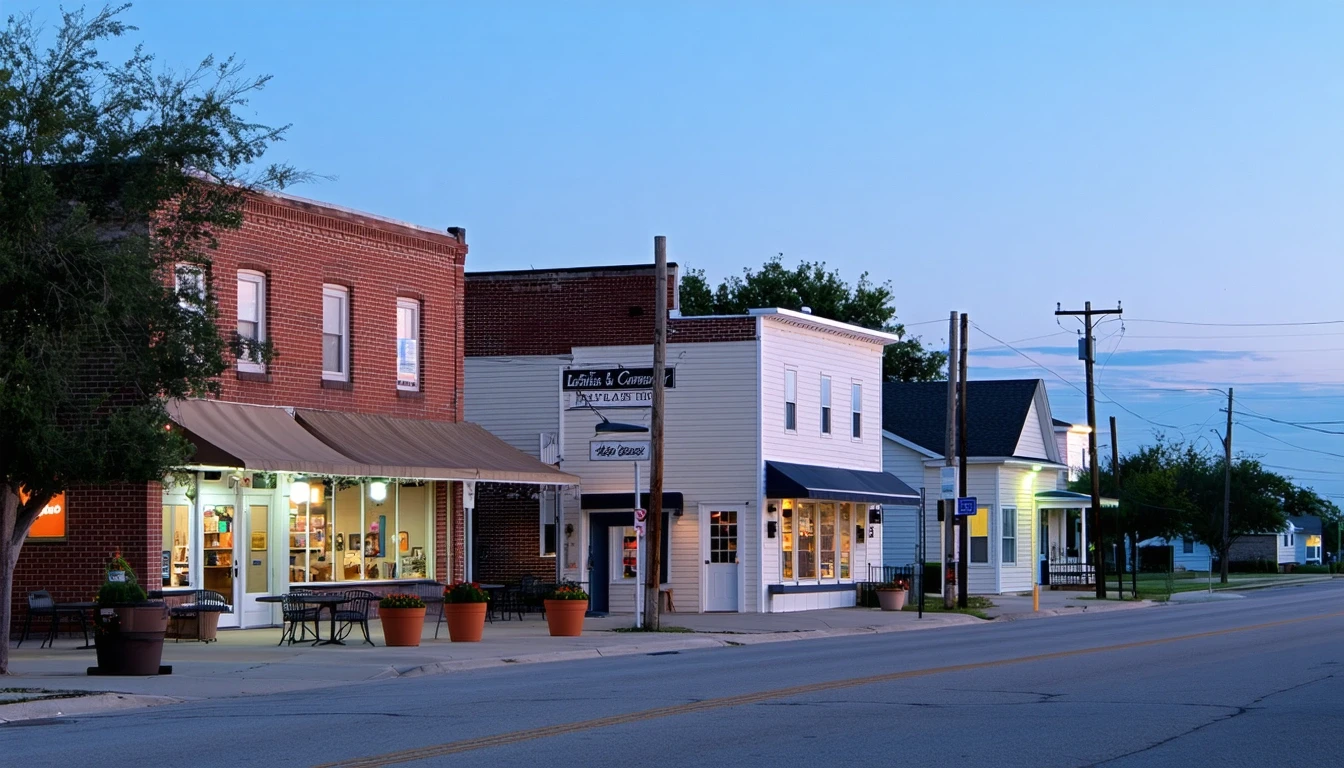
Pflugerville’s housing market operates in the shadow of Austin’s broader metro dynamics, but it’s not simply an overflow zone. The city has developed its own identity as a commuter-friendly suburb with mixed urban form—residential neighborhoods interspersed with commercial corridors, rather than strict separation. This creates pockets of walkability and transit access alongside stretches that require a car for every errand.
Home values at $321,200 reflect a market that’s neither bargain-priced nor prohibitively expensive relative to local incomes. The unemployment rate sits at 3.5%, signaling a stable job market, and household incomes are strong enough to support ownership for many. But the regional price parity index of 120 means that every service, repair, and recurring cost runs higher than the national average. A roof replacement, an HVAC service call, or a property insurance premium doesn’t just cost what it would elsewhere—it costs more because the entire regional cost structure is elevated.
What newcomers often misunderstand is that Pflugerville’s housing market isn’t uniform. The city’s infrastructure reflects its growth pattern: some areas have sidewalks, nearby grocery options, and bus stops; others require a car for even the most basic errands. This isn’t a flaw—it’s a structural feature that shapes overall living costs in ways that don’t show up in median home price data. Choosing a home here means choosing a location strategy, not just a building.
Renting in Pflugerville
At $1,677 per month, median gross rent in Pflugerville represents a meaningful but not crushing share of the median household income. For a household earning near the median, rent consumes roughly 18% of gross income—well below the 30% threshold often cited as a ceiling. But medians obscure variation, and Pflugerville’s rental market isn’t evenly distributed across the city.
The city’s errands infrastructure clusters along specific corridors. Food and grocery establishments exist, but they’re not evenly spread—they concentrate in medium-density bands rather than blanketing the city. For renters, this means apartment location determines daily logistics burden. An apartment near one of these corridors reduces car dependency for routine errands; one outside the corridor means every grocery run, every pharmacy stop, every quick errand requires a drive. Over a year, that difference compounds into time, fuel costs at $3.82 per gallon, and wear on a vehicle that many renters can’t easily replace.
Pflugerville’s rental stock also reflects the city’s mixed urban form. Some complexes sit in walkable pockets with pedestrian infrastructure; others occupy low-density areas where sidewalks thin out and bus service, while present, runs infrequently. Renters who prioritize convenience and lower transportation costs need to filter for location within the city, not just unit size or rent price. The lease locks in the monthly payment, but it also locks in the friction cost of getting through the week.
Rental volatility here follows regional patterns rather than hyperlocal quirks. Lease renewals tend to reflect broader Austin metro trends, which means renters face exposure to regional demand shifts they can’t control. There’s no rent stabilization mechanism, no cap on increases between leases. A tenant who stays in place for several years should expect the rent to move, and the direction is rarely downward in a growing metro.
Owning a Home in Pflugerville
Ownership in Pflugerville transfers cost control to the buyer, but it also transfers exposure. The $321,200 median home value is the entry point, not the total cost. Texas has no state income tax, which means property taxes carry more of the fiscal load. While the specific rate isn’t listed in available data, Texas property taxes are structured to fund schools, infrastructure, and services directly—and they adjust as home values rise. A buyer purchasing at the median today should expect the assessed value to shift over time, and the tax bill to follow.
Homeownership here also means managing climate exposure that renters can offload to landlords. Pflugerville’s summers bring extended heat, and cooling costs dominate the utility calendar. Electricity runs 15.69¢ per kWh, and a house with older insulation, single-pane windows, or an aging HVAC system will burn through kilowatt-hours faster than a newer, tighter build. Owners inherit the efficiency profile of the home they buy, and upgrading it requires capital they may not have immediately after closing.
Maintenance exposure is another ownership-specific cost that doesn’t appear in the purchase price. Roofs, HVAC systems, water heaters, and foundations all degrade on schedules that don’t care about the owner’s cash flow. In a regional price environment 20% above the national baseline, service calls and replacement parts cost more. A $6,000 HVAC replacement nationally might run $7,200 here, and that gap applies to every major system in the house.
Homeowners Associations exist in some Pflugerville neighborhoods, though prevalence and fee structures vary. Where HOAs are present, they add a recurring cost that can rise over time, and they impose governance rules that limit what owners can do with their property. Some buyers accept this tradeoff for amenities or exterior maintenance; others find it restrictive. The key is that HOA costs, like property taxes, don’t freeze at purchase—they’re ongoing exposures that shift with the community’s needs and decisions.
Apartment vs House in Pflugerville — Cost Behavior Comparison
| Expense Category | Apartment | House |
|---|---|---|
| Base Housing Cost | $1,677/month median rent (gross, includes some utilities in some leases) | Mortgage on $321,200 median home value (principal + interest, excludes taxes/insurance) |
| Utilities Exposure | Lower square footage and shared walls reduce cooling load; electricity at 15.69¢/kWh still material in summer | Larger square footage and standalone structure increase cooling exposure; older homes amplify seasonal volatility |
| Maintenance Control | Landlord responsible for major systems; tenant exposed to timing and quality of repairs but not direct cost | Owner responsible for all systems; costs elevated by regional price parity and no ability to defer without consequence |
| Location Access Tradeoff | More likely to be near corridor-clustered errands; reduces car dependency for groceries and daily needs | More likely in lower-density pockets; increases car dependency and fuel costs at $3.82/gal for routine errands |
| Outdoor Access | Shared green space; Pflugerville’s high park density benefits both types, but no private yard | Private yard common; park access still strong citywide, but outdoor space is controlled rather than shared |
Methodology note: This table includes only categories where cost behavior differs meaningfully in Pflugerville due to climate (cooling dominance), infrastructure (corridor-clustered errands), or urban form (mixed-density pockets). Categories like parking and insurance were omitted because local conditions don’t create a strong enough distinction between apartment and house experiences here. The differences shown reflect structural exposure, not household-specific budgets.
Utilities & Upkeep Differences
Pflugerville’s climate imposes a seasonal cost rhythm that affects houses and apartments differently. Summers here are long and hot, with extended periods of triple-digit heat. Cooling isn’t optional—it’s a baseline cost of habitability. At 15.69¢ per kWh, electricity costs add up quickly when an air conditioner runs for months on end. Apartments benefit from shared walls and smaller square footage, which reduces the cooling load. Houses, especially older ones with less efficient insulation or single-pane windows, face much higher exposure.
Natural gas, priced at $16.51 per MCF, plays a smaller role here than in colder climates. Heating needs are modest and brief. The cost asymmetry runs the other way: summer cooling dominates the annual utility calendar, and houses bear the brunt of that exposure. A tenant in an apartment might see noticeable summer bills; a homeowner in a 2,000-square-foot house with an aging HVAC system will see bills that feel punishing.
Maintenance differences extend beyond utilities. Houses require exterior upkeep—roofs, siding, gutters, landscaping—that apartments bundle into rent. In Pflugerville’s regional price environment, these services cost more than the national average. A lawn care service, a gutter cleaning, or a fence repair doesn’t just cost labor and materials—it costs labor and materials priced 20% higher than baseline. Homeowners can defer some of this work, but deferral creates risk. A small roof leak ignored becomes a major repair; a neglected HVAC filter becomes a system failure.
Apartments shift this exposure to the landlord, but they don’t eliminate it. Tenants face indirect costs through rent increases and deferred maintenance that affects livability. A landlord who delays HVAC replacement leaves tenants in a hot apartment with no recourse except to move. The cost structure differs, but both renters and owners are exposed to Pflugerville’s climate and the regional price environment that makes managing it expensive.
Rent vs Buy: Long-Term Exposure in Pflugerville
The rent-versus-buy decision in Pflugerville isn’t a simple math problem. It’s a tradeoff between different types of risk, different types of control, and different exposures to costs that shift over time. Renters face lease renewal volatility but avoid property tax increases, maintenance surprises, and the capital risk of a depreciating asset. Owners gain cost predictability on the mortgage payment but inherit every other exposure the property carries.
Renting in Pflugerville means accepting that the landlord controls the lease terms and the renewal price. In a growing metro, that price tends to rise. A tenant who stays in place for five years will likely face multiple increases, and there’s no mechanism to cap them. The tradeoff is flexibility: a renter can leave at lease end without selling an asset, without paying a commission, without waiting for a buyer. For households whose income or employment might shift, that flexibility has value that’s hard to quantify.
Ownership locks in the mortgage payment but exposes the buyer to everything else. Property taxes in Texas adjust as home values rise, and there’s no cap on assessed value growth in most cases. A homeowner who buys at $321,200 today might see that assessed value climb as the metro grows, and the tax bill will follow. Insurance costs also tend to rise over time, driven by regional weather patterns, claims history, and replacement cost inflation. The mortgage payment stays fixed, but the total monthly outflow does not.
Maintenance exposure is the wildcard. A house is a collection of systems that degrade on overlapping schedules. An HVAC system might last 15 years; a roof might last 20; a water heater might last 10. Owners can’t predict when these systems will fail, but they can predict that failure will be expensive and that the regional price environment will make it more expensive than the national average. Renters avoid this exposure entirely, but they pay for it indirectly through rent that reflects the landlord’s cost structure.
The long-term calculus in Pflugerville favors ownership for households with stable income, capital reserves for maintenance, and a timeline long enough to absorb transaction costs. It favors renting for households that value flexibility, can’t absorb large unexpected expenses, or aren’t certain they’ll stay in the metro for more than a few years. Neither choice is universally better—each fits different risk profiles and different life stages.
FAQs About Housing Costs in Pflugerville
Is Pflugerville affordable compared to Austin proper?
Pflugerville’s median home value of $321,200 is lower than many Austin neighborhoods, but affordability depends on total cost exposure, not just purchase price. The regional price environment runs 20% above the national baseline, meaning utilities, services, and maintenance all cost more. Commuting to Austin adds fuel costs at $3.82 per gallon, and time costs that don’t show up in housing budgets. Pflugerville offers lower entry costs but not necessarily lower total costs.
How much do utilities typically cost for a house in Pflugerville?
Utility costs depend on home size, insulation quality, and HVAC efficiency, but Pflugerville’s extended cooling season drives the expense. Electricity at 15.69¢ per kWh becomes the dominant cost during summer months when air conditioning runs continuously. Older homes with less efficient systems face higher exposure. Natural gas at $16.51 per MCF plays a smaller role due to mild winters. Owners should expect cooling to dominate the annual utility calendar.
Do most neighborhoods in Pflugerville have HOAs?
HOA prevalence varies across Pflugerville. Some neighborhoods have active associations with monthly or annual fees; others have none. Where HOAs exist, they add a recurring cost that can increase over time and impose rules on exterior modifications, landscaping, and parking. Buyers should verify HOA status and fee structure before purchasing, as these costs don’t appear in the mortgage payment but affect total monthly outflow.
Is renting in Pflugerville a better deal than buying?
Renting offers flexibility and avoids maintenance exposure, property tax increases, and capital risk. Buying offers cost predictability on the mortgage payment and control over the property, but transfers all other exposures to the owner. In Pflugerville’s growing metro, renters face lease renewal volatility; owners face rising property taxes and maintenance costs in a regional price environment 20% above baseline. The better deal depends on household stability, capital reserves, and timeline.
How does location within Pflugerville affect housing costs?
Location within Pflugerville changes daily logistics burden and transportation costs. Homes near corridor-clustered errands reduce car dependency for groceries and routine needs; homes in lower-density pockets require driving for every errand, adding fuel costs and time. Walkable pockets exist, but they’re not evenly distributed. Buyers and renters should evaluate location-specific access, not just unit price, because the friction cost of getting through the week compounds over time.
Making Housing Choices in Pflugerville
Housing costs in Pflugerville reflect the city’s position as an Austin metro suburb with its own infrastructure patterns and cost exposures. The median home value of $321,200 and median rent of $1,677 per month are starting points, not total costs. The regional price environment, the climate-driven utility calendar, and the corridor-clustered errands infrastructure all shape what it actually costs to live here.
Renters gain flexibility and avoid maintenance exposure, but they face lease renewal volatility in a growing metro with no rent stabilization. Owners gain cost predictability on the mortgage payment, but they inherit property tax exposure, maintenance risk, and climate-driven utility costs that run higher in standalone houses than in apartments. Neither path is universally better—each fits different risk tolerances and life stages.
What matters most in Pflugerville is understanding that housing cost isn’t just about the monthly payment. It’s about where the home sits within the city, how much driving it requires, how efficiently it handles the summer heat, and how much control the household has over costs that will shift over time. The households that succeed here are the ones who choose housing based on total exposure, not just sticker price, and who plan for the costs that don’t show up in the lease or the purchase agreement.
For a broader view of how these housing costs fit into monthly expenses and day-to-day financial pressure, the full cost structure extends beyond rent and mortgage into transportation, utilities, and services—all shaped by the same regional price environment and infrastructure patterns that make Pflugerville distinct within the Austin metro.
How this article was built: In addition to public economic data, this article incorporates location-based experiential signals derived from anonymized geographic patterns—such as access density, walkability, and land-use mix—to reflect how day-to-day living actually feels in Pflugerville, TX.