
Buying a home in Pearland means taking on more than a mortgage. Beyond the monthly payment, ownership here exposes households to property taxes, cooling costs driven by triple-digit summer heat, maintenance on larger single-family homes, and in many cases, homeowner association fees and rules. These costs don’t show up on the purchase contract, but they shape the long-term financial experience of living here—and they behave differently than rent.
This article breaks down the hidden cost layers of homeownership in Pearland, explains how they interact with the city’s suburban structure and climate, and clarifies when renting or buying makes sense given local conditions.
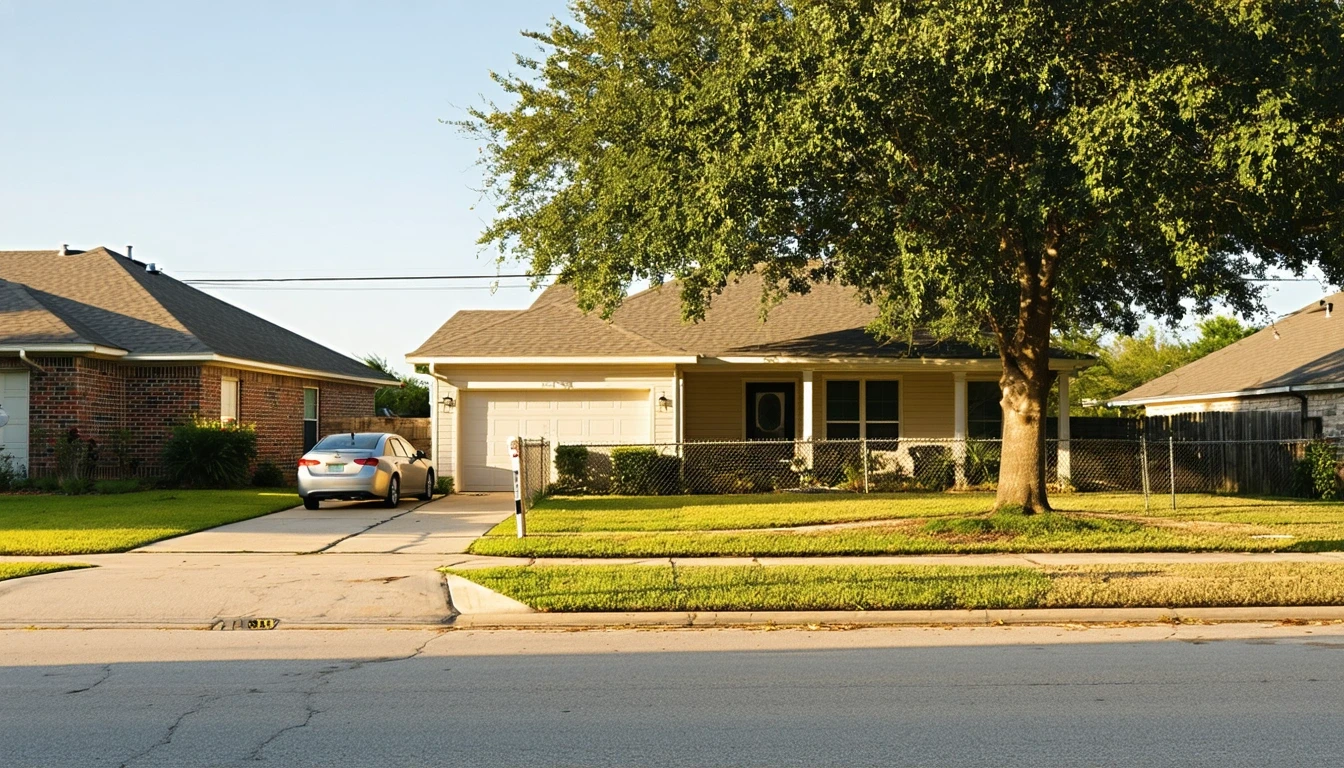
The Housing Market in Pearland Today
Pearland sits in the southern arc of the Houston metro, functioning primarily as a commuter suburb with a median home value of $311,100 and median gross rent of $1,622 per month. The housing stock reflects low-rise, single-family development—average building levels remain below typical thresholds, and the city’s physical form prioritizes detached homes over apartments or mixed-use density.
What shapes the market here is proximity to Houston employment centers combined with a car-oriented layout. Pedestrian-to-road infrastructure sits in a medium band, meaning some neighborhoods support limited walkability, but errands accessibility remains sparse—food establishment density falls below low thresholds, and grocery density hovers in the medium range. This means most households depend on cars for daily logistics, which increases the total cost of living beyond housing alone.
The regional price parity index of 105 indicates costs run moderately above the national baseline, but median household income of $111,123 per year provides cushion for many buyers. The unemployment rate of 4.4% reflects stable labor market conditions, though economic exposure remains tied to the broader Houston economy.
Newcomers often underestimate how climate and density interact here. Pearland’s extended cooling season and low-density form mean larger homes with more square footage to cool, and limited walkable alternatives mean car ownership is functionally required. These factors don’t change the purchase price, but they change the real cost pressures over time.
Renting in Pearland
Renting in Pearland offers predictability but limited flexibility in location. The median gross rent of $1,622 per month reflects suburban Houston pricing, and most rental stock consists of single-family homes or small apartment complexes rather than dense multifamily buildings. Renters face the same car dependency as owners—sparse errands accessibility and limited transit options mean most households need a vehicle regardless of tenure type.
Rental pressure here doesn’t come from scarcity in the traditional sense; it comes from the mismatch between where people work and where they can afford to live without a long commute. Pearland’s role as a bedroom community means many renters are trading proximity to Houston job centers for lower rent, but that tradeoff includes fuel costs, commute time, and the need to own and maintain a car.
Renters also absorb cooling costs indirectly. While some landlords include utilities, most do not, and tenants in single-family rentals face the same exposure to triple-digit summer heat as homeowners. The difference is that renters can’t control efficiency upgrades—insulation, HVAC replacement, or window improvements require landlord approval, which limits cost mitigation options.
For households prioritizing mobility or avoiding maintenance risk, renting makes sense. But in Pearland’s market, renting doesn’t eliminate car dependency, climate exposure, or the need to plan logistics around driving. It shifts who controls those costs, not whether they exist.
Owning a Home in Pearland
Ownership in Pearland means taking on property taxes, maintenance, cooling exposure, and in many neighborhoods, homeowner association governance. The median home value of $311,100 positions Pearland as accessible relative to income, but the cost structure extends well beyond the purchase price.
Property taxes in Texas fund local services in the absence of state income tax, and while exact rates vary by jurisdiction, owners should expect annual tax bills that represent a meaningful share of ownership costs. Unlike fixed-rate mortgages, taxes can rise over time as assessed values increase, and owners have limited control over that trajectory.
Cooling dominates utility exposure. Electricity rates of 15.41¢/kWh combine with extended summer heat to create seasonal cost spikes that renters and owners both face, but owners bear the full responsibility for managing usage and upgrading efficiency. Homes here tend to be larger single-family structures with more square footage to condition, and the low-rise, low-density form means less shared-wall insulation than in denser housing types.
Maintenance follows the same pattern. Larger homes mean more roof area, more exterior surface to paint or repair, more HVAC capacity to service, and more landscaping to manage. In neighborhoods with homeowner associations, owners also face monthly or annual fees that fund common area upkeep, and governance rules that limit exterior modifications, rental restrictions, or resale flexibility.
The tradeoff is control. Owners can invest in efficiency, lock in fixed housing costs through mortgages, and build equity over time. But in Pearland, ownership also means absorbing volatility in taxes, maintenance, and cooling—costs that don’t appear in the monthly payment but shape the long-term financial experience.
Apartment vs House in Pearland — Cost Behavior Comparison
| Expense Category | Apartment | House |
|---|---|---|
| Cooling Exposure | Lower square footage reduces total cooling load; shared walls provide some insulation | Larger square footage and detached structure increase cooling costs during extended summer heat |
| Maintenance Responsibility | Landlord or property management handles exterior, HVAC, and structural repairs | Owner responsible for roof, HVAC, exterior, and landscaping on larger lot |
| Car Dependency | Same sparse errands accessibility; car required regardless of housing type | Same sparse errands accessibility; car required regardless of housing type |
| Governance | Lease terms limit modifications; landlord controls upgrades and renewal terms | Potential HOA rules govern exterior changes, rentals, and resale; owner controls interior |
What drove these differences: Pearland’s low-density, low-rise form means single-family homes dominate, and those homes are larger with more exposure to climate and maintenance. Apartments offer smaller footprints and shared-wall insulation, but both housing types face the same car dependency due to sparse walkable errands access. Governance differs by tenure and neighborhood, not housing type alone. Categories like property taxes and insurance were excluded because they apply primarily to ownership, not housing type comparison.
Utilities & Upkeep Differences
Utility exposure in Pearland is driven by climate, not housing type. Triple-digit summer heat creates extended cooling seasons, and electricity rates of 15.41¢/kWh mean households face noticeable seasonal cost swings regardless of whether they rent or own. The difference is control: owners can invest in programmable thermostats, insulation upgrades, or HVAC replacement to reduce usage, while renters depend on landlord decisions.
Natural gas pricing of $16.51/MCF reflects heating fuel costs, though heating exposure remains minor compared to cooling. Pearland’s climate rarely requires sustained heating, and when it does, the duration is short. Cooling dominates the utility profile here, and that exposure scales with square footage.
Maintenance exposure follows housing form, not tenure. Single-family homes—whether rented or owned—require more upkeep than apartments due to larger roofs, more exterior surface area, and individual HVAC systems. Owners absorb this cost directly; renters face it indirectly through rent levels or deferred maintenance that affects comfort and efficiency.
Water features are present in Pearland, and park density sits in the medium range, but outdoor amenities don’t reduce household utility or maintenance costs. They provide quality-of-life value, not cost mitigation.
Rent vs Buy: Long-Term Exposure in Pearland
Renting and owning in Pearland represent different risk profiles, not different cost levels. Renters face renewal volatility—landlords can raise rent at lease end, and tenants have limited leverage in a market where car dependency and sparse errands accessibility reduce location flexibility. Owners face tax and maintenance volatility, but they lock in principal and interest through fixed-rate mortgages and build equity over time.
The structural difference is control. Renters can leave when leases end, avoiding long-term exposure to a single neighborhood or property. Owners gain stability and the ability to invest in efficiency, but they also absorb risk from tax increases, major repairs, and potential HOA fee changes. In Pearland’s low-density, car-oriented layout, both renters and owners face the same transportation and errands logistics—ownership doesn’t reduce car dependency or eliminate climate exposure.
Over time, ownership shifts costs from landlord-controlled (rent, maintenance decisions) to owner-controlled (taxes, repairs, upgrades). That shift offers predictability in housing payments but introduces new volatility in property taxes and upkeep. Renters avoid that volatility but give up equity accumulation and long-term cost stability.
For households planning to stay in Pearland long-term, ownership offers the ability to stabilize housing costs and invest in efficiency. For those prioritizing flexibility or avoiding maintenance risk, renting preserves mobility. Neither eliminates the cost pressures created by Pearland’s climate, density, and car-dependent structure—they just allocate responsibility differently.
FAQs About Housing Costs in Pearland
How much do property taxes add to homeownership costs in Pearland?
Texas funds local services through property taxes rather than state income tax, so annual tax bills represent a significant share of ownership costs. Exact rates vary by jurisdiction within Pearland, but owners should expect taxes to rise over time as assessed home values increase. Unlike mortgage payments, tax exposure is not fixed.
Does renting in Pearland avoid car dependency?
No. Errands accessibility remains sparse regardless of housing type—food establishment density falls below thresholds, and grocery density sits in the medium range. Most households need a car for daily logistics whether they rent or own, and that adds fuel, insurance, and maintenance costs to total housing expenses.
How does Pearland’s climate affect ownership costs?
Triple-digit summer heat creates extended cooling seasons, and larger single-family homes have more square footage to condition. Owners face the full cost of cooling exposure and must invest in efficiency upgrades to manage usage. Renters face the same climate but lack control over insulation, HVAC quality, or thermostat technology.
Are apartments cheaper to cool than houses in Pearland?
Generally, yes. Apartments have smaller square footage and benefit from shared-wall insulation, which reduces total cooling load. Single-family homes are larger, detached, and expose more surface area to heat, which increases cooling costs during Pearland’s extended summer season.
What hidden costs do first-time buyers in Pearland often miss?
Property taxes, cooling exposure, maintenance on larger homes, and potential HOA fees. The mortgage payment is predictable, but taxes can rise, HVAC systems require replacement, roofs need repair, and HOA rules may limit flexibility. These costs don’t appear at closing but shape the long-term ownership experience.
Making Housing Choices in Pearland
Housing costs in Pearland extend beyond rent or mortgage payments. Ownership exposes households to property taxes, cooling costs driven by extended summer heat, maintenance on larger single-family homes, and potential HOA governance. Renting avoids those responsibilities but offers less control over efficiency, renewal terms, and long-term cost stability.
The city’s low-density, car-oriented structure means both renters and owners face the same transportation and errands logistics. Sparse walkable access to food and groceries, combined with limited transit options, makes car ownership functionally required regardless of housing type. That dependency adds fuel, insurance, and maintenance costs to what a budget has to handle beyond housing alone.
For households planning to stay long-term, ownership offers the ability to lock in housing costs, build equity, and invest in efficiency. For those prioritizing flexibility or avoiding maintenance risk, renting preserves mobility and shifts volatility to landlords. Neither eliminates the cost pressures created by Pearland’s climate and density—they just allocate responsibility differently.
Understanding how housing costs behave here—not just what they cost today—helps households choose the tenure type that fits their risk tolerance, timeline, and control preferences. Pearland’s market rewards planning, not assumptions.
How this article was built: In addition to public economic data, this article incorporates location-based experiential signals derived from anonymized geographic patterns—such as access density, walkability, and land-use mix—to reflect how day-to-day living actually feels in Pearland, TX.