
Budgeting Smarter in Paradise
Across major U.S. cities, the average household allocates roughly 35% of gross income to housing, 15% to transportation, and 12% to food—but those national averages rarely survive contact with local reality. In Paradise, NV, the monthly budget in Paradise is shaped less by any single sticker shock and more by the steady accumulation of exposure: desert heat that runs cooling bills high, car-dependent commutes in a region where only 4.4% work from home, and a housing market where median rent sits at $1,192 per month. Newcomers often underestimate how costs stack in Paradise—not because any one category is extreme, but because the city’s structure quietly amplifies several at once. Triple-digit summer heat dominates utility seasonality, commutes average 22 minutes in a metro where rail is present but car dependency remains the norm, and the limited family infrastructure (low school and playground density) increases logistics complexity for households with children. Understanding the monthly budget here means recognizing that Paradise rewards planning and punishes assumption.
The median household income in Paradise is $55,224 per year (roughly $4,602 gross monthly), and the regional price parity index of 97 suggests costs run slightly below the national baseline—but that modest advantage dissolves quickly under the weight of transportation fuel ($4.61/gal), electricity rates (12.83¢/kWh), and the reality that broadly accessible food and grocery density, while reducing errand friction, doesn’t eliminate the need to drive. What makes budgeting in Paradise different isn’t the presence of any single expensive line item; it’s the way housing, utilities, and transportation interact with the city’s built environment and climate to create a cost structure that feels stable on paper but volatile in practice.
A Simple Budget Map: How Costs Behave by Household Type
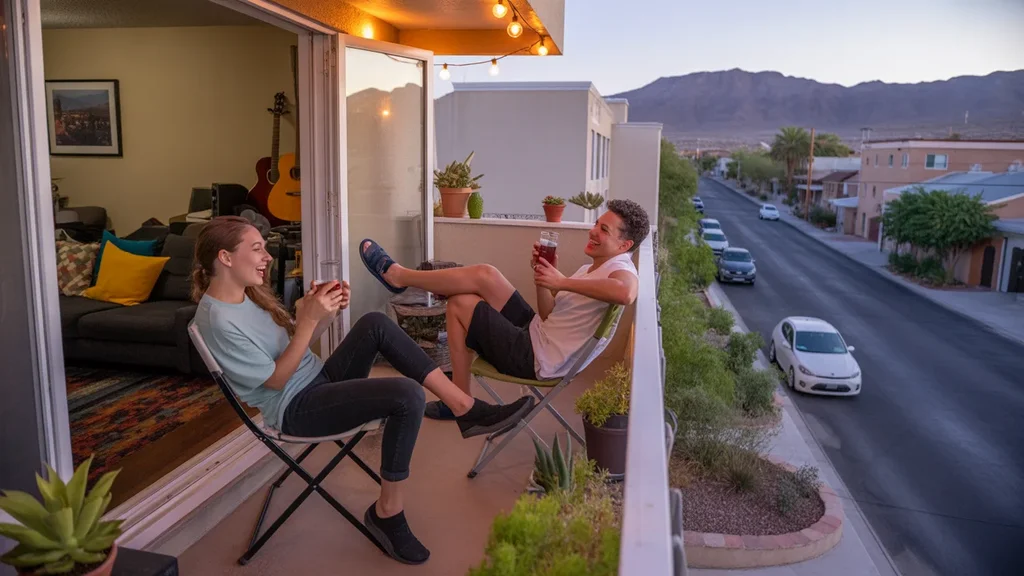
The table below illustrates how cost behavior and exposure differ across three household types in Paradise. Rather than simulate exact spending, it shows where budgets flex, where they lock in, and what drives variability. Numbers appear only where the feed provides them; all other entries describe the mechanism, not the magnitude.
| Category | Jasmine (single renter) | Sam & Elena (couple) | Ortiz family (2 kids, owners) |
|---|---|---|---|
| Housing (Rent or Mortgage) | $1,192/month median rent; fixed monthly, renewal-volatile | Shared rent or mortgage; stable if locked, sensitive to rate environment if buying | Median home value $333,800; mortgage fixed, but insurance/tax exposure grows over time |
| Utilities | Solo burden; summer cooling dominates in desert heat; electricity 12.83¢/kWh | Shared usage smooths per-person cost; seasonal volatility remains high in summer | Size-sensitive; larger footprint amplifies cooling load; natural gas $9.96/MCF for rare heating needs |
| Food (Groceries + Eating Out) | Broadly accessible grocery density reduces friction; solo shopping less efficient per meal | Shared grocery runs; accessible food options reduce time/fuel waste | Volume-sensitive; accessible grocery density helps but doesn’t eliminate bulk-shopping logistics |
| Transportation | Commute-dependent; gas $4.61/gal, 22-min average commute, low WFH (4.4%); rail present but limited reach | Dual-commute exposure possible; walkable pockets and rail offer alternatives in limited areas | Coordination-heavy; school/activity logistics amplified by limited family infrastructure; multi-trip days common |
| Fees / Friction Costs | Apartment-dependent; trash/water often included, parking episodic | Modest if renting; HOA/condo fees possible if ownership in vertical buildings | Admin-heavy; HOA common in ownership, trash/sewer billed separately, seasonal HVAC servicing non-negotiable |
| Discretionary (life + surprises) | Compressed by fixed housing + commute fuel; flexibility limited | Shared income smooths discretionary capacity; still sensitive to dual-commute fuel exposure | Episodic and unpredictable; childcare, activities, and home upkeep create recurring surprises |
| What Changes This Most | Commute distance and summer cooling intensity | Whether both partners commute and housing tenure (rent vs own) | Home size, cooling footprint, and school/activity coordination burden |
Methodology: This guide uses only city-level figures provided in the IndexYard data feed for 2026. Where exact category totals aren’t provided, categories are described directionally to show budget behavior rather than a receipt-accurate total.
The Real Cost Drivers in Paradise
In Paradise, the budget stress point is rarely one big bill—it’s the stack of small “friction” costs that show up after move-in. Housing anchors the budget: median rent of $1,192 per month is fixed until renewal, and the median home value of $333,800 translates to mortgage stability for owners but exposes them to rising insurance, tax, and maintenance costs over time. The more vertical urban form and mixed land use in Paradise mean many renters and owners live in denser buildings where HOA fees, shared utilities, and parking permits add administrative complexity and monthly line items that don’t appear in the initial lease or purchase price.
Transportation and utilities interact with Paradise’s structure in ways that amplify exposure. The 22-minute average commute, combined with a work-from-home rate of just 4.4%, means most households drive daily. Gas at $4.61 per gallon and a typical 25-mile round-trip commute translate to roughly $92 per month in fuel costs alone for a standard work schedule (illustrative, assuming 25 MPG and ~20 workdays)—before errands, groceries, or weekend trips. While broadly accessible food and grocery density reduces the need for long errand loops, and walkable pockets with rail service offer transit alternatives in limited areas, the reality is that car dependency remains the dominant pattern. For families, the limited family infrastructure—low school and playground density—means more trips, more coordination, and more fuel burned on logistics that denser neighborhoods handle on foot.
Utilities in Paradise are shaped by the desert’s extended cooling season. Electricity at 12.83¢/kWh may look modest, but triple-digit summer heat drives consumption well above national norms. For illustrative context, a typical household using 1,000 kWh per month would face roughly $128 in electricity costs before fees or taxes—and that’s a baseline, not a ceiling. Larger homes, poor insulation, or older HVAC systems push usage higher. Natural gas, priced at $9.96 per MCF, plays a minimal role in Paradise’s mild winters, but the seasonal swing in electricity creates a budgeting challenge: summer bills spike, and households without savings buffers feel the volatility acutely.
Common friction costs in Paradise include:
- HOA or association dues: Common in denser ownership structures; often cover water, trash, exterior maintenance, and shared amenities, but add $100–$400+ monthly depending on building type and services.
- Trash and recycling: Billed separately for many single-family homes; typically modest but episodic if not bundled.
- Water and sewer: Often billed separately from rent or mortgage; usage-sensitive in desert climate where landscaping and cooling-related water use can climb.
- Parking permits or fees: Relevant in denser areas or buildings with assigned/guest parking structures; episodic but non-negotiable where required.
- Seasonal HVAC servicing: Non-discretionary in desert heat; annual or bi-annual tune-ups prevent costly mid-summer failures and maintain efficiency.
How Households Keep the Budget Under Control (Without Living Like a Monk)
Budgeting in Paradise isn’t about deprivation—it’s about timing, tradeoffs, and recognizing where you have control. The biggest lever most households overlook is commute footprint: living closer to work, carpooling, or consolidating errands into fewer trips directly reduces fuel exposure without requiring lifestyle sacrifice. The broadly accessible grocery and food density in Paradise makes errand consolidation easier than in sprawl-heavy suburbs, and the presence of walkable pockets and rail service offers transit alternatives for those whose work and home align with those corridors. Families facing limited family infrastructure can reduce logistics burden by clustering activities geographically or coordinating carpools with neighbors, turning a coordination tax into a shared-cost opportunity.
Utilities respond to behavior more than most households expect. Running cooling during off-peak hours, using programmable thermostats to avoid cooling empty homes, and maintaining HVAC filters and seals all reduce electricity consumption without requiring comfort compromise. In Paradise’s desert climate, even small efficiency gains compound over the extended cooling season. Seasonal budget smoothing—setting aside a portion of lower winter utility bills to cover summer spikes—turns predictable volatility into manageable cash flow.
Discretionary spending in Paradise benefits from the city’s accessible food and entertainment options, but the key is distinguishing between convenience and necessity. Cooking at home using accessible grocery options (bread $1.79/lb, chicken $1.99/lb, eggs $2.42/dozen) costs materially less than frequent dining out, and the time saved by shorter errand loops makes meal prep more practical. For renters, lease renewal is the highest-stakes budget moment: negotiating early, understanding market conditions, and being prepared to move if necessary prevents rent spikes from destabilizing an otherwise stable budget.
Practical tactics households use to manage monthly costs in Paradise:
- Consolidate errands into fewer trips to reduce fuel waste; accessible grocery density makes this easier.
- Use programmable thermostats to avoid cooling empty homes during work hours in summer.
- Carpool or coordinate school/activity logistics with neighbors to share transportation burden.
- Cook at home using accessible grocery options; bulk staples (rice $1.04/lb) stretch budgets further.
- Set aside a portion of winter utility savings to smooth summer electricity spikes.
- Maintain HVAC systems seasonally to prevent mid-summer failures and preserve efficiency.
- Negotiate lease renewals early or be prepared to move if rent increases exceed budget capacity.
- Explore transit options (rail, bus) for commutes where home and work align with service corridors.
FAQs About Monthly Budgets in Paradise (2026)
Is $4,000 per month enough to live in Paradise, NV?
It depends on household type and housing tradeoffs. A single renter paying $1,192 median rent has roughly $2,800 remaining for utilities, transportation, food, and discretionary costs—tight but workable if commute distance is short and lifestyle is modest. For a couple or family, $4,000 becomes strained quickly once transportation, utilities, and friction costs (HOA, parking, childcare) stack up.
What’s the biggest budget surprise for people moving to Paradise?
Most newcomers underestimate summer utility volatility and the cumulative cost of car dependency. Electricity bills spike during the extended cooling season, and with only 4.4% of workers remote, daily commutes at $4.61/gal add up faster than expected. The limited family infrastructure also surprises parents, who find themselves driving more for school and activity logistics than they anticipated.
How much should I budget for groceries in Paradise in 2026?
Paradise benefits from broadly accessible grocery density, which reduces friction and keeps options competitive. Staples like bread ($1.79/lb), chicken ($1.99/lb), and rice ($1.04/lb) are modestly priced, but household size and dietary preferences drive the total. Singles might spend less per trip but lose efficiency; families buying in bulk can stretch dollars further if they plan around accessible options.
Does Paradise’s lower regional price index (97) actually make budgets easier?
The regional price parity of 97 suggests costs run slightly below the national baseline, but that advantage is narrow and easily erased by transportation and utility exposure. Gas at $4.61/gal, electricity at 12.83¢/kWh during triple-digit summer heat, and car-dependent commutes mean the “discount” shows up more in housing than in day-to-day operating costs.
What’s the smartest way to control monthly costs in Paradise without feeling deprived?
Focus on the levers you control: commute distance, errand consolidation, and seasonal utility behavior. Living closer to work or using transit where available (rail is present in limited areas) cuts fuel costs without sacrifice. Cooking at home using accessible grocery options and smoothing utility bills by setting aside winter savings for summer spikes turns volatility into predictability. The goal isn’t to spend less everywhere—it’s to spend intentionally where it matters.
Planning Your Next Step
The monthly budget in Paradise is shaped by three dominant forces: housing costs anchored by $1,192 median rent and $333,800 median home values, transportation exposure driven by car dependency and $4.61/gal gas, and utility volatility fueled by desert heat and 12.83¢/kWh electricity rates. What makes Paradise different isn’t any single extreme—it’s the way these costs interact with the city’s structure to reward planning and punish assumption. Broadly accessible grocery and food density reduces errand friction, and walkable pockets with rail service offer transit alternatives in limited areas, but the low work-from-home rate and limited family infrastructure mean most households still depend on cars for daily life.
If you’re trying to understand how transportation works in Paradise or whether utilities will dominate your summer budget, the next step is to map your own exposure: how far you’ll commute, how large a space you’ll cool, and whether your household can consolidate trips and smooth seasonal costs. Paradise doesn’t punish careful planners—but it doesn’t forgive assumptions, either. The households that thrive here are the ones who recognize that the budget isn’t a fixed receipt; it’s a dynamic system where small decisions about commute distance, cooling behavior, and errand timing compound into material monthly differences. Start with the categories you control, plan for the volatility you can’t avoid, and build a budget that reflects how you’ll actually live—not how you hope costs will behave.
How this article was built: In addition to public economic data, this article incorporates location-based experiential signals derived from anonymized geographic patterns—such as access density, walkability, and land-use mix—to reflect how day-to-day living actually feels in Paradise, NV.