
Apartment vs House in Palo Alto — Monthly Cost Comparison
| Expense Category | Apartment | House |
|---|---|---|
| Base Housing Cost | $3,169/month median rent | Property tax on $2,000,001 median value, plus mortgage principal and interest |
| Utilities (Electricity) | Smaller footprint limits exposure at 30.29¢/kWh | Larger space increases consumption at 30.29¢/kWh; central AC common in older single-family stock |
| Utilities (Natural Gas) | Minimal heating need in mild climate; often included or negligible | Whole-home heating at $22.96/MCF during occasional cool months; exposure rises with square footage |
| Maintenance & Upkeep | Landlord responsibility; renter protected from surprise repair costs | Owner bears full cost of roof, HVAC, landscaping, exterior paint; deferred maintenance compounds in older homes |
| HOA or Community Fees | Rare in Palo Alto rental stock | Common in newer subdivisions and townhome communities; covers landscaping, common area maintenance, sometimes exterior insurance |
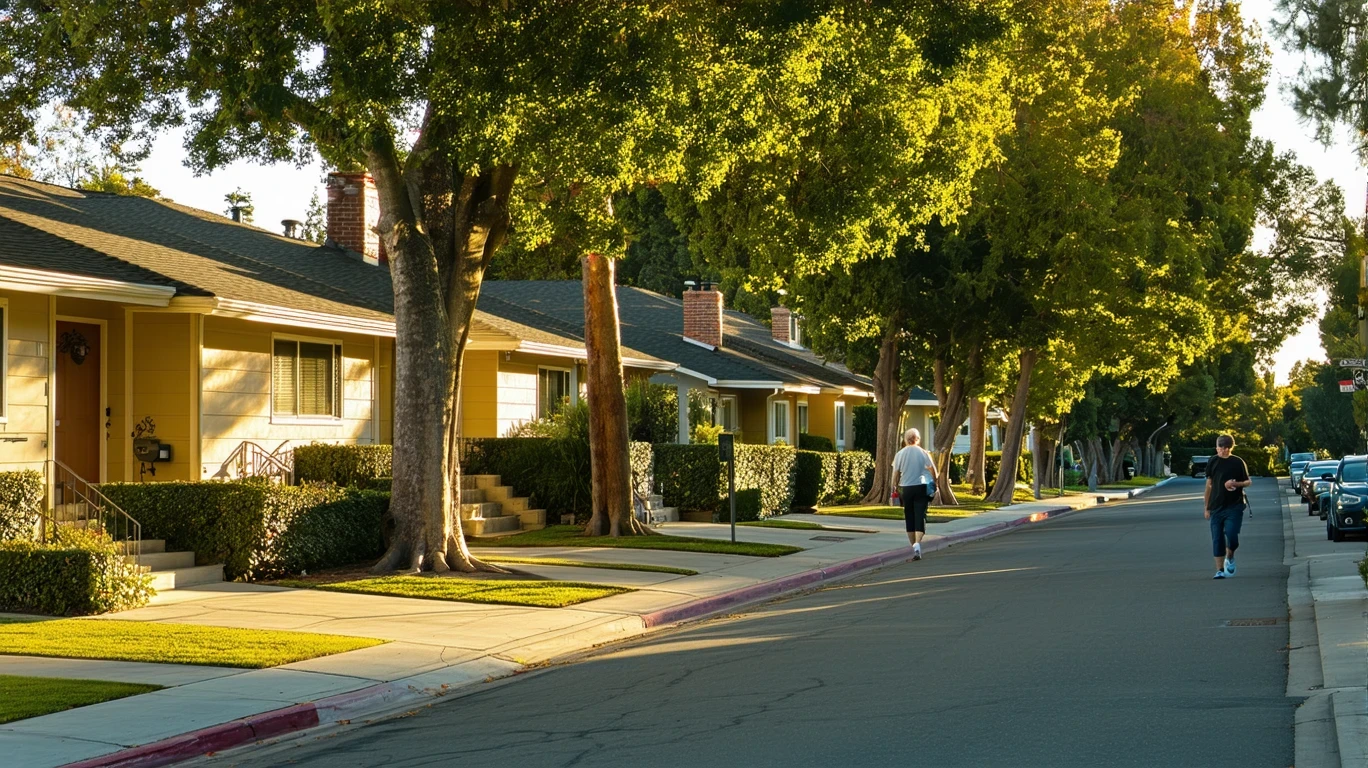
| Transportation Integration | Apartments cluster near Caltrain stations and University Avenue corridor, reducing car dependency for errands and commutes | Single-family neighborhoods vary; some walkable to parks and schools, others require driving for groceries and transit access |
Why these categories differ in Palo Alto: The table reflects Palo Alto’s combination of extreme home values, mild but variable climate, aging housing stock, and infrastructure that rewards proximity. Apartments concentrate near transit and commercial corridors, lowering transportation friction. Houses offer space and control but expose owners to property tax on valuations exceeding $2,000,001, maintenance on older structures, and variable access to walkable amenities depending on neighborhood. Categories like insurance and trash service are omitted because they don’t vary meaningfully by housing type in this market.
The Housing Market in Palo Alto Today
Palo Alto’s housing market is shaped by forces that don’t operate everywhere: a concentrated tech economy, strict development limits, and a small geographic footprint hemmed in by Stanford University, protected baylands, and established neighborhoods. The result is a market where median home values reach $2,000,001 and median rent sits at $3,169 per month—figures that reflect not just demand, but supply that cannot easily expand to meet it.
Newcomers often underestimate how tightly Palo Alto’s housing costs are tied to its economic base. This isn’t a bedroom community where prices follow regional trends. It’s a jobs center where compensation packages assume housing expense, and where equity from previous home sales or stock vesting events often funds purchases. The housing market here functions as a filter: it selects for households with substantial current income, accumulated wealth, or both.
What also distinguishes Palo Alto is the mismatch between its suburban built form and its urban-level amenities. The city offers rail transit via Caltrain, extensive bike infrastructure, walkable commercial districts, and high density of grocery and food options. This means [housing tradeoffs](/palo-alto-ca/cost-overview/) aren’t just about square footage and location—they’re also about how much you’ll rely on a car for daily errands, how easily you can reach transit, and whether your neighborhood integrates parks and schools within walking distance.
Renting in Palo Alto
Renting in Palo Alto means paying a premium for flexibility and proximity. At $3,169 per month median gross rent, the cost is high, but it buys access to a labor market where job changes are common and where being close to University Avenue, California Avenue, or a Caltrain station reduces commute friction and car dependency.
Rental stock clusters near transit and commercial corridors, which means renters disproportionately benefit from Palo Alto’s walkable infrastructure. You’re more likely to be within biking distance of groceries, parks, and restaurants if you rent than if you buy a single-family home in a purely residential neighborhood. This isn’t an accident—it’s a function of where apartments were built and where they’re allowed.
Rental availability is constrained by the same forces that limit ownership supply: zoning that favors single-family homes, neighborhood opposition to density, and land costs that make new construction pencil out only at the highest end. Turnover is frequent because of job mobility, but competition is intense. Renters should expect limited negotiating power and rent increases that track the broader tech economy.
The rental experience here is also shaped by tenant protections and landlord behavior that reflect California’s regulatory environment. Leases are typically annual, rent control does not apply to most units, and landlords can raise rents substantially between tenancies. Renters gain predictability during a lease term but face uncertainty at renewal.
Owning a Home in Palo Alto
Ownership in Palo Alto is a long-term bet on stability and control, but it comes with exposures that renters avoid. A median home value of $2,000,001 translates into property tax obligations that exceed what many households pay in rent elsewhere. California’s Proposition 13 limits annual assessment increases to 2% for existing owners, but new buyers pay tax on the purchase price—a reset that locks in a high baseline.
Ownership also means bearing the full cost of maintenance and repair on housing stock that skews older. Palo Alto’s single-family neighborhoods include many homes built in the mid-20th century, and deferred maintenance on roofs, foundations, and mechanical systems can surface quickly after purchase. Unlike renters, owners can’t call a landlord when the HVAC fails or the water heater leaks.
HOA fees are common in townhome communities and newer subdivisions, covering landscaping, exterior maintenance, and sometimes insurance. These fees are predictable but not optional, and they can rise over time as common infrastructure ages. In older single-family neighborhoods without HOAs, owners gain autonomy but lose the cost-sharing that comes with collective management.
What ownership provides in Palo Alto is insulation from rent volatility and the ability to benefit from long-term appreciation. Owners who purchased years ago and remain protected by Proposition 13 face [housing pressure](/palo-alto-ca/monthly-budget/) far lower than new entrants. This creates a bifurcated market: long-term owners with manageable costs, and recent buyers or renters facing current market rates.
Utilities & Upkeep Differences
Utility and maintenance costs in Palo Alto vary more by housing type and age than by climate extremes. The region’s mild weather means heating and cooling demands are moderate compared to areas with harsh winters or desert summers, but electricity at 30.29¢/kWh and natural gas at $22.96/MCF still add up when you’re conditioning a large, older single-family home.
Apartments benefit from smaller footprints and shared walls, which reduce heating and cooling loads. Many newer apartment buildings include efficient HVAC systems and appliances, and landlords often cover water, trash, and sometimes gas. Renters face lower utility bills on average, and they’re insulated from the cost of replacing aging equipment.
Houses, especially older ones, expose owners to higher utility consumption and the full cost of system failures. Central air conditioning is common in Palo Alto’s single-family stock, and running it during warm months at 30.29¢/kWh creates noticeable bills. Natural gas heating is typical, and while the mild climate limits exposure, whole-home heating during cool months still drives consumption at $22.96/MCF.
Maintenance differences are structural, not seasonal. Homeowners face costs that renters never see: exterior paint, roof replacement, landscaping, pest control, and appliance repair. In Palo Alto, where many homes sit on larger lots with mature landscaping, yard maintenance alone can be a recurring expense. Deferred maintenance is expensive here because labor costs are high and contractor availability is limited.
Rent vs Buy: Long-Term Exposure in Palo Alto
The rent-versus-buy decision in Palo Alto is less about monthly math and more about risk tolerance and time horizon. Renting offers flexibility and predictability within a lease term, but exposes you to market-rate resets every year. Buying offers control and tax-base stability, but exposes you to maintenance shocks, property tax on a high purchase price, and illiquidity.
Renters face volatility at renewal. Palo Alto’s rental market tracks the tech economy closely, and rent increases can be sharp when demand surges. You gain the ability to move without transaction costs, but you lose the ability to lock in housing expense for the long term. This tradeoff works for households prioritizing job mobility or unwilling to commit capital.
Owners face different volatility. Property taxes are stable under Proposition 13 once you’ve purchased, but maintenance and repair costs are unpredictable. A roof replacement, foundation repair, or HVAC failure can cost tens of thousands of dollars, and timing is outside your control. Owners also face transaction costs—realtor commissions, transfer taxes, moving expenses—that make short-term ownership uneconomical.
What ownership provides is protection from rent inflation and the ability to benefit from appreciation. In a market where home values have risen consistently over decades, owners who stay long enough often see substantial equity gains. But this outcome depends on market conditions, and it requires the financial capacity to weather maintenance costs and economic downturns without selling.
The decision also hinges on how you use Palo Alto’s infrastructure. If you value walkability, transit access, and proximity to amenities, renting near University Avenue or a Caltrain station may offer a better daily experience than owning a house in a car-dependent neighborhood. If you prioritize space, control, and long-term stability, ownership makes sense—but only if you can sustain the cost structure that comes with it.
How Place Structure Shapes Housing Decisions in Palo Alto
Palo Alto’s housing market isn’t just about price—it’s about how the city’s physical layout affects daily life and long-term costs. The presence of rail transit, extensive bike infrastructure, and high density of grocery and food options means that where you live determines how much you’ll spend on transportation, how much time you’ll lose to errands, and how easily you can manage a household without a second car.
Apartments and rentals cluster near transit nodes and commercial corridors, which means renters disproportionately benefit from walkable access to Caltrain, grocery stores, restaurants, and parks. You can bike to work, walk to the farmers market, and reach San Francisco or San Jose without driving. This reduces transportation costs and increases schedule flexibility, especially for households with one car or none.
Single-family neighborhoods vary widely in connectivity. Some areas near downtown or along bike routes offer similar walkability, but others require driving for groceries, school drop-offs, and errands. The difference isn’t trivial: a house in a car-dependent neighborhood adds transportation costs and time burdens that offset some of the benefits of ownership. Families with children gain access to strong school infrastructure and abundant parks, but they also face more complex logistics if both parents work and need to coordinate pickups, activities, and errands.
The city’s mixed-use character—residential streets interspersed with commercial corridors—means that proximity matters more here than in purely suburban or purely urban environments. A few blocks can determine whether you walk to the store or drive, whether your kids bike to school or need a ride, and whether you can live without a car or need two. These differences compound over time, affecting not just housing costs but the total cost and friction of daily life.
How this article was built: In addition to public economic data, this article incorporates location-based experiential signals derived from anonymized geographic patterns—such as access density, walkability, and land-use mix—to reflect how day-to-day living actually feels in Palo Alto, CA.
FAQs About Housing Costs in Palo Alto
Why is rent so high in Palo Alto compared to nearby cities?
Palo Alto’s rent reflects its role as a jobs center with constrained housing supply. The city’s small geographic footprint, strict zoning, and proximity to Stanford and major tech employers create demand that exceeds available rental stock. Renters pay a premium for access to the labor market, transit, and amenities that other nearby cities don’t offer in the same concentration.
How does Proposition 13 affect property taxes in Palo Alto?
Proposition 13 limits annual property tax increases to 2% for existing owners, but new buyers pay tax based on the purchase price. In Palo Alto, where median home values exceed $2,000,001, this means new owners face significantly higher property tax bills than long-term residents. The policy creates stability for existing owners but raises entry costs for newcomers.
Do Palo Alto homeowners face high utility costs year-round?
Utility costs in Palo Alto are driven more by home size and age than by extreme weather. Electricity at 30.29¢/kWh and natural gas at $22.96/MCF add up in larger, older homes with central air conditioning and whole-home heating, but the mild climate limits seasonal extremes. Owners of well-insulated, modern homes face lower exposure than those with older, less efficient structures.
Is it better to rent near transit or buy a house farther out in Palo Alto?
The answer depends on your household priorities and time horizon. Renting near Caltrain or University Avenue offers walkability, transit access, and lower transportation costs, but exposes you to rent volatility. Buying a house farther out offers space and stability, but may require a car for errands and increase commute time. The tradeoff is between flexibility and control, not just cost.
How does housing cost in Palo Alto affect long-term financial planning?
Housing cost in Palo Alto is high enough to dominate household budgets, even at the city’s elevated income levels. Renters face ongoing exposure to market-rate increases, which makes long-term planning difficult. Owners gain cost stability through Proposition 13 but face maintenance and repair costs that are unpredictable. Both paths require financial reserves and careful planning to sustain over time.
Making Housing Choices in Palo Alto
Housing decisions in Palo Alto are shaped by costs that don’t behave like they do elsewhere. Rent at $3,169 per month and home values at $2,000,001 reflect a market where supply is constrained, demand is tied to a concentrated tech economy, and infrastructure rewards proximity. The choice between renting and owning isn’t just about monthly payments—it’s about volatility, control, and how you’ll use the city’s walkable corridors, transit access, and amenity density.
Renters gain flexibility and lower upfront costs, but face rent resets that track the broader economy. Owners gain stability and tax-base protection under Proposition 13, but absorb maintenance shocks and property tax on high purchase prices. Both paths require income well above national norms, and both demand financial reserves to weather uncertainty.
What matters most is alignment between your household’s time horizon, risk tolerance, and how you’ll actually live in Palo Alto. If you value walkability and transit access, renting near University Avenue or a Caltrain station may offer a better experience than owning in a car-dependent neighborhood. If you prioritize space, control, and long-term appreciation, ownership makes sense—but only if you can sustain the cost structure and illiquidity that come with it.
For more detail on [where money goes](/palo-alto-ca/monthly-budget/) across categories, or how Palo Alto’s costs compare to other options, see the related guides on this site. And if you’re planning a move, the [best moving companies guide](https://indexyard.com/best-moving-companies-guide/) offers a starting point for logistics and cost expectations.