
Do you really need a car to live in Oklahoma City? For most residents, the answer is still yes—but that reality is shifting in ways that matter. Oklahoma City has long been shaped by sprawl and highways, but pockets of the metro now support transit-dependent lifestyles, walkable errands, and rail-based commuting. The question isn’t whether the city has public transit; it’s whether that transit reaches where you live, work, and run errands—and whether the infrastructure around you makes car-free life practical or merely possible.
Understanding how people actually get around Oklahoma City means recognizing a dual-mobility city: one where some neighborhoods function like urban cores with genuine transportation choice, and others remain fully car-reliant by design. The difference isn’t just convenience—it’s a structural factor that shapes housing decisions, daily routines, and long-term cost exposure.
How People Get Around Oklahoma City
Oklahoma City’s transportation landscape reflects decades of auto-oriented growth, but recent infrastructure investment has created islands of transit viability within a broader car-dependent metro. The city’s pedestrian-to-road ratio exceeds thresholds typically associated with walkable suburbs, and rail service now connects key corridors—yet these features concentrate in specific zones rather than blanketing the metro.
Most residents still drive for most trips. The city’s layout, with commercial corridors separated from residential subdivisions and employment centers scattered across the metro, makes driving the default for errands, work, and social life. But newcomers often misunderstand the degree of variation: living near the rail line or in a walkable pocket fundamentally changes daily mobility in ways that don’t apply five miles away.
What defines where money goes in Oklahoma City isn’t just gas prices or car payments—it’s whether your neighborhood’s structure lets you skip trips, combine errands on foot, or rely on transit for routine commutes. The city’s building height profile skews more vertical in core areas, and mixed residential and commercial land use creates zones where daily needs cluster within walking distance. Outside those zones, trips multiply and driving becomes non-negotiable.
Public Transit Availability in Oklahoma City
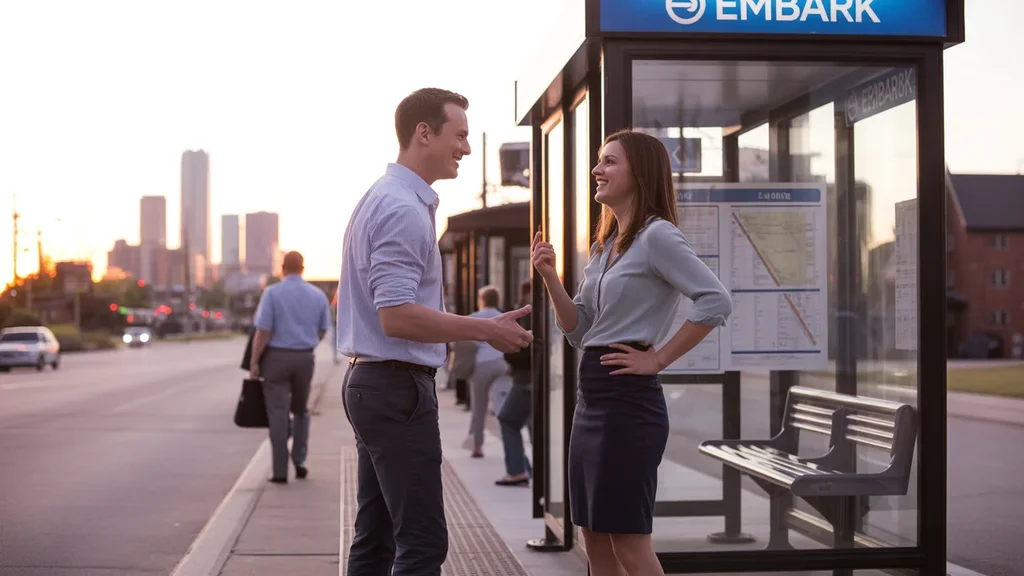
Public transit in Oklahoma City often centers around systems such as Embark, which operates bus routes and the Oklahoma City Streetcar. The presence of rail service marks a meaningful shift for a city historically built around highways, and the streetcar connects downtown, Midtown, and Bricktown in a loop that supports car-free movement within that zone.
Transit works best in the urban core and along established corridors where density, mixed-use development, and pedestrian infrastructure align. Residents in Midtown, downtown, or near the streetcar line can structure routines around transit for work, errands, and evening plans. The rail presence creates genuine optionality for households willing to orient their housing search around station access.
But transit falls short in suburban areas, outer neighborhoods, and anywhere beyond the core network. Bus coverage exists but operates on schedules that require planning and flexibility most car owners don’t need to exercise. Late-hour service thins out, and cross-metro trips often require transfers that double travel time compared to driving. For households in southern Oklahoma City, Edmond, or west-side subdivisions, transit functions as a backup option rather than a primary mode.
The gap isn’t just coverage—it’s the friction of using transit in a city where most destinations assume car access. Grocery stores, medical offices, and schools in peripheral areas lack the pedestrian connections that make transit practical even when a bus stop exists nearby.
Driving & Car Dependence Reality
Driving remains the dominant mode in Oklahoma City because the city’s geography rewards it. Parking is abundant and often free, commute distances stretch across the metro, and highway access defines convenience in ways transit can’t yet match. For most households, a car isn’t a luxury—it’s the tool that makes daily life function without constant logistical negotiation.
Sprawl shapes car dependence more than preference. Residential neighborhoods, commercial strips, and employment centers occupy separate zones connected by arterial roads and highways. Running errands on foot or by bus in most parts of the metro means adding hours to tasks that take minutes by car. The city’s cycling infrastructure, while notable in specific areas, doesn’t extend uniformly enough to replace driving for most trips.
Car reliance also brings predictability. Drivers control departure times, route choices, and trip chaining in ways transit users can’t. That control matters for households managing school pickups, irregular work schedules, or errands that span multiple stops. The tradeoff is cost exposure—fuel, insurance, maintenance, and depreciation—but for most Oklahoma City residents, those costs feel more manageable than the time cost of going car-free.
Commuting Patterns & Daily Mobility
Commuting in Oklahoma City typically centers on single-destination trips by car, with an average commute time of 22 minutes. About 25.3% of workers face longer commutes, often reflecting cross-metro travel between suburban homes and downtown or north-side employment centers. Work-from-home remains uncommon, with just 3.1% of the workforce remote, meaning most residents structure their days around physical commutes.
Transit-based commuting works for residents near the streetcar line or along well-served bus corridors, particularly those working downtown or in Midtown. Rail access eliminates parking costs and commute variability for core-to-core trips, and the walkable infrastructure in those zones supports errand-running on foot before or after work.
But most commuters drive because their origins, destinations, or schedules don’t align with transit coverage. Shift workers, parents managing school drop-offs, and employees at suburban office parks face commutes that require car flexibility. Proximity to work becomes a major factor in housing decisions, not because commute times are extreme, but because transit alternatives don’t exist for most routes.
Who Transit Works For—and Who It Doesn’t
Transit works best for renters and urban-core residents who prioritize walkability and accept the geographic limits of car-free life. Households near the streetcar loop, in Midtown, or along high-frequency bus routes can structure routines around transit, especially if work and daily errands fall within the same zone. The city’s mixed land use in these areas means groceries, clinics, and restaurants cluster within walking distance, reducing the need for trips outside the transit network.
Families with school-age children face harder tradeoffs. School locations, activity schedules, and the need for multi-stop trips make car ownership nearly essential unless the household lives within walking distance of schools and after-school programs. Playground and school density in Oklahoma City supports family life in specific neighborhoods, but those amenities don’t always align with transit access.
Suburban homeowners and residents in peripheral neighborhoods generally can’t rely on transit for daily life. Coverage thins out, frequencies drop, and the pedestrian infrastructure needed to reach stops safely often doesn’t exist. For these households, transit functions as an occasional option for downtown events or airport trips, not a primary mode.
Car-free life in Oklahoma City is viable, but it’s geography-specific. It works in the core and fails in the periphery, with little middle ground.
Transportation Tradeoffs in Oklahoma City
Choosing between transit and driving in Oklahoma City means weighing control against cost exposure, and predictability against geographic flexibility. Driving offers door-to-door convenience, schedule independence, and access to the entire metro. It also means absorbing fuel costs, insurance, maintenance, and parking where applicable. Transit reduces those costs but introduces time overhead, limits destination choices, and requires living in areas where coverage is strong.
For households near rail or in walkable pockets, transit reduces transportation’s claim on the household budget and eliminates the volatility of fuel prices and repair expenses. The tradeoff is accepting a smaller geographic range for housing, work, and errands. For households in suburban areas, driving is the only practical option, and the cost becomes a fixed part of the household structure rather than a choice.
The real tradeoff isn’t transit versus driving—it’s whether you’re willing to orient your housing search and daily routines around transit access. In Oklahoma City, that choice is available, but only in specific zones, and it requires committing to a different kind of urban life than most of the metro offers.
FAQs About Transportation in Oklahoma City (2026)
Is public transit usable for daily commuting in Oklahoma City?
Yes, but only if you live and work near the streetcar line or along well-served bus corridors. Transit-based commuting works best for downtown and Midtown residents with core-area jobs. Outside those zones, transit requires significant time overhead and schedule flexibility that most car commuters don’t face.
Do most people in Oklahoma City rely on a car?
Yes. The majority of Oklahoma City residents drive for most trips because the city’s layout, sprawl, and destination spacing make car ownership the most practical option. Transit serves specific corridors well, but it doesn’t reach most residential neighborhoods or employment centers with the frequency needed to replace driving.
Which areas of Oklahoma City are easiest to live in without a car?
Downtown, Midtown, and neighborhoods near the streetcar loop offer the strongest car-free viability. These areas combine transit access, walkable errands, and mixed-use development that reduces trip frequency. Suburban and peripheral neighborhoods generally require car ownership for daily life.
How does commuting in Oklahoma City compare to nearby cities?
Oklahoma City’s average commute time of 22 minutes is moderate, but the city’s car dependence is higher than metros with more extensive transit networks. Compared to nearby cities, Oklahoma City offers lower traffic congestion and abundant parking, but fewer transit alternatives for households trying to avoid car ownership.
Does Oklahoma City have bike infrastructure for commuting?
Yes, in specific areas. The city’s bike-to-road ratio is notable, particularly in core neighborhoods and along certain corridors. Cycling works for short commutes and errands within walkable zones, but the infrastructure doesn’t extend uniformly across the metro, and suburban areas lack the connectivity needed for safe, practical bike commuting.
How Transportation Fits Into the Cost of Living in Oklahoma City
Transportation in Oklahoma City isn’t just a budget line—it’s a structural factor that shapes housing choice, time allocation, and daily flexibility. Living near transit or in a walkable pocket reduces the need for car ownership and cuts exposure to fuel price swings, but it also narrows housing options and requires accepting a smaller geographic range for work and errands. Living in suburban areas offers more housing choices and often lower rent or purchase prices, but it locks in car dependence and the recurring costs that come with it.
The city’s dual-mobility reality means transportation costs vary more by neighborhood than by household type. A renter in Midtown may spend little on transportation beyond occasional rideshares, while a similar household in Edmond absorbs fuel, insurance, and maintenance as non-negotiable expenses. Understanding how mobility works in Oklahoma City helps clarify which neighborhoods align with your transportation preferences and which require financial and logistical commitments you may not expect.
For a fuller picture of how transportation, housing, and daily expenses interact, see what a budget has to handle in Oklahoma City. The goal isn’t to avoid costs—it’s to choose the tradeoffs that fit your priorities and daily routines.
How this article was built: In addition to public economic data, this article incorporates location-based experiential signals derived from anonymized geographic patterns—such as access density, walkability, and land-use mix—to reflect how day-to-day living actually feels in Oklahoma City, OK.